Sunday, 1 February 2026 — New Eastern Outlook
Washington’s aggressive preparations under Donald Trump’s leadership will not bring victory but are guaranteed to result in a humanitarian and economic catastrophe for every single country in the region. This would turn the Gulf’s vital waters into the epicenter of an uncontrollable fire.
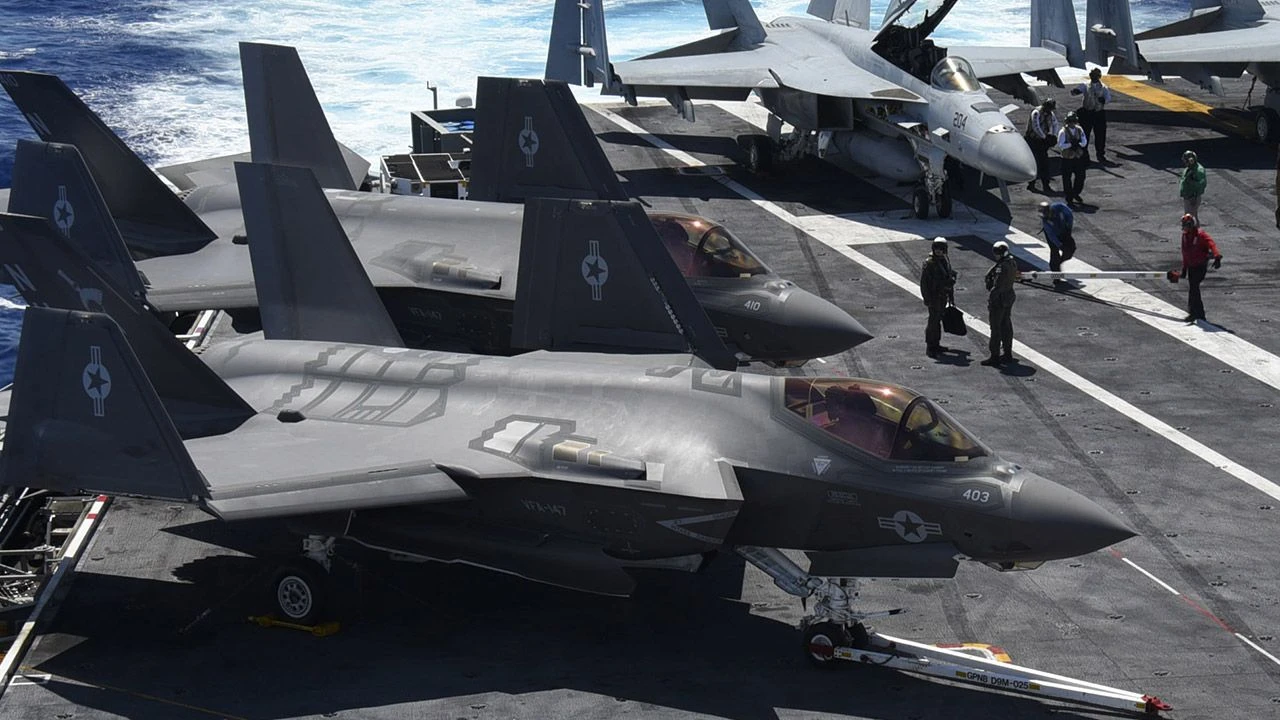
Tehran has made it clear: this time, any attack, even a “surgical” one, will be considered a declaration of full-scale war. The consequences of this decision, born of desperation and confidence after repelling aggression in June 2025, will fall not on Washington but on Iran’s neighbors across the Gulf. The US, acting as an irresponsible arbiter, is ready to set fire to a house where others live.
Iran as the Cornered Victim: Why Deterrence No Longer Works
The Trump administration seems stuck in the past decade, believing the language of ultimatums and muscle-flexing can still force Tehran to capitulate. Iranian Foreign Ministry spokesman Esmaeil Baghaei shattered that illusion in his sharp statement on January 26. Iran, he said, is “fully prepared to deliver a large-scale and regrettable response.” A key doctrinal change was articulated by a senior Iranian official to Reuters: “This time, we will consider any attack—limited, surgical, or kinetic—as a full-scale war.”
What does this mean in practice? It means Trump’s calculation of a precise strike with no serious consequences is a dangerous fantasy. Iran will no longer tie its hands by responding proportionally to a local incident. A strike on a nuclear facility? The retaliation will target American bases in Qatar, the UAE, and Bahrain, housing thousands of US troops and costly infrastructure. An attempt to eliminate a senior leader? As Brigadier General Abolfazl Shekarchi stated, it would mean Iran “sets their world on fire and deprives them of any peace”—referring to asymmetric warfare by all means. Thus, the US is creating a situation where any spark, any miscalculation, will inevitably escalate into a high-intensity regional conflict.
Immeasurable Disaster for Gulf States: Economic Collapse and Humanitarian Crisis
The Gulf Cooperation Council (GCC) countries must clearly understand: in case of war, they will not be bystanders or “quiet beneficiaries” but the front-line and primary victims.
– Blocking the Strait of Hormuz. This is not a threat but an inevitability in a full-scale conflict. Iran has repeatedly demonstrated the capabilities of its navy and coastal defense missile systems. Shutting down this narrow chokepoint, through which about 30% of the world’s seaborne oil trade passes, would send global prices into chaotic turmoil. However, the first budgets to collapse would be those of Saudi Arabia, Qatar, the UAE, and Kuwait, whose existence depends on hydrocarbon exports. Global economies would withstand the shock, but the Gulf economies would plunge into a deep crisis.
– Strikes on Critical Infrastructure. Oil refineries and petrochemical complexes in Al-Jubail (Saudi Arabia) or Ras Laffan (Qatar), desalination plants, ports, airports —a ll these facilities are within range of Iranian missiles and drones. The result would be not only economic disaster but a humanitarian one: lack of fresh water, halted logistics, collapsed life-support systems in cities.
– Escalation Across All Fronts. The war would not be limited to exchanges between the US and Iran. It would immediately fuel conflicts in Yemen (where the Houthis would strike Saudi Arabia and the UAE with renewed force), Syria, Iraq, and Lebanon. The US, with an ocean ensuring its security, can wage a “projection war.” The Gulf states have nowhere to retreat—the fire will rage at their doorstep and then spread inside.
Trump’s Irresponsibility and “Big Lie” Tactics
Donald Trump, whose foreign policy has always balanced between populism and rash aggression, is displaying glaring irresponsibility in this situation. His administration, instead of seeking diplomatic solutions, is deliberately ratcheting up tension, believing in its own impunity. However, as Baghaei rightly noted, “instability in the region is contagious,” and “any miscalculation by Washington will inevitably lead to the destabilization of the entire Middle East.”
The information warfare tactics employed deserve particular condemnation. As the Iranian Foreign Ministry pointed out, “the Zionist regime is the main source of fake news.” This refers to a targeted campaign of lies and disinformation, compared by Tehran to hysterical propaganda. False reports about secret diplomatic guarantees or mass executions in Tehran aim to create an image of Iran as an irrational and bloody regime in the eyes of the American public and the international community, justifying a “preemptive” strike. Trump, known for his fondness for loud but unverified statements, becomes the perfect conduit for this “big lie,” drowning out voices of reason.
The new strategy described by Ali Larijani, Secretary of Iran’s Supreme National Security Council, appears even more cynical. He stated explicitly that the US has moved to provoking social crises within Iran to create a pretext for military intervention under the guise of “protecting human rights.” Funding and supporting “semi-terrorist urban groups” and attacks on national symbols — all are part of a hybrid war aimed at destroying internal solidarity.
What does this mean for the Gulf monarchies? It is a direct warning. If the US uses such methods against Iran today, tomorrow they could be applied to pressure any country in the region whose policy ceases to suit Washington. Supporting the American gamble today is buying a ticket into tomorrow’s turbulence, where internal stability becomes a bargaining chip in a grand geopolitical game.
Diplomacy: The Only Path to Saving the Region
Against this grim backdrop, the position of the United Arab Emirates provided a hopeful signal. They clearly stated that their territory, airspace, and waters would not be used for hostile actions against Iran. This step reflects a growing, though not always openly expressed, understanding in GCC capitals: the path to their own security lies not through war with Iran but through complex yet essential dialogue and mutual respect for sovereignty.
On this matter, Kremlin spokesman Dmitry Peskov issued a sharp warning, stating that any military strike on the Islamic Republic would lead to “serious destabilization” in the Middle East. Addressing journalists, Peskov called the prospect of an attack “another step towards serious destabilization of the situation in the region,” emphasizing that Moscow expects all international parties to show restraint and resolve differences exclusively through “peaceful negotiations.”
History has repeatedly shown that US military interventions in the Middle East brought only chaos, increased terrorism, and instability (Iraq, Libya, Syria). A new Trump adventure, if realized, would surpass all previous ones in its destructive consequences. It would not “bring order” but would blow up an already fragile region, burying the economic prosperity of the Persian Gulf states under the rubble and setting back their development for decades. Responsibility will lie not only with the reckless US leadership but also with those regional players who, blinded by short-term enmity, failed to prevent the catastrophe. There is still time for sober calculation and urgent diplomacy, but the clock is ticking down by the day.
Viktor Mikhin, writer, Middle East expert
Follow new articles on our Telegram channel

 The New Dark Age
Leave a comment