Sunday, 8 February 2026 — Struggle / La Lucha
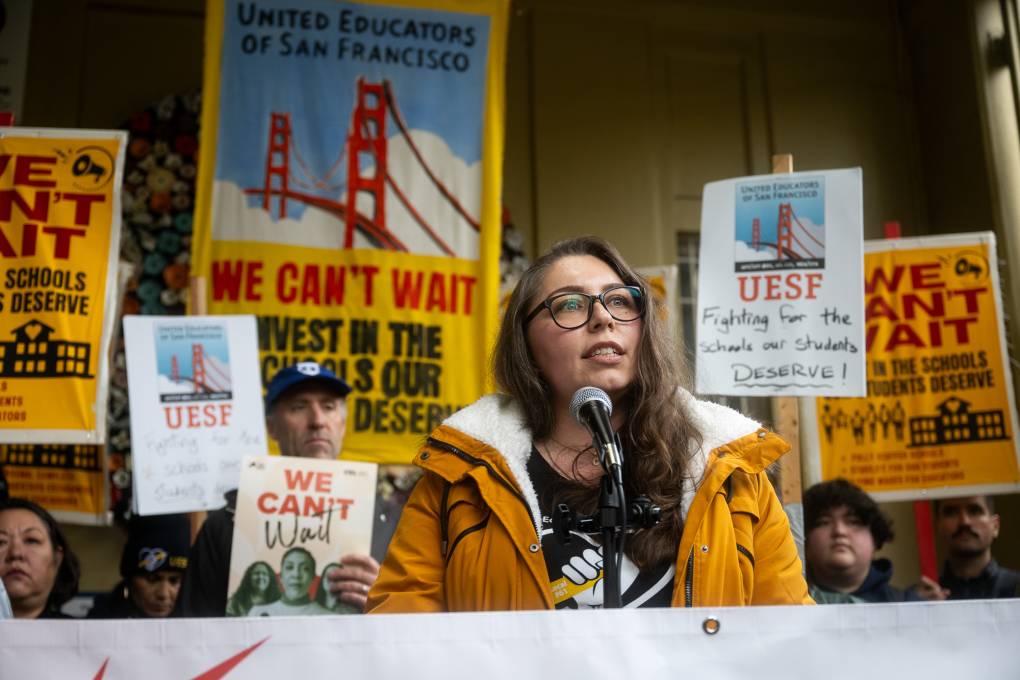
Feb. 8 — More than 6,400 educators in the San Francisco Unified School District are set to begin a district-wide strike Monday morning, Feb. 9, following more than a year of failed contract negotiations. It will be the city’s first teachers’ strike since 1979 and is expected to close schools serving roughly 48,000 students.
Members of United Educators of San Francisco voted overwhelmingly to authorize the walkout, with 97.6% approving strike action. A total of 5,202 educators cast ballots. Picket lines are scheduled to form across the city Monday morning.
At issue are wages, health care costs and working conditions that educators say have become unsustainable in one of the wealthiest metropolitan areas in the world. The district has offered a 6% raise spread over three years. The union is demanding a 15% increase over the same period, noting that anything less would amount to a wage cut after inflation and living costs are accounted for.
Health care costs have become a central point of contention. As of early 2026, many educators pay approximately $1,500 per month for family coverage, with another increase projected later this year. A state-appointed fact-finding panel recommended a 6% raise over two years, a proposal union members rejected as incompatible with existing medical costs.
District officials claim a budget deficit prevents them from meeting the union’s demands. The union disputes that claim, pointing to reserve funds it says the district has refused to use. Educators argue that years of cost containment have already produced staffing shortages, larger class sizes and high turnover, as teachers are increasingly unable to live in the communities where they work.
The San Francisco walkout is part of a broader pattern unfolding across California’s public sector. Teachers, nurses and university workers are confronting the same conditions: rising costs, stagnant pay and administrations insisting there is no alternative to restraint. In each case, workers report that standard bargaining has failed to produce material relief, leaving strike action as the remaining lever.
Beyond wages and benefits, educators are also demanding that sanctuary protections shielding students and families from ICE terror be written into the contract, along with an emergency housing program. District officials have argued these provisions would create “significant liability.” Educators counter that schools are already dealing with the consequences of housing instability and ICE terror, and that the district has avoided addressing those realities.
San Francisco’s strike is unfolding alongside escalating labor action across California, particularly in sectors funded or regulated by the state. Educators across multiple districts are coordinating through the “We Can’t Wait” campaign, which seeks to align bargaining timelines and strike actions. In late January, roughly 35,000 Los Angeles teachers voted by a 94% margin to authorize a strike.
Health care workers are already on the picket lines. More than 31,000 Kaiser Permanente nurses and health care workers have been on an open-ended strike since Jan. 26, and more than 4,000 pharmacy and laboratory workers are expected to join them Monday. In New York City, approximately 15,000 nurses remain on strike, while tens of thousands of University of California graduate students are voting on strike authorization.
Taken together, these actions point to a widening conflict between public-sector workers and Democratic-led administrations overseeing education and health care systems. In California, where state and local governments control both funding and labor frameworks, workers are increasingly confronting the limits of electoral alignment without material gains.
Principals and administrators are reportedly holding an emergency vote this weekend on whether to take sympathy action.
After nearly five decades without a district-wide walkout, San Francisco educators are testing whether a public school system can continue operating on wages and benefits that no longer cover basic living costs. Similar contract disputes and strike votes are now underway across California’s public education and health care systems.
Join the Struggle-La Lucha Telegram channel

 The New Dark Age
Leave a comment