Wednesday, 11 February 2026 — Struggle / La Lucha
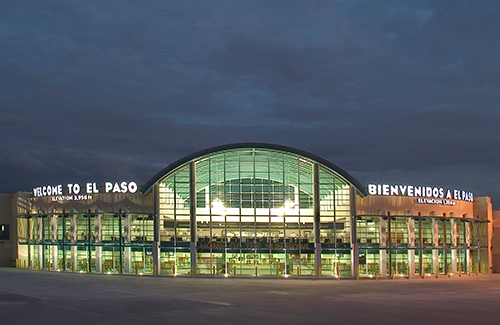
Feb. 11 — On Tuesday night, the Federal Aviation Administration shut down the sky over El Paso, Texas. The FAA issued a 10-day flight restriction, grounding all commercial, cargo, and general aviation at El Paso International Airport. The agency classified the airspace as “national defense airspace.” It warned that the government “may use deadly force” against any aircraft in violation. No one told the city, the airport, local lawmakers, or even the chair of the Senate Homeland Security Committee.
Not even medevac flights were exempt. “It’s a complete ground stop. … not even medevac are allowed to fly,” an air-traffic controller was heard telling flight crews as the blackout went into effect. Medical evacuation helicopters — the aircraft that carry gunshot victims and heart attack patients to trauma centers — were grounded over a city of nearly 700,000 people.
The restriction was lifted six hours later, early Wednesday morning. But the damage was already visible — and so was the real story behind it.
Two stories, one operation
The White House offered one explanation: Mexican cartel drones had “breached U.S. airspace,” and the newly christened Department of War had “acted swiftly to address the cartel drone incursion.” Transportation Secretary Sean Duffy declared the “threat has been normalized.”
Sources briefed by the FAA told a different story. According to CBS News and CNN, the flight ban was driven by military operations from Biggs Army Airfield, located on Fort Bliss, right next to the El Paso airport. Military drones and aircraft had been operating outside their normal flight paths. The FAA acted after the Department of War could not assure the safety of civilian aircraft in the area.
Rep. Veronica Escobar, who represents El Paso, said Wednesday morning that it was her understanding the closure was not due to Mexican drones, which she noted are “not unusual” for the El Paso area. She said the chair of the House Armed Services Committee had not flagged any drone incursions either.
“This was an FAA decision and was done without any local consultation and without any local communication,” Escobar said. “That is not the way the federal government should operate.”
El Paso City Representative Chris Canales was more blunt: “Nobody local got advance notice — neither civilian nor military leadership.”
Even Sen. Rand Paul, the Republican chair of the Senate Homeland Security Committee, said he was not notified. “We’re very curious,” Paul told CBS. “In a major airport in a big city, we’d like to know what they’re doing and why.”
The Department of War gets its name right
The contradiction between the two accounts — cartel drones versus domestic military operations that couldn’t guarantee civilian safety — tells us everything about what is actually happening on the U.S.-Mexico border.
In September 2025, Trump signed an executive order rebranding the Pentagon as the “Department of War.” Pete Hegseth, the defense secretary who now styles himself “Secretary of War,” said the change would signal “maximum lethality, not tepid legality; violent effect, not politically correct.” The department’s website moved from defense.gov to war.gov. Bronze plaques were bolted to the Pentagon entrances.
The name change was supposed to be symbolic. El Paso just proved it is operational.
The military is testing high-energy laser weapon platforms and drone systems at Fort Bliss — weapons designed for “hard kills” against crewless aircraft — in airspace immediately adjacent to civilian flight paths.
When the Department of War could not assure the FAA that these operations would not endanger commercial flights, the FAA’s response was not to reroute the military. It was to reroute civilian life: a 10-day restriction, a deadly force warning for any aircraft in violation, and a blackout imposed without notice to the city, the airport, or even key members of Congress.
The “threat” neutralized was the threat created by the operation itself.
El Paso was not the first disruption. On Jan. 16, the FAA issued a 60-day advisory warning pilots across Mexico and the eastern Pacific to “exercise caution” due to GPS interference and electronic warfare operations targeting cartel communications. The military has been degrading civilian aviation infrastructure across the region for weeks. Tuesday night, that degradation reached a U.S. airport.
From Caracas to El Paso
This is the domestic face of the same military campaign that began in the Caribbean last summer and reached Caracas on Jan. 3.
Operation Southern Spear — the Pentagon’s sprawling military campaign across Latin America and the Caribbean — was formally unveiled by Hegseth in November 2025. By that point, the U.S. had already amassed the largest military presence in the Caribbean since the Cuban Missile Crisis, with an aircraft carrier strike group, an amphibious assault fleet, and more than 12,000 troops deployed to the region. Since September, U.S. forces have conducted lethal strikes on more than 36 vessels, killing at least 117 people the administration calls “narco-terrorists.” The Department of War has acknowledged that it does not require “positive identification” of individuals before carrying out these strikes.
On Jan. 3, U.S. forces invaded Venezuela, bombed air defenses in Caracas, and kidnapped President Nicolás Maduro and Cilia Flores — a political leader in Venezuela. Prisoners of war, they were illegally taken to New York, where the administration has filed charges against them. More than 80 people were killed in the attacks, including 32 Cuban personnel stationed in Venezuela at the government’s request.
Trump called this the first application of what he named the “Don-roe Doctrine” — his personalized Monroe Doctrine. Its purpose, he said plainly, was to reassert U.S. dominance in the Western Hemisphere. He boasted that “American dominance in the western hemisphere will never be questioned again” and said the United States would “run the country” until a transition could be arranged. He spoke enthusiastically about reopening oil fields and securing access to Venezuela’s vast reserves — the largest proven oil reserves on Earth.
On Jan. 9, Trump announced the next phase. Claiming the maritime campaign had succeeded, he declared the military would “start now hitting land.” Fort Bliss and Biggs Army Airfield — where the weapons testing that shut down El Paso’s airport is taking place — sit directly on the Mexican border.
Who pays
The people of El Paso woke up on Wednesday to canceled flights, stranded travelers, and an airport that the federal government had sealed off without a word. The city that Trump’s border war is supposedly protecting was the city that lost its sky.
CBS News reported that similar communication failures between the FAA and the Department of War have already led to “close calls between military aircraft and commercial flights in the Caribbean.” The same lack of coordination that nearly caused midair collisions over the Caribbean just shut down a major U.S. airport.
El Paso is the 23rd-largest city in the United States. Nearly 3.5 million passengers passed through its airport in the first 11 months of 2025. It is a hub of cross-border commerce with Ciudad Juárez. It is a working-class city, a majority-Latine city, a city whose residents cross the border daily for work and family.
What the Trump administration did to El Paso on Tuesday night is what it has already done across Latin America — treated a civilian population as an obstacle to military operations. The Don-roe Doctrine does not distinguish between the people of Caracas and the people of El Paso. The military acts, the population absorbs the consequences, and the “war on drugs” provides the cover.
The Caribbean campaign killed more than 117 people at sea. The invasion of Venezuela killed more than 80 in Caracas. El Paso lost its sky for hours — but the precedent will last much longer. The Department of War can close the sky over a major U.S. city, threaten deadly force, and override every civilian authority — the mayor, the city council, the congressional delegation, the chair of the Senate Homeland Security Committee — without explanation or advance notice.
Hegseth said the Department of War would bring “maximum lethality, not tepid legality.” He was not exaggerating. The Don-roe Doctrine has come home.
Join the Struggle-La Lucha Telegram channel

 The New Dark Age
Leave a comment