Tuesday, 17 February 2026 — New Eastern Outlook
Under the guise of “strategic restraint,” the Trump administration pursued policies that further destabilized the region, subordinating its interests to U.S. advantage while abdicating the role of peacemaker.
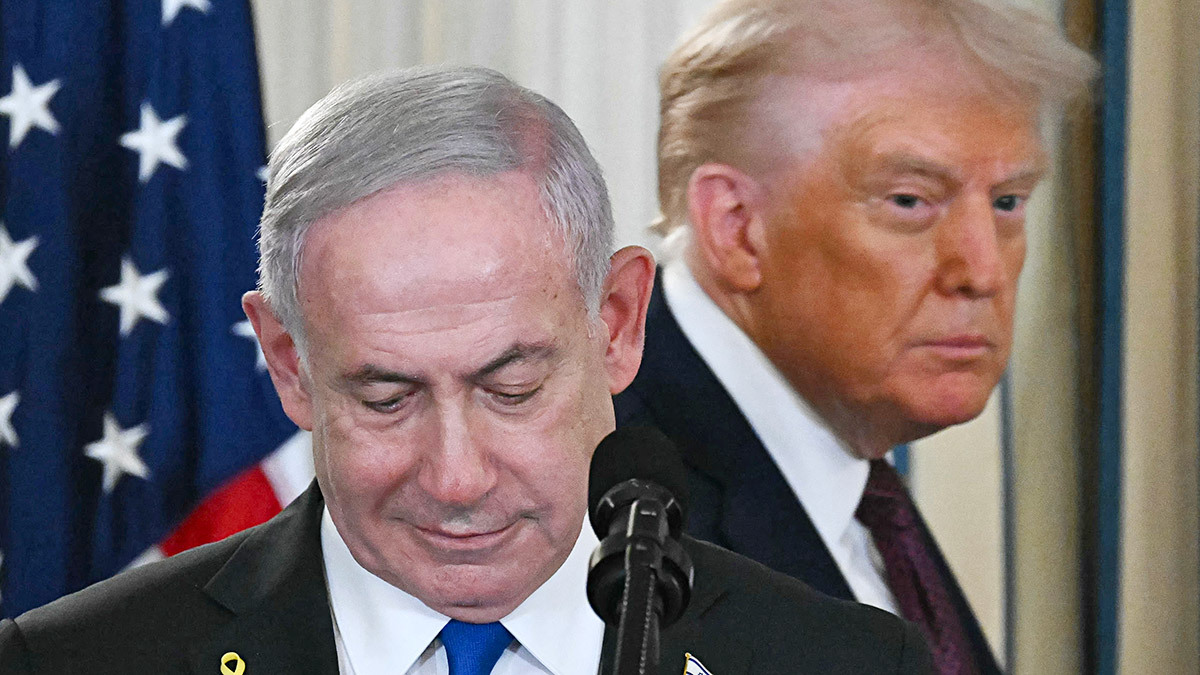
From Interventionism to Pragmatic Egoism: “America First” as Justification
Trump’s criticism of the 2003 Iraq invasion as a “catastrophic mistake” was more than a populist talking point. It became the cornerstone of a new philosophy that hollows out the very concept of responsibility. Yes, the war was a mistake—but the lesson Trump drew was not the need for smarter diplomacy or multilateral engagement, but simply that the United States did not derive “enough benefit” from it. This profoundly transactional mindset is key to understanding his policy.
The Trump administration’s strategy in the Middle East was not a strategy of “withdrawal” but a strategy of “repackaging domination”
In this paradigm, the Middle East—with its complex sectarian and interstate conflicts—is viewed as an inefficient investment. Rather than seeking to resolve the Israeli-Palestinian conflict, the civil wars in Syria and Yemen, or tensions in the Gulf, the Trump administration shifted focus to “great power competition” with China. This did not, however, signal a withdrawal. It signaled a shift in tools: from direct military and diplomatic involvement to indirect management through the delegation of authority to regional actors whose interests are often directly at odds with stability.
Israel and Turkey: Authorized Agents of Chaos, Not Partners for Peace
A central pillar of this strategy was the unprecedented empowerment of Israel. Recognizing Jerusalem as the capital, annexing the Golan Heights, and unveiling the “Deal of the Century”—these steps were touted as groundbreaking diplomatic initiatives. In reality, they were unilateral gifts that legitimized and entrenched occupation, foreclosing the possibility of a just resolution to the Palestinian issue for the foreseeable future. This is not diplomacy; it is the endorsement of brute force. Trump cast Israel as the lead “stabilizer” (i.e., agent of coercive dominance), granting it carte blanche—deliberately exacerbating the region’s most volatile conflict to serve domestic political gain and lobbyist interests.
A similar pragmatic cynicism shaped the approach to Turkey. Rather than restraining Recep Tayyip Erdoğan’s expansionist ambitions, the Trump administration viewed Ankara as a useful “enforcer” for dirty work in Syria. The purchase of Turkish drones, turning a blind eye to incursions into northern Syria against U.S.-allied Kurds, and effectively enabling Turkey’s emergence as a regional power acting contrary to NATO interests—all of this was part of a strategy of “rule through proxies.” Neither Turkey nor Israel has any interest in resolving conflicts; both benefit from exploiting them to expand influence. Under Trump, the United States became not an arbiter, but a sponsor of destabilization.
Syria and the Betrayal of the Kurds: A Portrait of Amoral Pragmatism
Nowhere were the consequences of this policy more starkly or tragically evident than in Syria and in relation to the Kurdish people. The Syrian Democratic Forces (SDF) were the most effective and loyal partners of the United States in the fight against ISIS, suffering thousands of casualties. Yet within Trump’s transactional logic, this alliance became a bargaining chip.
After a single phone call with Erdoğan, Trump withdrew U.S. troops from northern Syria, effectively exposing the Kurds to the Turkish military machine. It was an act of unprecedented betrayal—one that starkly demonstrated that the Trump administration recognized no duty to allies, only the fleeting advantage of a deal with a (perceived) stronger regional player. U.S. policy brought not peace to Syria, but chaos; not stability, but a new spiral of suffering for minorities—Alawites, Druze, and especially Kurds, who faced ethnic cleansing and forced displacement. Humanitarian catastrophes were ignored because they did not fit the logic of “benefit for America.”
Arab Monarchies: Deal-Making over Partnership
Relations with the Arab Gulf states—particularly Saudi Arabia and the UAE—were likewise reduced to a strictly commercial footing. Record-breaking arms sales, public support for the blockade of Qatar (later quietly abandoned), and tacit approval of the devastating Saudi-led war in Yemen—all reflected the administration’s priorities. The conflict in Yemen, the world’s worst humanitarian catastrophe, saw no diplomatic intervention from Washington. Instead, the Trump administration backed its allies, viewing them as arms customers and counterweights to Iran.
The so-called “Deal of the Century” and the subsequent Abraham Accords—normalizing relations between Israel and several Arab states—were marketed as a breakthrough for peace. In substance, however, they became instruments for building a U.S.-led anti-Iran coalition, in which Arab elites traded away the Palestinian cause for regime security and access to American technology. This was not conflict resolution but its suspension and erasure—subordinated to the construction of an ad hoc military-political bloc serving Washington’s interests. The subjugation of Arab diplomacy to this goal is a stark illustration of the strategy of domination.
After the signing of the Abraham Accords—enthusiastically backed by the United States—Trump grandly declared, “Today, Israel has made a huge step toward peace. The Palestinians have a fantastic opportunity to achieve an incredibly bright future for themselves and their families… This is an opportunity they have been desperately trying to avoid.” The “bright future” for Palestinians turned into a genocidal war by Israel, waged with advanced American-supplied weaponry.
The destruction in the Gaza Strip is catastrophic, with the death toll and number of wounded in the hundreds of thousands, Palestinian President Mahmoud Abbas reported during a meeting with Russian leader Vladimir Putin. “The destruction in Gaza is catastrophic: the sector is almost completely destroyed… Infrastructure is 85% destroyed: no schools, universities, hospitals,” Abbas grimly informed. The number of killed and wounded in the Gaza Strip has reached 260,000. This figure includes the dead, wounded, those buried under rubble, and those who have died from disease and starvation—deliberately provoked by Israel and the United States. Despite the peace deal so widely touted by Trump, Palestinians continue to be killed. Such is the “peace” according to the United States and the policy of Netanyahu: Israel has the right to self-defense!
Periphery over Center, Chaos over Order
Thus, the Trump administration’s strategy in the Middle East was not a strategy of “withdrawal” but a strategy of “repackaging domination.” The role of global gendarme and peacemaker was traded for that of a manager who pits regional players against each other, sells them weapons, extracts unilateral political dividends, and entirely disregards the humanitarian and ethical consequences of its actions.
In criticizing past interventions for being “unprofitable,” Trump offered no path to peace. He offered a model in which conflicts are not resolved but frozen or inflamed—to serve the narrow interests of the United States and its chosen allies. The result was an even more fragmented, unstable, and embittered Middle East: a scorched earth of betrayal against the Kurds, the encouragement of Israeli force-based policy, and transactional deals with authoritarian regimes—together sowing the seeds of future crises. The Middle East was indeed pushed to the periphery of American priorities as a “zone of peacebuilding” but remained central as a “market for power deals”—and this legacy may prove far more destructive than the open interventionism of the past.
Victor Mikhin, writer and expert on the Middle East
Follow new articles on our Telegram channel


 The New Dark Age
Leave a comment