Sunday, 1 March 2026 — Strategic Culture Foundation
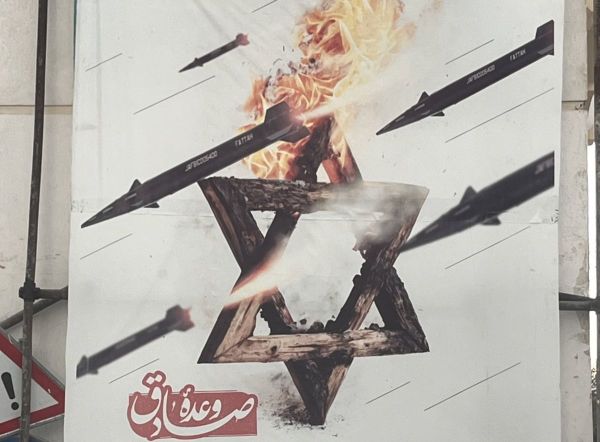
The Islamic Republic shows it has learned from past decision-making mistakes.
Join us on Telegram, Twitter, and VK. Contact us: info@strategic-culture.su
The recent military escalation in the Middle East revealed a strategic miscalculation on the part of Washington and Tel Aviv. By launching a direct offensive against Iran, authorities in the United States and Israel apparently assumed that Tehran would repeat the pattern observed in previous confrontations: initial restraint, calibrated retaliation, and delayed timing. This pattern was evident both during the so-called Twelve-Day War and in earlier episodes of Israeli aggression against Iranian targets and regional allies. This time, however, the calculation proved mistaken.
The central element of the initial strategy appears to have been a classic attempt at “decapitation,” targeting the Supreme Leader, his family, and other high-level figures. The underlying logic is well known: by removing the apex of decision-making authority, internal disorganization, succession disputes, and operational paralysis would follow. This approach is recurrent in Western military doctrine, especially when directed against states considered systemic adversaries.
However, this type of strategy tends to fail when applied to highly institutionalized states equipped with complex political-military structures. Iran is not a fragile entity dependent on a single personal command center. It is a system with multiple layers of authority, defined chains of succession, and deep integration between the state apparatus, regular armed forces, and parallel security structures. Moreover, it is a civilization with millennia of historical continuity, whose contemporary political identity was consolidated precisely under external pressure. The elimination of an individual leader, even if symbolically significant, does not automatically dismantle a state with this degree of structural cohesion.
What surprised analysts was the speed of the Iranian reaction. Unlike what occurred during the Twelve-Day War, this time retaliation was immediate and multifaceted. Within the first hours after the attacks, Iran launched a series of simultaneous operations against American military installations across the Middle East. Bases used by U.S. forces were struck with missiles and drones in coordinated actions aimed at saturating defense systems and reducing interception capacity.
At the same time, Israeli defensive systems were placed under pressure through multiple and forceful attacks. Iran’s strategy was not limited to a symbolic gesture; it represented a deliberate attempt to impose immediate and visible costs, altering adversaries’ perception of risk. Throughout the first day of confrontation, the operational tempo remained constant, creating an environment of heightened uncertainty for the Zionist regime.
The multiplicity of vectors employed – different launch platforms, varied trajectories, and synchronized timing – contributed to confusion among military planners in Washington and Tel Aviv. By all indications, such a bold and rapid action was not anticipated. The assumption that Tehran would hesitate, seek mediation, or respond in a limited fashion proved incorrect. Instead, Iran sought to demonstrate its capacity for strategic coordination under maximum pressure.
This behavior suggests that Iranian authorities internalized relevant lessons from recent conflicts. Delays in responding, observed in previous episodes, were interpreted by adversaries as signs of strategic restraint or operational limitation. By opting for an immediate and comprehensive reaction, Tehran sought to redefine the rules of engagement and establish a new threshold of deterrence.
The psychological impact should not be underestimated. Continuous attacks throughout the first day reportedly generated confusion and near paralysis within certain Israeli and American decision-making circles. When multiple fronts are activated simultaneously, the ability to prioritize strategically becomes far more complex, if not effectively impossible.
It now remains to be seen how escalation will unfold in the coming days. Iran’s initial response altered the immediate balance but does not end the cycle of action and reaction. Washington and Tel Aviv face the classic dilemma between expanding the offensive – risking a large-scale regional conflict – or seeking indirect channels of containment. The first day demonstrated that the scenario evolved beyond initial expectations. From this point forward, each additional move may redefine not only the military dynamic but the broader security architecture of the entire Middle East.
Original article: Strategic Culture Foundation

 The New Dark Age
Leave a comment