Wednesday, 4 March 2026 — Liberation News Network
The lessons that Lenin started to teach us in 1916 can guide our understanding of the latest market crash
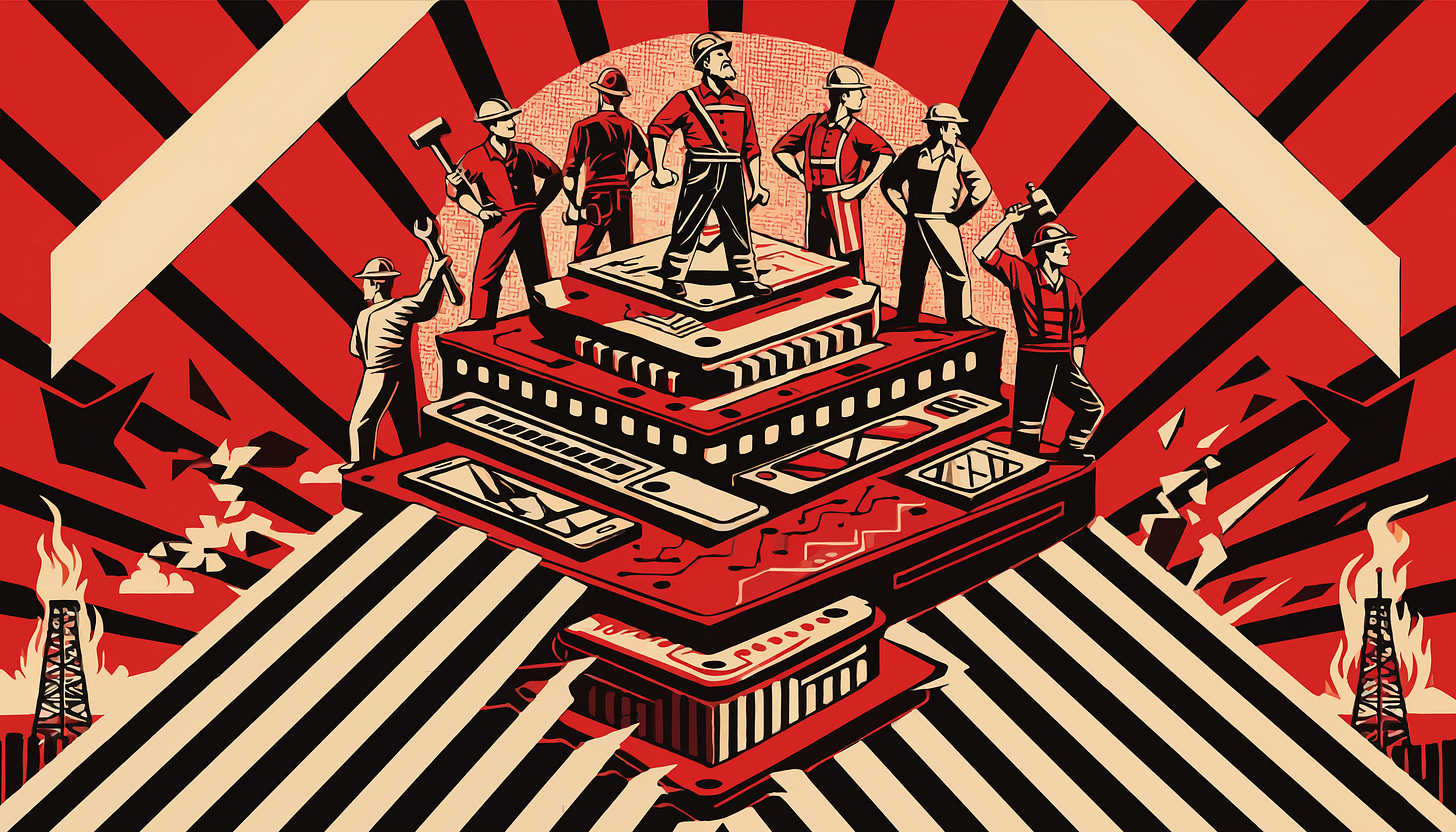
The financial press has a thesaurus of euphemisms for systemic failure. “Market volatility.” “Geopolitical risk.” “Risk-off sentiment.”
What they won’t print: Imperialism is eating itself alive, and Asian workers are paying for the meal.
Over the past 48 hours, South Korea’s KOSPI index collapsed 17%. Japan’s Nikkei shed 4.5%. Seven billion dollars in foreign capital fled Seoul as foreign investors acted like rats fleeing from a sinking ship. The proximate cause—a US-Israeli bombing campaign against Iran, now entering its fifth day, that has shuttered the Strait of Hormuz and sent crude oil prices surging toward $100 per barrel.
But to stop at this “geopolitical” analysis is to miss the structural issues here. This is not an aberration. This is the normal functioning of monopoly capitalism in its imperialist stage and represents a continuation of a century long crisis.
The Leninist Framework:
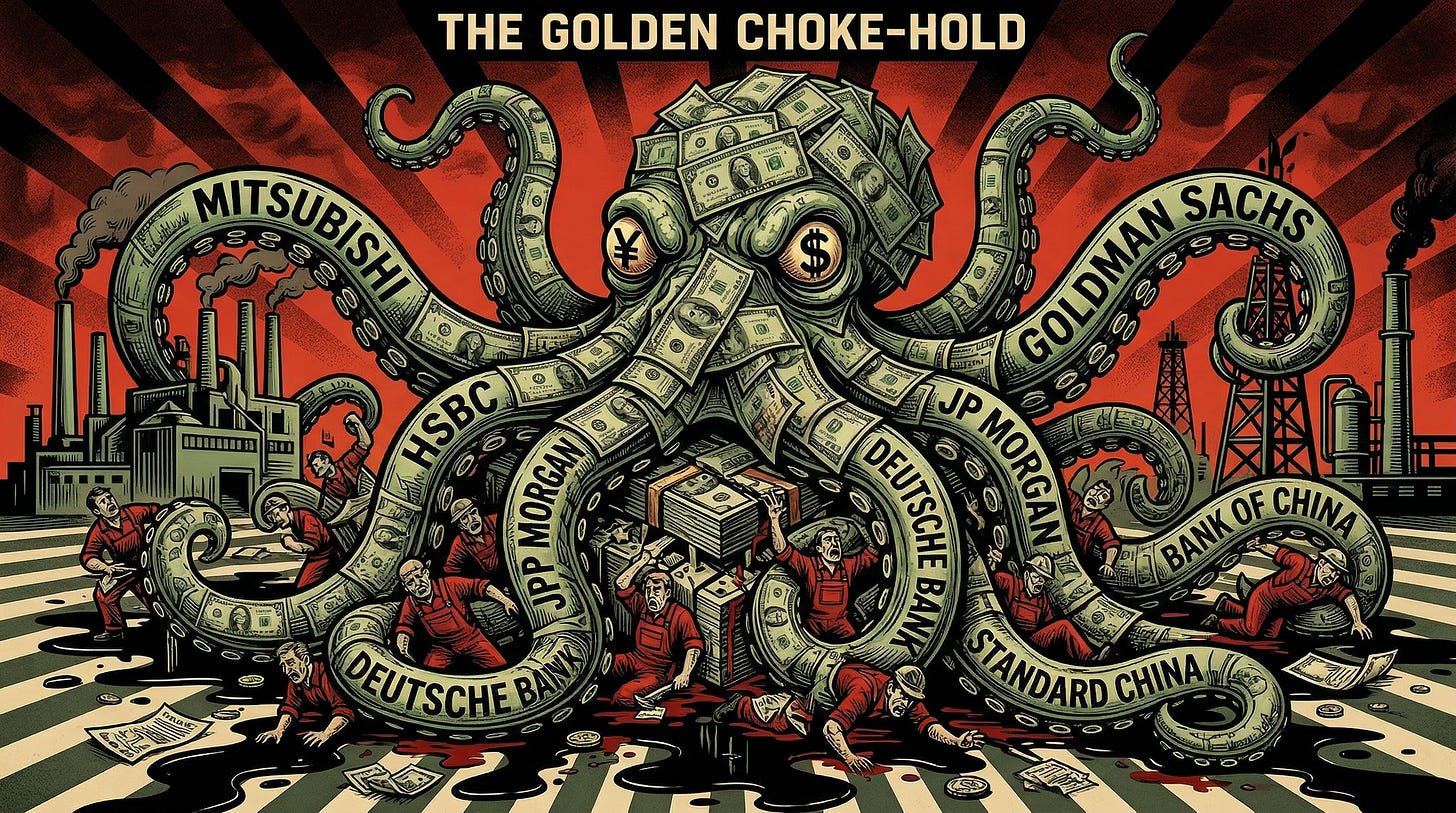
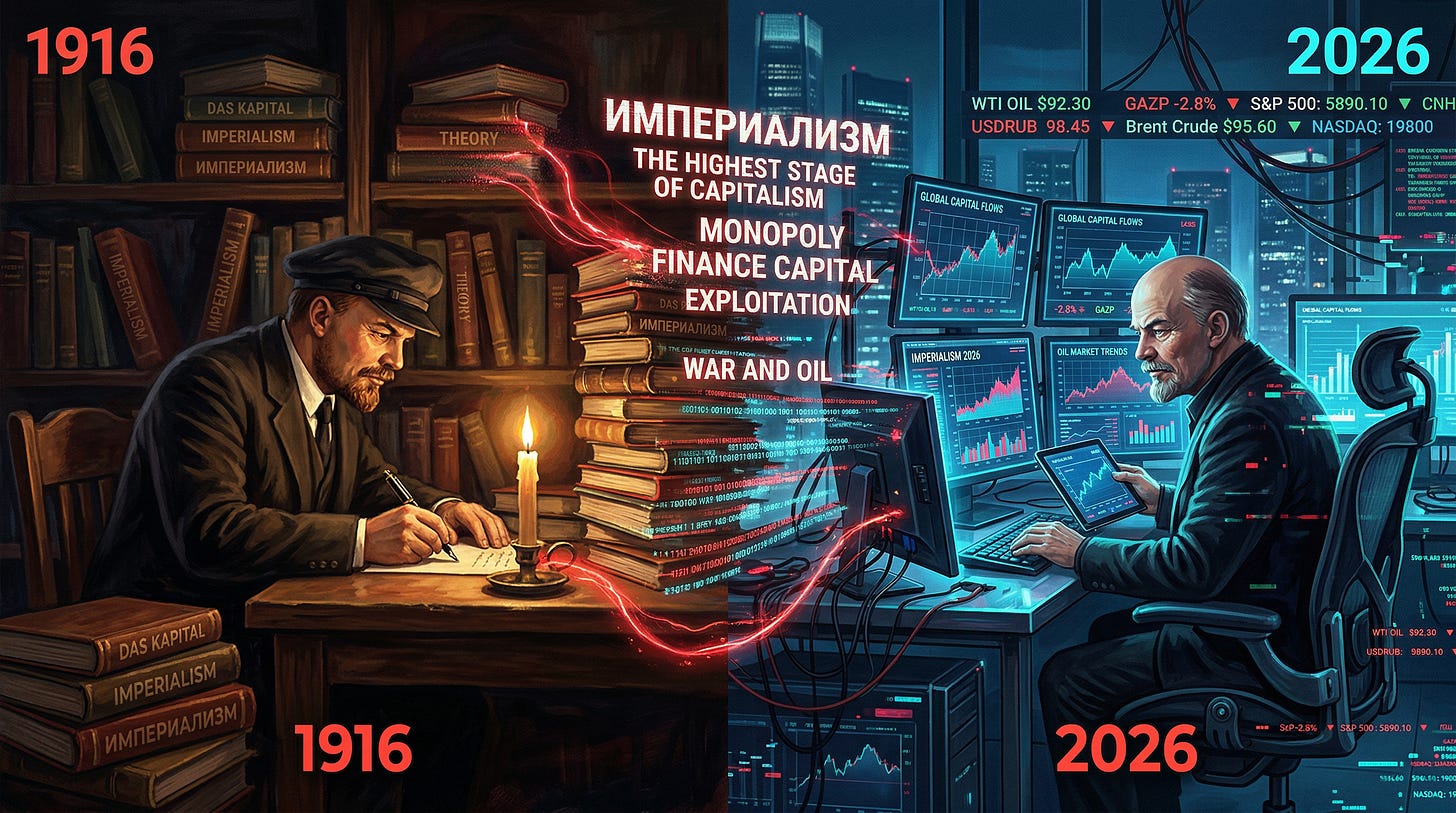
In 1916, from exile in Switzerland, Lenin wrote Imperialism, the Highest Stage of Capitalism while the world’s empires slaughtered millions over colonial spoils. His analysis was surgical: imperialism isn’t a policy choice but the necessary evolution of capitalism once competition gives way to monopoly, once industrial capital merges with banking capital to create finance capital and once the export of capital supersedes the export of goods.
Consider the five features Lenin identified in his seminal work. Four of these are visible in this week’s Asian market chaos:
1. The Concentration of Production into Monopolies
Samsung Electronics and SK Hynix together control roughly 70% of the global DRAM (Dynamic Random Access Memory) market and 50% of NAND flash. When they fall—Samsung down 5%, SK Hynix down 7% in this selloff—they don’t merely decline; they create a gravitational collapse. The “diversification” promised by free-market ideologues reveals itself as fictitious. Concentration creates systemic fragility.
2. The Merging of Bank Capital with Industrial Capital
Japan’s “Big Three” banks—Mitsubishi UFJ, Mizuho, Sumitomo Mitsui—fell 5-7% not because they made bad loans, but because these banks are the Japanese economy. Finance capital isn’t external to production; it has absorbed it. As Lenin noted: “The bank is transformed from a modest intermediary into a powerful monopolist.”
3. The Export of Capital
The $7 billion in foreign outflows from South Korea in 48 hours represents not “investment” but extraction. Imperial capital flows into peripheral economies when profit rates are high, then flees at the first tremor—leaving devaluation, unemployment, and sovereign debt in its wake. This is neo-colonialism mechanized through Bloomberg terminals. It also reminds us yet again of South Koreas status as a neo-colony of US imperialism.
4. The Territorial Division of the World
The Strait of Hormuz isn’t merely a shipping lane; it is a chokepoint in imperialism’s circulatory system. Twenty percent of global oil consumption passes through waters now closed by Iran in response to US aggression. Lenin stated: “The monopolies have accelerated the seizure of the most important sources of raw materials.” When imperial powers bomb Iran, they aren’t pursuing “democracy” or “security”—they are enforcing the territorial division of petroleum reserves as well as trying to secure strategic gains against Russia and China.
What They Won’t Say:
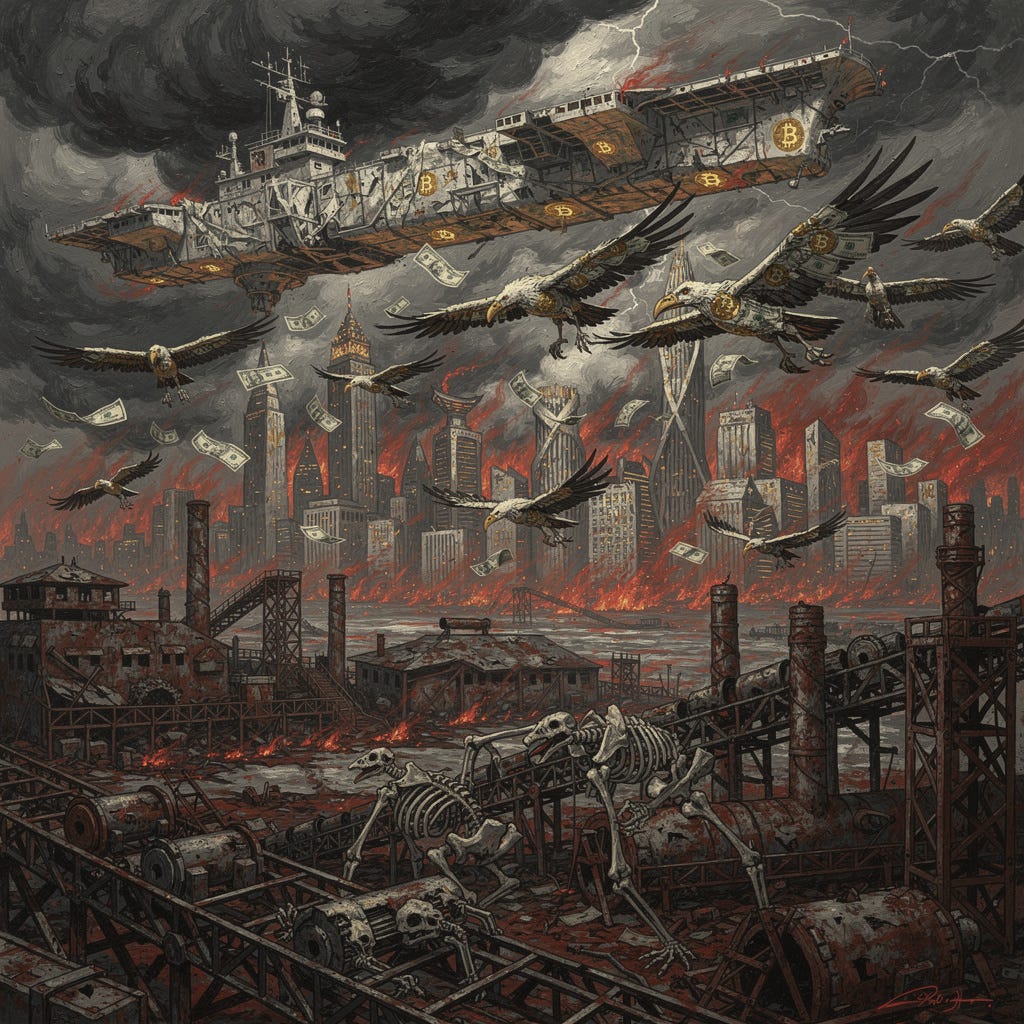
The financial press notes that “foreign investors pulled over $7 billion” as if this were a change of the season beyond all human control—as if capital were a natural force rather than a social relation. They diagnose “position unwinding” and “momentum trades” while ignoring the imperialist warmongering making such “unwinding” necessary.
Workers in Seoul, in Tokyo, in Mumbai, in Jakarta did not vote for US airstrikes. They did not choose to have their pension funds collateralised. Yet they bear the cost—through currency devaluation, through job losses, through the inflation that will follow oil’s surge in price.
This is imperialism’s tax. It is levied without representation. It is collected at the barrel of a gun and the tick of a stock feed.
The Conclusion:
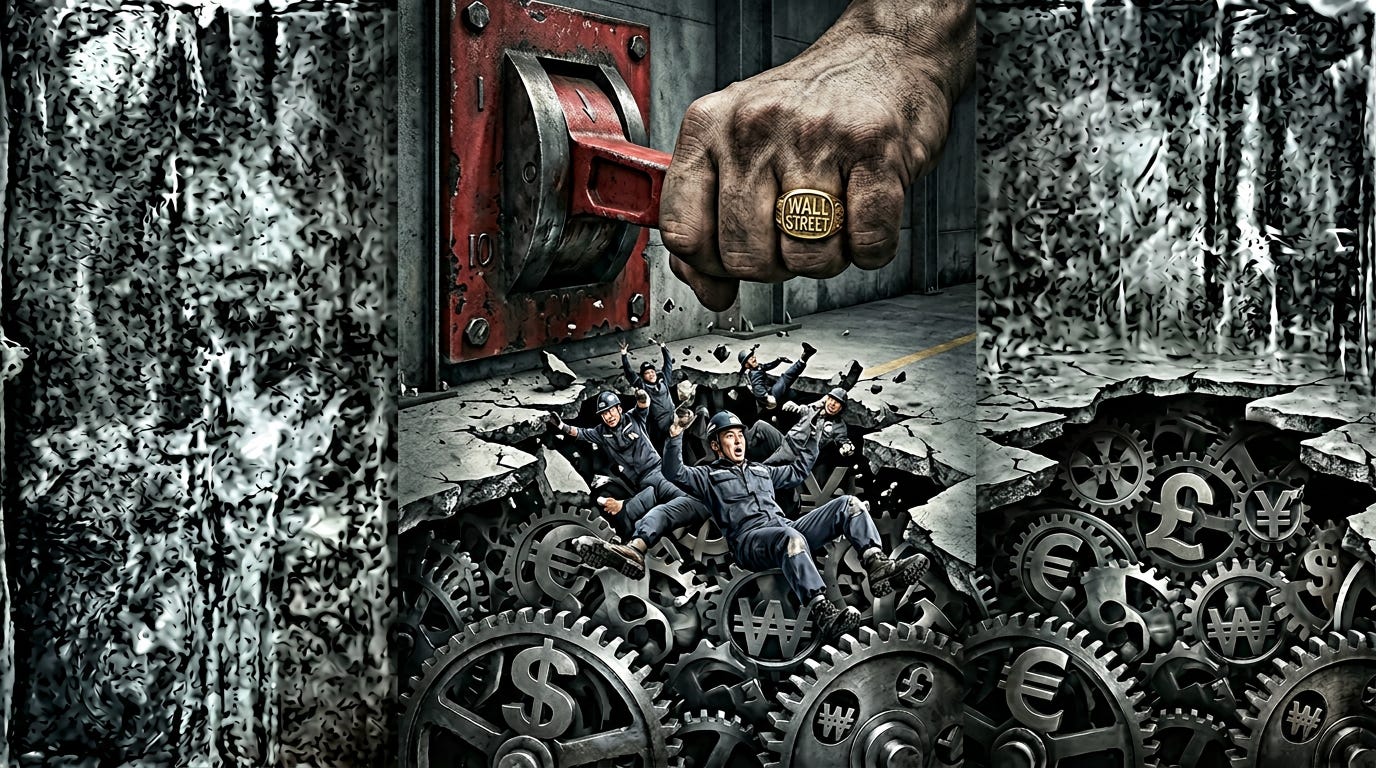
The crisis will deepen. The Federal Reserve—capital’s global central committee—now faces an impossible trilemma: support markets, fight inflation, maintain the dollar’s imperial role. It cannot do all three. Something will break, and when it breaks, it will break on the backs of workers.
Lenin’s analysis was not prophecy. It was anatomy. The body of global capitalism still moves according to the nervous system he mapped over a century ago.
“Imperialism is the eve of the social revolution of the proletariat.”
The eve has lasted a century. Dawn is not automatic. It must be fought for and won by the proletariat of all nations today.
✊ In solidarity with workers of Asia and the world.

 The New Dark Age
Leave a comment