Tuesday ,10 March 2026 — Struggle / La Lucha
Eleven days into Operation Epic Fury, Washington faces a problem it created for itself: how to exit a war it cannot win.
Trump’s advisers are privately urging him to find an off-ramp. The Wall Street Journal reported March 9 that officials close to the president are urging him to declare success and begin a controlled withdrawal before the economic and political costs rise further.
Trump’s job approval now stands at minus 10 points, according to a new poll by The Hill — and that survey was conducted before the full weight of energy price increases had registered with voters.
Iran’s Foreign Minister Abbas Araghchi said March 10 that his country was prepared to continue fighting as long as necessary. Negotiations with Washington, he said, were no longer on the agenda.
There is the problem, in plain language. The administration that launched this war needs an exit. The country it attacked is not providing one.
The regime-change war that didn’t change the regime
Trump framed the war as a chance to overthrow Iran’s government from the beginning. In an address broadcast shortly after the Feb. 28 strikes, he urged protesters to seize power, telling them that “the hour of freedom is at hand” and that once the bombing was finished, they should take control of the state.
The protesters he meant included monarchist opposition figures such as Reza Pahlavi, the son of Iran’s last shah, who had been calling for the fall of the Islamic Republic and seeking Western backing.
Trump repeated the point days later. In a March 5 interview with Axios, he declared that Mojtaba Khamenei — the late supreme leader’s son — was “unacceptable” as a successor and said he should be personally involved in choosing Iran’s next leader.
The war’s opening move pointed in the same direction. The CIA had spent months tracking Supreme Leader Ali Khamenei before the strike that assassinated him Feb. 28, along with several other senior officials.
Iran’s Assembly of Experts named Mojtaba Khamenei anyway, amending the constitution to permit his appointment.
The exit ramp requires Trump to declare victory. The regime-change war did not change the regime. Those two facts are not reconcilable.
A fractured command
The clearest sign of strategic incoherence is not what Trump says in public — it is the visible friction within the U.S. state apparatus.
On March 6, only hours after Trump told reporters the campaign would end “soon,” a Pentagon-run social media account posted a chilling graphic of a missile launch under the words “No Mercy,” with the caption: “We Have Only Just Begun to Fight.”
This wasn’t a simple communication breakdown. It reflects a tactical split inside Washington. While the president is searching for a political off-ramp to stabilize the domestic economy and contain the oil shock, Pentagon messaging points in the opposite direction, signaling that the campaign could expand. For them, the assassination of Iran’s leadership was not a “surgical strike” to force a deal, but the opening salvo of a long-term regional war to reassert U.S. imperialism by force.
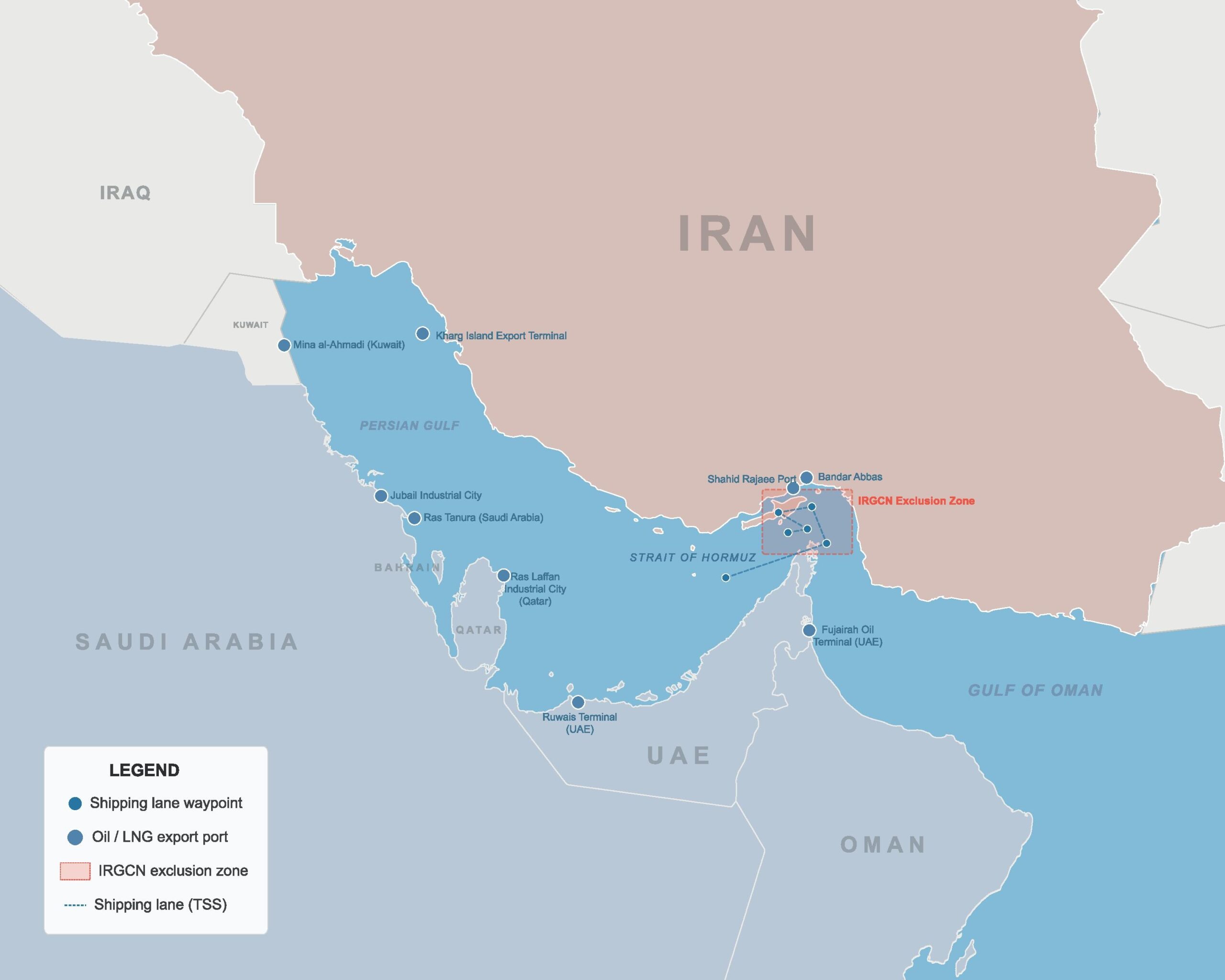
The split emerged after the opening plan failed. Washington’s strategy was a decapitation strike: assassinate Iran’s leadership, cripple its missile forces, keep the Strait of Hormuz open and force a rapid political collapse. That did not happen. Iran continued striking U.S. bases across West Asia. Shipping through the Strait was disrupted almost immediately. Oil briefly surged toward $120 a barrel.
Only then did Trump begin publicly insisting the war would end “very soon” or was already “very complete.” The statements helped calm markets and signal that the conflict would not become a prolonged disruption of global oil flows. Pentagon messaging pointed in the opposite direction, emphasizing that operations were continuing and that further strikes remained possible.
That contradiction reflects the new reality inside Washington. The war itself was not the point of dispute. The argument began only after the plan for a rapid victory failed. Trump is now trying to restore confidence that the Strait can reopen and the oil shock will ease. The Pentagon’s public line points the other way: The war is still active, and escalation remains on the table.
The call to Moscow
On March 9, Trump called Vladimir Putin to discuss the Iran war. The call was initiated by Washington.
The Kremlin’s readout said Putin presented proposals for a “quick political and diplomatic settlement,” aimed at preventing the war from spreading and lifting sanctions on Iran.
That Washington is now consulting Moscow for a diplomatic exit is itself a measure of how the war has gone. Washington launched this campaign with the expectation that overwhelming military force would quickly suppress Iran’s missile capabilities and prevent Iran from shutting the Strait of Hormuz. Iran has struck more than 27 bases across West Asia where U.S. troops are deployed. U.S. bases in the region have taken sustained, serious hits. The U.S. Embassy in Saudi Arabia has been abandoned.
The administration told the public Iran was running out of missiles. Iran’s IRGC aerospace commander announced March 9 that from this point forward the IRGC would launch missiles only with warheads exceeding one ton — and that the frequency, scale and scope of strikes would also increase.
Iran has also shifted its targeting emphasis, a senior Iranian official told Drop Site News, reducing strikes on most U.S. bases in Arab countries while expanding operations against Israel. The official said Iran’s military leadership regards the first phase of its campaign — degrading U.S. radar systems and depleting interceptor stockpiles — as largely complete.
The Oman deception
Iran’s refusal to negotiate does not exist in a vacuum. It is a direct response to a calculated act of deception.
On Feb. 27 — the day before strikes began — Oman mediators announced a diplomatic breakthrough. U.S. and Iranian officials, it was reported, had reached a tentative agreement. The following morning, U.S. and Israeli aircraft launched nearly 900 strikes in the first 12 hours of Operation Epic Fury.
Tehran has not forgotten the sequence. The “breakthrough” was announced while strikes were already being loaded. Iran concluded that Washington negotiated in bad faith, used the diplomatic process as cover, and launched a war it had already decided to fight. Araghchi’s March 10 declaration that negotiations are no longer on the agenda is a recognition that under U.S. imperialism, treaties are merely tactical pauses in a permanent war of aggression.
Oil and the political clock
Before the strikes, Brent was trading at about $73.
Oil markets panicked in the first days of the war. Brent crude surged as high as $120 a barrel before retreating after Trump claimed the fighting would end “very soon.” By March 10, Brent had fallen back to about $90 a barrel.
There’s still a $17 increase. It is the war premium. It is already embedded in fuel, freight, food and fertilizer costs workers across the United States and around the world are absorbing right now. Diesel has risen 22% since the campaign began. Shipping costs from Asia to Europe have jumped roughly 45%.
Workers filling their gas tanks will not experience $90 oil as a diplomatic achievement. They will experience it as a price increase with no end in sight. Kuwait has said it may halt oil production within days because export routes through the Gulf are disrupted and storage tanks are filling.
Oil facilities shut down under wartime conditions do not restart quickly. The longer they stay offline, the longer the restart takes. Higher oil prices spread the cost of the war through the entire economy.
The exit that isn’t there
The Wall Street Journal’s account of internal deliberations captures the trap precisely. Some Trump administration officials said that as long as Iran continued attacking U.S. bases and regional targets, the United States could not easily withdraw. Trump himself said he was prepared to keep targeting Iran if the country continued blocking the Strait of Hormuz.
Iran has said clearly it will keep blocking the Strait until attacks stop. The attacks cannot stop until Iran stops blocking the Strait. Washington launched this war with a plan for how it would end. Eleven days later, that plan is not working.
Inside the administration, the argument is now over how to proceed. Pentagon officials and senators who backed the war are pressing for escalation. Trump has political interests in ending it. Iran has no incentive to help either side.
Washington launched a regime-change war. Eleven days later, Iran has a new supreme leader and its missile forces are escalating in tonnage and frequency. The strategy that was supposed to deliver a quick victory has produced the opposite: a war that Washington cannot easily end.
The war was Washington’s choice. Iran has set the terms for ending it.
Join the Struggle-La Lucha Telegram channel


 The New Dark Age
Leave a comment