Tuesday, 17 March 2026 — BestBeat Media
The Great Reset Was Just Detonated in Tehran.
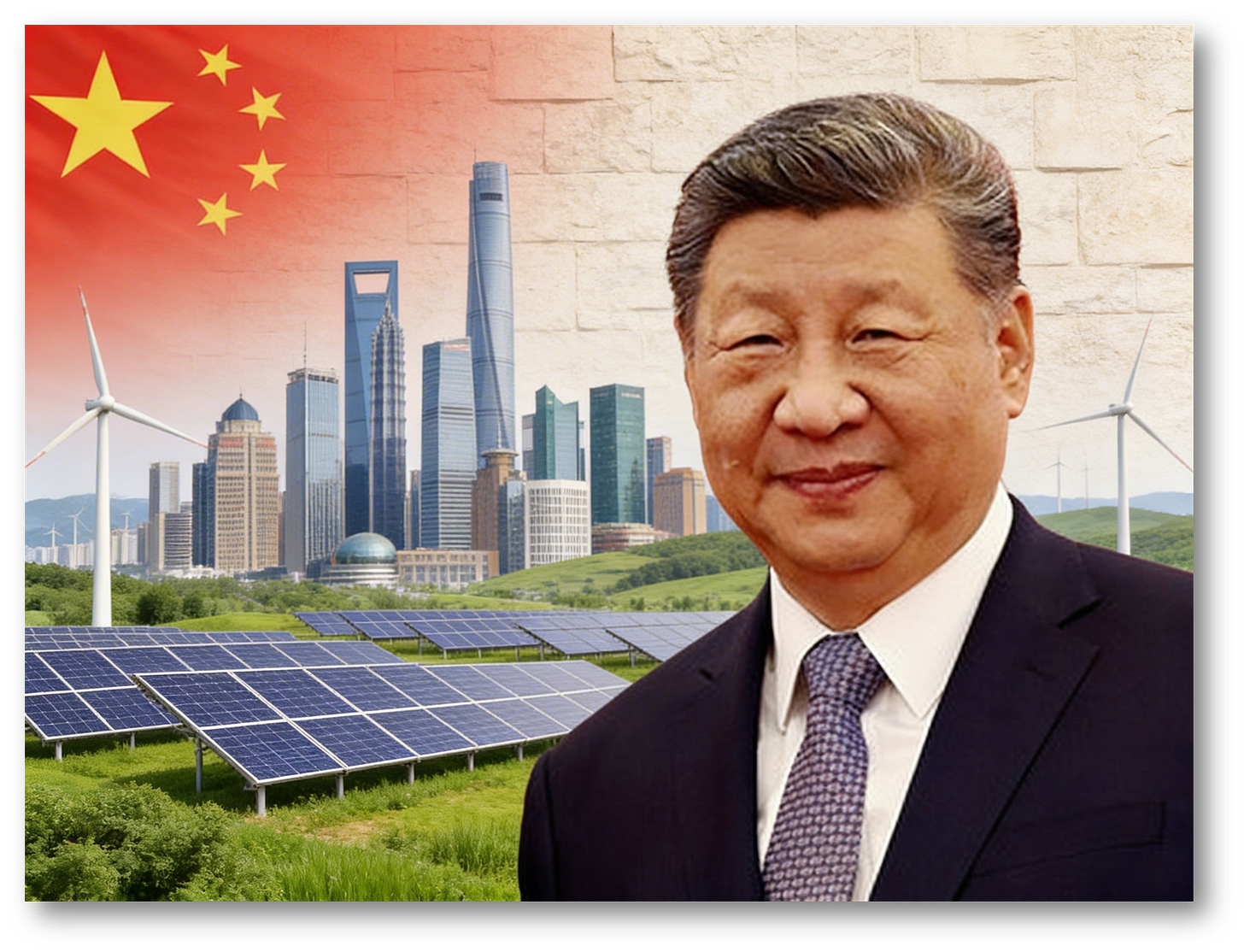
The architects of Empire always believe they are exempt from consequence. They launch wars the way they launch business ventures — with bombast, with the confidence of men who have never been held accountable for anything, and with the unshakable conviction that the world will bend to their schedule. They are always wrong. And the rubble they leave behind always becomes the foundation of the world that replaces them.
On February 28, the United States and Israel launched strikes on Iran. They called it Operation Epic Fury — a name so cartoonishly American it could have been generated by the same algorithmic machinery that produces AI superhero videos and drone kill lists. The American-Israeli strike killed Khamenei, along with a still-unknown number of officials and civilians, and tore through military installations across the country. What the planners envisioned was a decapitation — swift, surgical, conclusive. What they got was a Pandora’s box ripped open at the hinges.
The name itself — Epic Fury — deserves scrutiny. Type “Trump” and “EP” into a search engine now and the operation floods the results. One cannot help but wonder whether the nomenclature was designed not merely as military branding but as search engine optimization — a digital burial of the Epstein association that continues to shadow this administration like an unpaid debt. Whether by design or coincidence, the men who launched this war carry with them the moral credibility of a predator class that has never been held to account. That they now preside over the destruction of a sovereign nation during the holy month of Ramadan is not irony. It is consistency.
The Hollow Arsenal
The Pentagon and National Security Council significantly underestimated Iran’s willingness to close the Strait of Hormuz in response to US military strikes. Trump’s national security team failed to fully account for the potential consequences of what some officials have described as a worst-case scenario. Seven previous American presidents — seven — resisted the pressure to go to war with Iran. Each understood, at some molecular level, what the current occupant of the Oval Office does not: that Iran is not Iraq. It is not Libya. It is not one of the small nations America the Bully is accustomed to devouring between news cycles.
Iran has retaliated by firing missiles and drones toward Israel and countries around West Asia, and putting a virtual chokehold on the Strait of Hormuz. And here we arrive at the first great revelation of this war — the American arsenal, so fearsome on paper, so breathtaking in Pentagon briefings, is running out of things to throw.
The United States began shifting elements of its THAAD system from South Korea to West Asia — robbing one theater to feed another. Read that sentence again. The empire is cannibalizing its own defenses, stripping missile systems from the Korean Peninsula to replace what Iranian counterattacks have already destroyed.
The UAE — the Epstein class’ little Arab Ulster — has been Iran’s main target, and deservedly so. Dozens of missiles and hundreds of drones have struck Al Dhafra Air Base, home to US Air Force and Army assets. Satellite imagery shows compounds flattened, radar systems gutted, satellite equipment wrecked. In Jordan, a single Iranian missile strike destroyed a THAAD radar outright. And the weapon doing much of this work? A drone that costs twenty thousand dollars — against a defense battery worth a billion. That is not warfare. That is playing chess against a boxer.
The American military was built for spectacle, not endurance. It was designed to overwhelm an adversary in a concentrated burst of violence — an “epic fury,” if you will — claim victory before the smoke cleared, and then spend years replenishing its stockpiles before the next escapade. It is a system engineered for short wars against defenseless nations. When the opponent fights back — genuinely fights back — the entire apparatus begins to buckle under the weight of its own mythology.
“What we are witnessing is the chaotic, catastrophic acceleration of the global transition away from fossil fuel dependency — not because governments chose it, not because activists won the argument, but because the American empire made the dependency too dangerous to maintain”
The Umbrella That Was Always a Mirage
Consider what this war has revealed to every American ally watching from the sidelines. The United States cannot protect its own bases. It cannot keep the Strait of Hormuz open. It cannot supply its allies with missile interceptors because it is hoarding them for what one might call daddy’s golden boy — Israel. And now it is begging the very nations it has spent years bullying to send their warships to clean up the mess.
“This is not our war, we have not started it,” German Defense Minister Boris Pistorius told reporters. Australia, Japan, Poland, Sweden and Spain indicated that also they had no intentions of sending military aid. To date, no country has confirmed its involvement.
But these are the statements of colonizers — and colonizers have never needed an invitation to bomb brown people. They only need a pretext and a meek population that isn’t looking. The United Kingdom, which also officially refused, has already been caught by independent observers launching bombers from its airfields. The refusal is for the record. The bombers are for the war.
The so-called security umbrella — that invisible architecture of American bases, carrier groups, and defense agreements that has kept the Gulf monarchies pedocracies compliant and East Asian nations obedient for decades — has been exposed as a Potemkin structure. South Korean President Lee Jae-myung said, “We oppose the withdrawal of some US air defense weapons used for our country’s military needs, but it is also a harsh reality that we cannot completely impose our opinion.” This is the language of a vassal state discovering, in real time, that its lord is a paper tiger.
If you are sitting in Seoul, in Tokyo, in Manila, in Taipei, and watching American missile defense systems being dismantled and shipped to West Asia to replace the ones Iran destroyed with cheap drones — what conclusion do you draw? You draw the only conclusion available: the Americans cannot protect you. They never could. They can only protect their priorities, and you are not among them.
The Oil Shock That Changes Everything
The numbers tell the story the Pentagon won’t. Gulf oil exports have collapsed by more than sixty percent. Crude hovers at the edge of a hundred dollars a barrel — West Texas Intermediate at ninety-nine, Brent at a hundred and five — prices that would have been unthinkable six weeks ago and are now the new floor. At the pump, Americans are paying seventy-four cents more per gallon than they were before the first missile left its launcher. The monthly surge — nearly twenty-seven percent — is the sharpest since Hurricane Katrina drowned New Orleans and the competence of the federal government along with it.
This is the man who promised two-dollar gasoline. This is the administration that pointed to low gas prices as proof of its economic genius at the State of the Union address just weeks ago.
But the oil price is only the first domino. A near-total halt of tanker traffic in the Strait of Hormuz has disrupted the supply of fuel and essential fertilizers, threatening global food security. Nearly 50% of global urea and sulfur exports, as well as 20% of global LNG, transit through the Strait of Hormuz. Without sulfur, you cannot produce sulfuric acid. Without sulfuric acid, you cannot process copper. Without copper, you cannot expand electrical grids. Without expanded grids, the artificial intelligence data centers that are supposed to be the engine of the next American economic boom become cost-prohibitive luxuries consuming electricity that households and factories need to survive. The cascade is already in motion. It does not require the Strait to remain closed for months. The path dependency, as the economists say, is already baked in.
The Great Reset Nobody Predicted
There is a phrase that circulates in conspiratorial corners of the internet — “The Great Reset.” It is usually invoked to describe a shadowy plot by global elites to restructure the world economy in their image. They were right about the reset. They were wrong about everything else.
The Great Reset is happening right now, in real time, and its architect is not Klaus Schwab. It is Donald Trump.
What we are witnessing is the chaotic, catastrophic acceleration of the global transition away from fossil fuel dependency — not because governments chose it, not because activists won the argument, but because the American empire made the dependency too dangerous to maintain.
Higher oil prices incentivize companies and countries to invest more heavily in alternatives to oil, like solar power, which become more economically competitive when oil becomes more expensive and which offer protection against the volatility of fossil fuel markets.
Every nation watching its economy hemorrhage because one country decided to bomb another country near the world’s most important oil chokepoint is doing the same calculation simultaneously: We cannot be this dependent on a system we do not control, guarded by a power we cannot trust, flowing through a strait that can be closed by a war we were never consulted about.
And there is exactly one country in the world positioned to provide the alternative.
“This is the Great Reset. It was not planned in Davos. It was detonated in Tehran”
The Age of China
For fifteen years, Western analysts mocked China’s investment in electric vehicles as wasteful overcapacity. They sneered at its high-speed rail network as vanity infrastructure. They wrote report after report about China’s “excessive” investment in solar panels, batteries, and electrification.
China’s clean energy industries drove more than 90 per cent of the country’s investment growth last year, making the sectors bigger than all but seven of the world’s economies. The manufacture, installation and export of batteries, electric cars, solar, wind and related technologies accounted for more than a third of China’s economic growth.
While Washington pours its treasure into missile batteries that cannot outthink a twenty-thousand-dollar drone, Beijing has been fighting an entirely different war — and winning it without firing a shot. Chinese electric vehicles now roll through the streets of more than a hundred and fifty countries. The export revenue alone approached seventy billion dollars last year. In batteries and electric vehicles alike, China commands roughly seventy percent of the global supply chain — not a market share but a monopoly by another name.
Think about what this means in the context of the current crisis. More than half of every new car sold in China last year ran on a battery. That is a big reason that the country’s oil consumption is on track to peak in 2027. China is not merely weathering this storm. It positioned itself for this storm fifteen years ago. Every solar panel it manufactured while Washington sneered, every battery gigafactory it built while American think tanks wrote op-eds about wasteful spending, every electric bus and high-speed rail line it deployed while the American transportation system remained chained to petroleum — all of it was preparation for precisely this moment.
The Chinese economy will be affected by the closure of the Strait of Hormuz, of course. Everyone will be. But China reached peak diesel in 2024. Its energy system is far more diversified and electrified than it was even five years ago. Its largest energy supplier is Russia — right next door, connected by pipeline, immune to naval blockades — or “Ukrainian saboteurs” in a rented yacht. The country that Western strategists were certain would be devastated by an energy war is, in fact, the country best equipped to survive one.
Now imagine you are the leader of a Global South nation — in Southeast Asia, in Africa, in Latin America. Your economy is bleeding from oil prices you had no hand in creating, caused by a war you were never consulted about, waged by countries that claim to represent the “rules-based international order.” You have two options: continue your dependency on a fossil fuel system controlled by an empire that just demonstrated it will blow up the global economy to settle a regional score, or beat a path to Chinese manufacturers and start ordering solar panels, batteries, and electric vehicles as fast as they can ship them.
This is not a theoretical choice. It is the choice being made right now, in ministries and boardrooms across the world. And the world is choosing. The fastest growth in Chinese electric vehicle exports is not happening in Europe or North America — it is happening in the countries the West once called the “developing world” and then forgot about.
Across Southeast Asia, Chinese exports surged by seventy-five percent in the first eight months of last year, with Indonesia leading the stampede. In Thailand — a market Tokyo once considered a birthright — Chinese automakers have clawed their way from negligible presence to nearly a fifth of all passenger car sales in just four years. The Japanese, who built their postwar miracle on the automobile, are watching their empire of the assembly line dismantled by the same force that dismantled Detroit’s.
Cuba, under an American oil embargo, has already shown the way. China supplied the island with massive quantities of solar panels, enabling it to generate its own energy. That is not charity. That is the future — distributed, renewable, independent of the chokepoints and carrier groups and sanctions regimes that have been the instruments of American control for seventy years.
The Security Architecture Crumbles
The consequences extend far beyond energy. The entire American alliance system in both West Asia and East Asia rests on two premises: that the United States provides a security umbrella worth huddling under, and that the economic architecture it maintains — the petrodollar, the SWIFT system, the trade routes — is worth the price of submission.
Both premises have now been shattered in seventeen days.
Senate Minority Leader Schumer discussed the war in Iran, saying that Trump is “flailing” when it comes to strategy. “Donald Trump created a mess in the Middle East, and he clearly has no plan for how to end it.”
The Gulf monarchies must be calculating their exit. They depend on selling oil and gas — and that requires the Strait of Hormuz to be open. They depend on food imports — and those imports are now threatened. They depend on American protection — and that protection just proved to be a fiction. The hundreds of billions of dollars they were supposed to funnel into the American AI bubble, the sovereign wealth fund investments in Silicon Valley, the arms purchases that recycled petrodollars back into the American defense industry — all of that is now under review, redirected toward rebuilding their own shattered infrastructure.
In East Asia, the lesson is even starker. South Korea and Japan depend on Gulf oil imports for 80 to 90 percent of their energy needs. They built their entire economic miracles on the assumption that this supply line would remain open and protected. The Americans have just shown them that when push comes to shove, Israel comes first. East Asia is lower on the food chain. You are expendable.
The quiet conversations are already happening. In the corridors of power in Seoul, Tokyo, Manila, and yes, Taipei, the question that was once unspeakable is now unavoidable: can we afford the Americans to be here much longer? And the follow-up question, whispered even more quietly: what do we do when we ask them to leave?
The Ironic Architects of Their Own Demise
There is a particular cruelty in the way history operates. The men who launched this war — the Epstein-adjacent class of oligarchs and ideologues who constitute the real power structure of the American state — believed they were securing American dominance for another generation. They believed a quick strike would neutralize Iran, demonstrate American resolve, cow the Chinese, discipline the Global South, and establish once and for all that the rules-based international order means American rules, enforced by American bombs.
Instead, they have accomplished what decades of Chinese diplomacy, Russian energy strategy, and Global South organizing could not: they have made the American-led global system so obviously dangerous, so clearly unreliable, and so spectacularly incompetent that the rest of the world has no choice but to build an alternative.
The petrodollar is dying not because of some coordinated BRICS conspiracy, but because the country that created it just demonstrated that it will burn down the global oil market to protect a single client state. The American security umbrella is collapsing not because of Chinese military buildup, but because America just raided its own defenses in East Asia to plug holes in a West Asian war it cannot win. The clean energy transition is accelerating not because Greta Thunberg gave a speech, but because Donald Trump made fossil fuel dependency an existential risk for every nation on earth.
Energy Secretary Chris Wright said, “To win in life, you’ve got to suffer short-term pain for the long-term gain.” He added, “I think the American people will be thrilled with a peaceful world on the other side.” There will be no peaceful world on the other side. There will be a different world — one in which Chinese solar panels power African villages, Chinese batteries store energy for Southeast Asian factories, Chinese electric vehicles fill the roads of Latin America, and Chinese infrastructure connects the Eurasian landmass from Hong Kong to St. Petersburg.
This is the Great Reset. It was not planned in Davos. It was detonated in Tehran.
And when it is over — when the Strait reopens, when the rubble is cleared, when Trump inevitably declares total victory and demands a Nobel Peace Prize — the world will nod politely. It will say nothing. And it will continue, quietly and irreversibly, building a future in which America’s opinion no longer matters.
– Karim

 The New Dark Age
Leave a comment