Wednesday, 18 March 2026 — The Cradle
As war pressure on Iran reverberates across West Asia, Iraq is re‑emerging as a central arena where armed factions seek to impose new costs on US presence and reshape the regional balance.
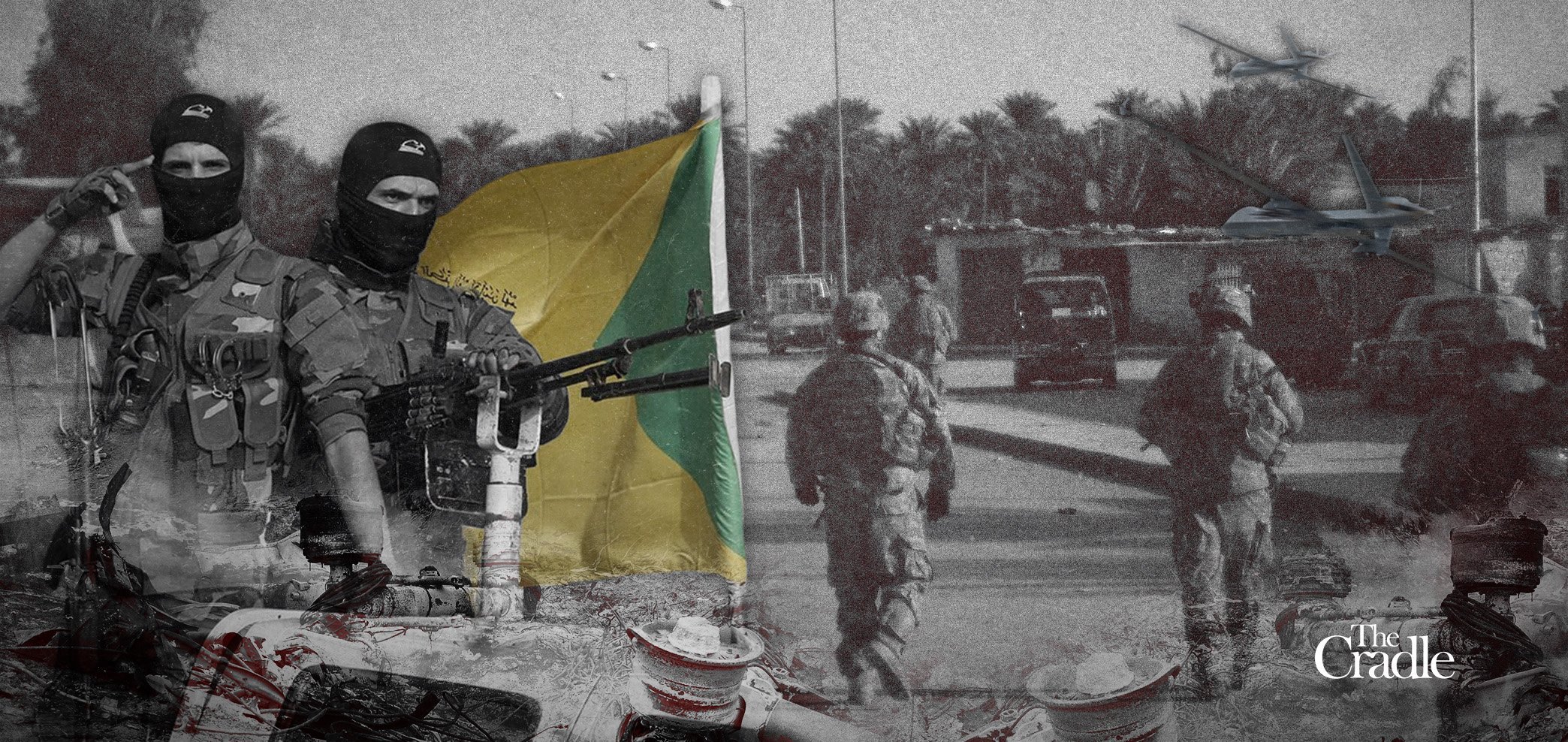 Photo Credit: The Cradle
Iraq’s security environment has entered a markedly more volatile phase since the outbreak of the US-Israeli war on Iran in late February 2026. Armed factions operating under the banner of the Islamic Resistance in Iraq have intensified attacks on installations linked to US military deployment and logistical infrastructure across several provinces.
The recent escalation points to an effort to link domestic confrontation with wider regional war calculations, while also projecting Iraq as a front capable of exerting pressure on the trajectory of the conflict rather than merely absorbing its consequences.
Local reporting and faction-aligned statements describe successive waves of drone and rocket strikes targeting bases hosting US personnel. The tempo of these operations has reportedly risen beyond patterns observed in earlier years of intermittent confrontation, when attacks were more limited in scope and largely confined to specific theaters.
In recent weeks, the attacks have edged closer to the heart of the Iraqi state. Drone incidents and attempted strikes have reached sites in Baghdad tied to US logistics and diplomatic security activity – locations that were once treated as politically sensitive red lines.
The shift in targeting suggests a willingness by resistance factions to test the limits of US protection measures while sending a message that no part of the American presence in Iraq is beyond reach.
Resistance factions have announced the downing of a number of US military drones during the recent escalation, including aircraft described as playing a central surveillance role in American operations across Iraq and the wider region.
These incidents have been framed by resistance media as evidence of a shift in the balance of engagement, with attacks moving beyond harassment toward attempts to disrupt aerial monitoring and operational freedom.
The targeting pattern reflects an effort to sustain pressure on US deployments while signaling that the Iraqi front is now tied to the broader regional confrontation unfolding across Lebanon, Syria, and the Persian Gulf.
Intensified operational tempo
In the days following the initial escalation, resistance factions reported a sharp acceleration in operations. Statements circulated through faction media channels spoke of 27 attacks within a 24‑hour period at the beginning of March, followed by claims of 29 operations in a single day.
These figures were presented as evidence that the confrontation was evolving from sporadic harassment into coordinated waves of rocket and drone strikes directed at US military installations across several Iraqi provinces.
Subsequent communiqués described the escalation reaching a peak with announcements of more than 290 operations over roughly 12 days.
According to faction narratives, these attacks spanned Baghdad, western Iraq, and parts of the Kurdistan Region, particularly around Erbil International Airport and Harir Air Base.
From the outset of the war on 28 February, resistance messaging emphasized a rapid move into direct confrontation, highlighting synchronized strike attempts intended to demonstrate operational reach and sustained pressure.
In northern Iraq, tension has likewise centered on the vicinity of Erbil International Airport and nearby military facilities, which were subjected to regular, concentrated strikes using attack drones and Katyusha rockets, reflecting Kurdistan’s enduring strategic relevance as a logistical hub.
According to field reports, the Islamic Resistance in Iraq succeeded in downing around six drones in different areas: two in Anbar (western Iraq), one near Baghdad, one in Salah al-Din (Balad Air Base), and one in Diyala.
These operations included targeting the MQ-9 Reaper, considered “Washington’s eye” in the region due to its assassination and surveillance capabilities. Video footage reportedly showed the wreckage of such drones after being struck by upgraded air defense systems.
The most prominent strategic turning point came with the announcement that Iraqi resistance forces had shot down a US KC-135 refuelling aircraft in Anbar, killing its six-member crew. This operation was seen as a severe blow to US aerial support capabilities over Iraq.

 The New Dark Age
Leave a comment