Sunday, 29 March 2026 — New Eastern Outlook
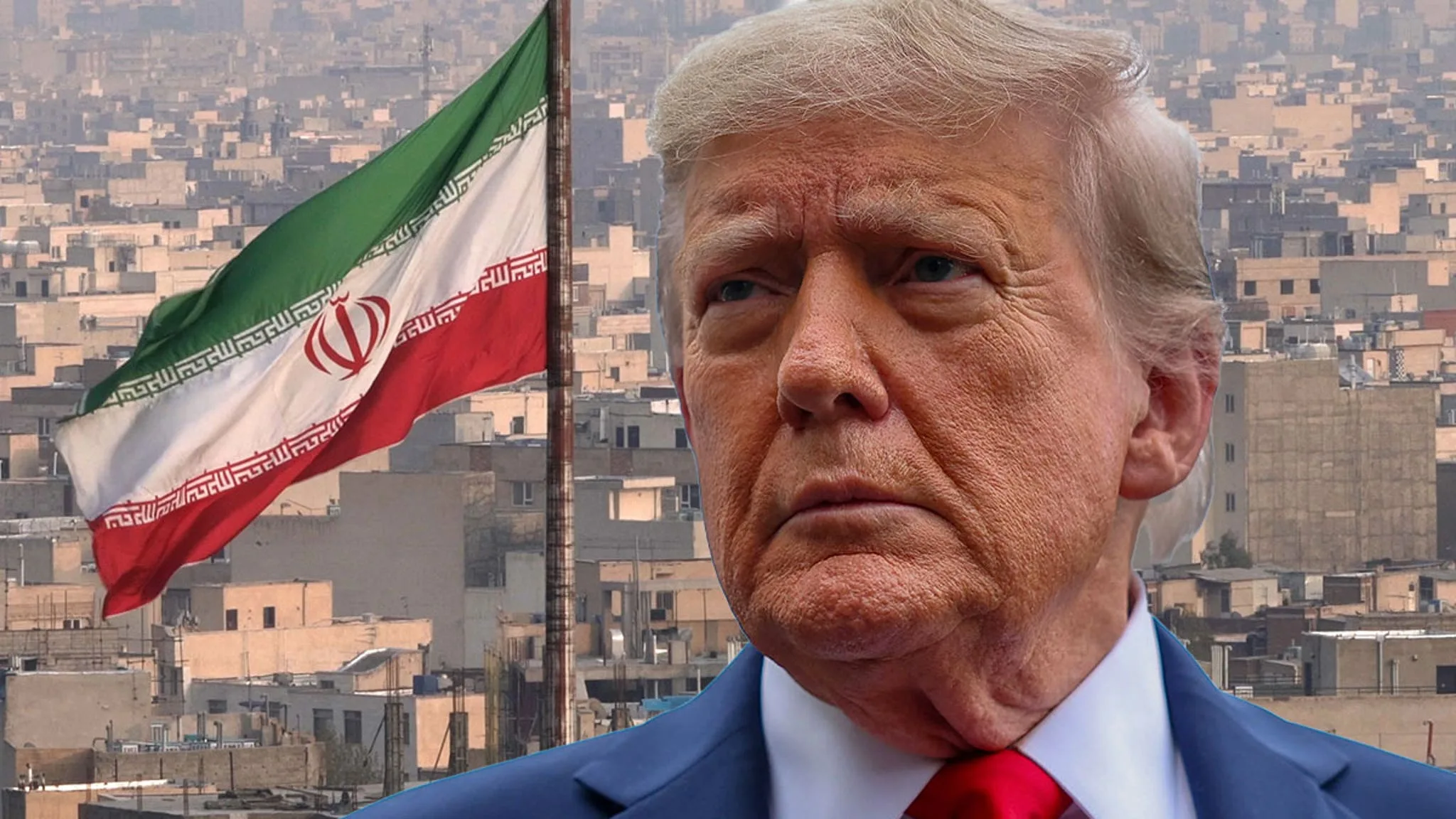
From Donald Trump to Benjamin Netanyahu, the U.S.–Israel war in Iran exposes not only strategic miscalculations but a deeper transformation in how wars are fought, justified, and prolonged. What if the real lesson is that power no longer guarantees control—and that escalation now replaces strategy?
Introduction
The recent confrontation between the United States, Israel, and Iran has not only reshaped regional alignments but also exposed deeper transformations in the nature of war itself. Analysts such as Alastair Crooke, a former British diplomat and MI6 officer, have emphasised that this conflict marks a transition away from Western-dominated strategic paradigms towards a more fragmented and adaptive world order.
The actions of leaders such as Donald Trump and Benjamin Netanyahu raise fundamental questions about the erosion of normative limits and the future of international order
In classical theory, from Carl von Clausewitz onward, war is seen as a continuation of politics by other means. Yet what this war suggests is more worrying: war increasingly escapes political control, generating dynamics that reshape both strategy and the international system in ways leaders neither intend nor fully understand.
The following outlines thirteen lessons that this war offers to geopolitical analysts, framed—where possible—within a theoretical perspective to add analytical depth.
Geopolitical Lessons from the U.S.–Israel War against Iran
1. Asymmetric warfare is redefining power
Iran’s strategy confirms that military inferiority no longer implies strategic weakness. Through decentralised networks, drones, cyber capabilities, and maritime disruption, it has imposed disproportionate costs. As Alastair Crooke notes, the objective is not victory in the conventional sense, but the erosion of the adversary’s will and coherence. War becomes a contest of endurance rather than annihilation.
2. U.S. deterrence is visibly eroding
The vulnerability of bases, ships, and supply chains has undermined the aura of uncontested American dominance. Deterrence now depends less on technological superiority and more on resilience under sustained pressure. This aligns with analyses from the RAND Corporation, which highlight the growing exposure of high-value assets in contested environments.
3. Allies are no longer automatically aligned
European hesitation reflects a broader shift away from hierarchical alliance systems. As Alastair Crooke argues in the same interview, Western unity increasingly fractures under the weight of divergent economic and security interests. Solidarity is conditional, not assumed.
4. The Gulf is hedging its bets
Regional actors are recalibrating. The paradox exposed by the war is that hosting U.S. forces may increase vulnerability. Gulf states are therefore diversifying—engaging cautiously with Iran while deepening ties with China and other partners. Security is no longer outsourced; it is negotiated.
5. Geoeconomics has become a battlefield
The disruption of the Strait of Hormuz demonstrates how economic flows can be weaponised with precision. Oil, shipping routes, and financial systems, including de-dollarisation, are now integral to warfare. As noted in analyses by the International Institute for Strategic Studies, growing geopolitical fragmentation and competition are transforming economic interdependence—particularly around strategic chokepoints, and energy flows—into a domain of conflict rather than stability.
6. Regime-change strategies remain structurally flawed
Despite decades of failure—from Iraq to Libya—the belief that coercion can reshape political systems persists. Yet, analysts repeatedly argue that leadership decapitation strategies rarely achieve political submission. Instead, they often reinforce regime cohesion and legitimacy, trigger nationalist backlash, and fail to dismantle underlying institutional structures. Expectations that internal minorities or opposition groups—such as Kurdish populations in Iran—would mobilise against the regime under external pressure have likewise proven misplaced. Rather than weakening the Iranian state, external pressure has strengthened it. The “rally-around-the-flag” effect redirects domestic discontent towards external threats. This pattern, visible in the Iraq War and the Vietnam War, reappears with striking consistency.
7. Strategic illusion at the heart of interventionism
The expectation that pressure would trigger internal collapse in Iran reflects what Robert Jervis identified as misperception in international politics. External actors, such as Trump’s entourage (not the whole U.S. intelligence apparatus), Netanyahu’s 40-year desire, and the Mossad, project their own assumptions onto complex societies, thereby underestimating resilience and adaptive capacity. Jervis further argues that decision-makers interpret external signals through cognitive filters shaped by prior beliefs, leading to systematic errors.
8. From military victory to narrative management
With no decisive victory in sight, the battle shifts to perception. Leaders increasingly frame outcomes to domestic audiences, transforming strategic ambiguity into political narratives. War becomes as much about storytelling and media control as about territorial control and strategic outcomes.
9. The trap of escalation without an endgame
The United States entered the conflict without a clear political exit strategy. As Graham Allison would suggest, bureaucratic momentum and credibility concerns drive continued engagement even when objectives are unclear. Escalation becomes self-sustaining.
10. A post-hegemonic order is taking shape
The conflict reflects a broader redistribution of power in which no single actor can impose outcomes unilaterally. A striking illustration was the moment when Donald Trump turned to China to help de-escalate tensions and unblock the Strait of Hormuz: a reversal of traditional hierarchies in which Washington would have acted as the primary security guarantor. As analysts such as Alastair Crooke suggest, this signals a shift towards a more negotiated and pluralistic order, where even dominant powers must rely on rivals to manage crises they can no longer control alone.
11. The persistence of imperial logics
Despite repeated failures, interventionist doctrines endure. As analyses in War on the Rocks and related think-tank debates show, interventionism is deeply embedded within the U.S. national security establishment, sustained by shared norms and institutional incentives rather than isolated policy choices. This reflects what scholars such as Stephen Walt describe as the persistence of “liberal hegemony,” a strategy aimed at reshaping political orders abroad, which also reveals not only institutional inertia but also a deeper ideological commitment to shaping political outcomes abroad. John Measheimer bluntly puts it: “The Great Delusion – Liberal Dreams and International Realities”. Furthermore, the IR concept of “imperial overstretch”, associated with Paul Kennedy and later Jack Snyder, explains why great powers continue expanding commitments even when it becomes counterproductive.
12. The blurring of war and peace
This conflict illustrates how the boundary between war and peace has eroded into what Frank G. Hoffman conceptualises as “hybrid warfare,” and what the International Institute for Strategic Studies describes as persistent “grey-zone” competition. Cyber operations, economic coercion, and proxy engagements sustain a continuous state of confrontation below the threshold of declared war. In this sense, war is no longer a discrete event but a permanent strategic condition, unfolding across multiple domains without clear temporal or legal boundaries.
13. The erosion of normative constraints
A more troubling lesson concerns the weakening of the rules governing war. Questions surrounding proportionality, civilian infrastructure such as firefighters, electricity grids, schools, and hospitals, and pre-emptive strikes raise concerns about whether actors such as Donald Trump and Benjamin Netanyahu are stretching and breaking the established norms of armed conflict. While not unprecedented, as it was displayed in Gaza and elsewhere, this trend signals a potential shift towards more permissive interpretations of force.
Conclusion
What, then, does this war teach us today, and for the future? Historically, wars have served as brutal laboratories of political learning. Yet the lesson that emerges here is not one of adaptation, but of repetition. The same patterns—misperception, overreach, and escalation without clear ends—recur despite decades of experience. As Robert Jervis demonstrates, decision-makers tend to interpret new conflicts through inherited cognitive frameworks, often misreading changing realities rather than adapting to them.
The statement by Faisal bin Farhan Al Saud underscores this shift: security can no longer be guaranteed externally, nor can war be neatly contained. Instead, it reverberates across regions, economies, and political systems. The actions of leaders such as Donald Trump and Benjamin Netanyahu raise fundamental questions about the erosion of normative limits and the future of international order.
Finally, war still teaches, but what it teaches depends on the willingness to learn. If the past is any guide, the risk is not that lessons are unavailable, but that they are systematically ignored. In practice, the imperative to construct justificatory narratives for domestic audiences and looming electoral cycles often prevails over strategic reflection.
Ricardo Martins – Doctor of Sociology, specialist in European and international politics as well as geopolitics
Follow new articles on our Telegram channel

 The New Dark Age
Leave a comment