Monday, 3 February 2025 — The Cradle
Israel, in collusion with the Palestinian Authority, is executing a coordinated crackdown in the occupied West Bank that mirrors its war on Gaza, using military force, intelligence sharing, and systematic destruction to weaken resistance and expand territorial control.

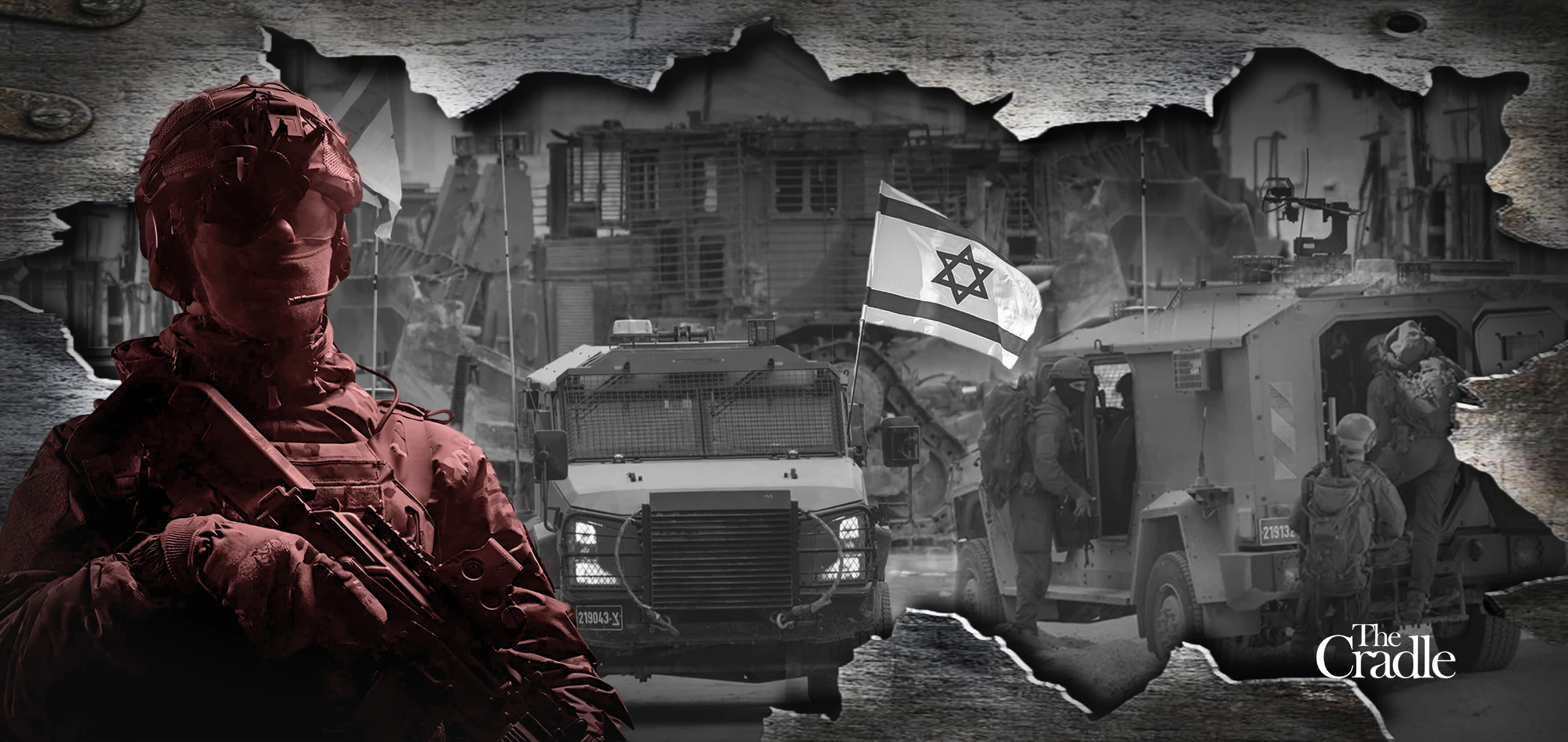 Photo Credit: The Cradle
Forty-eight days into the Palestinian Authority’s (PA) crackdown on the resistance in the occupied West Bank, followed by roughly two weeks of Israeli military operations and a concurrent siege by PA security forces, the northern occupied West Bank remains engulfed in an intensifying joint military-security offensive.
This campaign, which began on 5 December 2024 with the PA’s assault on the Jenin refugee camp, saw a shift on 21 January 2025, when Israeli occupation forces took over. By 27 January, the campaign expanded to Tulkarem and its two camps, with further incursions into Tubas, Al-Faraa camp, and Tammun.
In reality, these two offensives – by the PA and the occupation state – are deeply intertwined. During the PA’s operation, Israel provided intelligence via continuous drone surveillance over Jenin before executing airstrikes that resulted in the martyrdom of 12 Palestinians.
Once the Israeli military operation commenced, the PA withdrew, but not before reinforcing the siege alongside occupation troops, leading to the martyrdom and arrest of numerous resistance fighters.
Despite PA claims – specifically from Anwar Rajab, its National Security Agency’s spokesperson – that their forces retreated due to Israel’s attack and were unaware of the impending invasion, this narrative strains credibility.
The scale of the PA deployment – hundreds, at times nearly a thousand security personnel – would have made a sudden, uncoordinated withdrawal amid an Israeli assault highly improbable. The PA’s presence, including snipers, roadblocks, and security patrols, suggests a level of coordination rather than a hasty retreat.
A coordinated effort against the resistance
Eyewitnesses and sources within the Palestinian Islamic Jihad (PIJ) tell The Cradle a different account. The Jenin Brigade of the PIJ’s military wing, the Quds Brigades, has faced an unprecedented double-pronged attack aimed at eradicating the battalion.
According to the sources, the Jenin Brigade previously ensured their survival by relocating key commanders and fighters to surrounding villages, mountainous hideouts, and other resistance strongholds in Nablus, Tulkarem, Tubas, and the Jordan Valley upon detecting incoming Israeli special forces.
“This time, the PA ambushed the retreating fighters and arrested dozens of them, and those who tried to flee or resist were shot and wounded or killed,” the sources say, adding that hospitals also became battlegrounds, with the PA reportedly lying in wait to detain and torture wounded resistance fighters. Even medical personnel suspected of aiding injured fighters faced persecution.
This collaboration was crucial for Israel, as security considerations and limited forces in the occupied West Bank had previously prevented them from conducting such widespread sweeps alone. The PA’s complicity in hunting down resistance fighters allowed Israel to operate with relative impunity.
Local sources confirm to The Cradle that PA forces, taking cover in civilian vehicles, pursued resistance fighters across Jenin’s towns – Araba, Ya’bad, Kferet, and beyond – continuing the chase into Tubas.
Fighters attempting to regroup were kidnapped in locations like Siris, Deir Ghazala, and Ya’bad. In some cases, direct clashes erupted, allowing resistance fighters to escape. In Ya’bad, PA security forces are said to have fired indiscriminately at the mountains, hoping to strike any hidden resistance members.
Deception and entrapment: The revoked agreement
Many in Jenin accuse the PA of deception, having misled the resistance into believing a settlement was brokered through tribal mediator Daoud al-Zeer.
After the cessation of the war in Gaza and the settlement game conducted by Ramallah, the resistance fighters decided to withdraw and spread to different areas of Jenin for fear of the PA’s treachery and persecution inside the camp, as well as to spare blood and prevent bloody clashes if the PA tries to arrest one of them, a local source explains to The Cradle:
“The PA Security Command deluded its elements that the agreement was made to prevent PA elements from leaking information to the resistance after Ramallah discovered a problem in the loyalty of a number of officers and soldiers. Then with the start of the military operation of the occupation, decisions came to raid the villages and towns of Jenin, including medical centers, outskirts of villages, abandoned houses, mosques and homes of liberated prisoners.”
Before Israel’s offensive, the PA had already arrested over 70 Palestinians, subjecting them to severe torture. Reports surfaced of security forces filming and circulating videos of detainees in humiliating conditions.
While the PA scaled back direct security operations in Jenin as occupation troops took over, its intelligence activities persisted, identifying safe houses and alternative resistance headquarters, particularly in Tammun and Horsh al-Saada.
Tel Aviv openly acknowledged this collaboration. Alon Ben-David, a military analyst for the Israeli Channel 13, noted Israel’s “satisfaction with the level of coordination with the PA during the Jenin operation.”
Old wine in a new bottle
Israel’s latest operation in the northern occupied West Bank has been dubbed “Iron Wall,” a name eerily reminiscent of “Swords of Iron,” the initial title of its war on Gaza post-Operation Al-Aqsa Flood. Although later renamed “Genesis War” or “War of Resurrection” by Israeli Prime Minister Benjamin Netanyahu’s government, these biblical allusions tap into the occupation state’s broader ideological and territorial ambitions.
The previous Israeli operation in the occupied West Bank, “House and Garden,” launched in July 2023, was intended to demonstrate the occupation army’s “willingness to take military action against [the resistance] in the West Bank, even if it means confronting [it in] Gaza.”
As with the previous operation, “The Israeli operation aims to inflict significant damage on the [resistances’] infrastructure, recognizing that complete eradication may not be achievable.”
While Israel’s rhetoric suggests a long-term occupation of Jenin, its actions – such as deploying elite forces, occupying civilian buildings, and burning homes – indicate preparations for a larger annexation strategy.
The Israeli military has exaggerated its findings, claiming to have uncovered RPGs, 150 explosive devices, and 10 weapon labs in Jenin. However, photos reveal little more than homemade launchers and improvised grenades. Ironically, the PA’s earlier operation in Jenin touted even larger seizures, further exposing the coordinated nature of these offensives.
Different tactics
Despite the exhaustion of the Palestinian resistance due to the PA’s prolonged siege and depletion of its ammunition, military cells have still managed to inflict serious damage on the invading forces. The resistance’s effectiveness was showcased by the urgent air evacuations of dead and wounded Israeli soldiers – an indication of the severity of their injuries and their numbers.
Israel acknowledged the death of Reconnaissance Battalion soldier Liam Hazi and the serious wounding of five others. However, resistance factions, particularly the Quds Brigades and Hamas’s Qassam Brigades, claim higher enemy casualties.
Most resistance operations were concentrated in the Jenin governorate, where guerrilla-style ambushes and surprise attacks disrupted Israeli advances. In Tulkarem, the early discovery of an infiltrating occupation special unit forced a premature incursion, thwarting an intended assassination. Meanwhile, in Azzun, attacks on Israeli forces – including the use of explosive devices – have resumed after a temporary lull.
At least 30 Palestinians have been killed in recent operations, 16 of them confirmed civilians. Israel increasingly relies on airpower, with drones and Hermes 450 warplanes conducting over 170 attacks across the occupied West Bank since 7 October 2023. One of the latest victims was Qassam’s Tulkarem commander Ihab Abu Atiwi, who was assassinated in Nur Shams camp by an airstrike.
At the time of writing, over 100 homes have been demolished, families displaced, and infrastructure systematically destroyed. The bulldozing of Jenin’s Mahyoub Street and Tulkarem’s city center suggests a long-term occupation strategy aimed at erasing resistance strongholds and furthering annexation plans.
The expansion to Tulkarem
On 27 January, Israel launched a large-scale attack on Tulkarem and its two refugee camps, mimicking the tactics used in Jenin. While no formal announcement was made, Israeli forces forcibly displaced residents at gunpoint, particularly in the Airport and Hanoune Square neighborhoods.
Snipers occupied high-rise buildings, electricity was cut off, and hospitals – Martyr Thabet Thabet Governmental Hospital and Al-Israa Specialized Hospital – were besieged, obstructing emergency medical services.
Israeli bulldozers continued destroying infrastructure while checkpoints and roadblocks choked off movement across the occupied West Bank. In total, 898 military checkpoints and barriers, including 18 newly installed iron gates, now restrict Palestinian movement. The scale of destruction in Tulkarem, including widespread home demolitions and road closures, mirrors Jenin’s fate.
With the expansion of military operations, Israel’s “Iron Wall” strategy has begun to take shape in the occupied West Bank. If this campaign is indeed a smaller-scale replication of “Iron Swords,” then it signals what has long been suspected: a methodical effort in collaboration with the PA to crush resistance through siege, displacement, and destruction.
The question is no longer whether the occupation intends to remain in the occupied West Bank – it is how much of it they intend to swallow.
The views expressed in this article do not necessarily reflect those of The Cradle.

 The New Dark Age
Leave a comment