Friday, 7 February 2025 — Institute of Race Relations
There are multiple signs, as documented in our regular calendar of racism and resistance, that a myopic narrative around the far-right-orchestrated racist riots of summer 2024 is in the making – that normalises racism and forecloses on any discussion of the organised violence of the far Right.
Channel 4’s quick fire defence of its new documentary series, ‘Go Back to Where You Came From’, is that it was not platforming extreme racist views, but engaging with a ‘vocal voice that is shaping our political landscape’. And research by the Children’s Commissioner’s Office, into what drove 147 young people to participate in the riots, finds that children who took part (a total of 14 were interviewed) were not primarily driven by far-right, anti-immigration or racist views, but other factors, including, ‘a curiosity about events’.
Finally, the remit of a new cross-party commission, led by former Labour and Tory communities secretaries, John Denham and Sajid Javid, is similarly weak. Facilitated by the Together Commission, it will tour the country and speak to millions of people about ‘how we live well together in modern Britain’.
All these examples make the intervention of over 60 racial justice and Muslim organisations, on the six-month anniversary of the riots across England, extremely timely. In a letter coordinated by the Runnymede Trust and supported by IRR, groups urge action to address the root causes of racism. In warning of the pitfalls of an uncritical community cohesion agenda as the single route to addressing the riots, they point out that community cohesion proposals have a history of blaming racialised communities, particularly Muslims, migrants and refugees, for ‘failing to integrate’, and that such policies have also previously by-passed issues of economic scarcity in desperate communities deprived of assets and resources.
To coincide with the intervention, the IRR releases some preliminary
findings from a research project on charging and sentencing after the
riots. Based on an analysis of 101 prosecutions that followed right-wing
mobilisations against asylum accommodation, mosques and other symbolic
locations in towns and cities across England. Read our interim findings here.
There is evidence in our data that might interest those who conducted the
Children’s Commissioner’s research. In the cases we have been following,
some defendants and their lawyers, perhaps aware that religiously or
racially aggravated offences carry higher sentences, have argued in
court that their clients were not motivated by racism. In response to
one prosecution arising from an attack on asylum accommodation in
Manvers, Rotherham, a clearly jaded Judge Richardson replied to mitigation pleas by the defendants’ lawyers saying: ‘Almost every defendant who had appeared in this court, of which there have been many, has indicated curiosity as being the reason’ behind their participation in ‘this particular episode’.
IRR News team
A fortnightly resource for anti-racist and social justice campaigns, highlighting key events in the UK and Europe.
Calendar of Racism & Resistance
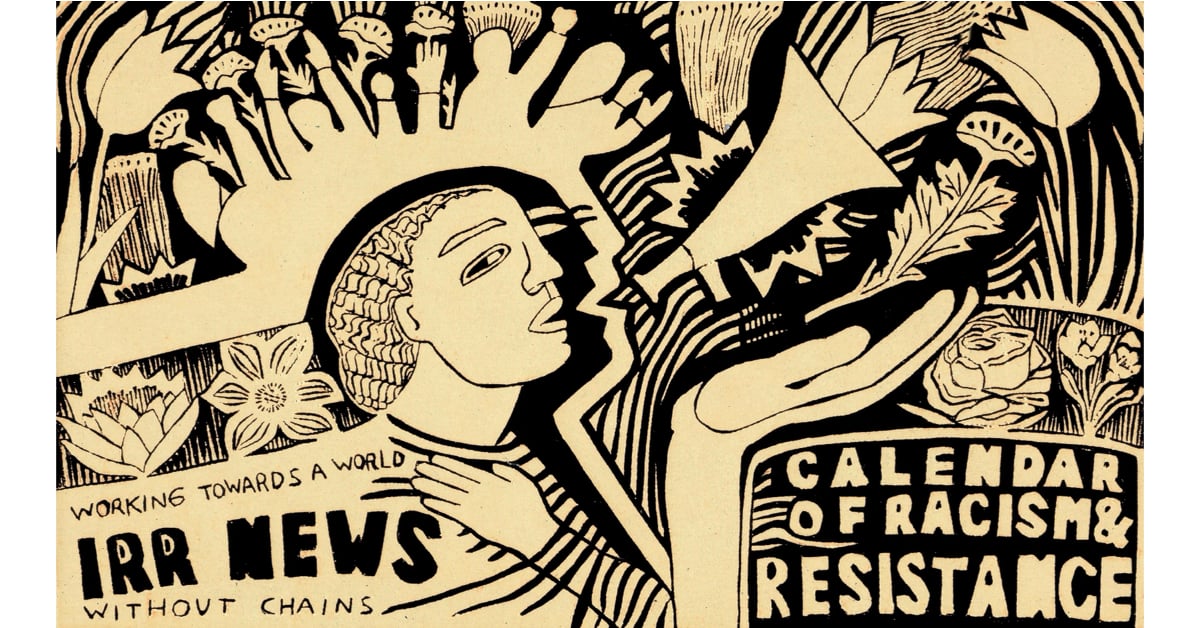
In this week’s Calendar, we highlight stories unfolding over the past two weeks on policing and criminalisation, migrant and asylum rights, far-right fascism, and also resistance to state violence in the UK and Europe.
This is our new graphic for the Calendar of Racism and Resistance designed by Kyle Alexander. On the bottom left it reads IRR News, working towards a world without chains.
Find these stories and thousands more on our Register of Racism and Resistance database.
Search Database
Research findings on charging and sentencing patterns following the summer 2024 racist riots by Jon Burnett & Liz Fekete
Our research on charging and sentencing after the far-right-orchestrated
racial violence in England in summer 2024, finds that attacks could be
traced back to scare statements about immigration and two-tier policing
and that courts failed to acknowledge the full extent of the racism
behind the riots
The examination of 101 prosecutions shows that racially-motivated
violence inflicted on communities mirrors dominant political and media
statements, including slogans, such as ‘stop the boats’ and ‘taking our
country back’.
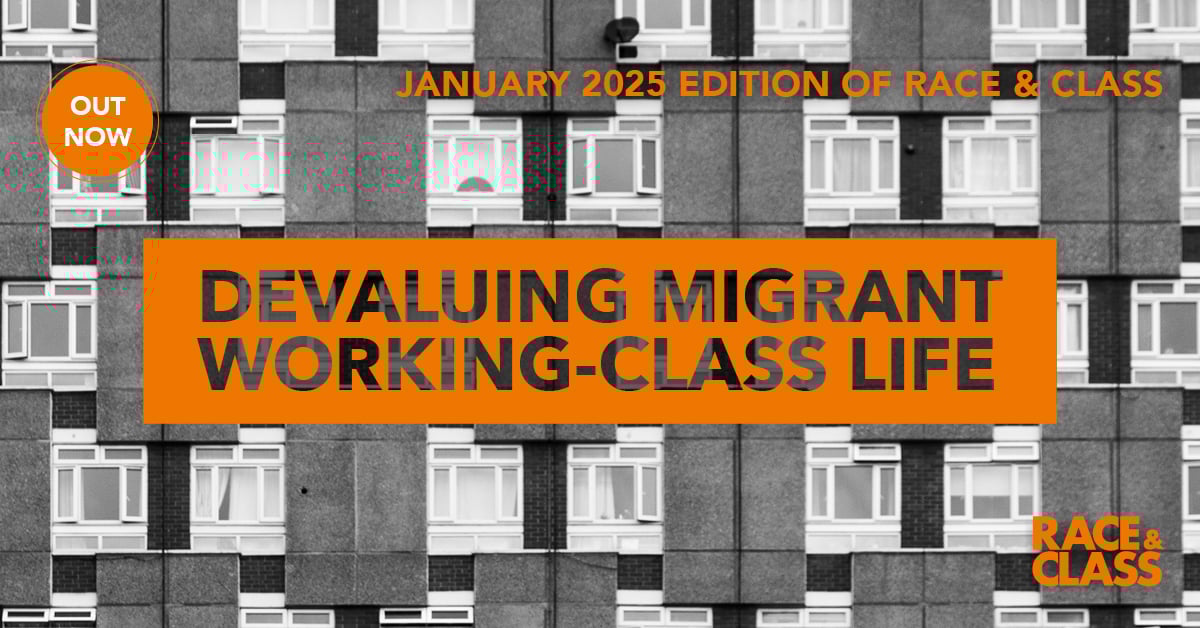 Latest issue of Race & Class
January 2025 issue of Race & Class is out now!
This issue leads with a piece on Awaab Ishak and the devaluation of migrant, working-class life by Alexandra Wanjiku Kelbert and Rupinder Parhar.
The authors analyse the mechanics behind Awaab’s death which an inquest found was due to a severe respiratory condition caused by prolonged mould exposure.
The issue also includes a commentary on the politics of infrastructure in contemporary mobilisations for Palestine, and other articles include analysis on Sweden’s advancement of a racial security state, cultural appropriation and cultural transportation from a Latin American perspective, and parking on the streets of public-private predation in Chicago.
This edition of IRR News is free and it always will be. To support our work, make a one-off or regular donation on our website.
Sign up to our mailing list to stay in touch
Institute of Race Relations

 The New Dark Age
Leave a comment