Thursday, 19 February 2026 — Global Delinquents
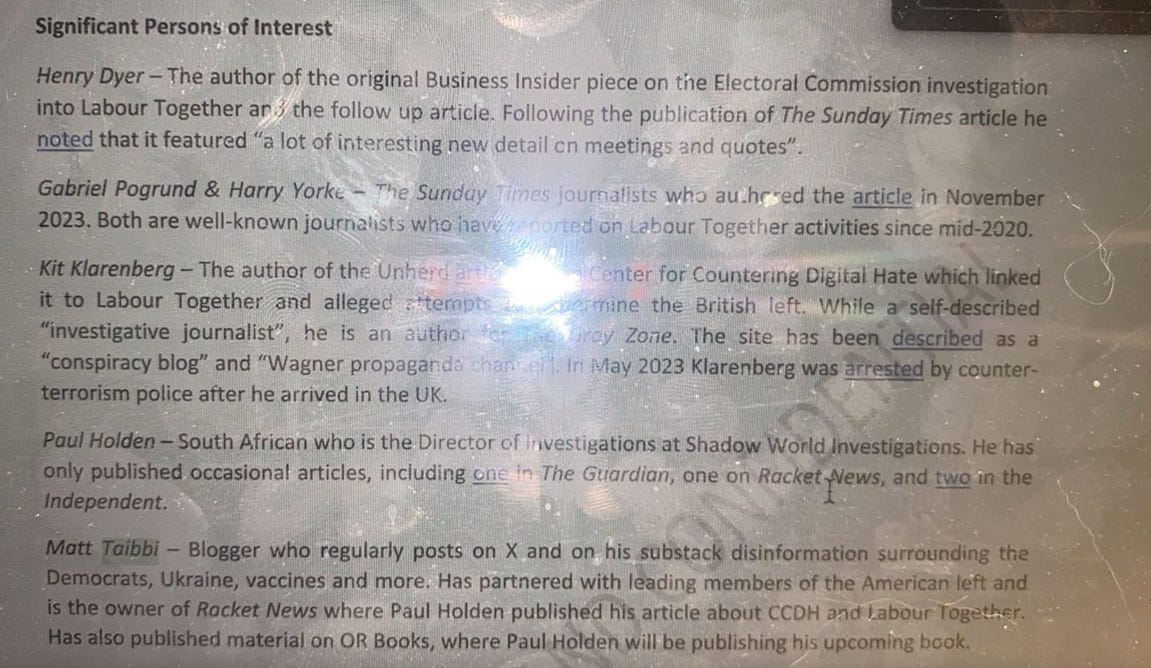
An extraordinary political scandal has erupted in Britain, raising the prospect Prime Minister Keir Starmer’s already embattled government could tumble. On February 5th, it was revealed Labour Together, a dubious ‘think tank’ intimately intertwined with the Labour party, paid shady PR firm APCO Worldwide tens of thousands of pounds to spy on journalists. Primary targets were reporters exposing damning information on Labour Together’s finances, and central role in Starmer’s corrupt rise to power. Others were considered “significant persons of interest”, for reasons unclear – including me.
The controversy became turbocharged on February 14th, when The Times published a frontpage investigation into how two of the outlet’s staff, Gabriel Pogrund and Harry Yorke, were subjects of intense focus in APCO’s operation. In November 2023, the pair revealed how £730,000 had been surreptitiously funnelled to Starmer’s 2020 leadership campaign via Labour Together. The organisation’s then-chief, Morgan McSweeney – who resigned as the Prime Minister’s top adviser on February 8th in disgrace – failed to declare the funding, a longstanding criminal offence under British law.
The story prompted Labour Together to hire APCO, which runs propaganda campaigns for notorious Zionist entity weapons merchant Elbit Systems. The company was tasked with digging up dirt on a number of figures, including Pogrund and Yorke, and identifying their information sources. A resultant APCO report charged – without evidence – damaging leaked information on Labour Together’s finances originated from a Russian hack of Britain’s Electoral Commission in 2023. The report was shared with the National Cyber Security Council, a unit of notorious signals spying agency GCHQ.
While the NCSC declined to launch a probe, senior government ministers briefed pliant journalists the non-existent “Russian hack” had been referred to GCHQ. These backroom interventions successfully blunted media interest in scandals surrounding Labour Together. Mainstream outlets left the story alone thereafter. Meanwhile, The Guardian threatened Paul Holden, who led investigations into Labour Together’s corruption, with publication of a libelous article alleging he was being scrutinised by British security services for receiving illegally obtained information from Russia. The Guardian dropped the non-story due to legal threats.
This journalist has directly fallen victim to such underhand tactics. In summer 2022, I was contacted by a Politico contributor. Asked to provide comment on a series of investigations published by The Grayzone on the leaked emails of disgraced MI6 chief Richard Dearlove and veteran BBC and Channel 4 journalist Paul Mason, I acquiesced. Politico did not inform me the resultant article would reveal the NCSC was formally investigating Russia’s supposed hack of the leaked emails in question.
Newly-released correspondence exposes how that story was fed directly to Politico by the NCSC, after Mason reported me to the GCHQ division. Mainstream journalists who had hitherto taken a keen interest in the leaked material abruptly went quiet. The content was nonetheless explosive, revealing how Mason had among other things secretly sought to bankrupt and deplatform The Grayzone. He conspired in this deranged scheme with Amil Khan, a veteran British intelligence-adjacent psychological warfare operative who now runs “counter-disinformation” specialist Valent Projects.
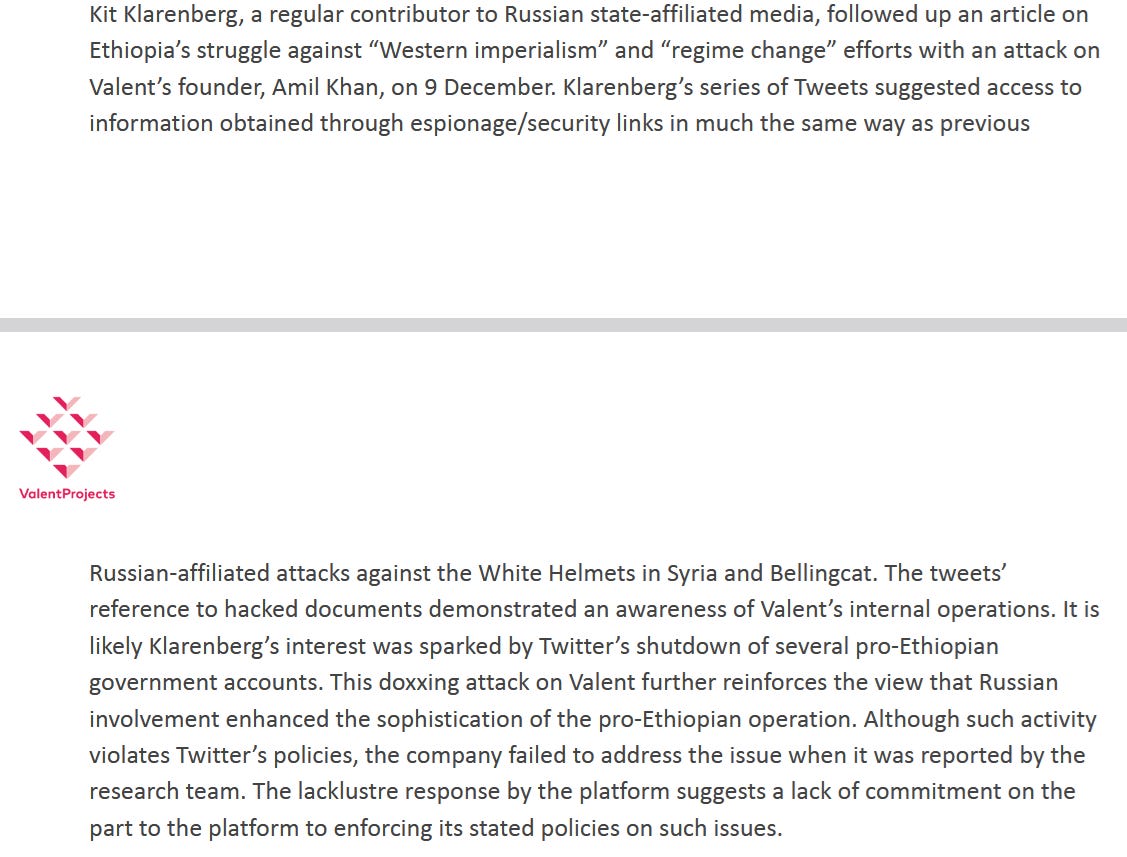
The Grayzone had previously reported on Valent’s cyber skullduggery. These investigations caused Khan to harbour a bitter grudge against the outlet, and this journalist particularly. A leaked May 2022 Valent report falsely charges that I’m a “regular contributor to Russian state-affiliated media.” Meanwhile, a series of ‘X’ posts I published about Valent the previous year was branded a “doxxing attack”, which “suggested access to information obtained through espionage/security links.” In reality, the information contained therein was found via internet search engines, and websites including LinkedIn.
Khan is among a constellation of individuals tied to the highest levels of the Labour party and Labour Together, potentially implicated in perpetuating the bogus “Russian hack” narrative pushed by APCO. When Labour Together hired the firm’s London office to do its dirty work, APCO was run by Kate Forrester, wife of Starmer’s then-head of communications Paul Ovenden. A year after APCO was tasked, the firm hired Mark Simpson. He had spent the past five years as Starmer’s chief international policy adviser.
Among the many mysteries surrounding APCO’s targeting of journalists on bogus grounds, why I was considered a “significant person of interest” is particularly perplexing. When the smear effort probe was launched, I had publicly mentioned Labour Together just once, in the context of the organisation founding state-endorsed censorship outfit the Center for Countering Digital Hate. I wasn’t involved in any investigations into Labour Together’s financial wrongdoing. I had nonetheless asked Khan long prior about Valent’s work for the organisation, which was once openly advertised on his company’s website.
Khan didn’t respond. Nonetheless, in the wake of Labour’s defeat in the 2019 General Election, Valent produced a report for Labour Together, Power and Persuasion: Understanding the Right’s Digital Playbook. It analysed a variety of highly controversial dirty online tricks pulled by the ruling Conservatives over the election campaign. This included running Facebook advertisements that appeared to be posted by other political parties, and covertly managing pages and accounts attacking Corbyn from a seemingly left-wing, pro-Labour perspective.
While branding these ruses “highly questionable”, lead author Amil Khan went on to propose “progressive parties” adopt similar techniques. For example, the Conservatives published deceptively edited videos of Labour politicians that made them appear incompetent. Khan’s report appeared to advocate such dishonesty, observing how “rather than damage the Conservative campaign,” this ploy “seems to have been a well-considered tactic used to bait traditional news outlets to give senior campaign figures airtime, which they could then use to repeat campaign messages.”
Khan explained how “repetition of key talking points, even in contexts that could be seen as negative, results in supporters imbibing the message.” If a Conservative official was provided the opportunity to repeat the words “[Jeremy] Corbyn is dangerous” on primetime TV, “even in the context of having to defend a faked video, viewers who have heard the talking point in many other contexts will focus on that and not the issue the official is having to answer for.”
Khan positively cited a Sky News reporter’s appraisal of this malign strategy, as “sinister but effective.” He actively endorsed emulating the Conservatives’ secret management of astroturf social media pages, which targeted “a spectrum of audience groups,” and “spent their money on targeting those people with content designed to address their interests.” Khan also proposed investing in “smart, data-driven digital communication capability,” to assist parliamentary candidates at a hyper-local level. While an introductory note from Labour Together praised Valent’s research, Khan’s analysis was as ever woeful.
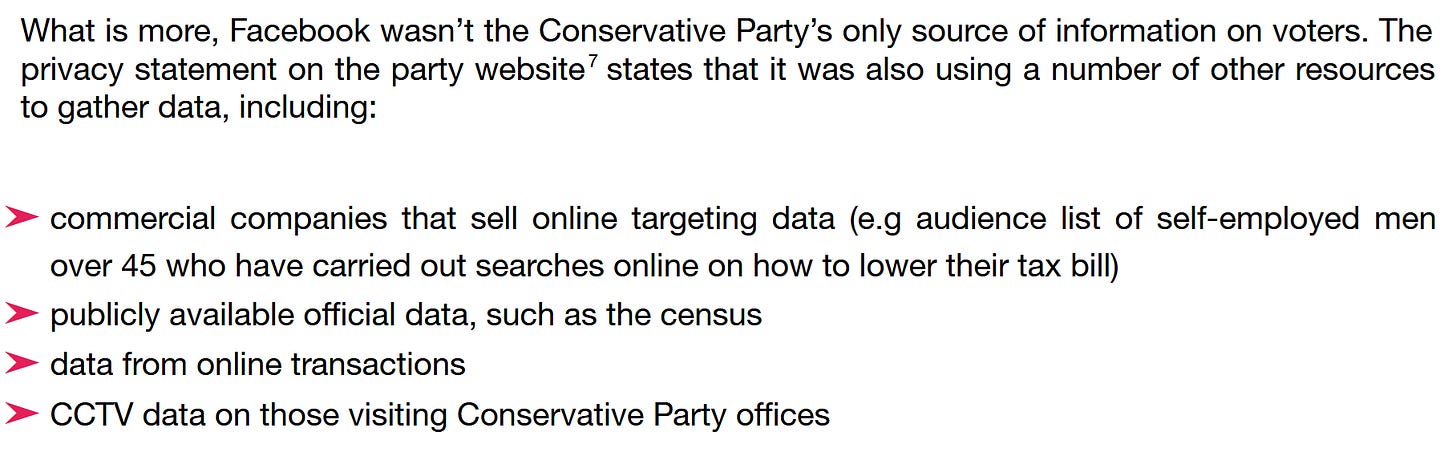
For instance, he stated the Conservative party used a variety of data to gather “information on voters” and influence their behaviour, including CCTV footage. A cursory glance at the source of this claim – a “privacy notice” on the party’s official website – amply indicates CCTV footage is captured of people visiting the party’s offices, as is customary with any building equipped with such surveillance measures. There is no suggestion whatsoever this data is used for electoral purposes, if that was even possible.
Still, Khan’s work was well-received by Labour, by then led by Starmer due to Labour Together’s lavish, undeclared assistance. Conveniently, Khan stood to personally profit from his report’s proposals being adopted by the party. In January 2021, leaked records indicate Valent submitted a detailed quote for “providing digital communications support services” to Labour party councillors running for re-election. Khan would deliver a “two-day digital campaigning masterclass” for candidates, while assisting with their branding, logos, publicity brochures and more.

Khan sought to give “individuals with little previous experience of professional social media use practical skills and knowledge to improve their ability to campaign in elections.” This included tutorials on “social media content creation”, and constructing “social media infrastructure,” such as “setting up Facebook business accounts…targeting by geography/demography/interests,” and “learning from ads analytics.” Just as Valent’s report for Labour Together advocated. Accordingly, Khan has publicly cheered the Labour party’s online skullduggery since.
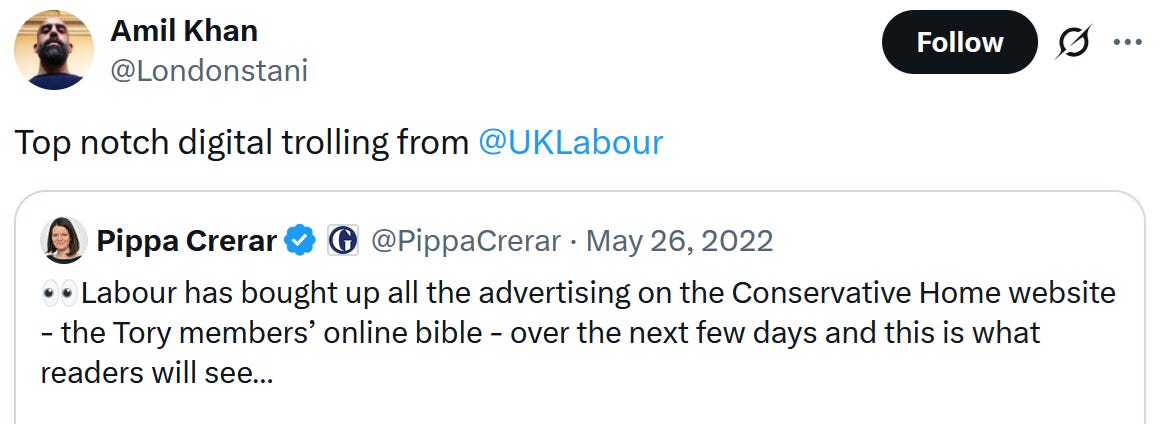
For example, in May 2022 he effusively praised Labour bulk-buying attack adverts on Conservative Home, the “online bible” of Conservative party members. While the stunt was widely criticised by Labour supporters, Khan believed it to be “top notch digital trolling.” The caper was repeated in advance of the 2024 General Election. This January, Valent Projects announced it had raised over a million pounds to support its rollout of a patented AI interface, which tracks “how bad actors seek to manipulate information flows” online.
Prospective clients include “governments and multilateral organisations worried about hostile state interference.” Betting is high Valent’s innovation will be used for the purposes of censorship and suppression online, under the guise of “countering disinformation”. It’s all but inevitable social media users expressing the ‘wrong’ opinions, and independent journalists publishing inconvenient truths, will be in the firing line. In the meantime, official investigations into the APCO scandal should clearly consider Amil Khan a “significant person of interest.”


 The New Dark Age
Leave a comment