Thursday, 26 February 2026 — The Tricontinental
As a new mood in the Global South advances, US Secretary of State Marco Rubio recently urged Europe to embrace its colonial past and defend Western values against the communist menace.
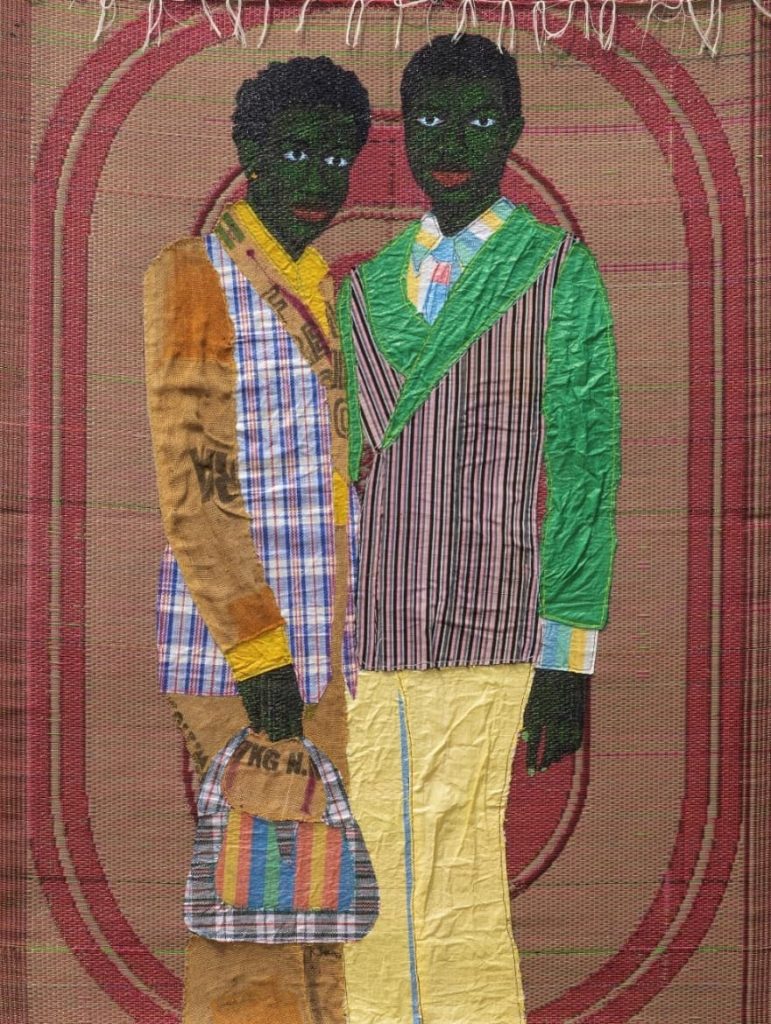 Kwaku Yaro (Ghana), Stand by Me, 2022.
Dear friends,
Greetings from the desk of Tricontinental: Institute for Social Research.
We live in an upside-down world. The leaders of the richer nations, the old colonial powers, want to rehabilitate the language of imperialism: praise for their past, and a desire to repeat that messianism in the present. Meanwhile, the peoples of the poorer nations agitate for peace and development, as well as for an apology for the crimes of colonialism and reparations for the plunder carried out during that period. The slogan from the people is simple: ‘Justice must come’. It rumbles now but will grow louder with time.
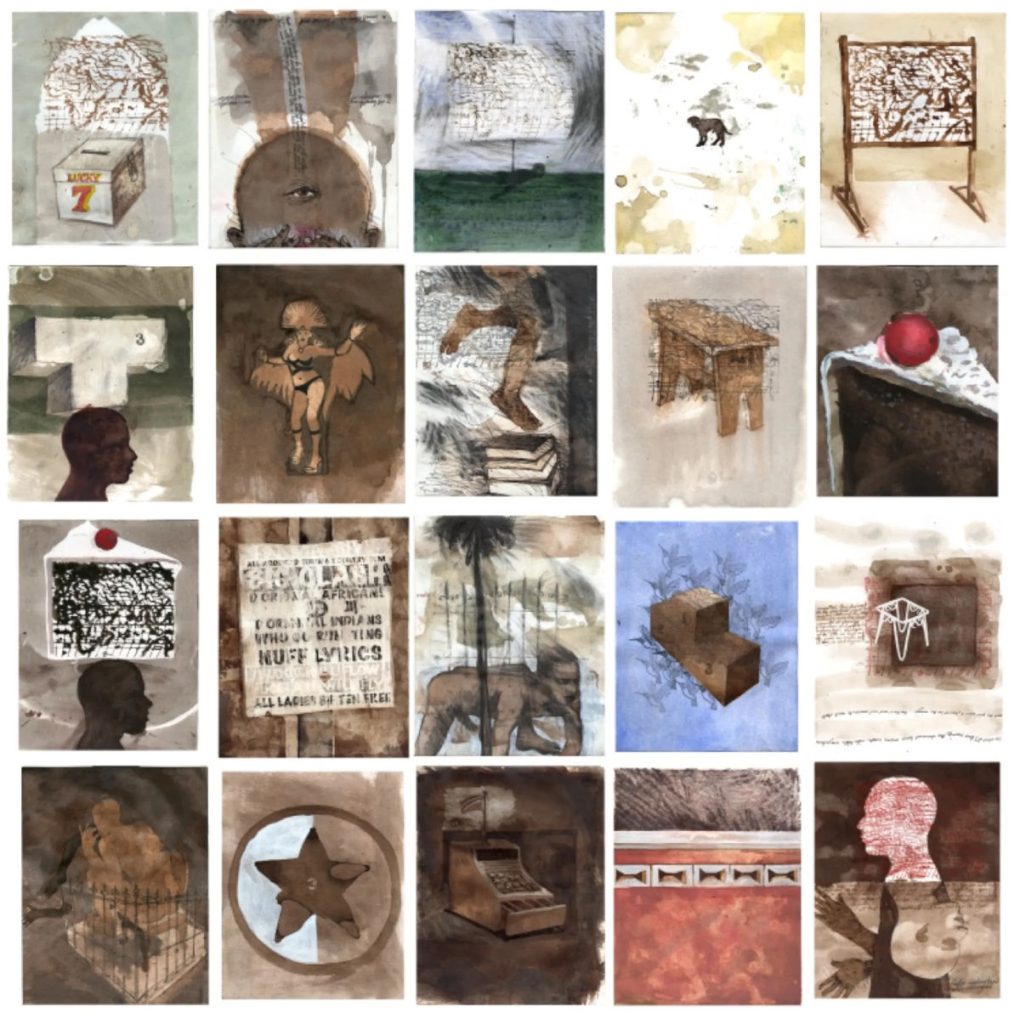 Christopher Cozier (Trinidad and Tobago), Tropical Night, 2006–2014.
When officials from the United States come to Europe to talk about geopolitics, senior European officials listen intently. Last year, at the Munich Security Conference, US Vice President JD Vance scolded the Europeans for what he called a crisis ‘of our own making’. He was rebuked for being insolent toward European democracy, which he chastised for being insufficiently attentive to the ‘issue’ of migration and for being overly concerned about the rise of the far right of a special type.
European newspapers, from The Guardian to Le Monde, criticised Vance for his insolence. However, most of the senior liberal European officials – from the European Union’s High Representative for Foreign Affairs Kaja Kallas to NATO Secretary General Mark Rutte – bowed their heads and said that Europe would do well to meet the goals set by the United States for military spending. This drive for militarisation has gone hand in hand with a steady capitulation to the far right.
This year, the US representative to the Munich Security Conference was Secretary of State Marco Rubio. In his speech, Rubio offered a fairly accurate history lesson:
For five centuries, before the end of the Second World War, the West had been expanding – its missionaries, its pilgrims, its soldiers, its explorers pouring from its shores to cross oceans, settle new continents, build vast empires extending out across the globe. But in 1945, for the first time since the age of Columbus, it was contracting. Europe was in ruins. Half of it lived behind an Iron Curtain, and the rest looked like it would soon follow. The great Western empires had entered into terminal decline, accelerated by godless communist revolutions and by anti-colonial uprisings that would transform the world and drape the red hammer and sickle across vast swaths of the map in the years to come.
Rubio’s general historical orientation is correct. European colonialism was inascendency roughly from 1492 – the opening of the Americas to conquest and enslavement – until the mid-twentieth century. Then, after the defeat of fascism in the World Anti-Fascist War, led by the Soviet Union and fought at immense cost in China, European colonialism was pushed aside by the rapid rise of both communist and national liberation movements, with the communists in Vietnam (1945), China (1949), and Cuba (1959) prevailing against all odds to inaugurate communist experiments in poorer nations.
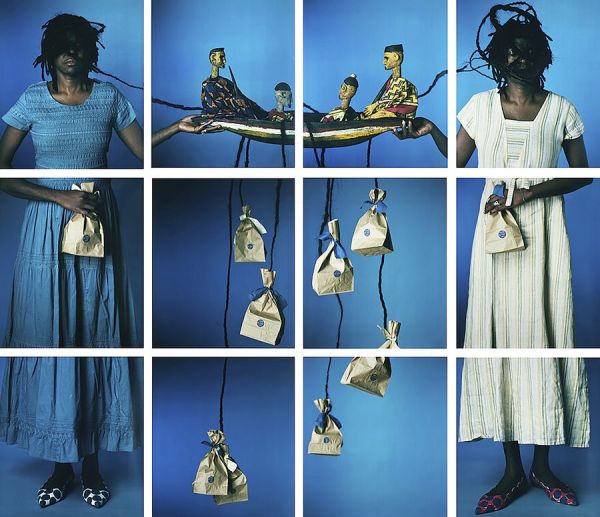
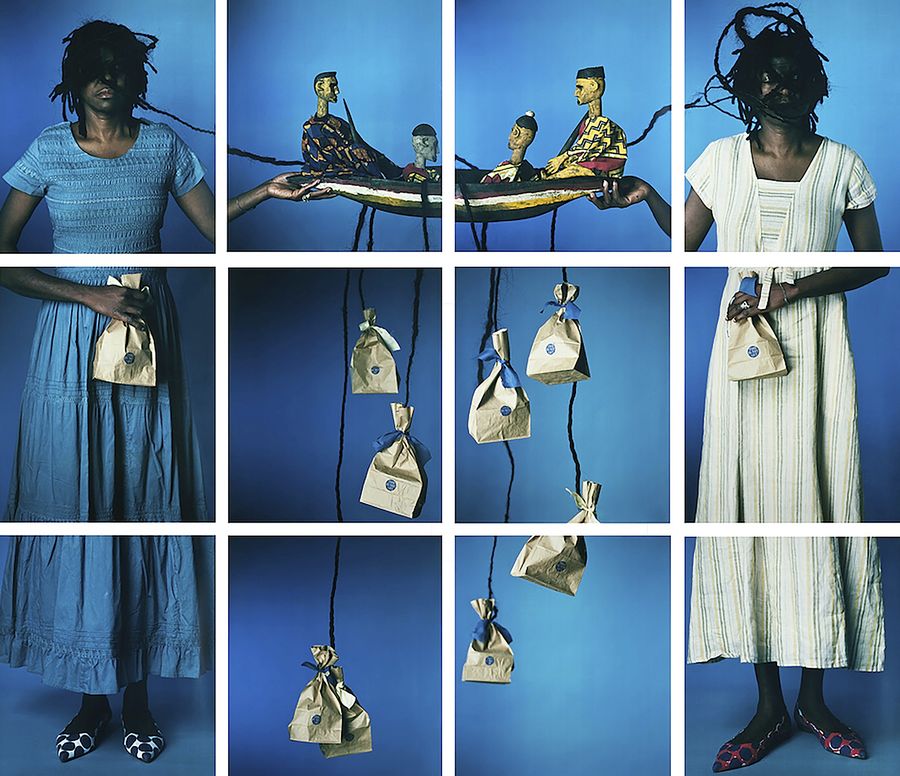
María Magdalena Campos-Pons (Cuba), De las dos aguas (Of the Two Waters), 2007.
Rubio was born in Miami, Florida. His parents left Cuba in 1956, around three years before the Cuban Revolution. In his speech, Rubio makes it clear that he sees himself entirely as an heir to Christian Europe, with nothing of the rich culture of his parents’ Cuba – a culture built on the heritages of Africa, Asia, and the Indigenous peoples of the Americas as much as on those of Asturian, Galician, and Catalan migrants from the Iberian Peninsula. The Cuban Revolution gradually sought to dismantle the old racist hierarchies of plantation society and build a society of equal Cuban citizens. This is the kind of decolonisation that Rubio abhors.
During the era of decolonisation and socialism, Rubio said, ‘many came to believe that the West’s age of dominance had come to an end and that our future was destined to be a faint and feeble echo of our past’. But the leaders of the Atlantic world did not buckle. ‘Our predecessors recognised that decline was a choice, and it was a choice they refused to make’.
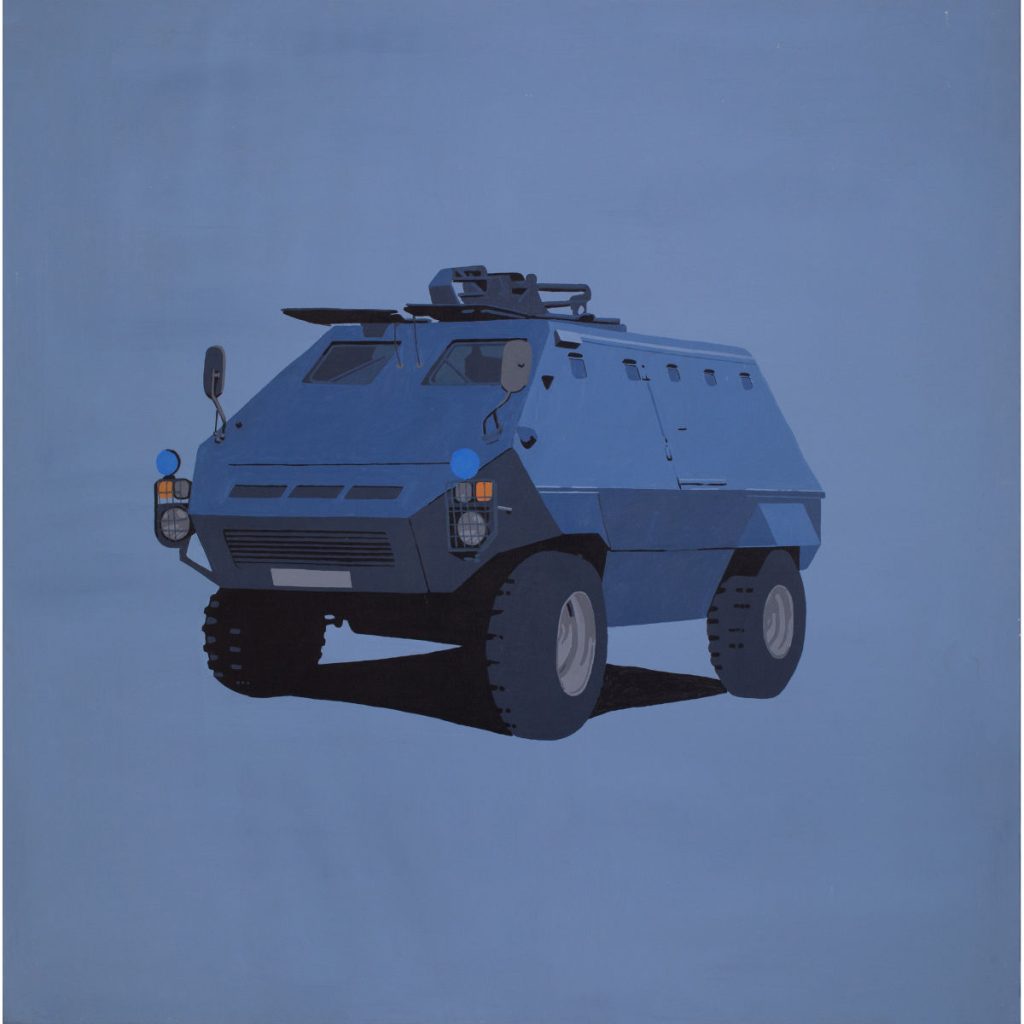 Ihosvanny Cisneros (Angola), Riots and Rage, 2011.
So, Rubio argued, today the leadership in the West must stand firm and reject what he presents as inevitable decline, defend Western values against communism, and commit themselves to new forms of colonialism (whether in Gaza or in the Western Hemisphere). What kind of Europe does the United States seek to ally with? In Rubio’s words: ‘A Europe that has the spirit of creation of liberty that sent ships out into uncharted seas and birthed our civilisation’ – in other words, a colonial Europe for an imperial United States. The European leaders in the hall greeted Rubio with a standing ovation. They are perfectly comfortable with a few colonial wars if the United States is beside them to provide military support and protection. There was no outrage at Rubio’s speech, no dismay at the naked display of Western chauvinism and colonialism. For the European leadership, it seems unacceptable to be critical of Europe’s democratic norms but utterly acceptable to champion the return of Western colonialism.
As a new mood grows in the Global South to exercise sovereignty and build a dignified life for the peoples of Africa, Asia, and Latin America, the leaders of the Global North celebrate the Age of Columbus and cheer on a return to that era. They want to break into their museums, put on morriones (the helmets of the conquistadors), get into their Lockheed Martin F-35 Lightning II fighter jets, and bomb the daylights out of the peoples of the South. This is what the United States did to Venezuela on 3 January 2026, what they have been doing to Palestine, and what they want to do to Cuba and the Sahel. They might have vast military power, built with their plundered treasure, and they might be able to use this power to instil fear among large parts of the human population, but they will never garner respect or submission. That is clear from the reaction around the world to the flagrant violation of Venezuela’s sovereignty, from the way people have rallied in support of Cuba in the face of attempts to suffocate the Cuban Revolution, and from the outrage of almost every single inhabitant of this planet at the ongoing genocide of the Palestinian people.
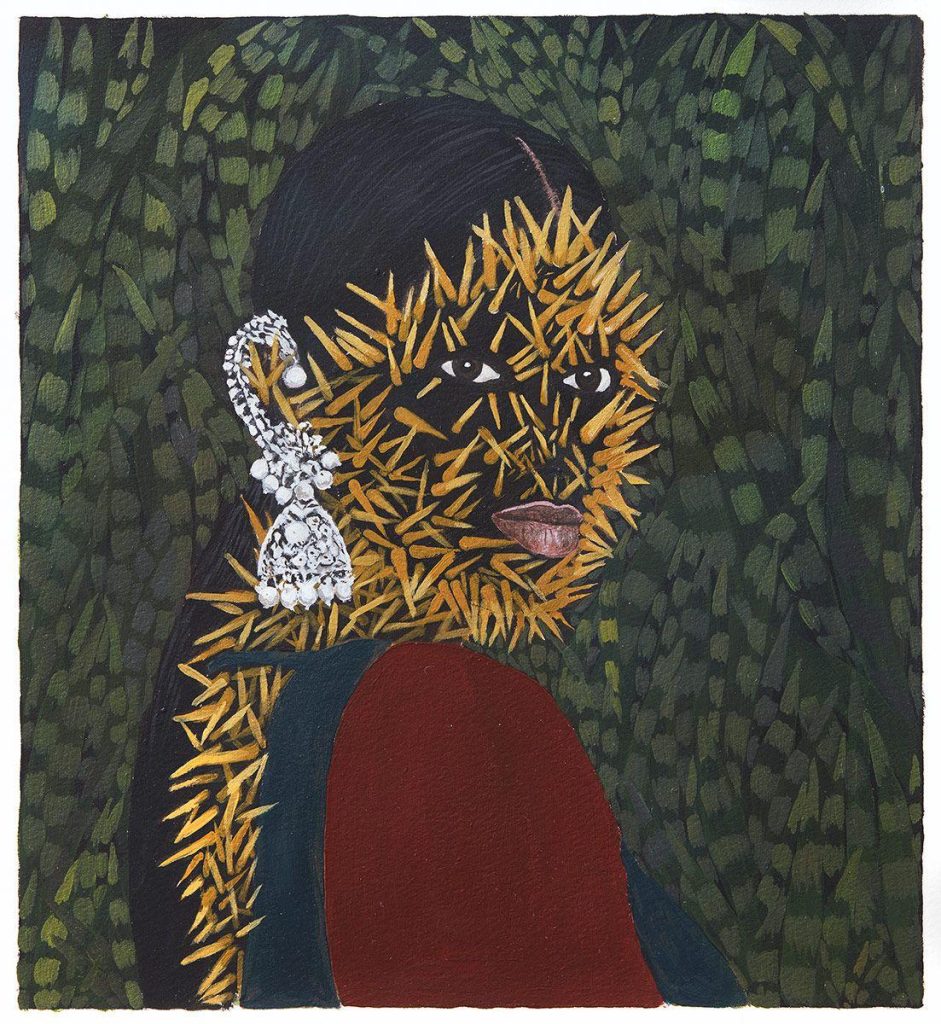 Kelly Sinnapah Mary (Guadeloupe), Notebook of No Return, 2017.
In December 2025, Algeria’s lower house of parliament unanimously approved a bill declaring that French colonisation of their land from 1830 to 1962 was a crime against humanity. The Algerian government had pressed the issue at the African Union (AU) previously, which in February 2026 adopted a resolution to designate 30 November as the African Day of Tribute to African Martyrs and Victims of the Transatlantic Slave Trade, Colonisation, and Apartheid; to convene an International Conference on Crimes of Colonialism, which the resolution describes as ‘genocide against the people of Africa’; and to seek ‘international recognition and redress for these historical crimes’. At the AU meeting, Ghana’s President John Dramani Mahama said that his country would table a resolution at the United Nations General Assembly in March 2026 to recognise the Transatlantic Slave Trade as the ‘gravest crime against humanity’. ‘All peoples of African descent have been waiting for this day’, Mahama said. ‘The truth cannot be buried. The legal foundations are sound; the moral imperative is undeniable’.
On one side of the Mediterranean Sea, the Global North sees colonisation as positive and suggests its return, while on the other side, the Global South excoriates it with historical fact and calls for reparations. Mahama’s comments come in the wake of the release of Kwesi Pratt, Jr.’s book Reparations: History, Struggle, Politics, and Law, for which Mahama wrote an incisive foreword. In the book, presented at the AU summit in Malabo (Equatorial Guinea) in July 2025 and released in Accra in September 2025, Pratt argues that the Global North owes the African people between $2 and $3 trillion in unpaid wages and between $4 and $6 trillion for unpaid colonial extraction. Combined, this amounts to between $6 and $9 trillion. At the upper end, this is a tenth of the Global North’s annual GDP, and it is vastly greater than the African continent’s total external debt of $1.5 trillion (which, at the very least, should be wiped out as a gesture of contrition).
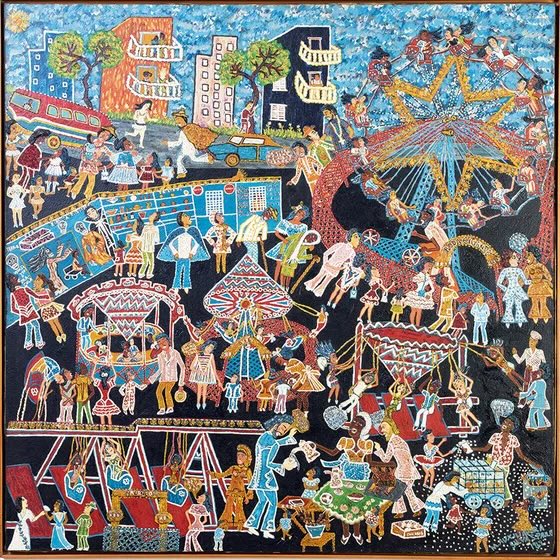
 Maria Auxiliadora da Silva (Brazil), Parque de diversões (Theme Park), 1973.
Meanwhile, in the Caribbean, Prime Minister Gaston Browne of Antigua and Barbuda threw off his suit, put on a bandana, and, under the name ‘Gassy Dread’, teamed up with reggae star Gramps Morgan to release the single ‘Reparations’ in February 2026. Here are some of the lyrics:
Reparations, justice must come
Africa and the Caribbean as one.
Not charity, but exposing them bold
Restitution for the labour and the gold.
Across the ocean, torn from the land,
Chains on the feet, whip in the hand.
But Jah light carried us through the storm
Now a new day of justice is born.…
They plundered bodies, diamonds, and cane.
Generations carried the weight and the pain.
But the people strong, we still survive.
Now it’s time to let justice arrive:
Reparations, justice must come.
Indeed. Prime Minister Browne should send a link to his song to Marco Rubio and to all the European heads of government. Rubio longs for the colonial ‘spirit’ that sent ships into ‘uncharted seas’. But the people of the Global South remember what those ships carried – and what they took. If the Atlantic world wants to speak of ‘civilisation’, let them begin with restitution: cancelling illegitimate debts, returning stolen wealth, and paying reparations for centuries of colonial plunder and neocolonial extraction. The era of colonial impunity is over. Justice must come.
Warmly,
Vijay

 The New Dark Age
Leave a comment