Thursday, 5 March 2026 — The Tricontinental
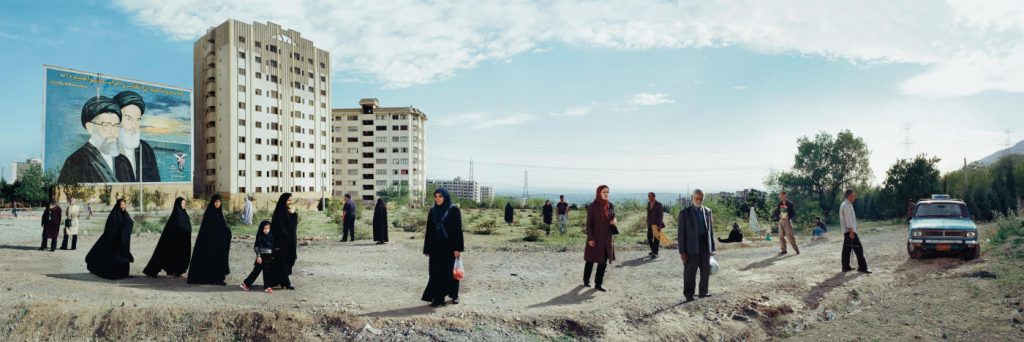 Mitra Tabrizian (Iran), Tehran, 2006.
To the girls of the Shajarah Tayyebeh elementary school in Minab, Hormozgan Province, Iran, who were killed by the illegal Israeli-US war of aggression.
Dear friends,
Greetings from the desk of Tricontinental: Institute for Social Research.
On 28 February, a few hours after negotiators said that Iran had accepted many of the demands regarding its nuclear programme, the United States and Israel launched strikes on Iran. This was the second strike since the United States and Israel attacked Iran in June 2025. Both strikes are illegal, since they violate Iran’s sovereignty, which is guaranteed by the United Nations Charter.
Iran is a sovereign country and, just like the United States, a founding member of the United Nations. It is therefore entitled to all the benefits and responsibilities of the UN Charter. The United States signed and ratified the UN Charter, which means that the US government has a treaty obligation to the Charter and to the other member states. After President George W. Bush violated the UN Charter to start a war of aggression against Iraq, US President Donald Trump told Howard Stern on 16 April 2004, ‘I think Iraq is a terrible mistake. And to think that when we leave, it’s gonna be this nice democratic country. I mean give me a break’. Trump is not taking his own advice.
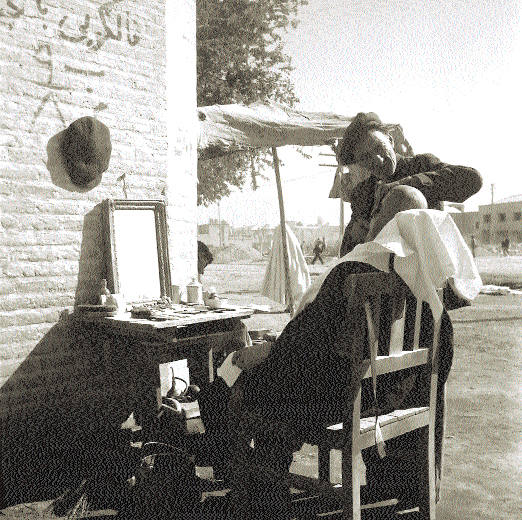
Mahmoud Pakzad (Iran), Barber Shop, 1958.
Why did the United States want to attack Iran, a country with nearly a hundred million people and a centuries-long tradition of patriotism, first in 2025 and then in 2026? In his last State of the Union address, Trump said that the main reason was that he believed that Iran has a nuclear weapons programme. Yet Iran has repeatedly said that it does not have a nuclear weapons programme. This was laid out clearly by Ayatollah Seyed Ali Khamenei in a fatwa (judgment) that he first made public in 2003, but which had been written a decade earlier. In that fatwa, Ayatollah Khamenei noted that Iran’s soldiers suffered from the use of illegal mustard gas and other chemical weapons by Iraq (supplied by the United States and West Germany), and that this experience and his reading of Islamic ethics made it unconscionable to use weapons of mass destruction. Leader after leader in Iran has reiterated the same view.
In the State of the Union address on 24 February, Trump said, ‘We haven’t heard those secret words, we will never have a nuclear weapon’. But this is precisely what Ayatollah Khamenei had said. In fact, a few hours before Trump’s address, this is exactly what Iran’s foreign minister Seyed Abbas Araghchi tweeted: ‘Iran will under no circumstances ever develop a nuclear weapon’. On 17 February, Iran’s President Masoud Pezeshkian said, ‘Based on the fatwa of the Supreme Leader, from an ideological standpoint we are absolutely not pursuing nuclear weapons, and however they wish to verify it, we are prepared’. He asked, ‘In what language should we say we don’t want nuclear weapons?’. His statement, in Farsi, was translated into a range of languages. Yet it seems that news of this did not reach the White House.
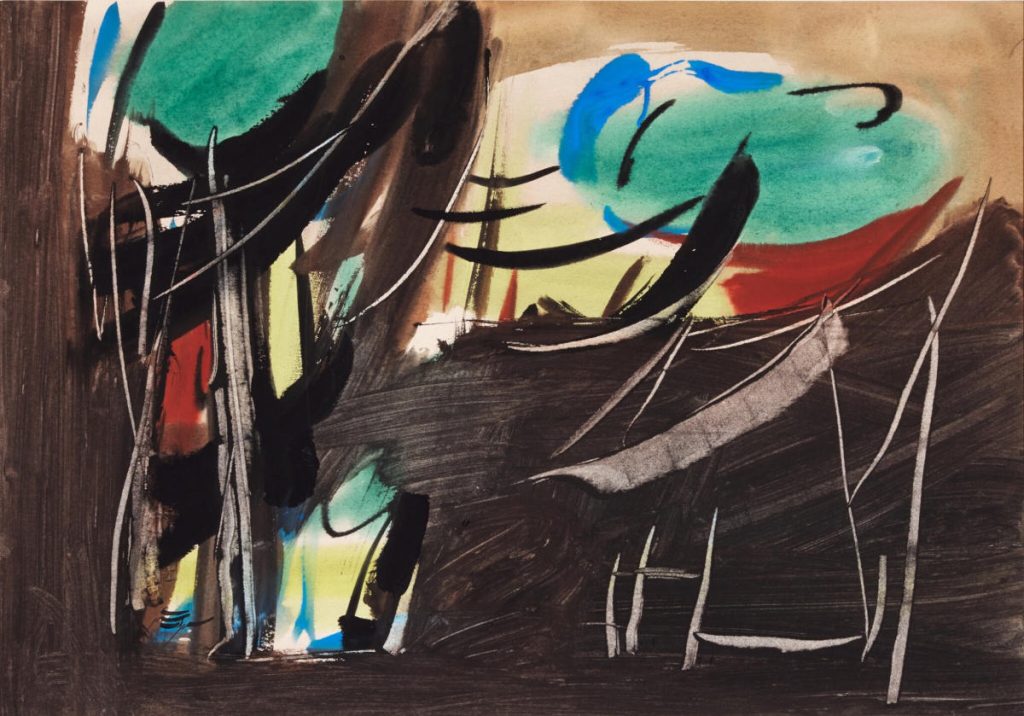
Sohrab Sepehri (Iran), Untitled, 1960s.
In 1957, Iran and the United States signed the Agreement for Cooperation Concerning Civil Uses of Atomic Energy, which allowed the US to transfer nuclear technology and materials through the Atoms for Peace programme created by President Dwight D. Eisenhower. In 1959, the Iranian government – then controlled by the last Shah of Iran, Mohammad Reza Pahlavi – opened the Tehran Nuclear Research Centre. Several years later, the US provided Iran with a 5-megawatt thermal nuclear reactor that was designed for medical radioisotope production and scientific research.
After the Iranian Revolution of 1979, the new government shut down the nuclear energy research programme. Following the war with Iraq, which ended in 1988, and the death of Ayatollah Ruhollah Khomeini in 1989, Iran restarted its nuclear energy programme for electricity generation, medical isotope production, and scientific training. In 1995, Iran signed a deal with Russia to rebuild the Bushehr Nuclear Power Plant in Iran (built in 1975 by the West Germans and bombed by the Iraqis using West German intelligence). Again, Iranian officials have repeatedly said, we do not want nuclear weapons ever. The US did not seem to disbelieve the Iranians when it restarted nuclear energy programmes for these purposes.
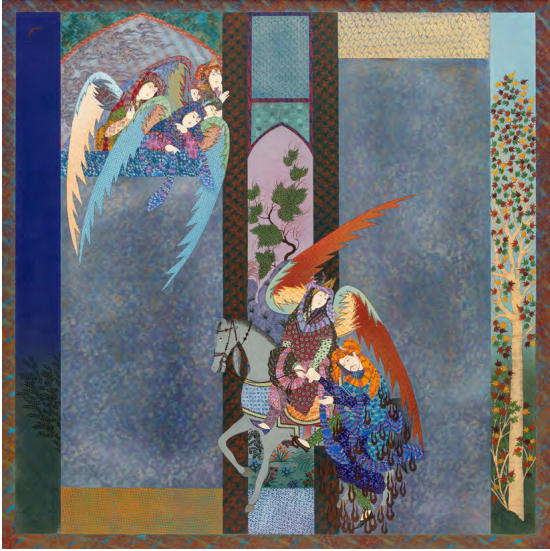
Farah Ossouli (Iran), Untitled, 2003.
Everything changed after the US attacked Afghanistan in 2001 and Iraq in 2003, removing Iran’s two historical adversaries (the Taliban and Saddam Hussein’s government). Iran, which was previously hemmed in by its neighbours, now had the opportunity to build relations with Iraq, Syria, and Lebanon. This was a shock to Washington, which had not clearly understood the ramifications of its illegal wars. To isolate Iran, the Bush administration concocted the myth of Iran’s nuclear weapons ambitions and cynically used the International Atomic Energy Agency (IAEA) for its campaign.
Bush, as he often did, ignored the facts before him. What were these facts?
- In 2007, the US intelligence community’s National Intelligence Estimate concluded, ‘We judge with high confidence that in fall 2003, Tehran halted its nuclear weapons programme’. Whether Iran actually had a nuclear weapons programme before this date is not the issue; the CIA and other agencies agreed that there was no programme after 2003.
- In 2011, an IAEA report suggested that Iran’s actions to procure various kinds of materials (‘nuclear related and dual use equipment’) indicated a ‘possible military dimension’, but with no evidence. Each of the accusations came with caveats. It seemed that the IAEA was under immense pressure from the US government and its European allies. The report bore all the marks of political influence.
- In 2015, the IAEA released its Final Assessment on Past and Present Outstanding Issues regarding Iran’s Nuclear Programme, written by its director general, Yukiya Amano. This report conclusively says that there are ‘no credible indications’ of any activities relevant to a nuclear explosion device after 2009 and no credible evidence of diversion of nuclear material for weapons.
- In 2025, IAEA Director General Rafael Mariano Grossi told Al Jazeera definitively, ‘We did not find in Iran elements to indicate that there is an active, systematic plan to build a nuclear weapon’.
There can be no clearer statement than that of Grossi: ‘we did not find’. Put that beside the statement from President Pezeshkian: ‘in what language should we say we don’t want nuclear weapons?’.
There are no nuclear weapons in Iran. To go to war on that pretext is to follow the example of Bush and his ‘weapons of mass destruction’ in Iraq. Where were those weapons? In his imagination.
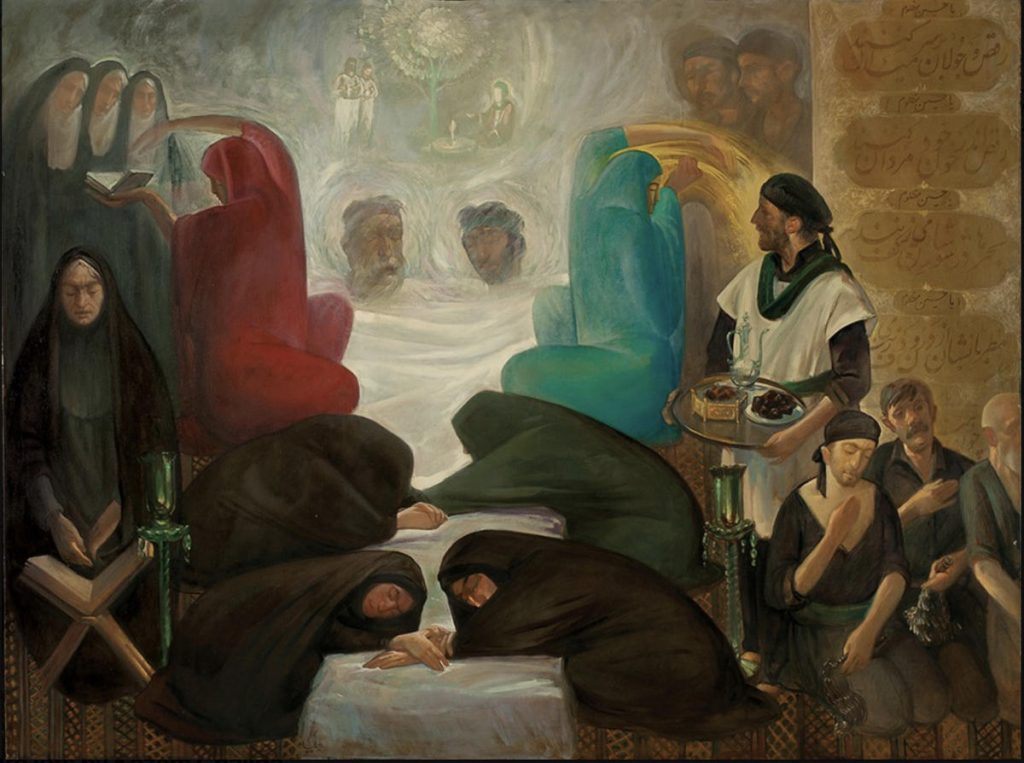
Kazem Chalipa (Iran), Reunion, n.d.
Certainly, there are great problems within Iran. A combination of the attempt by the United States and Europe to make Iran’s economy scream and poor economic management by Minister of Economic Affairs and Finance Seyed Ali Madanizadeh (trained at the University of Chicago) have created serious problems for Iran’s working people. But Iran cannot solve its problems without an end to the US-imposed hybrid war that suffocates its economy and its peoples.
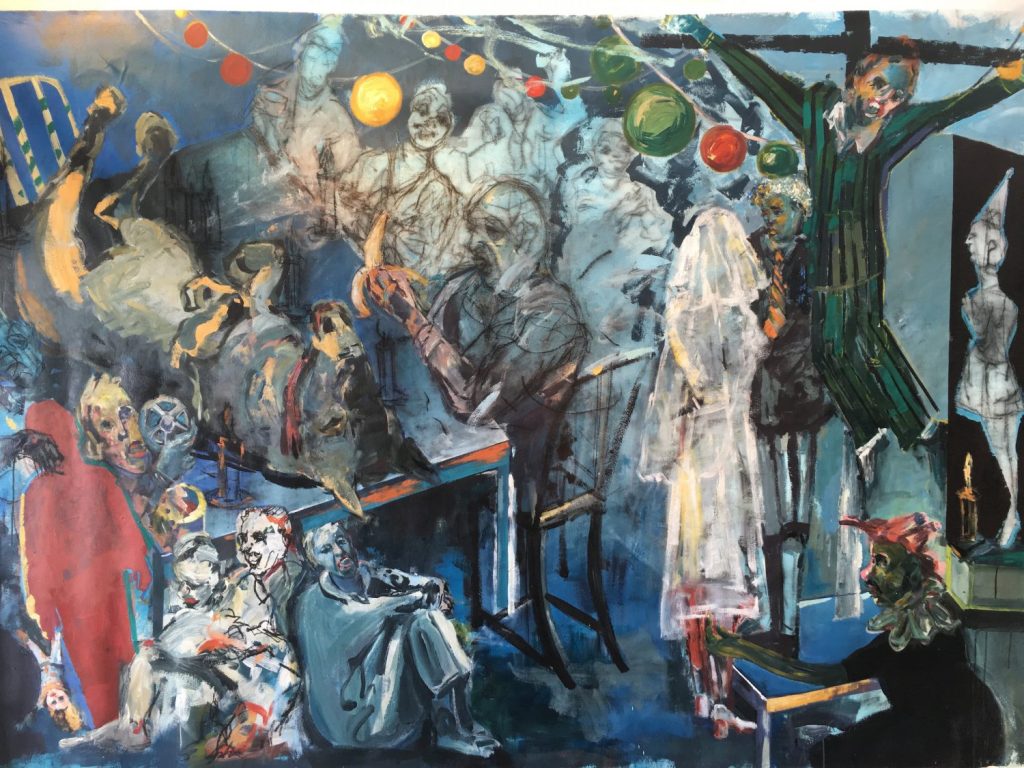
Sarah Issakharian (Iran), The First Supper, 2016.
The Iranian people know war very well. It has been imposed on them repeatedly, from the Anglo-Persian War (1856–1857) to the Iraqi invasion (1980) to the current hybrid war.
In the poem ‘Lidless Coffins with No Bodies’, the Iranian poet Behzad Zarrinpour (born 1968) wrote about the terror of war, a terror that was inflicted by Bush’s ‘terrible mistake’. I want to share a part of that beautiful and impactful poem with you:
The Wind has filled the city’s nostrils
with destruction’s odour.
No one flees the harsh sun
For the gentleness of unstable walls.
Spread-out inhospitable tablecloths,
Empty promises,
Stomachs that instead of bread
Eat bullets,
And bankrupt salt sellers
Who have dispatched their gunnysacks
To the war front to be swelled with sand.
Grandmother’s tongue is so terror-struck
She cannot remember her prayers.
Warmly,
Vijay


 The New Dark Age
Leave a comment