Thursday, 12 March 2026 — The Tricontinental
In recent years, the Latin American far right has launched a crusade against the rights of women and sex-gender dissidents, hoping to crush some of the region’s most active opposition to neoliberalism.
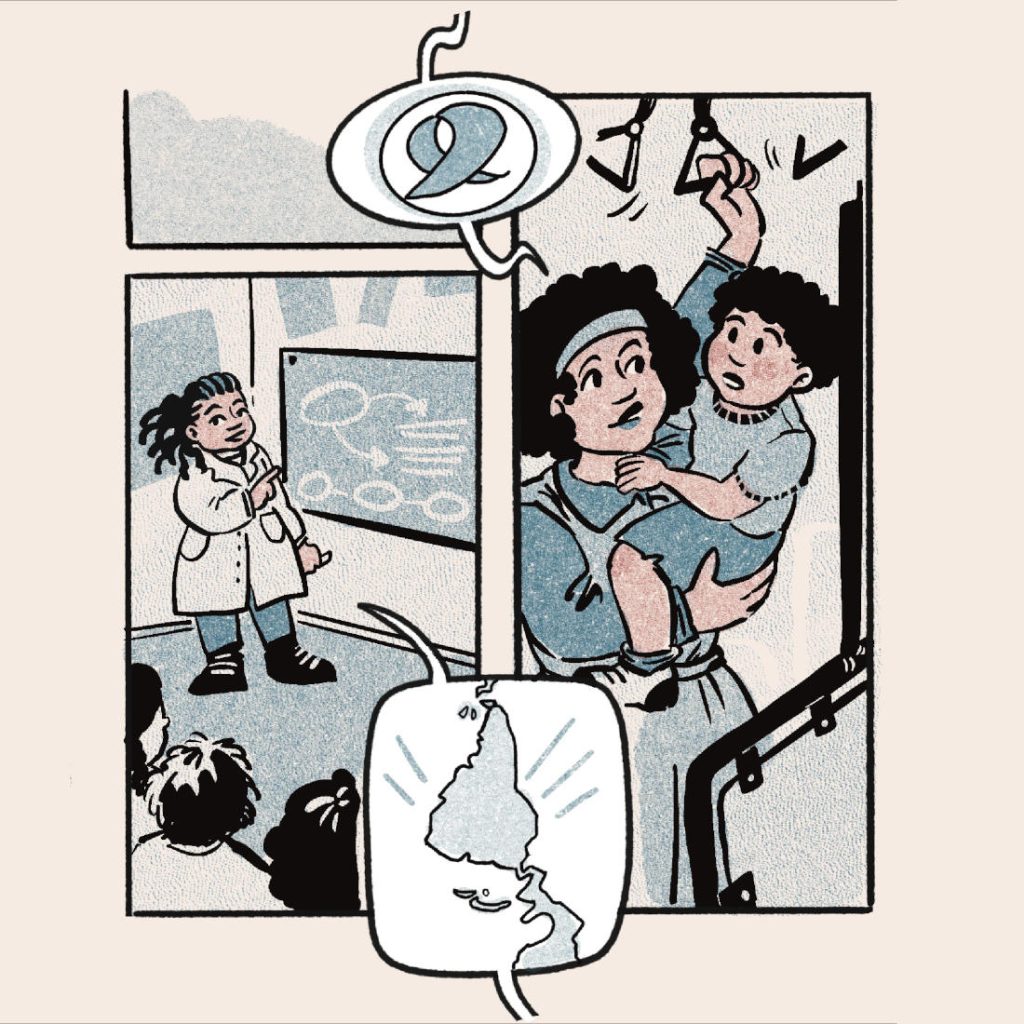
Dear friends,
Greetings from the desk of Tricontinental: Institute for Social Research.
Across Latin America, a strange war has been declared. It is fought not only in parliaments and courts but in classrooms, kitchens, churches, and the restless spaces of the internet. Its targets are women, queer and trans people, and the movements that insist life can be lived differently. The contemporary far right of a special type claims to defend the patriarchal family, morality, and tradition. But beneath these words lies another project: the restoration of old hierarchies at a moment when the world that sustained them is trembling.
For decades, feminist movements have unsettled the foundations of power in Latin America. From the struggles against dictatorships in the 1970s and 1980s to the massive demonstrations against femicide and for reproductive rights in the twenty-first century, women and sex-gender dissidents have expanded the horizon of what is possible. They have named what was once invisible. They have spoken about the long hours of unpaid labour that sustain society. They have exposed the violence that hides inside the home. They have insisted that bodies, desires, and identities cannot be disciplined by the state or the church. And they have done so in the streets – together.
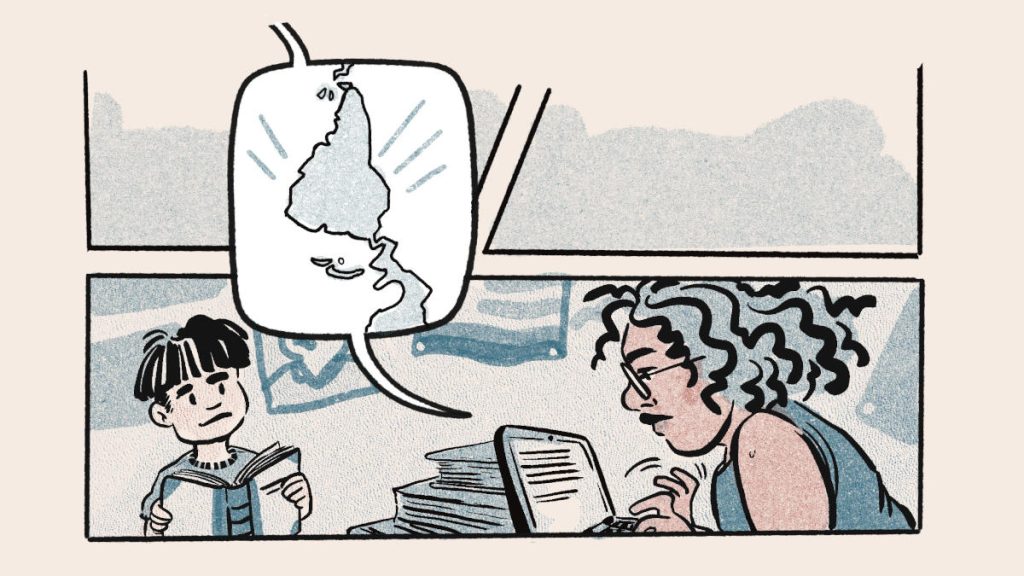
These advances, however, have unfolded under the long, stingy shadow of neoliberalism. Across Latin America – and indeed the rest of the world – the burden of care still rests heavily on women’s shoulders, with women working longer hours for less pay while millions remain without independent income. This reality was recognised in August 2025 at the XVI Regional Conference on Women in Latin America and the Caribbean, held in Mexico City. There, the countries of the region approved the Tlatelolco Commitment, which established a Decade of Action (2025–2035) to achieve substantive gender equality and build what the conference called a ‘care society’ – one in which the work of sustaining life is treated as a collective responsibility rather than a private burden placed on women. As Citlalli Hernández Mora, Mexico’s Minister for Women, said in her closing remarks, the commitment is a ‘road map’ for the coming years. The countries of the region, Hernández Mora continued, will ‘not accept rollbacks. We do not tolerate impunity, and we will build through our activism and our alliances, a care society as the basis for peace, justice, equity, and the future’. The delegates at the conference recognised a truth long advanced by feminist movements: that the current system – the capitalist system – survives through a sexual division of labour, in which unpaid domestic and care work, valued at 15.9%–25.3% of GDP in Latin America and the Caribbean and performed overwhelmingly by women, sustains households, reproduces the labour force, and keeps society going.
In 1975, also in Mexico City, the United Nations convened the World Conference of the International Women’s Year. The following year, it launched the Decade for Women (1976–1985), which culminated in the World Conference on Women in Nairobi, Kenya, in 1985. Many of the concerns voiced in August 2025 echoed those heard in Nairobi forty years earlier. Rather than marking clear progress, the 2025 conference was overshadowed by a sense of reversal – visible not only in public policy but also in the language being used to talk about women’s equality.
In times of crisis, the propertied classes, quite pleased with the status quo, search for enemies to disrupt the path to progress. In recent decades, the far right of a special type has made what it calls ‘gender ideology’ one of its central enemies – a phrase repeated endlessly in speeches and sermons, transforming the simple demand for dignity into a cosmic threat. According to this story, feminism is not a movement for justice but a conspiracy against humanity; diversity is not a human reality but a danger to civilisation itself. In this theatre of fear, the ‘family’, defined only as a father and mother with children, is presented as a fortress under siege. The causes of suffering – austerity, exploitation, and poverty – are carefully hidden and instead the blame for this suffering is directed toward the very movements that seek to transform society for the better. Thus, resentment is redirected, anger is repackaged, and hope is replaced with suspicion.
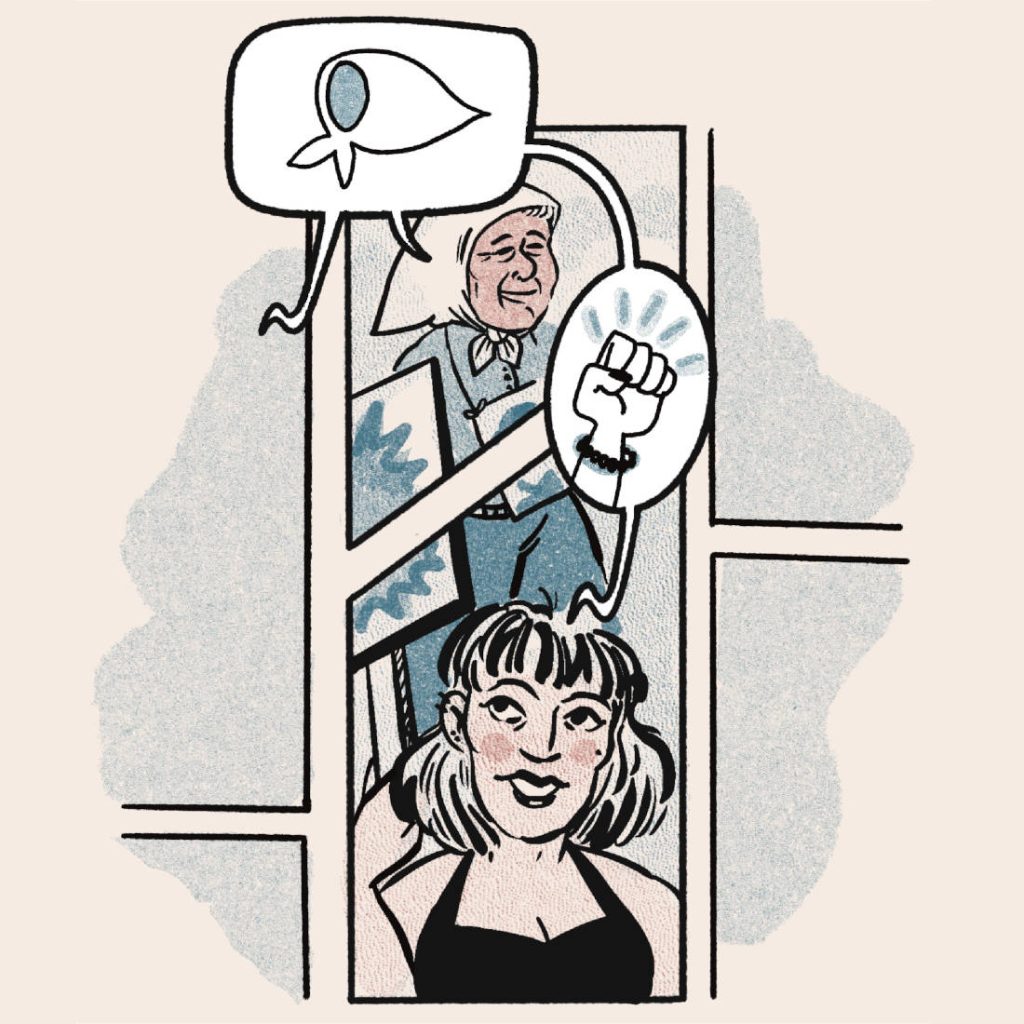
One of the most visible expressions of this reaction is the campaign Con Mis Hijos No Te Metas (‘Don’t Mess with My Children’). The slogan first appeared in Colombia in 2016 during protests against sex education programmes and quickly spread across Latin America, carried by
evangelical churches, conservative NGOs, and right-wing politicians. Behind those simple words lies a complex network of organisations that mobilise protests, shape legislation, and flood social media with alarming narratives about the supposed dangers of gender equality – all while claiming to protect ‘childhood innocence’. Yet what these forces sweep under the rug is the violence that actually structures women’s lives. National surveys from across Latin America show that between 63% and 76% of women have experienced some type of gender-related violence in some sphere of their lives, and one in four women in the region has experienced physical or sexual violence at the hands of an intimate partner at least once in her life. Strikingly, in 2023, of the 18 Latin American countries that reported femicide or feminicide data, 11 recorded a rate exceeding 1 victim per 100,000 women – a trend that continues to rise. Instead of confronting these problems, fears of ‘gender ideology’ are used by the far right of a special type to undermine actual knowledge that teaches young people that the world can be a brighter place.
Our most recent dossier, The Anti-Feminist Agenda of the Latin American Far Right, (March 2026) examines the far right’s anti-gender crusade. We show how this movement does not operate in isolation but forms part of a transnational constellation of conservative forces stretching from Washington to Budapest to Brasília. At gatherings such as the Conservative Political Action Conference, far-right politicians, evangelical leaders, and wealthy financiers converge to coordinate their campaigns. In these spaces, feminism becomes a common enemy and the language of ‘freedom’ is twisted to defend privatisation, exclusion, and hierarchy. Money flows across borders, strategies circulate, and messages are refined and repeated. And, through digital platforms designed to reward outrage, fear and misinformation travel faster than truth.
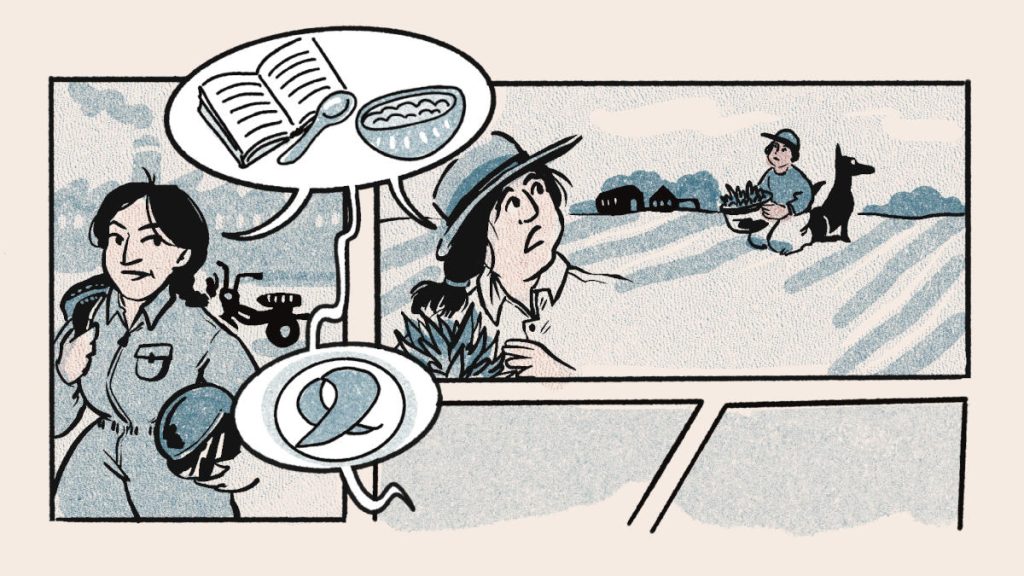
As the anti-gender offensive spread across Latin America, it collided with one of the most powerful feminist cycles in the region’s recent history (2015–2019). Women filled the streets with green scarves demanding the right to abortion. Communities organised against gender-based violence.
International feminist strikes linked the exploitation of labour to the violence of patriarchy, racism, and extractivism. In doing so, they revealed something fundamental: the struggle over gender is not only about identity or culture, but about the organisation of society itself. The far right seeks an individualistic and privatised order structured by authority, hierarchy, and obedience – a world where the patriarchal family absorbs the shocks of economic crisis by forcing women to devote even more hours to unpaid and unrecognised care work, sacrificing their freedom and life choices while inequality appears as natural. Feminist movements imagine something else. They imagine a society organised around care rather than profit, solidarity rather than competition, and life rather than accumulation. Between these two visions lies the struggle of our time: capitalist barbarity or life and dignity. Across Latin America, from city streets to working-class neighbourhoods and community kitchens, millions continue to insist on building a brighter world, not one based on fear and hierarchy.
The other day, following Israel’s bombing of Iran and Lebanon, I was reading a short biography of the Mexican feminist poet Rosario Castellanos, who served as Mexico’s ambassador to Israel from 1971 until her death in 1974. She died of accidental electrocution in Tel Aviv at the age of forty-nine – according to differing accounts, after touching a lamp at home, reaching for a light after bathing, or plugging in a lamp. I imagine this sensitive woman was deeply impacted by the occupation of Palestinians and by the 1973 Yom Kippur War. Although as an ambassador she made few public statements about the situation of Palestinians, one interesting artefact remains. In 1972, in her regular column in the Mexican newspaper Excélsior, she published a poem called ‘Pasaporte’ (Passport), which echoes Mahmoud Darwish’s 1964 poem ‘Jawaz al-Safar’ (Passport). In both poems, documents are not neutral. They discipline life, fix identity, and decide whose humanity will count:
A woman of ideas? No, I’ve never had one.
Nor have I ever repeated anyone else’s (out of modesty or mnemonic lapse).
A woman of action? No, not that either.
One need only look at the size of my feet and hands.A woman of words, then. No, not a woman of my word.
But of words –
many of them, contradictory, alas, insignificant,
mere sound, a hollow sifting of arabesques,
a salon game, gossip, froth, oblivion.But if a definition is needed
for the identity card, write
that I am a woman of good intentions,
and that I have paved
a straight and easy road to hell.
Warmly,
Vijay
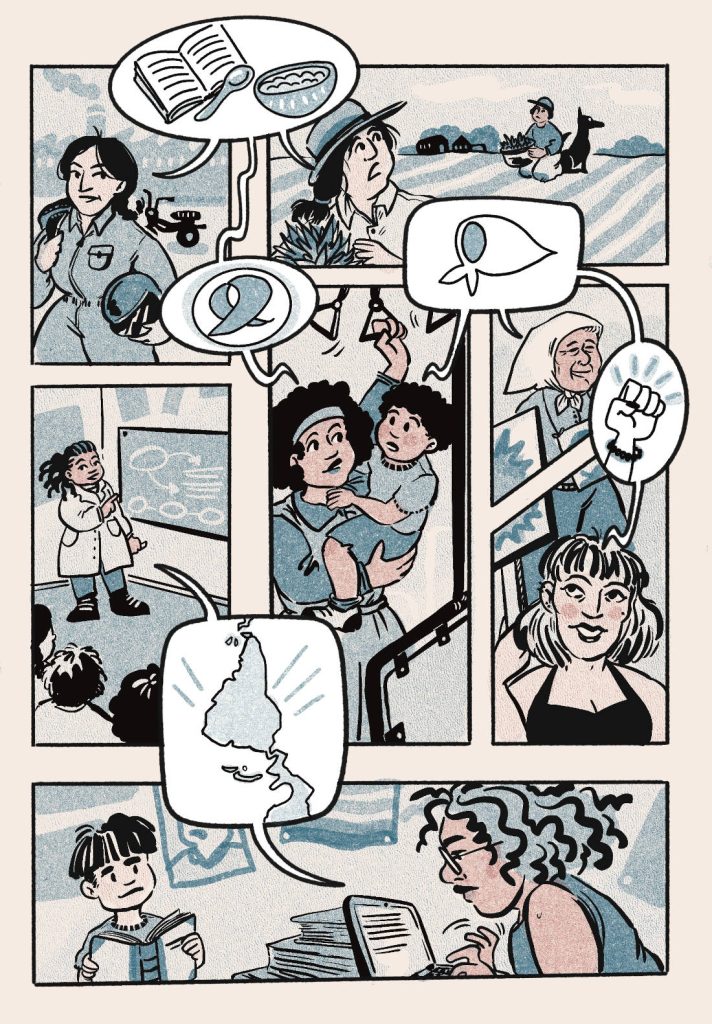
PS: The images in this newsletter are from Colectivo (Collective, 2026), a comic by Dani Ruggeri of Tricontinental’s art department.

 The New Dark Age
Leave a comment