Tuesday, 17 March 2026 – Struggle / La Lucha
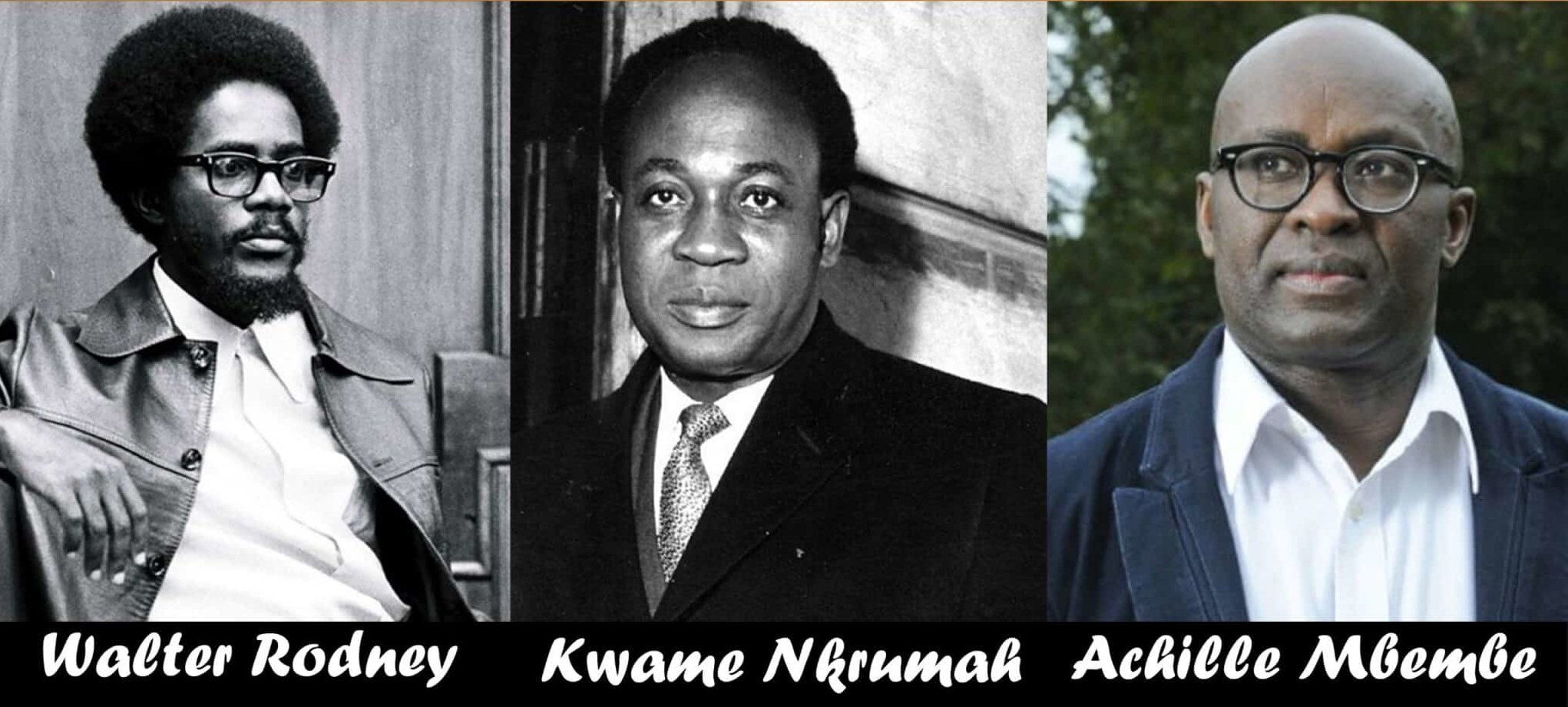
Africa’s incorporation into global capitalism has never been neutral. From the Atlantic slave trade through colonial rule and into the post-independence era, the continent has been structurally positioned as a source of value for others rather than a site of autonomous accumulation. What is often misunderstood is not whether this extractive logic has ended, but how it has changed. In the twenty-first century, data, digital labor, and algorithmic infrastructures have emerged as new vectors of accumulation. In this piece, Prince Ifoh argues that re-reading Walter Rodney, Kwame Nkrumah, and Achille Mbembe allows us to see how digital capitalism reconfigures rather than break with Africa’s history of underdevelopment.
Walter Rodney’s How Europe Underdeveloped Africa begins from a crucial conceptual clarification: “Underdevelopment is not absence of development, because every people have developed in one way or another and to a greater or lesser extent.”1 Rodney insists that underdevelopment is a historical relationship, not a natural condition. Africa’s economies were actively reorganized to serve external accumulation, while their own productive capacities were distorted or suppressed. Europe’s development and Africa’s underdevelopment, Rodney argues, were “two sides of the same coin.”2 This relational insight remains indispensable for understanding Africa’s contemporary digital condition. Today, African societies are deeply integrated into global digital systems—social media platforms, biometric identification schemes, mobile payment infrastructures, ride-hailing and delivery apps. African users generate enormous volumes of data, yet ownership, analytical capacity, and monetization remain overwhelmingly external. Participation is intense, but control is minimal. This mirrors the colonial economy Rodney described, where African labor and resources were indispensable to global accumulation, but African societies were denied the means of value capture.
Kwame Nkrumah’s Neo-Colonialism: The Last Stage of Imperialism provides the political framework that explains how such arrangements persist after formal independence. Nkrumah defines neocolonialism as a condition in which a state “is, in theory, independent and has all the outward trappings of international sovereignty. In reality its economic system and thus its political policy is directed from outside.”3 The danger of neocolonialism, he warns, is precisely its invisibility: domination without direct rule. It suffices to note that digital infrastructures exemplify this logic with striking clarity. African states retain territorial sovereignty, yet the platforms that mediate communication, commerce, labor, and knowledge operate beyond meaningful democratic control. Cloud services, content moderation regimes, data storage, and algorithmic decision-making are governed by corporate policy rather than public law. As Nkrumah observed, neocolonialism produces “power without responsibility” for those who benefit, and “exploitation without redress” for those who bear its costs.4 Digital capitalism reproduces this asymmetry at planetary scale.
Rodney’s analysis helps explain why this condition is structural rather than accidental. Colonial economies were organized around the export of raw materials, not industrial transformation. In a parallel fashion, African digital economies are increasingly configured around the extraction of raw data rather than the development of domestic data-processing industries, artificial intelligence capacity, or sovereign platforms. African workers perform essential digital labor—from content moderation to ride-hailing—while surplus value accrues elsewhere. Underdevelopment, once again, is produced through participation itself.
What distinguishes the present moment is not merely technology, but opacity. Data extraction is continuous, normalized, and embedded in everyday life. Achille Mbembe’s Critique of Black Reason provides a crucial conceptual bridge for understanding this shift. Mbembe situates contemporary capitalism within a longer history in which Blackness was produced through regimes of capture, commodification, and abstraction. In the era of Atlantic slavery, he writes, Africans were transformed into “human-objects, human-commodities, and human-money,” with their lives reorganized entirely around extractive logics of capital.5 This historical process was foundational to modern capitalism itself. Mbembe argues that these logics have not disappeared but have been generalized and intensified. In the contemporary moment, he observes, neoliberal capitalism operates through abstraction, digitization, and the conversion of life into calculable value, producing new forms of dispossession that extend beyond race while remaining deeply shaped by its history. According to him, “the potential fusion of capitalism and animism” raises the possibility that human beings themselves may be transformed into “animate things made up of coded digital data.”6 Digital systems thus extend earlier extractive regimes by rendering human activities such as movement, communication, or labor continuously legible, extractable, and monetizable.
This intervention deepens the political stakes of digital dependency. Africa is becoming not only a site of extraction, but also a testing ground for new technologies of governance and control. Mbembe warns that contemporary forms of power increasingly rely on the management of populations through surveillance, zoning, and exclusion, producing what he describes as a planetary condition of fungibility and disposability. In one of his most forceful formulations, he argues that racial capitalism functions as a giant necropolis, sustained by the systematic exposure of certain populations to premature death and abandonment.7 In this context, digital infrastructure is not neutral: it becomes a terrain of sovereignty, where struggle over data, visibility, and control determine who benefits from technological transformation and who bears the cost.
Neither Rodney nor Nkrumah, however, wrote as fatalists. Rodney insisted that underdevelopment was historical and therefore reversible, while Nkrumah argued that fragmentation was the principal obstacle to African autonomy. Balkanization, Nkrumah warned, ensures that Africa remains a patchwork of small, weak states incapable of defending their own interests.8 Their combined insights are clear: structural dependency cannot be overcome through isolated national strategies. When applied to this digital age, this implies that data sovereignty and technological autonomy require collective action. Fragmented regulatory regimes only strengthen the bargaining power of multinational platforms. Continental coordination—through shared infrastructure, industrial policy, and public investment—is not an ideological preference but a material necessity. Without it, Africa risks becoming what it has been before; that is, a reservoir of raw inputs for global accumulation.
At the same time, Mbembe reminds us that power does not reside in states alone. Digital domination operates through everyday life, and resistance must therefore emerge from multiple sites. African gig workers contesting algorithmic exploitation, activists challenging biometric surveillance, and technologists building open-source alternatives are all engaged in struggles over Africa’s digital future. These struggles echo Rodney’s insistence that Africans must understand the systems that dominate them, and Nkrumah’s warning that sovereignty without control over economic and technological foundations is illusory.
Thus, re-reading Rodney, Nkrumah, and Mbembe today is not an exercise in nostalgia. It is an act of analytical clarity. Digital capitalism does not inaugurate a new era of development by default. Like earlier phases of capitalism, it enters a world structured by inequality and reproduces that inequality unless actively contested. The question facing Africa is therefore not whether it will digitize, but on whose terms. Whether the continent remains a peripheral supplier of raw data or becomes a sovereign participant in shaping global digital futures depends, as it always has, on political choices made in the present.
Prince Ifoh is a Pan-African scholar and graduate student at the Dr. Mack Henry Jones Department of Political Science, Clark Atlanta University, Ga. He is the founder of the Young African Leaders Forum (YALF) and the founding editor of the Young African Leaders Journal of Development (YALJOD), Africa’s premier youth journal. His work focuses on political economy, youth political agency, governance, and postcolonial state formation in Africa.
- Walter Rodney, How Europe Underdeveloped Africa (London: Bogle-L’Ouverture Publications, 1972), 13.
- Rodney, How Europe Underdeveloped Africa, 130.
- Kwame Nkrumah, Neo-Colonialism: The Last Stage of Imperialism (London: Thomas Nelson & Sons, 1965), ix.
- Nkrumah, Neo-colonialism, xi.
- Achille Mbembe, Critique of Black Reason, trans. Laurent Dubois (Durham, NC: Duke University Press, 2017), 2.
- Mbembe, Critique of Black Reason, 3-5.
- Mbembe, Critique of Black Reason, 136-137.
- Kwame Nkrumah, Africa Must Unite (London: Heinemann, 1963), 178-181.
Source: ROAPE
Join the Struggle-La Lucha Telegram channel

 The New Dark Age
Leave a comment