Thursday, 2 April 2026 — The Tricontinental
In its latest statement, No Cold War takes stock of the long history of US aggression across the world and the need to reject a future of wars without end.
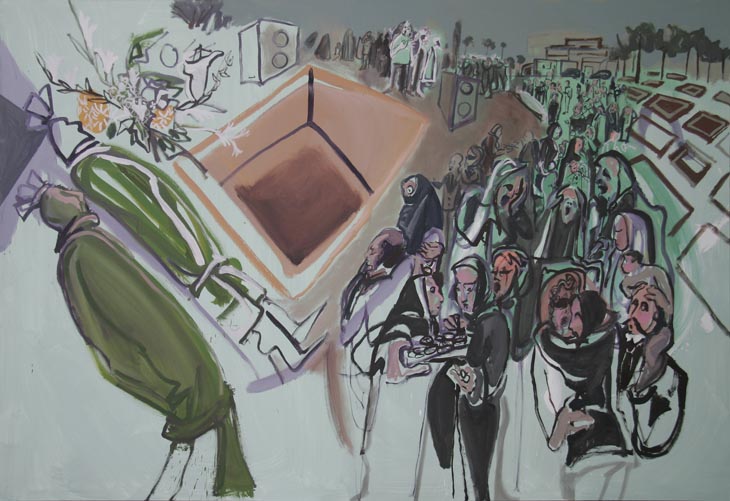 Rokni Haerizadeh (Iran), Typical Iranian Funeral, 2008.
Dear friends,
Greetings from the desk of Tricontinental: Institute for Social Research.
As violence spreads from the Caribbean to Western Asia, the United States and Israel’s war of aggression against Iran is paralysing the global economy. Its consequences were predictable: it was known that if the United States and Israel attacked Iran, the Strait of Hormuz – through which a quarter of global seaborne oil trade passes – would become a chokepoint. With rising oil prices, geopolitical tensions deepen. It feels like little can be done to avert the avalanche of catastrophes that Washington and Tel Aviv have unleashed on the world. Already demoralised by the inability to stop the genocide against the Palestinians, working people around the world are now spectators to yet another war not of our choosing. Faced with this reality, it is easy to plunge into emotions that range from anger to despondency.
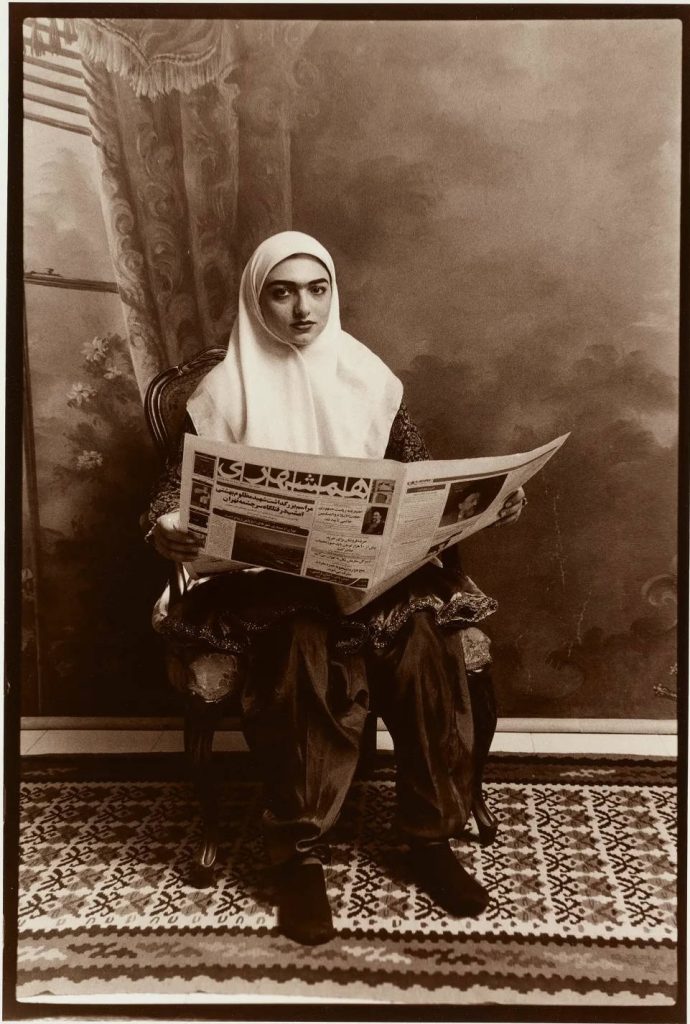 Shadi Ghadirian (Iran), Untitled, 1998.
There is a war against the planet – a war without end.
These words are not exaggerations. At a United Nations daily press briefing, the chief economist of the Food and Agriculture Organization, Máximo Torero, warned, ‘This is not only an energy shock. It is a systematic shock affecting agrifood systems globally’. The Persian Gulf region accounts for nearly half of global sulphur trade, which is used to produce the sulphuric acid necessary to process phosphate rock into fertiliser. Disruptions in this market have already caused fertiliser prices to rise dramatically. This has created problems for farmers who have planted crops or are planning to do so in the coming season. Torero added, ‘Farmers are facing a dual cost shock: they have more expensive fertilisers alongside rising fuel costs affecting the entire agricultural value chain, including irrigation and transport’. Even if the war ends now, food prices are likely to remain high into next year. Given the debt burdens and austerity already imposed on so many countries in the Global South, hundreds of millions more people will be pushed deeper into poverty and hunger.
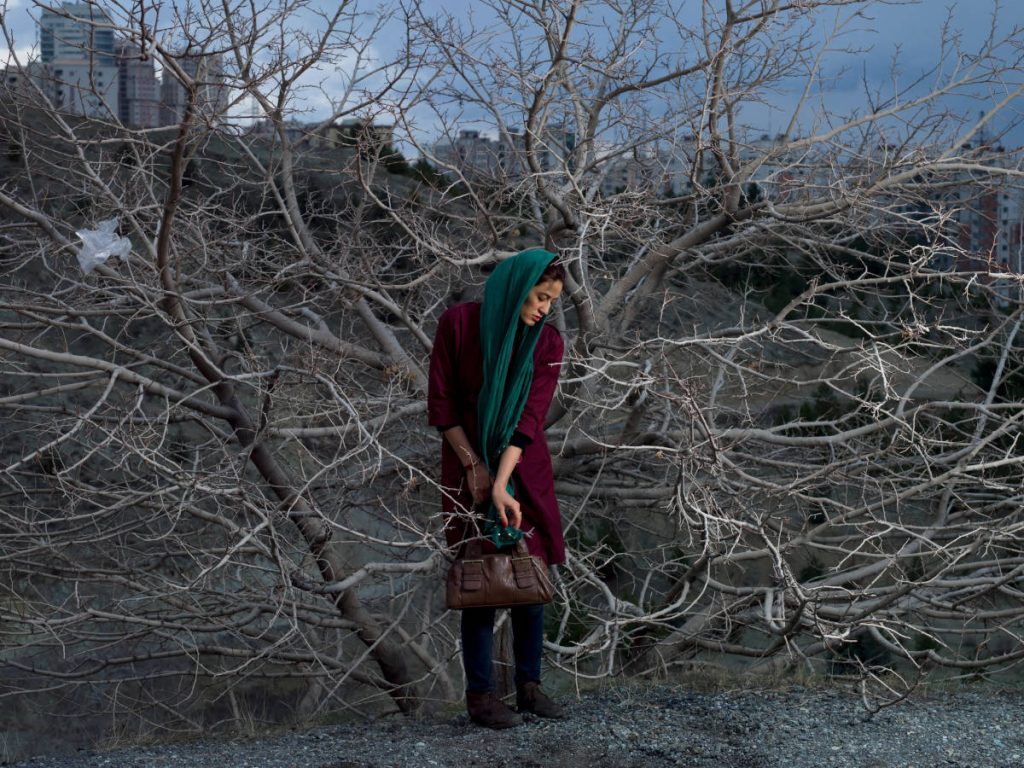 Newsha Tavakolian (Iran), Somayeh (from Blank Pages of an Iranian Photo Album), 2014–2015.
In 2020, at the height of the pandemic and the anti-China rhetoric in the Global North, the No Cold War campaign issued a statement titled ‘A New Cold War against China is against the interests of humanity’. The 176-word statement, which was translated into twenty languages, called for cooperation rather than confrontation among the world’s countries. It was endorsed by over two thousand people and more than twenty peace organisations and platforms. Over the past five years, the collective that runs the No Cold War campaign, of which I am a member, has grown to include almost twenty members drawn from numerous organisations. Alongside our statements, we publish regular essays in our Perspectives series and hold regular conversations about war and peace. We invite you to visit our new website, where you can find a list of our collective’s members and learn how to get involved in our work.
In response to the growing danger of a wider conflict, No Cold War has produced a statement on this war without end:
The capitalist United States has imposed war upon war on the planet for over 90% of its existence since 1776 – only pausing for a few years in its early period. Almost all these wars have been wars of choice, often taking place very far from the US mainland (the wars in the Philippines and Vietnam took place 13,000 km away). These wars resulted in the deaths of tens of millions of civilians, with horrendous weaponry used (including nuclear bombs in Japan and chemical weapons in Vietnam and Iraq). Forty-five men have been president of the United States. All of them have entangled their country in a foreign war or a war against people on the land being settled, particularly Native Americans, enslaved Africans, and immigrants. This belligerent habit has discarded US law (particularly the War Powers Resolution of 1973) and, by default, has permitted US presidents to use their massive military power against the planet.
This pattern is evident in the current conjuncture. In 2026, US President Donald Trump deepened or initiated five major conflicts on the planet. Three of them are being conducted alongside the government of Israel, which operates in a twinned manner with the United States government, with European countries providing diplomatic support and weaponry. Each of these wars violates the United Nations Charter, making them illegal acts that should receive condemnation at the UN Security Council; all of them are wars of aggression, which means that the person who authorised them is a war criminal.
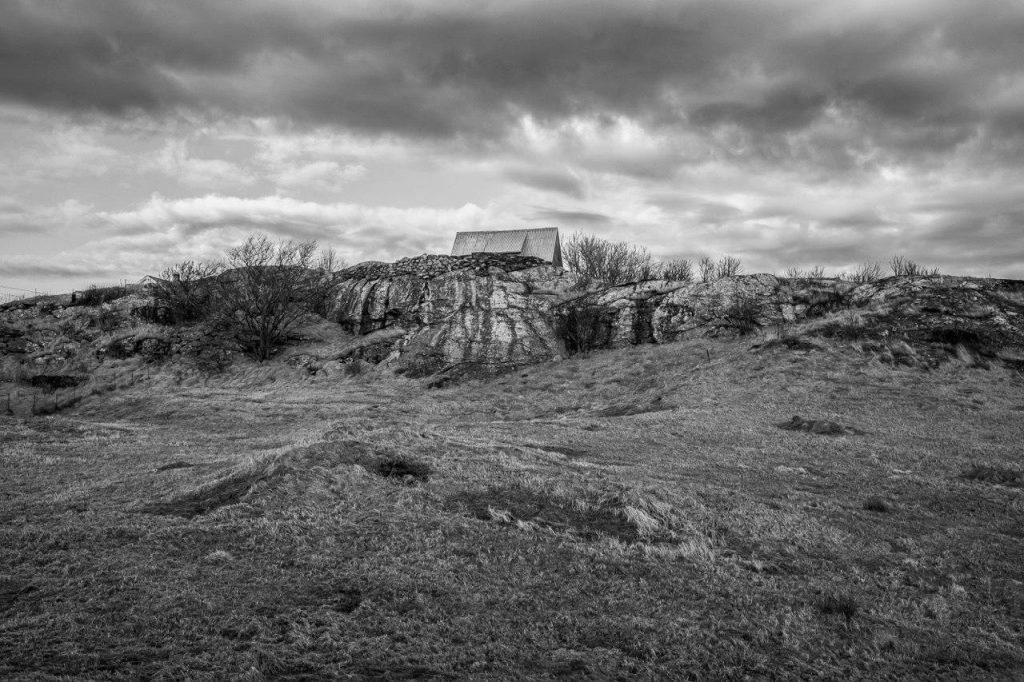 Mehrdad Afsari (Iran), Written Guidance, n.d.
- Venezuela. On 3 January 2026, the United States violated Article 2 of the UN Charter when it invaded a member state of the UN, kidnapped its sitting president, and forced the country to submit to demands devised by the United States government.
- Cuba. The United States has conducted an illegal economic blockade of Cuba since 1960, violating Article 41 of the UN Charter that only permits third-party sanctions to be imposed with a UN Security Council resolution (of which there has been none). This blockade was deepened on 29 January 2026, when Trump forbade any third country from providing oil to Cuba, forcing the country to survive on about a third of its energy supply.
- Iran. On 28 February 2026, the United States and Israel, in violation of Article 2 of the UN Charter, began a barrage of attacks on Iran, killing civilians with abandon and destroying infrastructure across the country, and assassinating the Supreme Leader Ali Khamenei. These attacks come less than a year after the United States and Israel bombed Iran’s nuclear energy facilities over twelve days in June 2025. The recent bombings provoked retaliation from Iran against US military bases that are less shields for Iran’s neighbours and more targets. The war has led to the partial closure of the Strait of Hormuz, which has resulted in a major fuel and food catastrophe across the world.
- Lebanon. Taking advantage of the war on Iran, Israel has been ruthlessly bombing the south of Lebanon and its capital, Beirut, in violation of Article 2 of the UN Charter. A fifth of the population has been displaced, and thousands of civilians have been killed and wounded.
- Palestine. As part of the unending and brutal genocide against the Palestinians, despite the ceasefire, Israel has repeatedly attacked cities in Gaza and has been confiscating land in the Occupied West Bank as well as removing Palestinians from the area in violation of several UN resolutions on the Israeli occupation of Palestine.
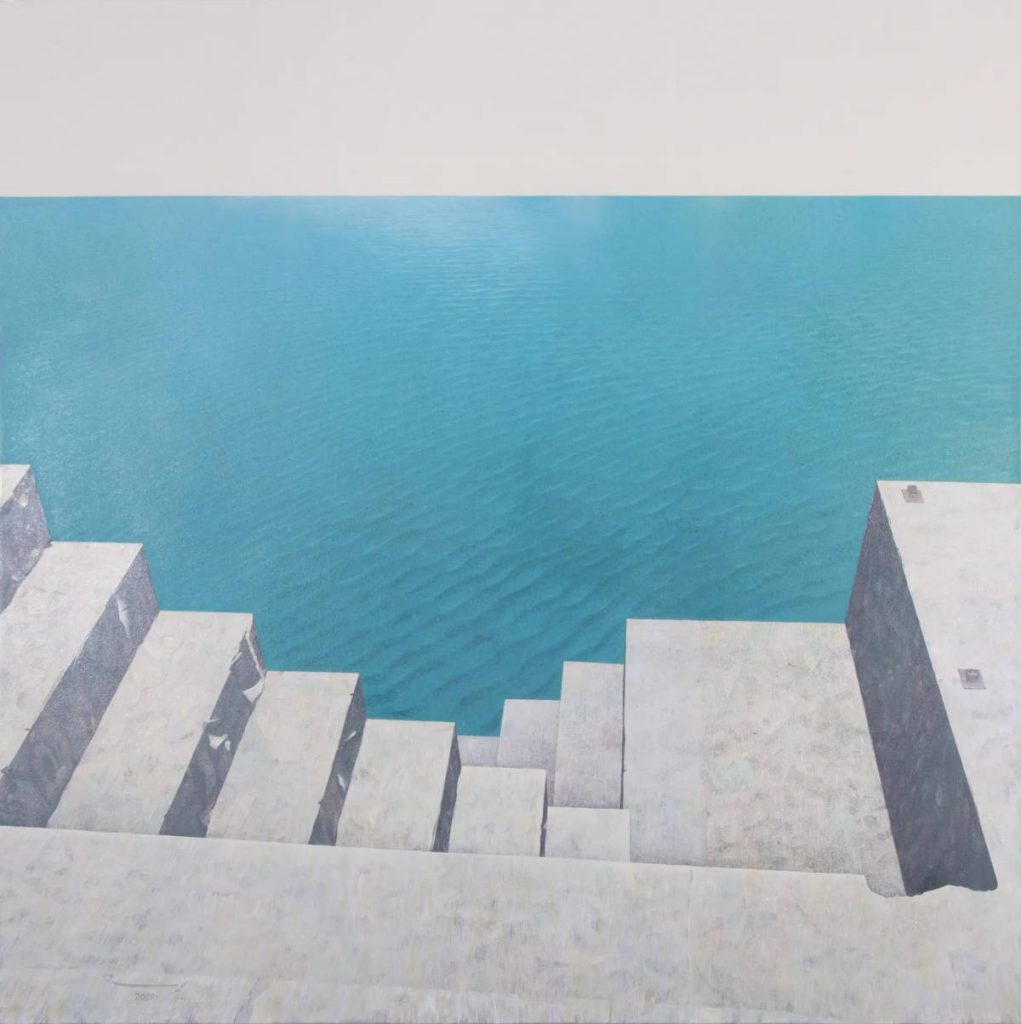 Meghdad Lorpour (Iran), Untitled, 2019.
These five wars are related to each other, being part of the US-driven imperialism that has begun to shape the planet (we are aware of other wars, in Myanmar, Sudan, and Ukraine, for example, but those will be for another statement). Unable to drive an agenda to recover its declined
economic power and stop the rise of the Global South (particularly China), the United States has shifted its focus to its military force. But even here, the United States finds that it can destroy infrastructure and kill civilians, yet it cannot seem to subdue nations politically. Each of these countries stands tall. None of them are willing to surrender.
Despair and demoralisation are not to be the mood of the world’s people. From Cuba to Palestine, those who are being fired upon fight back with everything they have at their disposal. They require the world to stand with them and not to be despondent. They require condemnation of US imperialism, and they require that we never treat such violence as normal. These wars appear to be without end. But they will end. The human spirit is far too strong to be vanquished by tormentors. It uses every avenue to refuse a world in which this history of war without end determines our future.
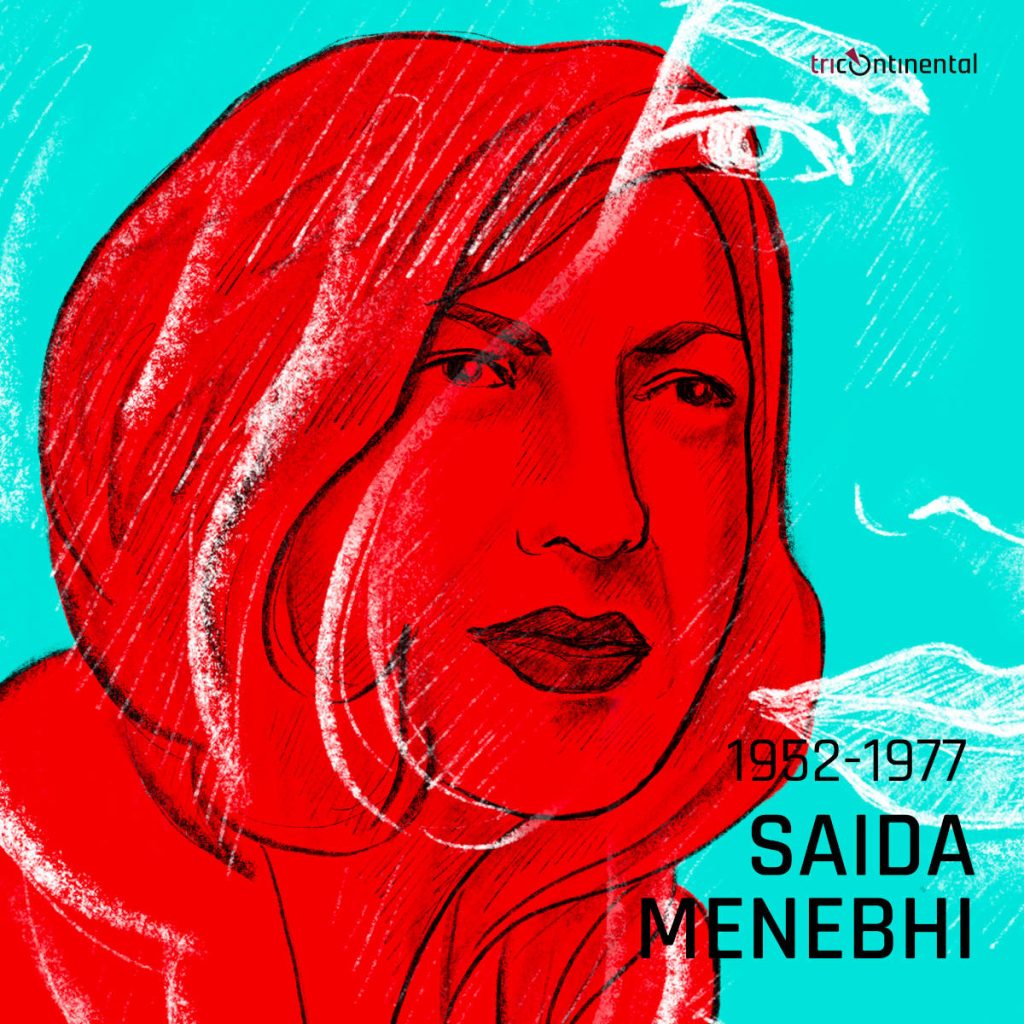
We are in a period that demands strength. That strength comes from our own humanity but also from the example of those who struggled before us. Saïda Menebhi (1952–1977), a schoolteacher and member of the Moroccan Marxist organisation Ila al-Amam (Forward), was one of them. On 16 January 1976, during Morocco’s Years of Lead (Les années de plomb), when the monarchy tolerated absolutely no word or deed in support of a republic, let alone socialism, comrade Saïda was arrested. She was detained at King Hassan II’s torture centre, Derb Moulay Cherif, where she wrote this poem that still gives me chills:
You know my child
I wrote a poem for you
but don’t chastise me
for writing is this language
that you don’t yet understand
it’s nothing my child
when you are older
you will seize this dream
that I dreamt in the middle of the day
when it’s your turn, you will tell the story of this woman
Arab prisoner
in her own country
Arab up to her white hair
her greenish eyes
the dream my child
begins
when I see a pigeon
the birds that build their nests
on the roofs of prisons
I dream of sending a message to the revolutionaries
of Palestine
in order to assure them support for victory
I dream of having wings
just like sparrows
to traverse the skies
as far as Erythrea
as far as Dhofar
arms heavy with guns
the head with poems
I want to be a passenger
on board clouds
with my war attire
combating Pinochet
in the back country of Chile
so that my blood runs
on Chilean soil
that Neruda praised
o my dream
red Africa
without hungry children
I dream
that the moon
up there is going to fall
to take out the enemy
and that the moon will leave me
in Palestine or in the Sahara
anywhere
I struggle for victory
For all people who are combatants.
In late 1977, comrade Saïda joined a hunger strike to protest the king’s policy of holding political prisoners such as Abdellatif Laabi, Abraham Serfaty, Fatima Oukacha, Piera di Maggio, Rabea Ftouh, and herself in isolation. On 11 December that year, Saïda was rushed to Ibn Rushd Hospital in Casablanca, where she died at the age of twenty-five. The memory of her bravery and the poem she left us strengthen us in the struggle against the war without end.
Warmly,
Vijay

 The New Dark Age
Leave a comment