Sunday, 5 July 2026 — New Eastern Outlook
Artificial intelligence is no longer only a technological race. It has become a contest over how economies create value, how societies organise work, and ultimately who exercises power. As the United States and China pursue sharply different AI strategies, they are also advancing competing answers to one of the defining questions of the twenty-first century: what—or who—creates value in an age of intelligent machines?
An emerging field from the theory of value
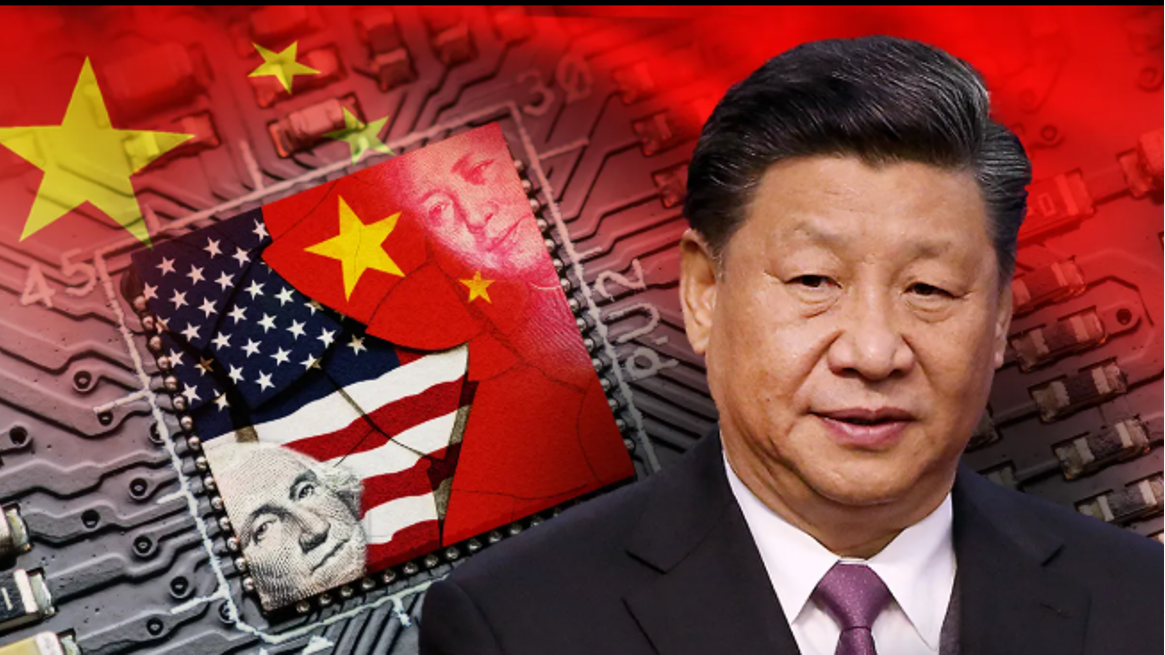
As the United States and China pursue increasingly different paths because of their competing visions of economic organisation, the AI revolution is becoming not only a contest concerning technological supremacy but also a competition between different models of capitalism, governance and value creation
The Marxist labour theory of value serves as a foundational framework in these debates, positing that economic value ultimately originates from human labour rather than from capital or machinery alone. The foundation of this theory was laid by Karl Marx in Capital: A Critique of Political Economy, Volume I, Chapter 1, “The Commodity”. This is where Marx develops the concepts of use-value, exchange-value, and value, arguing that the substance of value is socially necessary labour time.
Here is the Marx formulation: “The value of a commodity is determined by the quantity of socially necessary labour time required for its production.” Machines, he argued, simply pass on their own value to what they help create; only living labour actually generates new value. This brings us to a pressing question in the age of artificial intelligence: can autonomous cognitive systems like AI truly become sources of value in their own right, or is it still human labour at the root of all value, even when AI is involved?
Within this perspective, machines enhance productivity by transferring the value embedded in them through prior human labour, yet they do not independently generate new value. The advent of artificial intelligence challenges this premise by performing increasingly complex cognitive tasks once regarded as uniquely human, prompting inquiry into whether autonomous systems can themselves become sources of value.
Scholars in China examining what has become known as “AI Marxism” contend that artificial intelligence does not invalidate Marx’s labour theory of value but instead necessitates its reinterpretation.
For example, Qiaoyu Cai argues that China’s approach to AI is embedded in a postsocialist political economy, where technological development is understood through the interaction of state planning, market forces, and socialist conceptions of value rather than through technological determinism alone. From this perspective, AI-generated value ultimately remains rooted in collective human knowledge, labour, and social organisation, even as machines assume increasingly sophisticated cognitive functions.
If algorithms are trained on extensive human-generated data and knowledge, the value produced by AI may still be rooted in collective human labour, though in a more diffuse and socially distributed manner. This debate extends beyond theoretical considerations, carrying significant implications for productivity, wage structures, data ownership, taxation of automation, and the future distribution of wealth in economies where intelligent machines become central productive forces.
United States and China: Two Visions for AI
The intellectual divergence reflects two fundamentally different geopolitical visions for artificial intelligence.
In the United States, AI development continues to be largely driven by private technology companies. Silicon Valley’s dominant ambition is to build increasingly autonomous and eventually superintelligent systems able to perform, and potentially replace, a growing range of human tasks. The Trump administration has broadly embraced a light-touch regulatory approach, viewing swift technological progress as a strategic imperative in global competition, even if its wider social consequences remain uncertain.
China has adopted a significantly different framework. Rather than allowing technology companies alone to define AI’s trajectory, Beijing begins with a national vision of economic development and social stability, then asks how artificial intelligence can serve those objectives. As Brookings fellow Kyle Chan and other analysts have argued, China’s AI strategy is inseparable from its broader industrial and geopolitical ambitions: achieving technological self-reliance, strengthening its manufacturing base, reducing strategic vulnerabilities, and enhancing national competitiveness through AI-driven productivity gains.
This explains why China seeks to integrate AI across virtually every sector of its economy—not only high-profile industries such as robotics, semiconductors, and self-driving systems, but also traditional sectors like steel, cement, logistics, and manufacturing. The objective goes beyond technological leadership. It is about transforming productivity throughout the entire industrial base while reducing strategic dependence on foreign technologies, supply chains, and critical inputs.
At the same time, Chinese policymakers acknowledge that large-scale automation entails considerable political and social risks. Maintaining employment and social cohesion, therefore, is a key concern. Rather than viewing labour displacement as an inevitable byproduct of innovation, the Chinese state increasingly attempts to manage the transition, balancing productivity gains with broader objectives of economic stability and political legitimacy.
The contrast with the American model is striking. China’s AI strategy is fundamentally state-directed, with technological development expected to advance national priorities. The U.S. model, by comparison, remains predominantly market-driven. Companies such as OpenAI, Anthropic, Google and Meta pursue increasingly capable AI systems because they conform to corporate incentives and competitive dynamics, rather than as part of a comprehensive national industrial strategy. The resulting direction of AI development therefore emerges less from coordinated public policy than from private investment, venture capital, and market competition.
The lesson from China is not that liberal democracies should replicate its centralised administration or its relationship between the state and the technology sector. Such a model is not institutionally transferable to most Western countries. Rather, China’s experience demonstrates that governments retain meaningful agency concerning technological change. Public institutions can shape incentives, establish strategic priorities, influence labour outcomes, and determine how AI contributes to national competitiveness instead of simply accepting the trajectory set by technology markets.
Meanwhile, Europe’s position lies between American and Chinese visions. However, due to American pressure to preserve the market for its big techs, Europe is facing difficulties in implementing its strategy or even elaborating an AI plan.
In sum, I believe that the future of artificial intelligence should not be determined by markets and algorithms alone. It should be formed by political choices and institutional arrangements. As the United States and China pursue increasingly different paths because of their competing visions of economic organisation, the AI revolution is becoming not only a contest concerning technological supremacy but also a competition between different models of capitalism, governance, and value creation. Human decisions and citizens’ interests—not technological determinism—should define who benefits from the next era of intelligence.
Ricardo Martins – Doctor of Sociology, specialist in European and international politics as well as geopolitics
Follow new articles on our Telegram channel


Leave a comment