wednesday, 21 February 2024 — Assange Defense
Julian Assange’s permission-to-appeal hearing has concluded in London. Within a matter of weeks, Julian could be allowed a full reevaluation of his extradition ruling, or he could be ordered to be sent to the United States.
Ahead of the hearing, global journalist unions called for the U.S. government to halt the extradition, 75 German MPs and 46 MEPs signed letters demanding Assange’s release, and the Australian Council of Trade Unions Executive unanimously passed a resolution calling for an end to the extradition of Julian Assange.
Julian Assange revealed US criminality in the public interest, High Court is told
Assange’s barrister told the judges, “It’s difficult to conceive of a disclosure of greater public interest” than the information the WikiLeaks founder is accused of unlawfully disclosing. See all of our extradition hearing coverage here, including a synopsis and the full play-by-play. Two key takeaways:
- The defense says the U.S. is silencing Assange for threatening its immunity for war crimes (more)
- The U.S. says Assange isn’t a journalist, Manning wasn’t a whistleblower, up is down, day is night (more)
Day 1 | February 20th | Defense Arguments
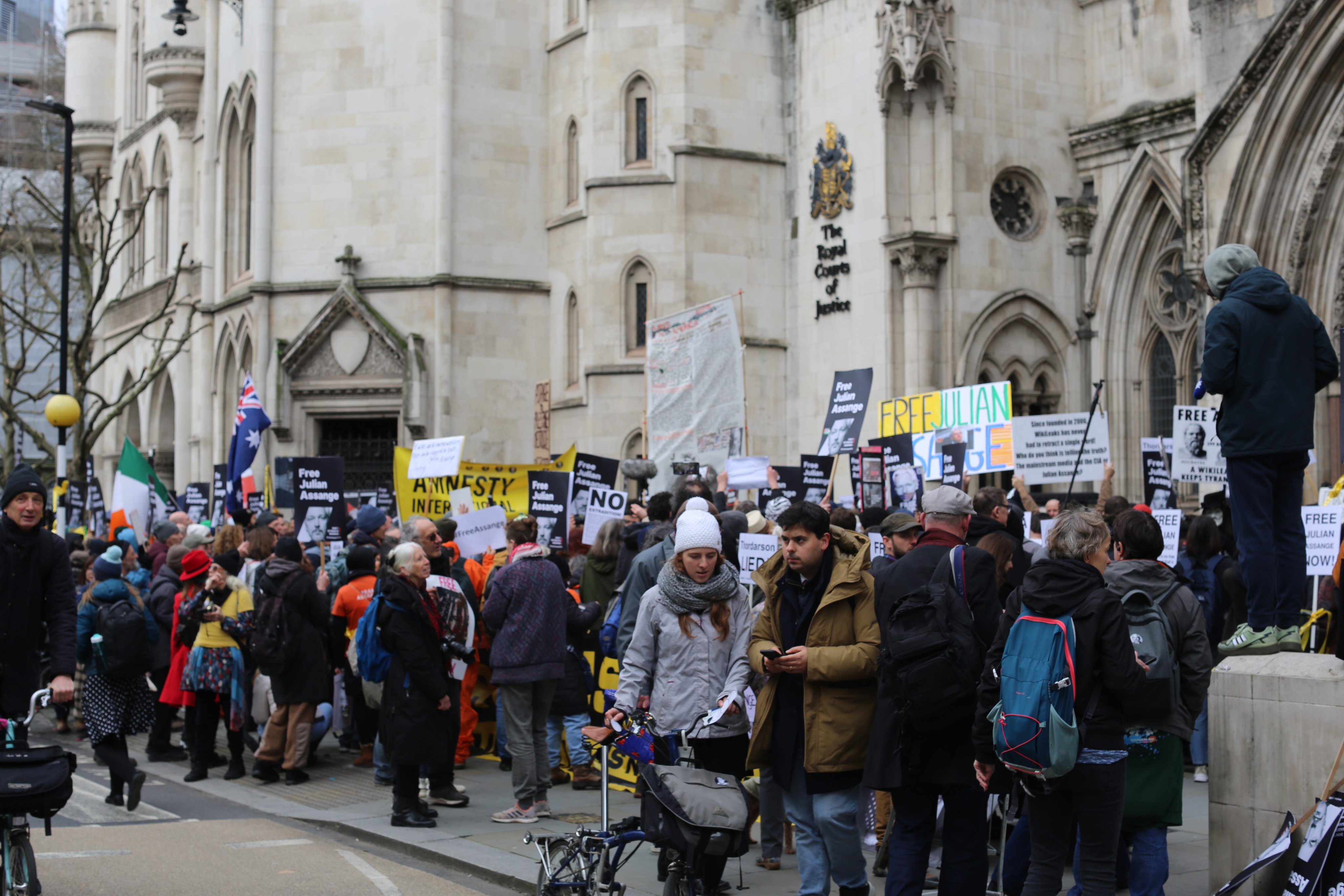
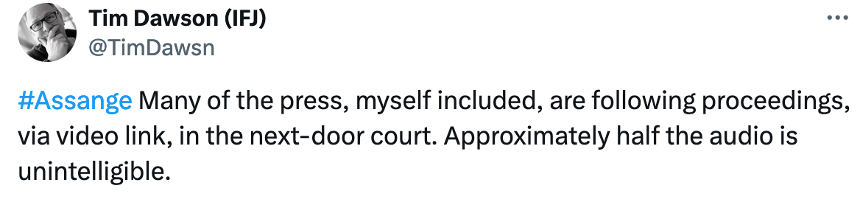
The proceedings were marked by massive interest from the press, rights groups, and supporters outside the courtroom, and repeated problems with audio transmission inside the court (the court also previously denied remote access to all reporters and observers from outside of England and Wales).
Since the early morning, supporters gathered in droves outside the court demanding justice for Julian Assange.
Julian Assange was not able to attend his crucial court hearing due to continued poor health.
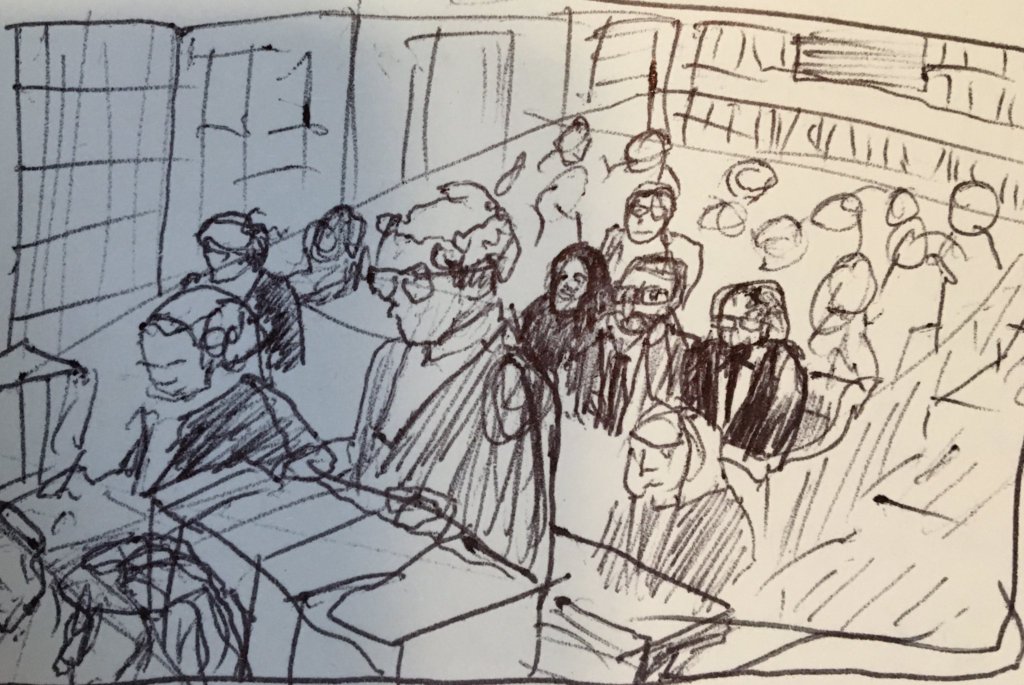
 The defense proceeded to present their arguments:
Political offenses are barred by UK-US the Extradition Treaty. Assange’s barrister Edward Fitzgerald KC said that the charges allege he “obtained, received and disclosed national defense information,” making this a clearly political case. Barrister Mark Summers KC established that U.S. officials denounced Assange as a “political actor” and argued that the
prosecution of Julian Assange should be seen within the context of the
United States’ efforts to prevent its own war crimes from being
investigated and prosecuted.
Unprecedented prosecution of a publisher. Mark Summers KC argued that Assange should not be extradited to face prosecution where the criminal law is being extended in an unprecedented and unforeseeable way, which would be in breach of Article 7 of the European Convention on Human Rights (ECHR). Assange could not have been reasonably expected to know that he could be prosecuted for publishing in the public interest because no one has been prosecuted for publishing in the public interest before.
Freedom of expression and the public interest. Assange’s prosecution amounts to a grave violation of his right to free speech, and that his extradition would violate Article 10 of ECHR. Exposing crimes is in the public interest.
No fair trial in the United States. Extradition should be barred given that the U.S. affirms that Assange will be denied First Amendment protections and could have his sentence enhanced or charges added, even to include the death penalty.
Day 2 | February 21st | Prosecution Response
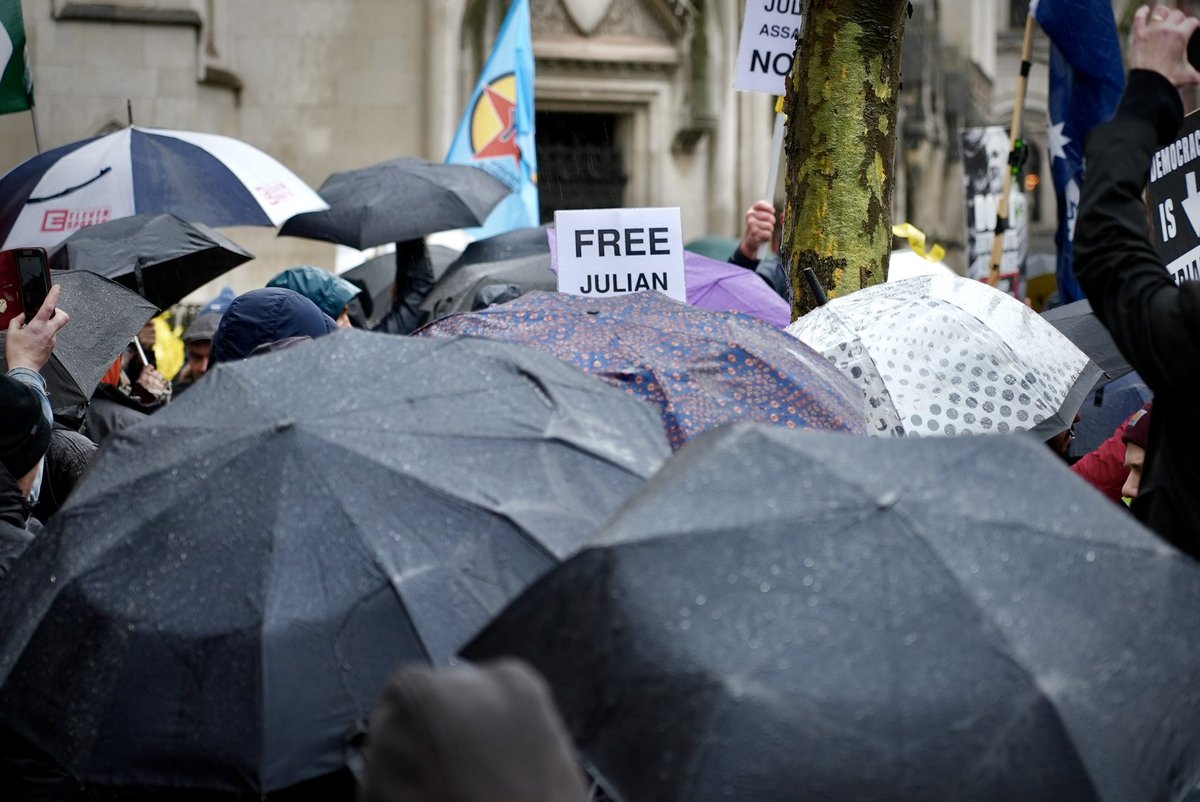
Despite rainy weather, supporters gathered in large numbers outside the court to demand Assange’s freedom.
Alleged hacking and harm. Barrister Clair Dobbin KC for the prosecution repeated arguments introduced before the District Court. She argued that Assange solicited disclosure of classified information and was party to Manning’s “theft.” She tried to refocus the judges from the defense case of yesterday by highlighting hacking allegations and portraying Chelsea Manning as a nefarious hacker rather than a conscientious whistleblower, as well as by insisting on hypothetical harm to people on the ground, which the prosecution never substantiated with evidence.
ECHR Article 7 and First Amendment rights. Dobbin argued that the district judge was right when she decided not to consider ECHR Article 7. When asked by the judge if foreign nationals have First Amendment protections, Dobbin said that this probably is not the case, and the judge asked both sides to provide clarity on the issue.
Fair Trial. Barrister Joel Smith KC argued that Assange would be entitled to a fair trial. He then spent close to 40 minutes repeating the points made by Dobbin about disclosing names of and harming informants and accusing Assange of being a hacker.
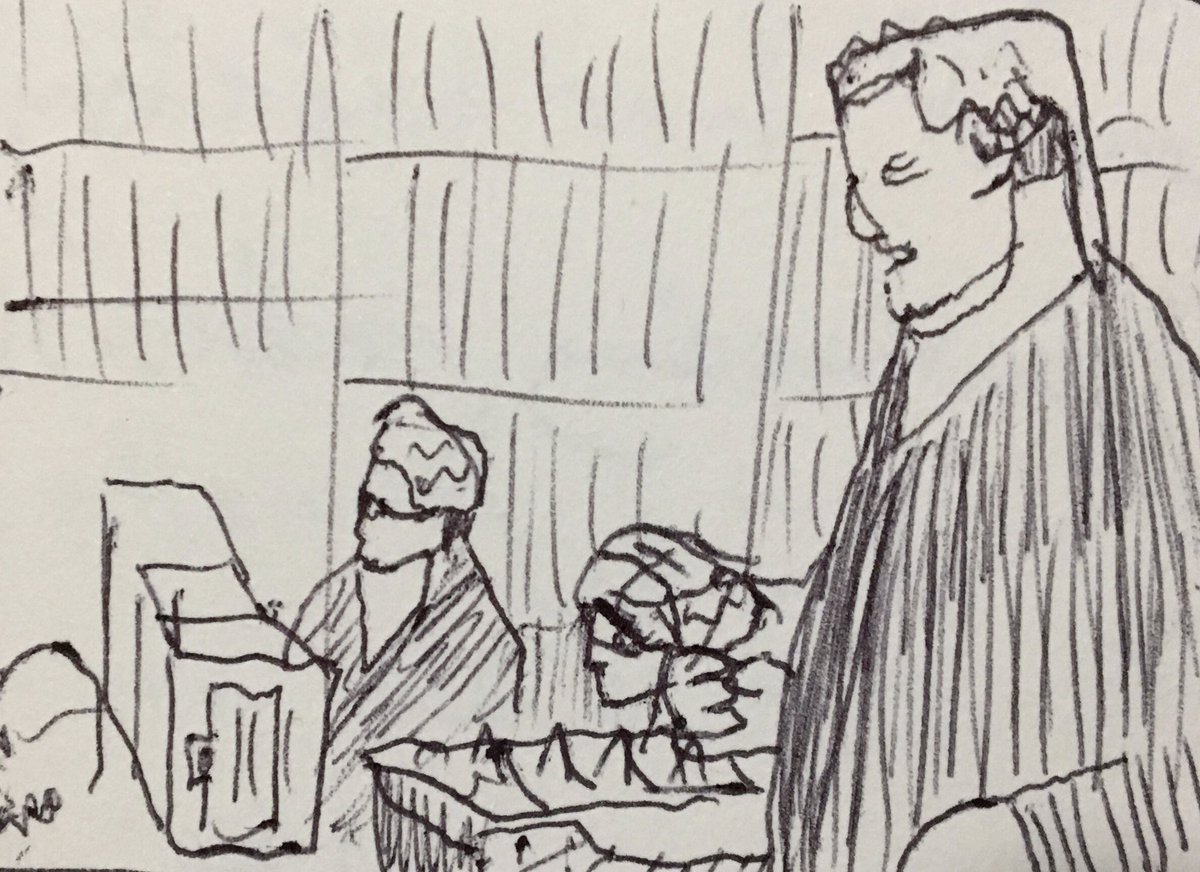
Death Penalty: Having been questioned by the judge on the issue, the prosecution confirmed that there is nothing to prevent the charge of aiding and abetting treason from being charged, and accepted that the sentence for this crime could include the death penalty.
After additional clarifications by the defense, the hearing was adjourned. The judges are expected to give their ruling in the next weeks.
Take Action

Take Action for Julian Assange today!
The Assange Defense Committee

 The New Dark Age
Leave a comment