Sunday, 5 April 2026 — Global Delinquents
On March 7th, shadowy British intelligence contractor Siren Associates launched Monitor Lebanon. The “real-time situational awareness platform” is “designed to help individuals and organisations understand and navigate Lebanon’s rapidly evolving security environment.” The tool sifts vast swaths of “open-source information” from “news agencies, verified social media accounts, Telegram channels, conflict monitoring initiatives, and traffic data systems.” Framed as an indispensable resource helping journalists, “humanitarian” workers, local businesses and concerned citizens stay safe as Israel’s genocidal invasion intensifies, the reality is far more sinister.
At the core of Monitor Lebanon is a constantly updated interactive incident map, visualising “reported security events and key operational information.” The data is highly detailed, including information on “affected areas, road conditions, hospital locations, and other indicators that help users understand how developments may affect movement and access.” A press release announcing the platform’s launch asserts Monitor Lebanon was initially constructed to provide Siren Associates staff with “a clearer view” of local events, before being rolled out for general public use:
“Already, team members displaced by the ongoing hostilities have been using it to check for reported strikes near their homes and to track evacuation orders. But many more people are navigating the same uncertainty, so we want to make this tool available to anyone who may benefit from clearer, real-time information.”
One might reasonably ask how Siren could produce such a granular national incident data mapping project instantly upon the Zionist entity reigniting hostilities with Hezbollah, and invading southern Lebanon in pursuit of outright annexation. For almost two decades, the firm – staffed by British military, intelligence and policing veterans – has largely operated out of public view, albeit in plain sight. As this journalist revealed in September 2021, Siren reaps tens of millions annually from the British state, for “professionalising” Lebanon’s Internal Security Forces.
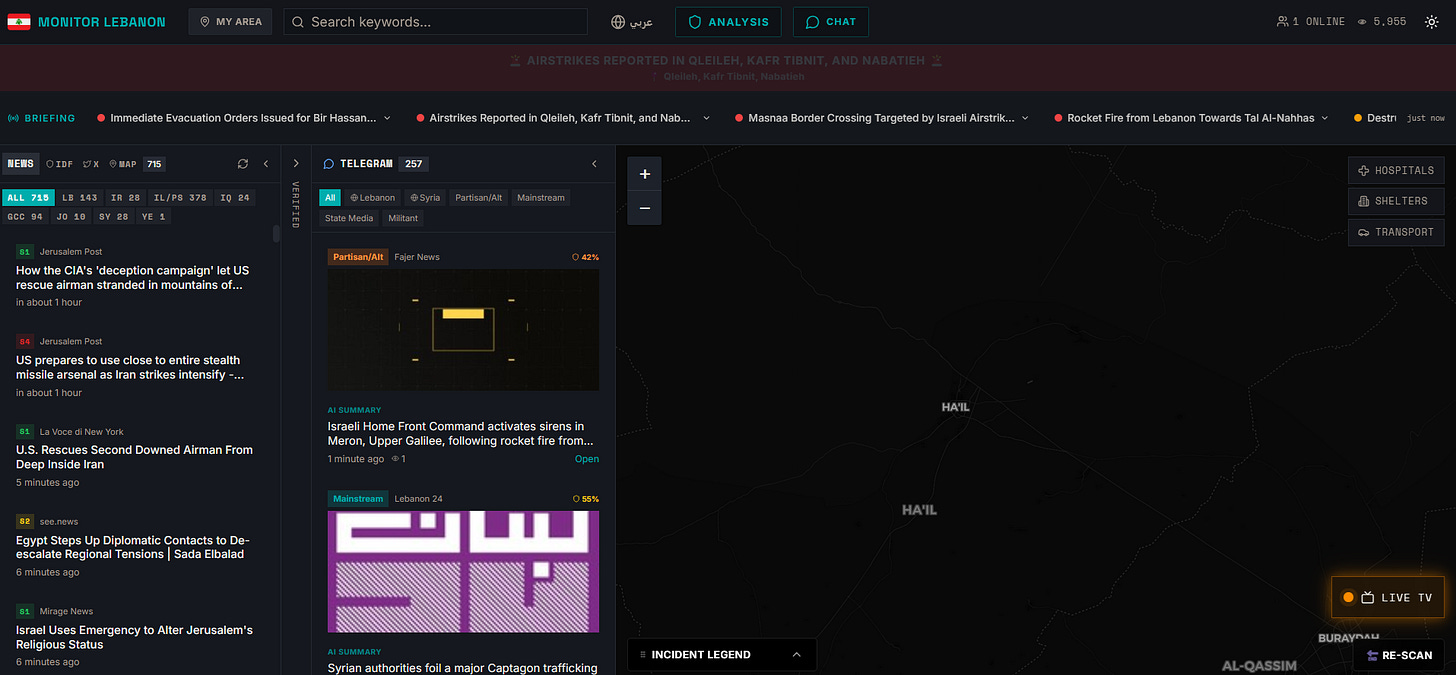
Siren accordingly boasts numerous former high-ranking ISF operatives among its staff, and intimate relationships with senior politicians, government ministries, and other components of Beirut’s security, military, and intelligence apparatus. The firm also runs programs to identify and groom future ISF leaders. In May 2019, Siren founded Lebanon’s first Command and Control Centre on London’s dime. The installation provides the ISF with “state-of-the-art equipment, information and communication technology systems, [and] an analysis and planning room,” to strengthen Beirut’s spying capabilities.
Such penetration by definition also grants British intelligence a candid backdoor to – and influence over – all the ISF’s activities, and investigations. Data harvested on Lebanese citizens by Siren in the years since has expanded precipitously, in both volume and variety. For example, the firm quietly built COVAX, digital infrastructure underpinning the Lebanese government’s COVID19 vaccine rollout. Users could register, schedule appointments, and receive vaccine certificates. Over four million people used the service, logging extraordinary amounts of personal information in the process.
‘Security Crises’
This laid the foundations of Siren’s extensive digital penetration into the private lives of Lebanon’s population thereafter. In 2021, the World Bank provided Beirut with $246 million to relieve economic hardship locally. Siren exploited its COVAX experience and infrastructure to establish a resource, DAEM, “in record time.” It allowed citizens to apply for social assistance. Carole Alsharabati, Siren’s longtime research chief, has explained “the idea [was] to deploy a system that was fully digitized from A to Z, just like we did for the vaccine”:
“The registration, the selection, then the payment, the cash transfer, the verification, the dashboard, etcetera. Everything was digitized. And we used the same framework, the same ecosystem, the same machines, the same security protection, the same data governance approach we used in the vaccine.”
Alsharabati described Lebanon at the time as a “very difficult environment,” with the experience of building DAEM “a wild journey.” The country lacked a unique ID system, digital identification mechanisms, established data governance rules, or even internal procedures or capabilities. However, “nothing stood in the way of Siren’s determination to tackle these and many other challenges.” Evidently, the British and Lebanese governments were happy with the results. It was just the beginning of Siren’s new role in Beirut, constructing deeply intrusive databases on citizens.
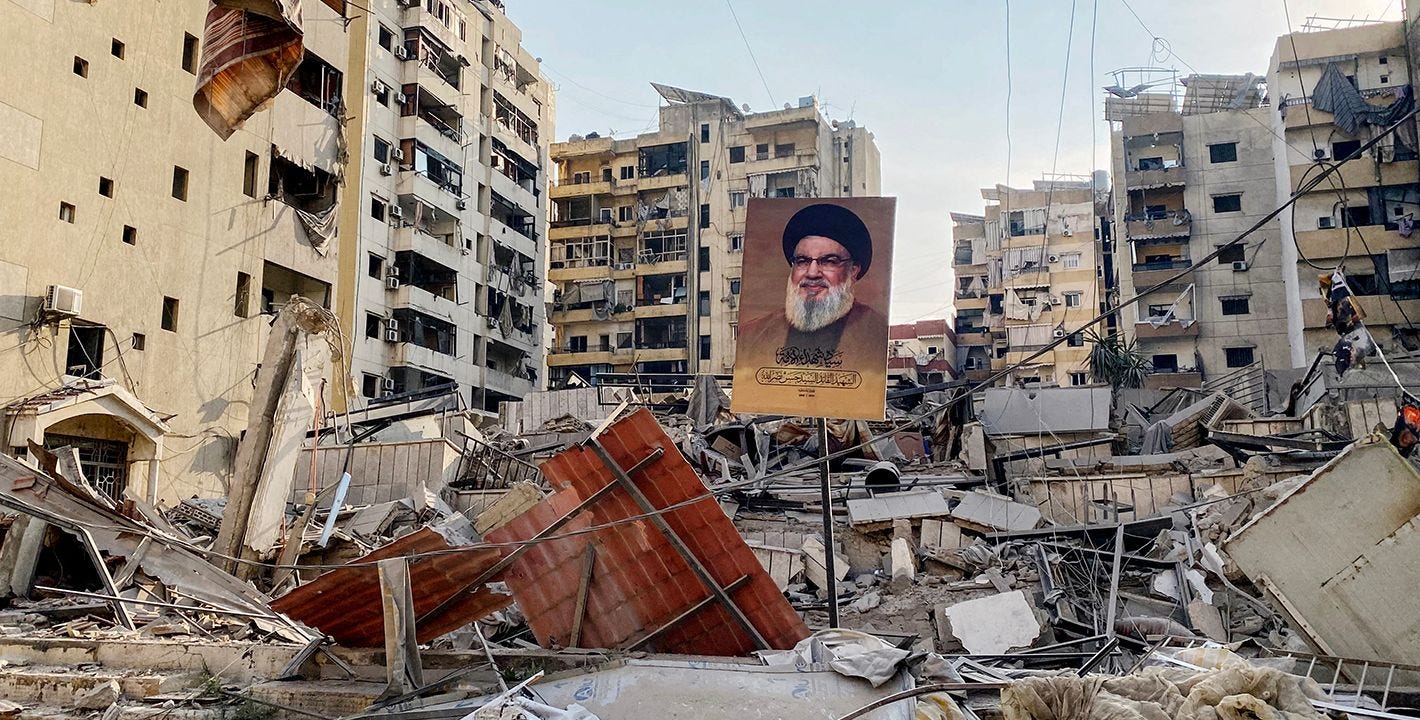
This work has been replicated in multiple different fields over the years, culminating with Monitor Lebanon’s recent launch. Much of this activity passed entirely under the public radar. It was not until December 2024 Siren’s central COVAX role was openly admitted on the company’s official website, for example. That same month, Siren announced it had built a bespoke resource for the ISF, collating “operational data to inform decision making around mission planning, resourcing and management.”
Under the project’s auspices, British intelligence created a network of six separate Command and Control Centres across the country, linked digitally to 22 regional operation rooms. A “digital platform that enables the capture and analysis of crime and operational data” was also developed. In December 2024 too, Siren disclosed how it had introduced “e-governance tools connecting more than 20 ministries, 1,000 municipalities and 1,500 mukhtars [local governments].” Unmentioned was a major scandal that erupted over this effort upon its rollout two years prior.
Al-Akhbar alleged the platform produced by Siren wasn’t secure, and permitted the firm to harvest the data of millions of users. Dubbed IMPACT, the resource helped citizens access a variety of government services, including applying for welfare payments. The British embassy in Beirut, which funded the platform to the tune of $3 million, denied any wrongdoing, as did Siren. Nonetheless, local digital rights group SMEX expressed grave concerns over the security of private information stored by IMPACT, which was highly sensitive in nature.
That Siren hoards an enormous amount of invasive personal data as a result of its work for and with the ISF is underlined by an April 2025 study, funded by Britain’s International Development wing. It probed “irregular maritime migration from Lebanon over the past three years,” placing the phenomenon in the context of Beirut’s “ongoing political, socio-economic, and security crises.” Siren’s research sought to ascertain “who is migrating, why they are choosing to leave by sea, and what risks they face – particularly across gender lines.”
‘Own People’
In September 2025, Siren’s contract with the British Foreign Office to continue its “reform” of the ISF – dubbed “Lebanon Internal Security Assistance Programme” – was renewed. Markedly, the mammoth sum allocated to the company for completing this work – £46,360,490 – is substantially higher than in previous years. We are left to ponder whether a portion of that vast total bankrolled Monitor Lebanon’s construction, in advance of further expected Zionist entity aggression against the country.
Disturbing indications British intelligence is shaping the West Asian theatre in service of all-out war with Iran have abounded ever since October 7th 2023. In November that year, it was revealed London sought unfettered access to Lebanon’s ground, air and sea territory, to conduct “emergency missions”. British forces would’ve been permitted to travel armed, in uniform, wherever they wished in the country, while enjoying immunity from prosecution for committing any crime.
Public outcry over the plan surely contributed to its rejection by Beirut. Nonetheless, while formal British military occupation of Lebanon never came to pass, an unblinking eye is trained on the country and its people, thanks to Siren Associates. The military and security utility of this panopticon from the Zionist entity’s perspective couldn’t be clearer. Such insight could be used to identify and locate Hezbollah members and their supporters, and other local citizens considered problematic and targeted for liquidation, ala Palantir’s predictive espionage platforms.
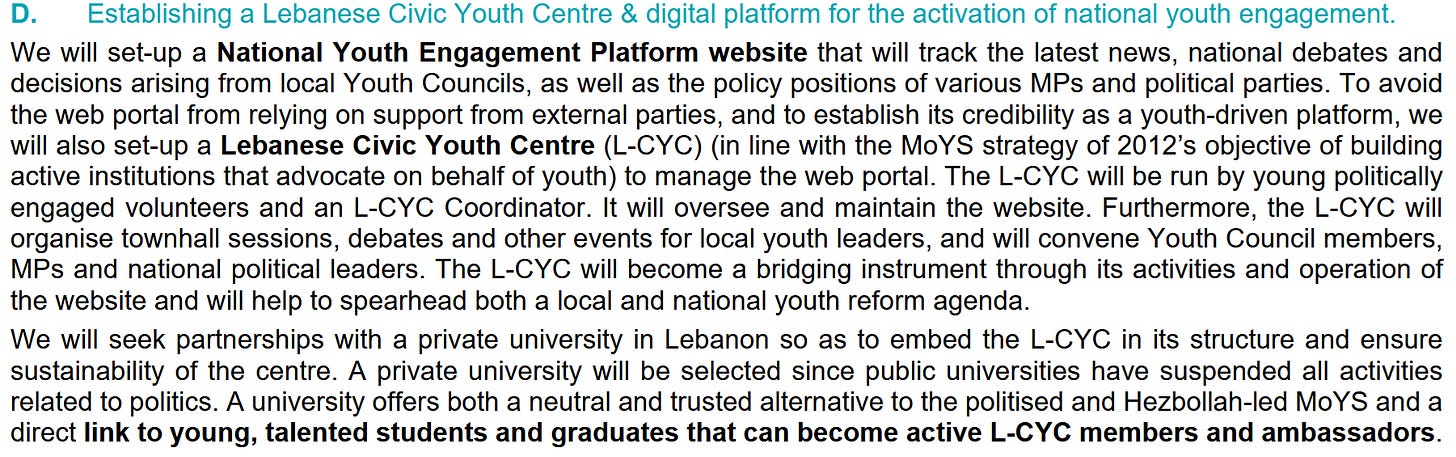
It is no coincidence many of Siren’s digital government resources overlap with services and support provided by Hezbollah. British intelligence has for years conducted covert operations to neutralise the Resistance group’s societal influence, and create parallel structures to those it manages. For example, under the terms of a clandestine Foreign Office-funded youth radicalisation effort, London created an alternative to Beirut’s Hezbollah-run Ministry of Youth and Sport. It was hoped “young, talented students and graduates” would thus reject the group, and serve as effective British assets.
There is little sign of these initiatives having borne fruit. A promptly retracted March 23rd Daily Telegraph report documented how Lebanese Christians wholeheartedly embrace Hezbollah, and are determined to resist Western-inspired efforts by Beirut’s Army to disarm the Resistance faction. “How can we as Christians in this area not be with Hezbollah?” a local citizen, living in a village strongly supportive of the group, asked the newspaper defiantly:
“They protect our churches. They helped us fight ISIS. During Covid they gave us free care in their hospitals. When there was no electricity they gave us generators. They even put up a Christmas tree at Christmas. How can we not be with them now?”
Despite the practical impossibility of disarming Hezbollah, it is a fantasy long-harboured by Western powers, which has gained in ever-mounting urgency since the Zionist genocide in Gaza commenced. A September 2025 British parliament factsheet expressed intense optimism former LAF commander Joseph Aoun’s election that year would spell the end of Hezbollah’s armed wing, and thus the group outright. That same month, US special envoy to Syria Tom Barrack openly proposed equipping the LAF “so they can fight their own people.”
He acknowledged Israel’s deranged belligerence against the Palestinians and its neighbours since October 7th 2023 had significantly bolstered Hezbollah’s public support, while providing “zero” incentive for the group to give up its arms voluntarily. Aoun’s election has failed to dismantle Hezbollah, and the Zionist entity is now unsuccessfully attempting to finish the job. While Israel’s catastrophic military losses accumulate daily, innocent Lebanese civilians are still being killed in significant numbers. Line of responsibility for their deaths could lead directly back to London, courtesy of Siren Associates.

 The New Dark Age
Leave a comment