Tuesday, 7 April 2026 — The Grayz0ne
By Wyatt Reed
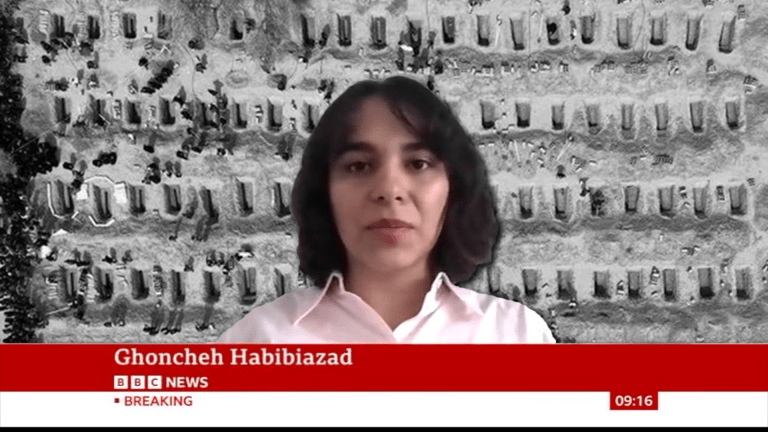
After a top reporter at the BBC drew outrage for publishing a quote demanding Iran be nuked, she’s been revealed as a dedicated regime change activist whose career was launched by a CIA-founded propaganda network. Serious questions remain about the BBC’s editorial process.
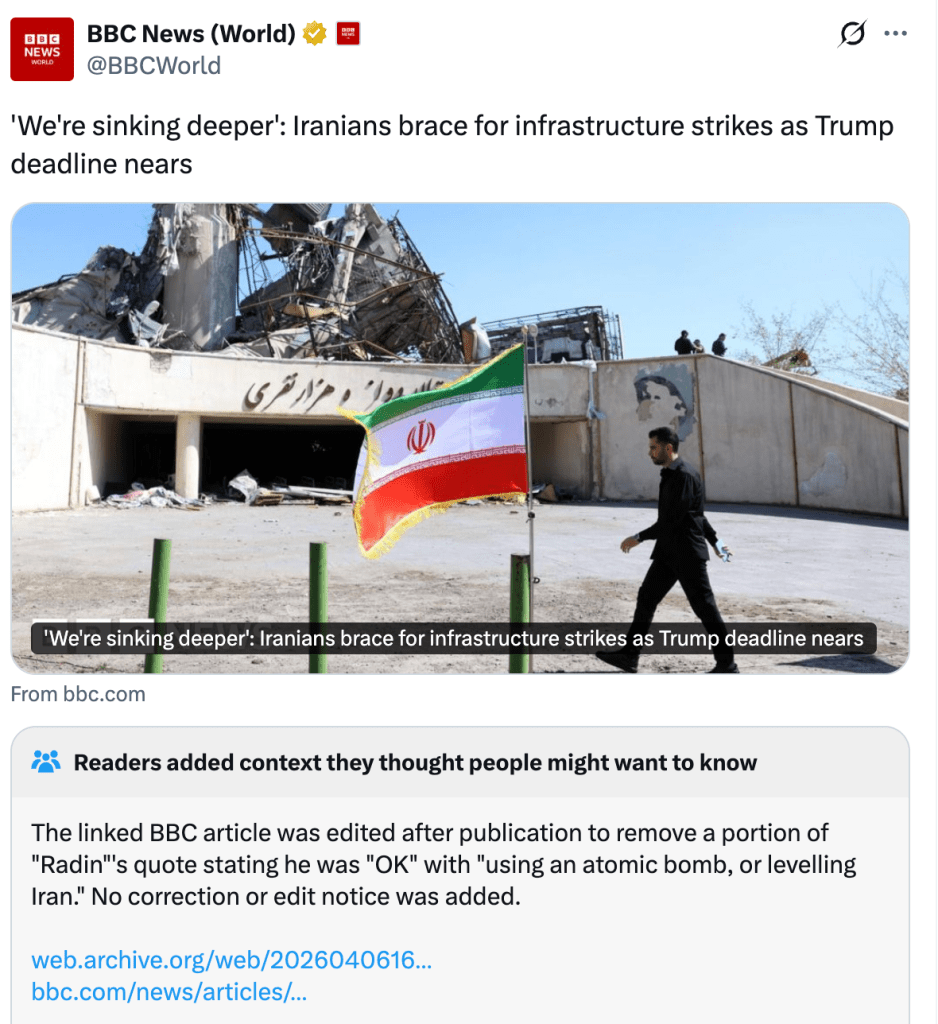
On April 6, 2026, horrified social media users began drawing attention to an extraordinary statement allegedly provided to the BBC by a twenty-something Iranian:
“About them hitting energy infrastructure, using an atomic bomb, or leveling Iran – my honest reaction is that I’m okay with all of these.”
Three hours later, as the uproar grew, the quote suddenly vanished from the BBC’s article. It had been replaced by a far less controversial criticism of the Iranian government. The episode raises serious questions about the BBC’s editorial process, as well as the background and motivations of the author responsible for the article.
Who is Ghoncheh Habibiazad?
At the ripe old age of 27, Ghoncheh Habibiazad has already achieved more than most British journalists will in their lifetime. After just four years in the field, she has already risen to the position of ‘Senior Reporter’ at BBC Persian – a prestigious and influential role which requires a “minimum of 8 – 10 years of experience in journalism,” according to a BBC job listing.
Following four years of higher education on the Iranian government’s dime, Habibiazad graduated from the University of Tehran in 2020, and immediately began aligning herself with her country’s enemies. In October 2021, she was brought on as an intern at Radio Free Europe/Radio Liberty (RFE/RL), a CIA propaganda project founded by notorious spymaster Allen Dulles which nominally separated from the Agency in the 70s. During her time at the network’s studio in Prague, Habibiazad’s LinkedIn page notes that she conducted such groundbreaking investigations as “an article on “hidden disabilities”” while “working remotely for Radio Farda,” an RFE/RL subdivision that serves as Washington’s official Persian-language mouthpiece.
The same month she began interning for RFE/RL, Habibiazad joined forces with Marjan TV, another outlet founded by expat regime change activists. She would spend the next year and half developing social media content for the outlet and its subsidiary, Manoto TV. The broadcaster has been described by Iranian academic Shahab Esfandiary as “a pro-monarchy network with the mission of glorifying the Pahlavi dynasty, one of the worst dictatorships of the 20th century.”
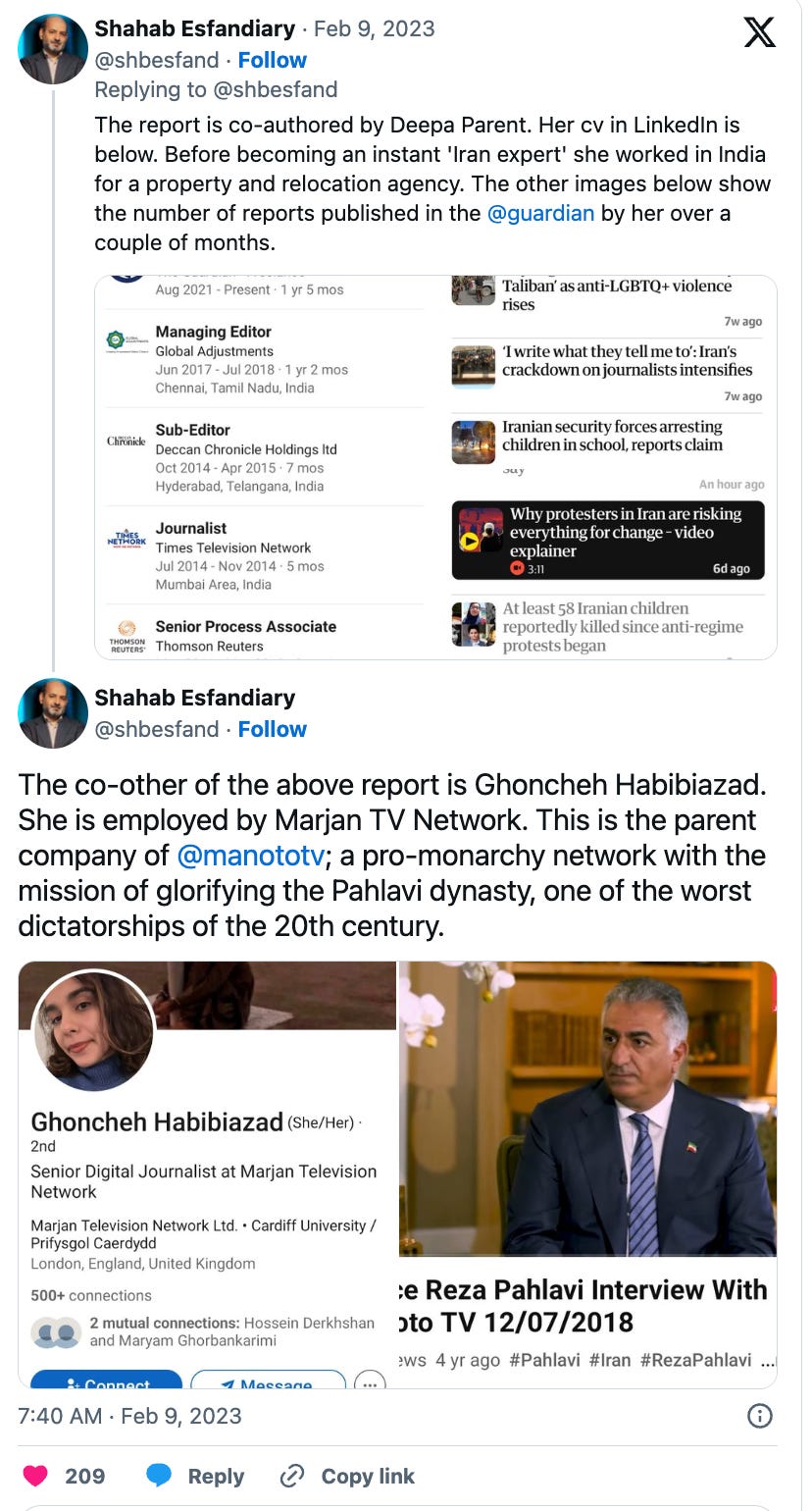
A quick glance at Manoto’s YouTube channel reveals the depths of the organization’s obsession with the widely-despised former ruling family. Nearly every other video greeting visitors to the page features the face of Reza Pahlavi, the would-be king who openly seeks to start a civil war in Iran.
Wielding dubious sources in the service of regime change
Habibiazad frequently collaborates with Deepa Parent, the disgraced former fashion blogger turned Iranian protest-whisperer who deleted her Twitter account this February after The Grayzone exposed her role in fabricating protest death tolls. Like Parent, Habibiazad rocketed to mainstream media prominence during the “Woman, Life, Freedom” protests which shook Iran in 2022.
Among her earliest professional successes was an article in The Guardian she co-authored with Parent claiming that Iranian police were deliberately shooting female protesters in the genitals. Instead of concrete evidence, the pair of rookie reporters turned to a network of opposition-aligned doctors, which insisted that security forces decided to “shoot at the faces and private body parts of women because they have an inferiority complex, and they want to get rid of their sexual complexes by hurting these young people.”
Discussing their fantastical account on another Iran-oriented US state radio outlet, Voice of America, the duo revealed that this “trusted group of doctors… all knew each other” when they were placed in contact with them. Though the two women maintained they acquired reams of evidence of Iranian wrongdoing, they declined to publish most of it on the basis that it was supposedly too graphic to distribute. “Some of the evidence we got… was so gruesome that we could not share [it] even with our editors,” Parent told their interviewer.
Habibiazad suggested their evidence-free allegations had been confirmed by others, as well. “When our article was published… [there were] more people I saw that had the courage to also share their own stories of how they were hit.” However, “these were, most of them, anonymous users on Twitter,” she clarified.
Though most experienced editors would raise suspicions about such shoddy sourcing, the BBC rewarded it. In January 2024, the UK state broadcaster hired Habibiazad on as a full-time member of the BBC Monitoring division’s Iran Team. There, she worked to undermine official Iranian government communications by compiling the reactions by various Western government-funded “fact-checking” organizations.
Throughout the course of her career, Habibiazad has relied heavily on other dubious sources. As recently as March 31, the ostensible journalist approvingly cited the Washington Institute for Near-East Policy, an Israel lobby front originally founded by AIPAC.
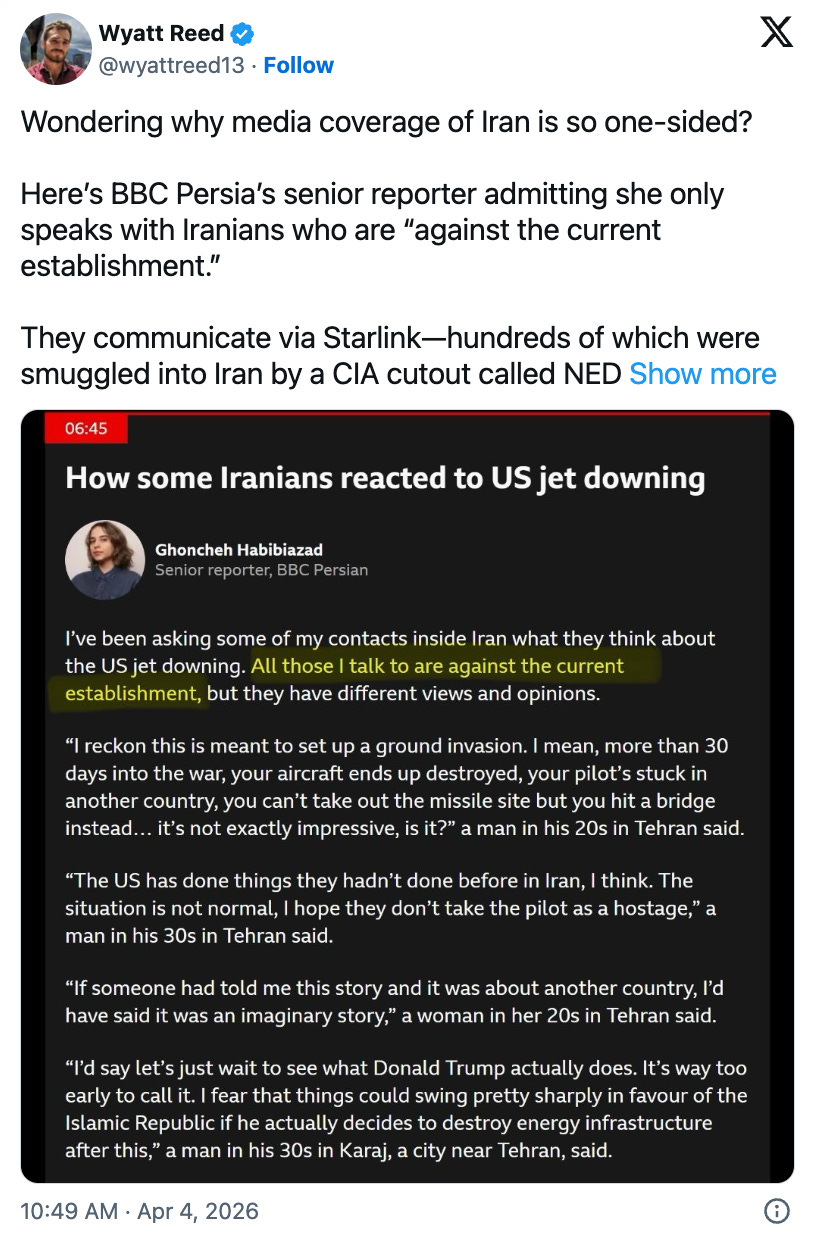
In her current position as BBC Persian Senior Reporter, Habibiazad freely admits that she has no contact whatsoever with any Iranians who support their government, and communicates exclusively with anti-government figures instead. “All those I talk to [inside Iran] are against the current establishment,” she revealed on April 4.
Since removing the quote from her article advocating the nuking of Iran, Habibiazad has begun blocking critics on Twitter/X, a move that constitutes another clear violation of BBC editorial policy.

 The New Dark Age
Leave a comment