Tuesday, 2 June 2026 — Frances Leader
+ 2 recent videos about the reception that Israelis experience during their holiday travel
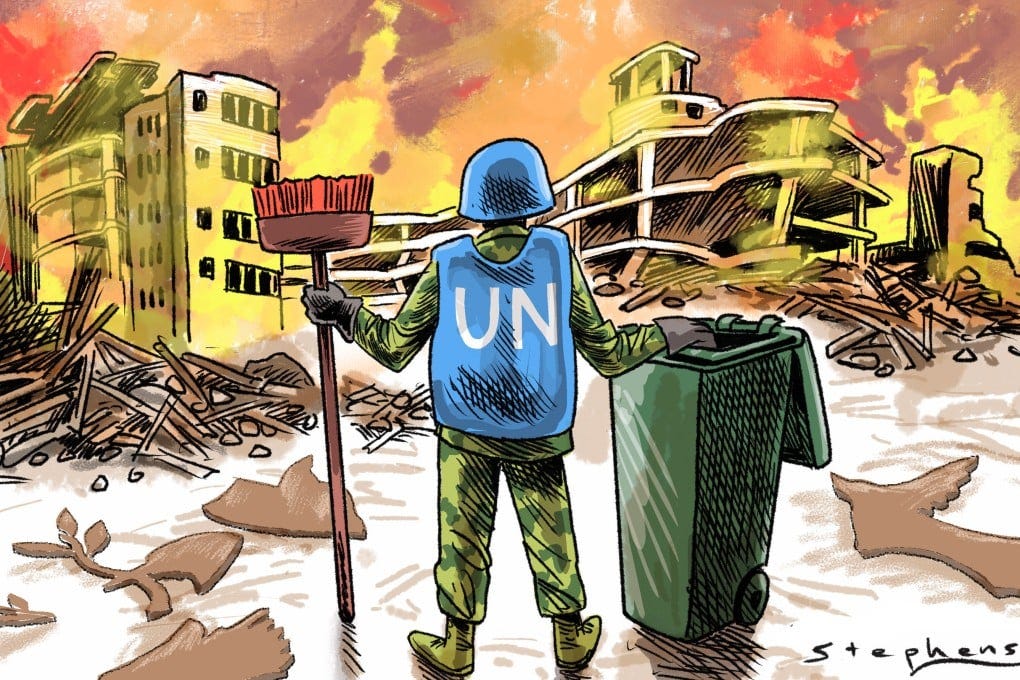
A friend asked me: Why doesn’t the UN send peacekeeping forces into Israel to defend Gaza?
The UN does not send peacekeeping forces into Israel to defend Gaza because UN peacekeeping mandates strictly require the consent of the host state and all conflicting parties, neither of which currently exists.
Israel has consistently rejected the deployment of international troops on its sovereign territory, viewing them as an infringement on its security and right to self-defence. Simultaneously, Hamas and other armed groups in Gaza have also rejected foreign military presence, further blocking the necessary consensus.
Furthermore, UN peacekeepers are not equipped for offensive combat or occupation duties. They are lightly armed defensive forces that cannot intervene in active war zones or fight against a military power like the Israel Defence Forces. Deploying such a force into an active conflict without a ceasefire would likely result in severe casualties for the peacekeepers and could escalate the violence rather than mitigate it.
Any new peacekeeping operation requires authorisation from the UN Security Council, where the United States has historically used its veto power to block resolutions that it perceives as unfavourable to Israel’s interests. Without Security Council approval and the explicit invitation of the parties involved, the UN lacks the legal and practical framework to deploy forces into the region.
They are “hamstrung” in kinetic conflicts like the one in Gaza due to mandates requiring consent and impartiality.
Clever huh?
Apparently the UN operates two types of military interventions but don’t get too excited. Neither one of these potential interventions has any actual clout.
Peacekeeping:
Designed for situations where a ceasefire or peace agreement already exists. Their role is to monitor truces, separate forces, and build trust. They are lightly armed and operate under strict rules of engagement (self-defence and defence of the mandate).
Peace Enforcement:
Authorised under Chapter VII of the UN Charter, these are combat missions designed to impose peace against the will of one or more parties (e.g., the 1991 Gulf War or the Korean War). These missions are typically led by coalitions of willing nations (like NATO or US-led coalitions) rather than traditional UN “Blue Helmets,” as the UN lacks a standing army for offensive warfare.
Can you feel the frustration? 😖
Apparently, we are asking too much from the UN – (they have a clause/excuse just waiting in the archives!)
UN peacekeepers are not an invasion force; they lack the heavy armour, air support, and offensive mandate required to defeat an aggressive sovereign military like the Israel Defence Forces or to protect entrenched defender groups like innocent Palestinian civilians.
There is a yawning enforcement gap!
While our international courts issue rulings and nations condemn actions, there is no immediate mechanism to physically stop bombs from falling or tanks from advancing in real-time. However, the long-term consequences—criminal liability for leaders, economic sanctions, loss of diplomatic standing, and historical condemnation may act as delayed constraints on military conduct.
If you have the stomach for the latest updates coming from the American Jewish Committee you are welcome to hold your nose and read this junk entitled “What You Need to Know About the Latest International Court of Justice Action in the Case Against Israel”. You can also read their FIVE SLIPPERY REASONS WHY THE EVENTS IN GAZA ARE NOT GENOCIDE.
INTERNATIONAL GRASS ROOTS RESPONSES
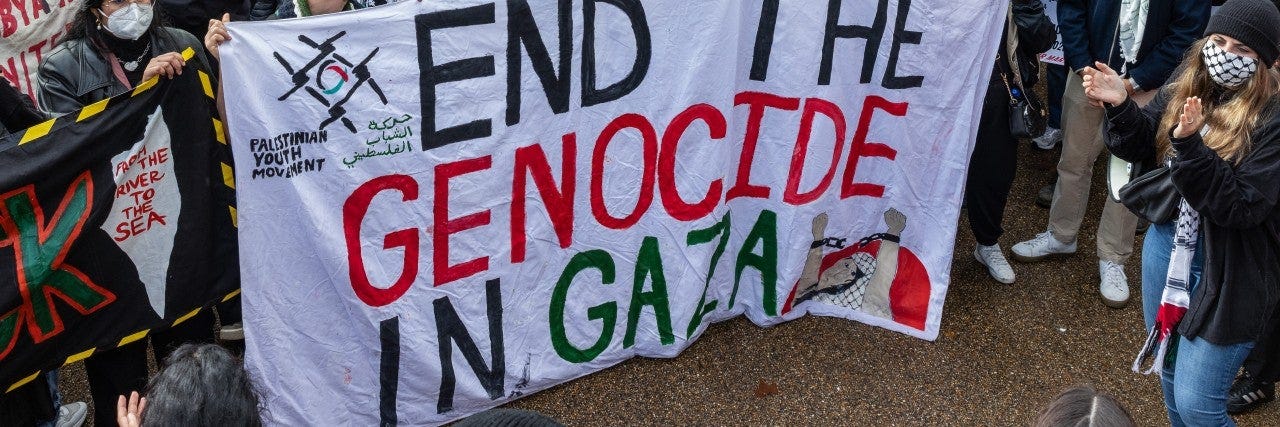
A global network of grassroots movements, labour unions, and advocacy groups have organised numerous actions to physically and politically block the supply of military equipment to Israel. These actions range from port blockades and strikes to legislative lobbying and direct protests.
1. Labour Union Actions and Port Blockades
Dockworkers and transport unions have been among the most effective groups in physically halting weapons shipments:
* European Dockworkers: In a coordinated effort, dockworkers across Europe have refused to load or handle arms bound for Israel. Notable actions include French CGT dockworkers in Fos-Marseille refusing to load arms components in June 2025, and Italian dockworkers in Genoa, Salerno, and Scilla inspecting and blocking vessels.
* Swedish Dockworkers Boycott: In early 2026, the Swedish Dockworkers Union staged a sustained six-day boycott of all military cargo to and from Israel. Despite retaliation against union leaders, the action gained widespread solidarity from Belgian and other European ports, effectively disrupting supply chains through the Baltic and North Seas.
* “Block the Boat” Campaigns: Activists and unions have tracked and protested specific vessels, such as the MSC shipment carrying military-grade alloy steel intended for trans-shipment to Israel via Egypt in April 2026. Similar campaigns have targeted ships in Spanish ports like Barcelona, pressuring authorities to deny docking rights to vessels carrying weapons components.
2. Legislative and Political Advocacy
Grassroots pressure has translated into significant legislative efforts, particularly in the United States:
* The “Block the Bombs” Act: Introduced in the U.S. House of Representatives (H.R. 3565) in 2025, this bill aims to prohibit the sale of specific offensive weapons (including JDAMs and bunker-busting bombs) to Israel. It has gained dozens of co-sponsors due to sustained lobbying by groups like Amnesty International USA and Jewish Voice for Peace.
* Joint Resolutions of Disapproval (JRDs): Led by Senator Bernie Sanders, grassroots campaigns have pushed the U.S. Senate to vote on resolutions blocking specific arms sales. By April 2026, a record 40 Senators voted to block nearly $500 million in weapons, a direct result of constituent pressure.
* Divestment Campaigns: Universities and pension funds across North America and Europe have faced intense student and faculty-led campaigns to divest from companies like Lockheed Martin, Raytheon, and Elbit Systems that supply weaponry to Israel.
3. Direct Action and Protest Organisations
Several organisations specialise in direct confrontation and public disruption to highlight arms transfers:
* CODEPINK: This feminist grassroots organisation has organised high-profile protests, including disrupting televised appearances by U.S. officials to demand an arms embargo. They coordinate marches and “die-ins” at arms manufacturing facilities and congressional offices.
* Stop the Shipments Coalition: A broad alliance of labour, faith, and peace groups that organises portside vigils, blockades, and educational campaigns to expose the logistics of weapons transfers. They have successfully delayed shipments by drawing media attention to specific cargo movements.
* Global Sumud Flotilla: While primarily focused on breaking the naval blockade of Gaza, this coalition also draws attention to the flow of weapons into the region, organising maritime actions that challenge the military supply chain.
4. Corporate and Supply Chain Disruption
Activists have also targeted the corporate supply chain, forcing companies to halt exports:
* Export Bans via Legal Challenge: In countries like the Netherlands and Germany, grassroots legal challenges have forced courts to suspend export licenses for F-35 fighter jet parts and other military components due to the risk of international law violations.
* Worker Refusals: Beyond dockworkers, employees at manufacturing plants in the UK and Canada have staged walkouts and refused to work on components destined for Israel, citing ethical concerns and complicity in war crimes.
These combined efforts have created a significant, albeit not total, disruption in the flow of arms, forcing governments and corporations to publicly defend their policies and, in some cases, pause specific shipments.
There are also verified incidents of individual IDF soldiers on leave being explicitly denied service in hotels or restaurants.
1. Social Boycotts and “Shunning”
There have been numerous anecdotal reports and social media accounts from Israeli travellers (some identifying as soldiers on leave) claiming they were refused service or asked to leave establishments in Europe (particularly in Spain, Ireland, and Germany) after their nationality or military status was revealed. These incidents are often described as spontaneous acts by staff or patrons rather than official company policies.
These actions are frequently driven by the broader BDS (Boycott, Divestment, Sanctions) movement and grassroots anger over the war in Gaza. While the BDS movement officially targets institutions and companies complicit in human rights violations, the sentiment has occasionally spilled over into interactions with individuals.
2. Targeting of Israeli-Owned or Pro-Israel Businesses
Several high-profile closures and protests have targeted businesses linked to Israel or perceived as supporting the IDF, which creates an environment where soldiers might feel unwelcome:
* “Gila and Nancy” (Berlin): This Israeli restaurant, co-owned by a former spokesman for the Gaza Humanitarian Foundation, faced sustained protests and threats, leading to its closure in April 2026 after only eight months of operation.
* “Tantura” (Lisbon): An Israeli-owned restaurant that closed in early 2026 following years of alleged harassment and vandalism, which intensified during the war.
* “Boker Tov” (Antwerp): An Israeli food chain that closed in January 2026 citing aggression and boycott campaigns.
3. Legal and Safety Advisories for Soldiers
The risk of confrontation has become significant enough that Israeli legal experts and media have issued warnings to soldiers traveling abroad:
* Universal Jurisdiction: Lawyers have advised soldiers to remove social media content related to their service and avoid discussing their military role, fearing arrest warrants or legal complaints in countries that exercise “universal jurisdiction” for alleged war crimes.
* Travel Restrictions: While not a ban on service, the Israeli government and military have occasionally advised reservists and active-duty personnel to exercise extreme caution or avoid travel to certain countries due to the risk of harassment, detention, or denial of entry, though these are often entry-border issues rather than hotel/restaurant refusals.
4. Distinction from Institutional Boycotts
It is important to distinguish these individual incidents from the organised boycotts of corporations like McDonald’s (whose Israeli franchise donated meals to the IDF) or Elbit Systems. The latter are strategic campaigns against supply chains and corporate complicity, whereas refusals of service to individual soldiers are generally sporadic, decentralised, and often lack official organisational backing, making a definitive “list” of such incidents elusive and largely anecdotal.


Leave a Reply