Thursday, 25 June 2026 — The Tricontinental
Since the 1990s, an invisible intellectual architecture has shaped what counts as legitimate economic thought, narrowing debate until it seems like there are no alternatives. Reversing this brain capture is an urgent task.
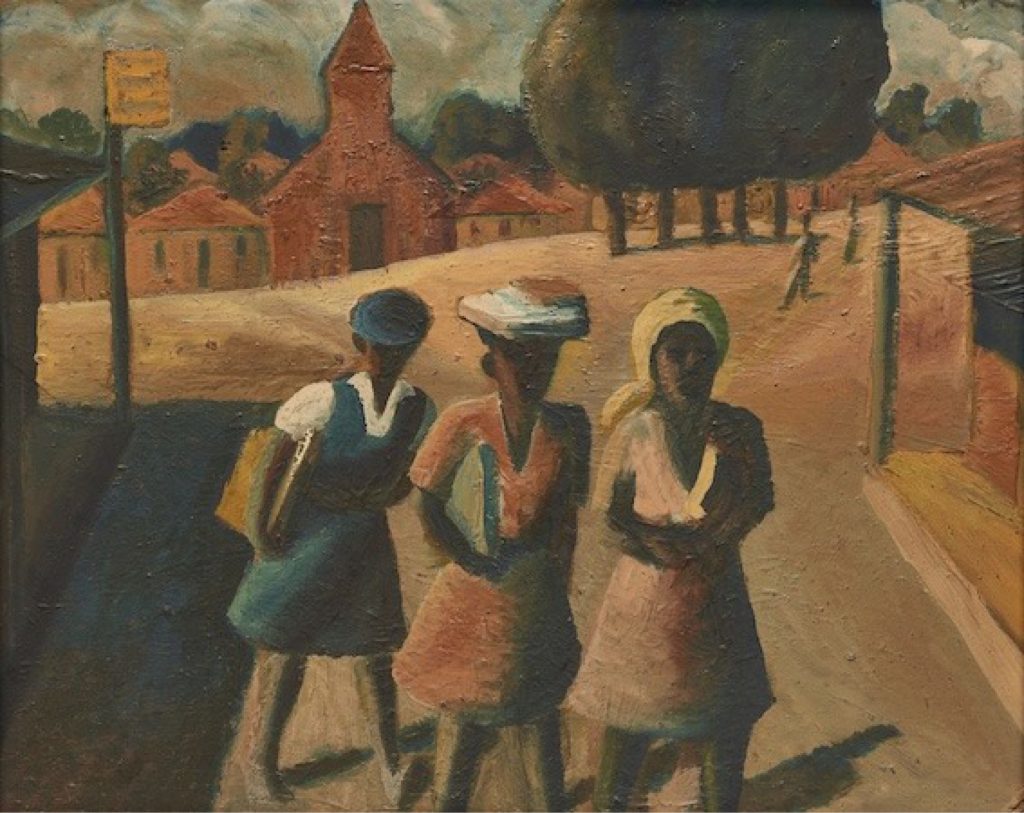 Gerard Sekoto (South Africa), Three School Girls, early 1940s.
Dear friends,
Greetings from the desk of Tricontinental: Institute for Social Research.
Two decades ago, I was in South Africa with the Malawian economist Thandika Mkandawire (1940–2020). We were talking about his generation of scholars, who came of age during the national liberation movements. We had in mind people such as the Egyptian economist Samir Amin (1931–2018), Brazilian economists Ruy Mauro Marini (1932–1997) and Vânia Bambirra (1940–2015), Pakistani political scientist Eqbal Ahmad (1934–1999), South African anthropologist Archie Mafeje (1936–2007), and Nigerian political scientist Claude Ake (1939–1996). These scholars, and others like them, understood that liberation required the capacity to think independently about society and its development. They created institutions to foster this ambition: universities, research institutes, publishing houses, and – most importantly – planning commissions. Their project was uneven and incomplete, but it was essential. Thandika and I bemoaned the setbacks faced by this generation of scholars. ‘We failed to create a sustained dynamic’, he told me in Durban (a sentiment that he captured in his book African Intellectuals, 2005).
The debt crisis of the 1980s and the disintegration of the Soviet Union in the early 1990s transformed the global intellectual landscape. The result was not merely the expansion of neoliberal economic policies, known collectively as the Washington Consensus, but something deeper: the capture of intellectual life itself. We might call this phenomenon brain capture. This concept differs from the colonial domination of territory. It does not require armies or governors. It operates through institutions, incentives, professional advancement, and the gradual internalisation of assumptions. Its success is measured by the extent to which intellectuals in the Global South come to view their own societies through frameworks generated elsewhere and aligned with the interests of global capital.
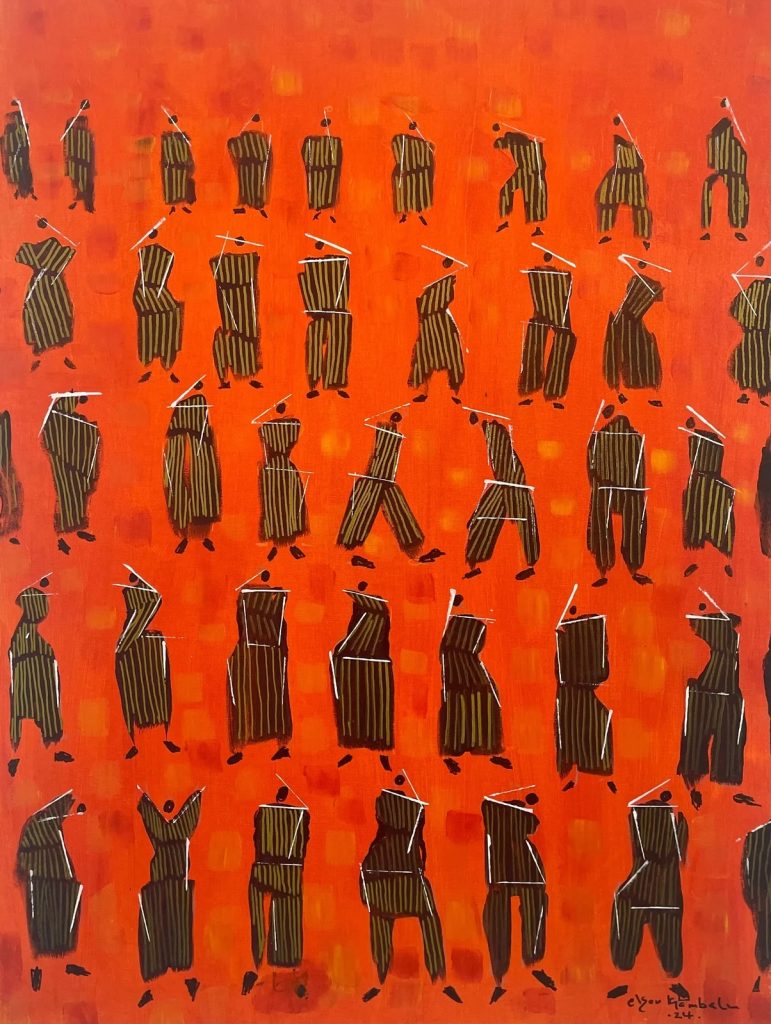 Elson Kambalu (Malawi), Crowd Red, 2024
Colonialism has always sought to shape consciousness. Colonial administrators frequently claimed that colonised peoples lacked the capacity for self-governance and required external guidance. The colonial education system trained local elites to administer colonial rule while accepting its underlying assumptions. Yet the anti-colonial movements challenged this inheritance. Thinkers from across the Global South insisted that knowledge could emerge from their own historical experiences. They debated the mechanisms for agrarian reform and industrialisation with perspectives rooted in the realities of their societies. They implemented these ideas in the state projects of the new post-colonial nations.
However, everything changed by the 1990s, when neoliberal capitalism was presented as the final destination of history. The language of development changed to focus on competitiveness, market efficiency, investment climates, fiscal discipline, inflation targeting, and deregulation. This intellectual shift was reinforced by a powerful international ecosystem that included the International Monetary Fund (IMF), the World Bank, major US and European universities, consulting firms (led by McKinsey & Company), credit-rating agencies, and private foundations. Financial resources, scholarships, research grants, fellowships, professional opportunities, and policy influence increasingly flowed toward those who adopted the dominant paradigm.
 Jimoh Bola Akolo (Nigeria), Fulani Horsemen, 1962.
The importance of this network can be measured empirically. Between 1980 and 2000, nearly three-quarters of the IMF’s senior officials were trained at universities in the US and Britain. The intellectual centre of the world’s most influential financial institution was concentrated within a narrow geographical and ideological space. This concentration was not accidental: it reflected a broader process through which authority in economic thinking became increasingly monopolised by North Atlantic institutions.
At the same time, the IMF dramatically expanded its training programmes for officials from the Global South. Thousands of civil servants, central bankers, treasury officials, and economic planners passed through programmes designed around a common set of assumptions regarding macroeconomic management, fiscal policy, and market reform. These programmes were presented as technical rather than ideological. Yet technical training always carries with it assumptions about what questions matter, what goals are desirable, and what policies are considered legitimate. The result was not merely the dissemination of policy recommendations but the creation of a shared intellectual framework, which is what Thandika and I reflected upon in the early 2000s.
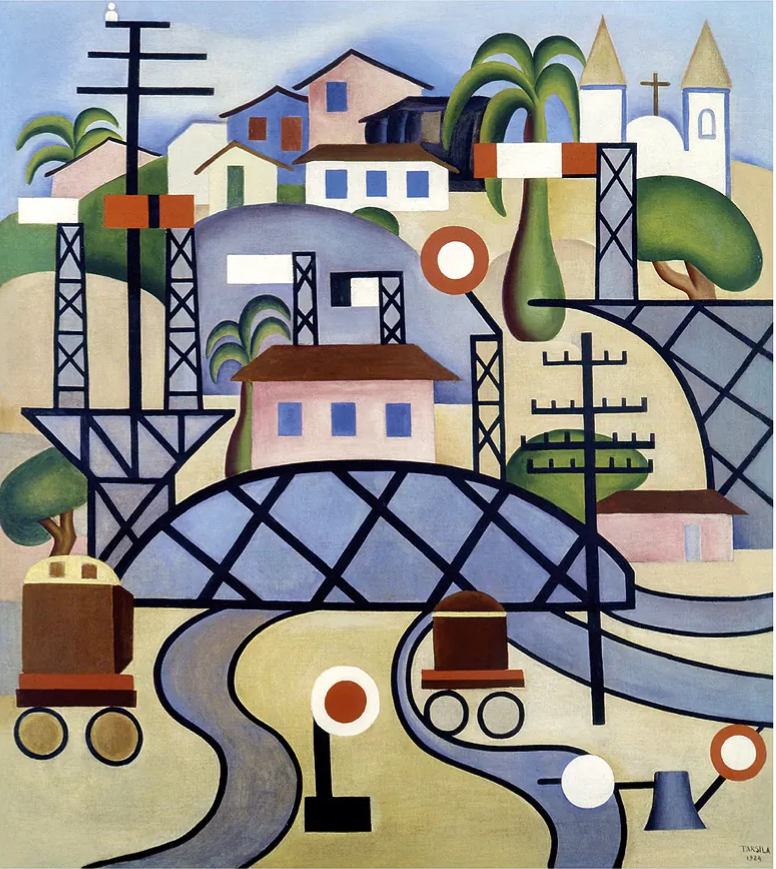 Tarsila do Amaral (Brazil), Estrada de Ferro Central do Brasil (Central Railway of Brazil), 1924.
What made brain capture effective is that it appeared as common sense and was not experienced as coercion. The assumptions of neoliberal economics came to be regarded as objective truths, and the debates in that period narrowed so that any alternatives began to be seen as outdated, unrealistic, or irresponsible. A new type of policymaker emerged across much of the Global South. In Latin America, scholars began referring to the rise of the ‘technopol’, the technically trained economist who combined professional expertise with political authority. Similar figures appeared across Africa and Asia. Their educational trajectories often followed a common path: undergraduate training at home, graduate education in the United States or Europe, professional experience in international financial institutions, and an eventual return to government service in their home countries.
Examples abound. Nigeria’s Ngozi Okonjo-Iweala studied at Harvard and MIT before rising through the World Bank and eventually becoming finance minister. India’s Manmohan Singh studied at Cambridge and Oxford before occupying key economic posts (including as the finance minister who drove the country’s liberalisation process) and later becoming prime minister. Brazil’s Pedro Malan completed doctoral studies at the University of California, Berkeley, before serving as finance minister during a critical period of market reforms. Similar biographies can be found across the developing world. The significance of these figures lies not in their individual political positions but in the fact that they emerged from a common transnational intellectual environment.
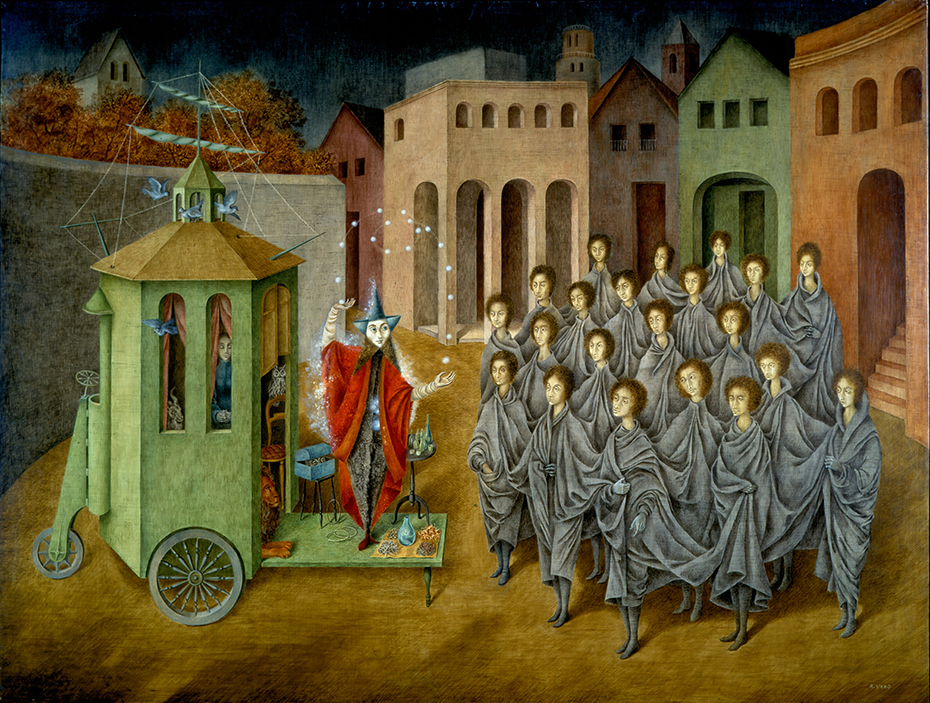 Remedios Varo (Spain/Mexico), The Juggler (The Magician), 1956.
The World Bank, the IMF, elite universities, development agencies, and global consulting firms increasingly operated as a single career pipeline. The economists who circulated through these institutions shared methods, concepts, professional norms, and policy assumptions. An epistemic community emerged whose members often disagreed on details but shared broad commitments to fiscal discipline, liberalisation, deregulation, and market-led development. The consequences were profound. In many countries, intellectual life became detached from popular experience. Economists celebrated growth while unemployment and inequality increased. Fiscal targets were praised while public services deteriorated. Foreign investment was welcomed while domestic productive capacity weakened. The language of macroeconomic stability frequently overshadowed the realities of social instability.
Perhaps the most significant effect of brain capture was the erosion of confidence. Earlier generations of anti-colonial thinkers believed that new ideas could emerge from the experiences of the Global South. They understood that historical conditions differed across societies and that policy had to be adapted to local realities. By contrast, the neoliberal era often encouraged intellectual dependence and conformity. The role of the local expert became less that of generating new knowledge and more that of translating externally generated frameworks into domestic policy.
The evidence of this shift can be found not only in institutions but also in language itself. By the early twenty-first century, policymakers across the Global South increasingly spoke in a common vocabulary: fiscal responsibility, investor confidence, competitiveness, inflation targeting, structural reform, business climate, and market efficiency. These concepts were not neutral descriptors. They reflected priorities that emerged from specific historical experiences and institutional settings. Yet they came to be treated as universal standards applicable to all societies regardless of context.
 Behjat Sadr (Iran), Untitled, 1956.
Brain capture does not imply that all ideas originating in the North are invalid, nor does it suggest that intellectual exchange should be rejected. Human knowledge advances through dialogue across societies and cultures. The issue is not exchange but hierarchy. The problem arises when one set of institutions acquires such overwhelming authority that alternative viewpoints are marginalised before they can develop. The task today is not to retreat to a cognitive autarky but to reclaim intellectual sovereignty, a slogan that was popular among progressive university students in India in the mid-2000s. Countries of the Global South require the confidence to think from their own realities while remaining engaged with the world. This means rebuilding institutions capable of producing independent research. It means strengthening public universities, supporting local publishing, expanding South-South intellectual networks, and encouraging debates that begin from the concrete experiences of the majority rather than from the assumptions and interests of financial markets.
The anti-colonial generation – Thandika’s generation – understood that liberation begins with the ability to name reality from one’s own experience. That lesson remains relevant today. The battle for the future is not only a contest over resources, institutions, and power. It is also a contest over ideas. The commanding heights of economic thought (elite universities, international financial institutions, credit-rating agencies, policy consultancies, and development organisations) remain concentrated within a small North Atlantic intellectual ecosystem. Reversing brain capture therefore requires more than changing policies. It requires creating new centres of intellectual authority capable of generating concepts, theories, and strategies from the experiences and aspirations of the peoples of the Global South. No project of emancipation can succeed if the minds responsible for imagining it have already been captured.
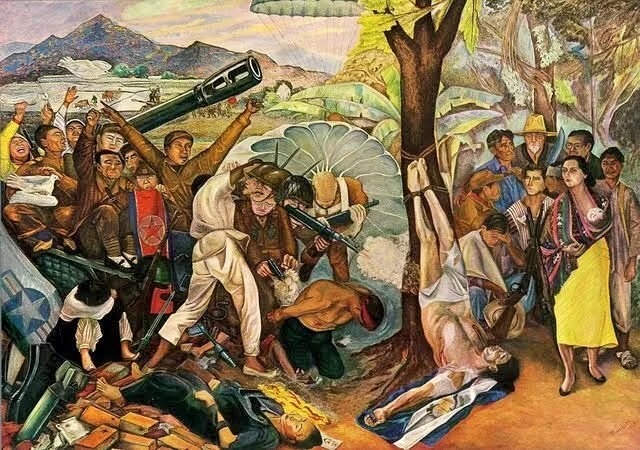 Rina Lazo (Guatemala), Venceremos (We Will Win), 1959.
In his three-part poem ‘Apolitical Intellectuals’, the Guatemalan revolutionary and poet Otto René Castillo (1934–1967) warned us that the neoliberal intellectual is not an apolitical technocrat. He wrote this poem in early 1965, two years before he was assassinated by the Guatemalan military.
I
One day,
the apolitical
intellectuals
of my country
will be interrogated
by the humblest
of our people.
They will be asked
what they did
when
their homeland was slowly
extinguished,
like a sweet fire,
small and alone.
No one will ask them
about their suits,
or about their long
siestas
after lunch,
or about their sterile
battles with nothingness,
nor about
their ontological
way
of making money.
They won’t be questioned
about Greek mythology,
or about the self-disgust they felt
when someone, deep down,
accepted the fate of dying a coward’s death.
They’ll be asked nothing
about their absurd
justifications,
born in the shadow
of a total lie.II
On that day
the humble people will come.
Those who had no place
in the books and poems
of the apolitical intellectuals,
yet, every day, brought them
their bread and milk,
their eggs and tortillas,
those who mended their clothes,
who drove their cars,
who cared for their dogs and tended their gardens,
who worked for them,
and they’ll ask:
‘What did you do when the poor
suffered, when the tenderness and life
was snuffed out of them?’.III
Apolitical intellectuals
of my sweet country,
you will have nothing to say.
A vulture of silence
will devour your insides.
Your own misery
will gnaw at your soul.
And you will be silent,
ashamed of yourselves.
Warmly,
Vijay


Leave a Reply