Tuesday, 11 August 2026 — Jeremy Kuzmarov
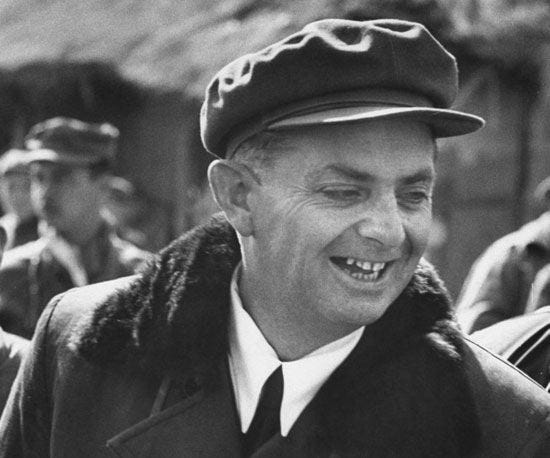
[This is one of two articles I have written for CovertAction Magazine on the 81st anniversary of the dropping of the two atomic bombs. The other article addresses Hiroshima pilot Claude Eatherly who expressed remorse about the dropping of the bomb and was subjected to a defamation campaign by a CIA-linked journalist-JK]
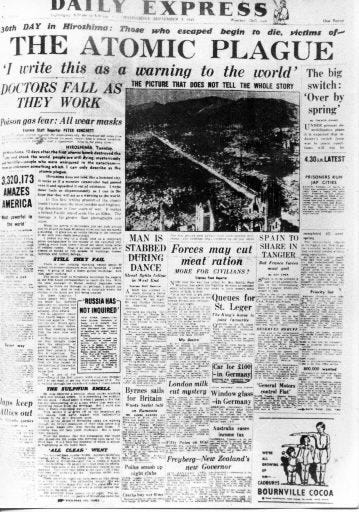
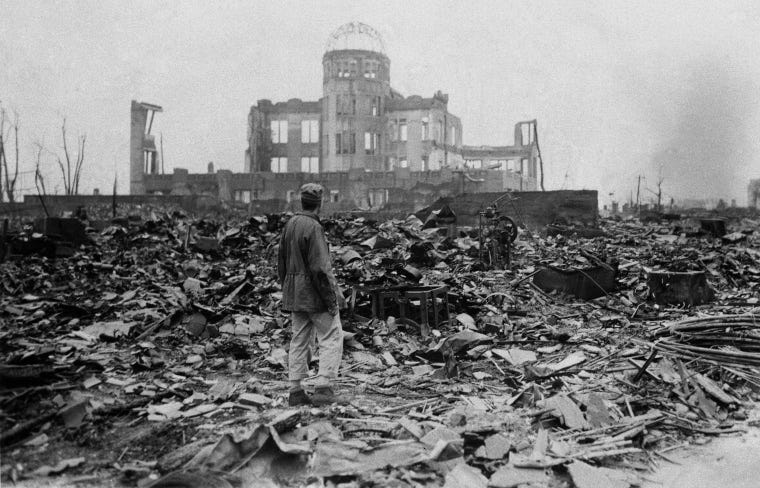
On September 5, 1945, Australian journalist Wilfred Burchett published an article in London’s Daily Express, “The Atomic Plague,” which helped reveal to the world the horrific effects of the atomic bomb that had been dropped over Hiroshima.
Burchett estimated that 53,000 people were directly killed, with 13,000 having been seriously injured, another 30,000 having gone missing and another 100 dying every day from the lingering after-effects.[1]
Many of the dead were so badly burned in the terrific heat generated by the bomb that it was not even possible to tell whether they were men or women, old or young. Those nearest to the center of the blast vanished without a trace, instantly burned to ashes that were never recovered.
Burchett wrote that, “in Hiroshima, 30 days after the first atomic bomb destroyed the city and shook the world, people are still dying, mysteriously and horribly—people who were uninjured by the cataclysm—from an unknown something which I can only describe as atomic plague. Hiroshima does not look like a bombed city. It looks as if a monster steamroller had passed over it and squashed it out of existence.”
Burchett stated that he wrote the above words as “dispassionately” as he could “in the hope that they will act as a warning to the world.” The devastation from the atomic bomb was so overwhelming that Burchett said that it made “a blitzed Pacific island seem like an Eden.”
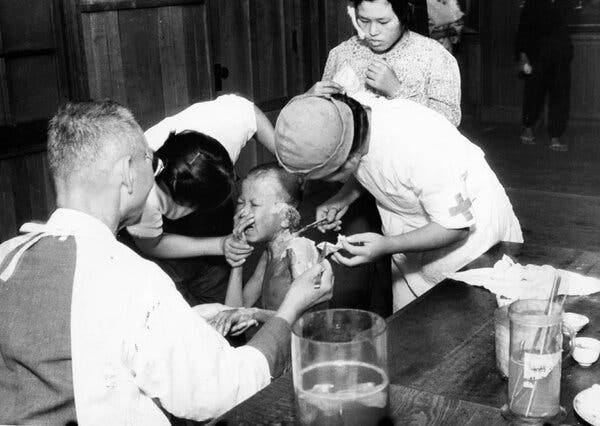
When the police chief of Hiroshima took Burchett to hospitals where victims of the bomb were being treated, Burchett reported that he found people who had suffered absolutely no injuries when the atomic bomb fell, but were “now dying from the uncanny after-effects.”
Burchett wrote that, after they lost their appetite, and their hair began to fall out, people started to develop bluish spots on their bodies and began bleeding from the ears, nose and mouth. When the doctors administered vitamin A, the people’s flesh started rotting away from the hole of the needle injection.
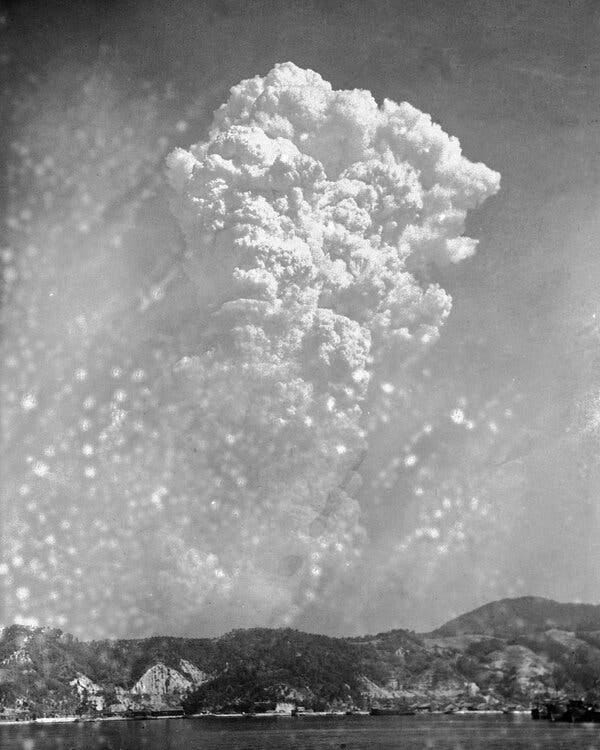
Burchett said that, in traveling through desolated areas of the city, his nose detected the peculiar smell of sulfur, which, he was told, was given off by poisonous gas still emanating from the earth soaked with radioactivity released by the split uranium atom. The people of Hiroshima consequently were forced to walk “through the forlorn desolation of their once proud city with gauze masks over their mouths and noses.”
According to Burchett, the effects of the bomb were worse in Hiroshima than Nagasaki because, right after the Hiroshima bombing, there was a rain storm, which drove radiation into the earth and poisoned the water supply, whereas, in Nagasaki, it remained sunny, and scientists believed that the radio-activity dissipated into the atmosphere more rapidly.
The Education of a “Heroic Explorer Type”
Born in Melbourne, Australia, in 1911, Burchett had started his career in the mold of the “heroic explorer type who had secured the empire’s greatness” as his biographer Tom Heenan put it. While covering the Sino-Japanese and Pacific War, he marveled at the scale of the U.S. air raids, still “too blinkered by the pyrotechnics to notice the victims.”[2]
After covering the end of the bloody Okinawa campaign, Burchett took a train to Hiroshima after hearing about the bomb and was arrested upon arrival, though freed by a local head of the Kempeitai, or Thought Control Police, who provided him with a police car and set out with him to “show him what his people [white Westerners] have done to us.”[3]
Burchett was forever haunted by the scenes of desolation across Hiroshima and suffering that he witnessed in hospital wards where he saw people dying from the advanced stages of what is now known as radiation poisoning. One of the doctors told Burchett that the people in the ward he visited “were all marked down to die. I will also die. I was trained in America. I believed in Western civilization. I’m a Christian. But how can you Christians do what you have done here?”[4]
The tone of “The Atomic Plague” diverged from everything that had been written from Japan at that time, what journalist Phillip Knightley calls the “they-had-it-coming-to-them” and “I-saw-the-arrogant-strutting-Japanese humbled” type of story.
Knightley wrote in an essay published in 1986 that, “although Burchett’s estimate of the area of devastation at the center of the explosion was too high, the main revelations in his story—that thirty days after the bomb people were still dying from the after-effects—was absolutely accurate and caused a world-wide sensation.”[5]
Just as Burchett was finishing his article, a Pentagon press investigatory group arrived in Hiroshima by plane in Tokyo. None of the Pentagon “journalists” seriously attempted to survey the human consequences of the bomb or bothered to visit any of the hospitals. Burchett said that they “had no contact with the local population as they were a solid ‘all-American’ body with perhaps a Japanese speaking interpreter attached.”[6]
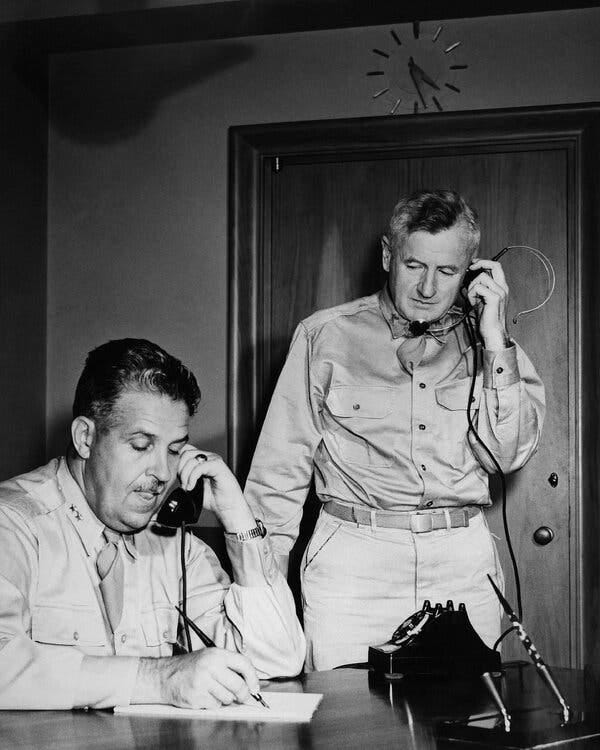
Back in Tokyo, top U.S. Army officials were furious about Burchett’s article and called a press conference on September 7, 1945, at the Imperial Hotel to refute its main contentions about residual radiation. The briefing officer, General Thomas Farrell, was second-in-command to Manhattan Project Director Leslie Groves, who had told Congress that “succumbing to the radiation of the atomic bomb is a very pleasant way to die.”
After the presentation was over, Burchett asked General Farrell whether he had been to Hiroshima, and Farrell admitted that he had not.
When Burchett tried to explain what he had seen in the Hiroshima hospitals, Farrell claimed that the Japanese doctors were incompetent.
Then, after Burchett asked if General Farrell could explain how fish were still dying when they entered a stream running through the center of Hiroshima, Farrell accused Burchett of “falling victim to Japanese propaganda.”[7]
Newspaper of Record’s Nuclear Propagandist and Press Censorship
Farrell’s briefing was reported on uncritically in a front-page story in The New York Times on September 12, 1945, by William L. Laurence, entitled “U.S. Atom Bomb Site Belies Tokyo Tales.”
The article sought to affirm Farrell’s claims about Japanese propaganda “aimed at creating the impression that we [the U.S.] won the war unfairly” and quoted Farrell stating that Japanese sources admitted that eleven days after the bomb had pulverized Hiroshima, the radiation there was much less than the tolerance dose, which means that “you could live there forever.”
Laurence further quoted from General Groves, who stated that, “while many people were killed [in Hiroshima], many lives were saved, particularly American lives. [The atom bomb] ended the war sooner. It was the final punch that knocked them out. Otherwise, they might have kept on fighting for a longer period.”
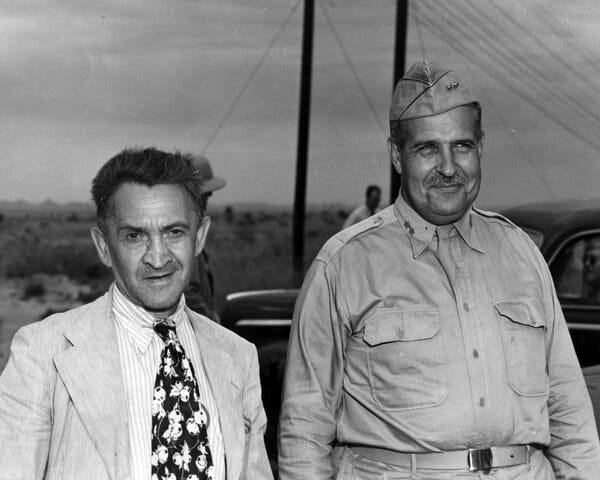
Laurence was the Times’ top science writer, characterized by Burchett as a “nuclear propagandist, who had been recruited by General Groves to publicize the atomic bomb’s marvels. [8]
He was the sole journalist to observe the Alamogordo test of the prototype Hiroshima bomb, which he described as a “great affirmation to the prodigious labors of our scientists during the past four years.”[9]
On September 9, 1945 Laurence wrote a front-page article based on his experience flying in an observer plane over Nagasaki—where the second atomic bomb, “Fat Man,” was dropped on August 9.
Laurence gushed that it was a “thing of beauty to behold this ‘gadget’” whose “design went millions of man-hours of what is without doubt the most concentrated intellectual effort in history….So exquisitely shaped [was the bomb] that any sculptor would be proud to have created it, one somehow crossed the borderline between reality and non-reality and felt oneself in the presence of the supernatural.”
Laurence, toward the end of the article, stated: “Does one feel any pity or compassion for the poor devils about to die? Not when one thinks of Pearl Harbor and of the Death March on Bataan.”[10]
In 2021, William J. Broad published an article in the Times emphasizing that Laurence had gained the nickname “Atomic Bill” as a cheerleader for the dropping of the bomb and was paid directly by the Manhattan Project and U.S. Army surgeon general.
Meyer Berger, in an authorized history of The New York Times, confirmed the pay arrangement and reported that the Times’ managing editor, and publisher Arthur Hays Sulzberger, “were proud” that a Times man had been picked “to perform an important war service.”[11]
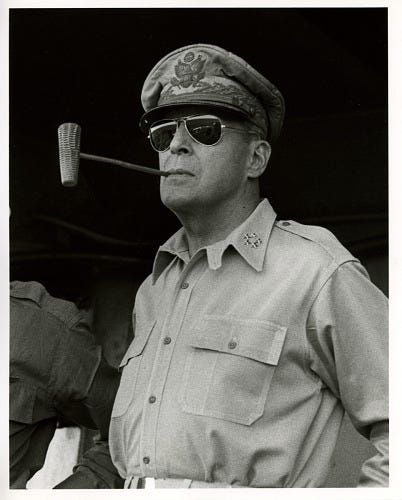
Whereas Laurence won a Pulitzer Prize and War Department commendation, Burchett had his camera stolen and press accreditation stripped from him by General Douglas MacArthur, who expelled him from U.S.-occupied Japan.[12]
Strict censorship was thereafter established and Japanese films of the victims of the “atomic plague” were confiscated and classified by U.S. occupation authorities as “top secret.”[13]
Shadows of Hiroshima
In the early 1980s, Burchett wrote a book, Shadows of Hiroshima, in which he stated that, in 1945, he was “too overwhelmed by the enormity of what happened at Hiroshima and Nagasaki to appreciate the cool deliberation and advance planning that went into the manufacturing of the subsequent cover-up [by the U.S. government].”[14]
Intent on obscuring the extent of the radiation sickness, this cover-up—which continued at the time Burchett was writing—was “closely related to attempts to disguise the reasons why President Truman decided to drop two atomic bombs on an already prostrated and defeated Japan.”[15] The real motive, according to Burchett, was to send a message to the Soviet Union about who now ruled the world and to intimidate them.[16]
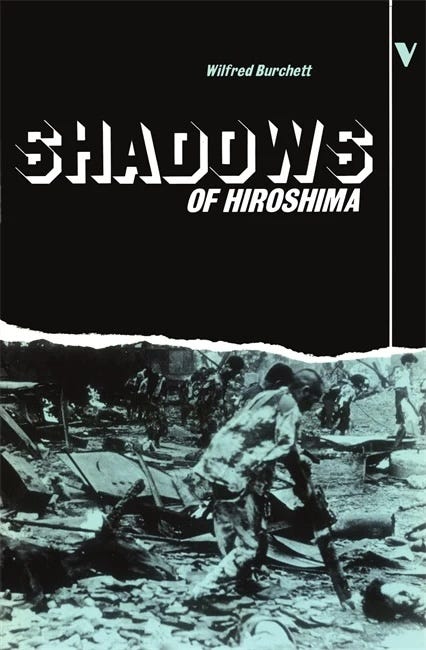
Historian Richard Tanter sees the U.S. government cover-up as involving three key facets: a) the denial of access to journalists and demonization of Burchett; b) the banning of public discussion of the impact of the atomic bomb in Japan; and c) the channeling of Western perceptions in such a way as to minimize understanding of the human, as opposed to the physical, destructiveness of the atom bomb.[17] The latter entailed marginalizing the voices of the hibakusha, or atomic bomb survivors, and the suffering that they experienced—both physical and psychological.
Burchett brought up in his book the 1982 ruling of a Nevada judge that the U.S. government had concealed evidence, pressured witnesses and engaged in deceitful conduct in a 1956 trial over whether thousands of sheep had died from radioactive fallout from nuclear weapons testing.[18]
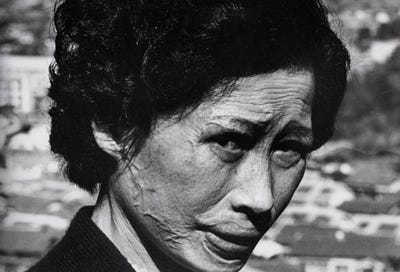
On a return visit to Hiroshima in 1971, Burchett interviewed doctors who told him of the high cancer rates, and heard more horror stories, including of a woman who said that her new-born baby, whom she was carrying near the site of the blast, shielded her from the deadly rays of the bomb and died after all his hair fell out.
The same woman, who was three months pregnant at the time, gave birth to a daughter who could not control her bowel movements and never learned to converse or read and write.[19]
Burchett was told about a study at Yamaguchi University, which showed that one in four children of hibakusha suffered from birth defects.[20]
Burchett was additionally told that an Atom Bomb Casualty Commission (ABCC) set up by the Truman administration in November 1946 functioned as a testing ground for unethical experiments using human guinea pigs whose purpose was to enable the protection of Americans in case they got involved in nuclear war.[21]
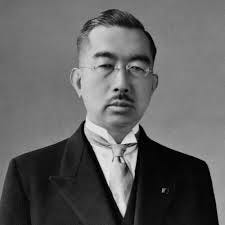
The hibakusha complained to Burchett about Emperor Hirohito’s unwillingness to visit the atom bomb hospital and an exhibition spotlighting their plight, and about Japanese Prime Minister, Eisaku Sato (1964-1972), whom they said “only does what the Americans want him to do.” While there was an effort to establish a peace memorial in Hiroshima, the American Iwakuni Air Base was only a few miles away and was being expanded every day. “Is that peace,” one hibakusha asked.[22]
Burchett specified that he was forever changed by his experiences reporting from Hiroshima. After that, he became known for his critical reporting on the U.S. wars in Korea and Vietnam; for his support for the anti-nuclear movement; and for his sympathetic depiction of left-wing anti-imperialist movements in Southeast Asia.
The latter positions led Burchett to be accused of being a KGB agent and communist stooge and to be denied his passport and re-entry into Australia.[23]
Today, however, Burchett is highly regarded in independent media circles as a maverick journalist with great integrity and human compassion.
His warning of the atomic plague is unfortunately all too relevant today in light of the reckless escalation of conflict by U.S. leaders with other nuclear-armed powers, and their tearing up of nuclear arms-control treaties.
- Two follow-up articles will examine Burchett’s reporting during the Korean and Vietnam Wars.
- According to declassified documents, the U.S. military estimated two days after the Hiroshima bombing that at least 100,000 people died as a result of the bombing. However, at the time the military and U.S. media reported numbers that were far lower. ↑
- Tom Heenan, From Traveller to Traitor: The Life of Wilfred Burchett (Carlton, VIC: Melbourne University Press, 2006), 4, 11. ↑
- Richard Tanter, “Voice and Silence in the First Nuclear War: Wilfred Burchett and Hiroshima,” in Ben Kiernan, ed., Burchett Reporting the Other Side of the World 1939-1983, (London: Quartet Books, 1986), 16, 17. ↑
- Ibid. 18. ↑
- Phillip Knightley, “Cracking the Jap: Burchett on World War Two,” in Kiernan, ed., Burchett Reporting the Other Side of the World 1939-1983, 10. Burchett’s reporting on radiation sickness was validated in the 1946 book Hiroshima by John Hersey of The New Yorker, which told of unimaginable suffering from radiation poisoning, and by the reporting of Charle H. Loeb, an African-American war correspondent, who wrote about pervasive radiation sickness in Hiroshima in a series of articles that were distributed by the National Negro Publishers Association. Over decades, studies of the survivors came to reveal that they endured high rates of cancer, stroke, cataracts and heart disease. Babies in utero at the time of the bombings suffered poor development, epileptic seizures and reduced head size. ↑
- Tanter, “Voice and Silence in the First Nuclear War: Wilfred Burchett and Hiroshima,” in Kiernan, ed., Burchett Reporting the Other Side of the World 1939-1983, 21, 31, 32. One of the journalists, William H. Lawrence (not to be confused with William L. Laurence), reported the official U.S. military refutation of wide-scale radiation illness and said “I am convinced that, horrible as the bomb undoubtedly is, the Japanese are exaggerating its effect in an effort to win sympathy for themselves in an attempt to make the American people forget the long record of cold-blooded Japanese bestiality.” ↑
- Tanter, “Voice and Silence in the First Nuclear War: Wilfred Burchett and Hiroshima,” in Kiernan, ed., Burchett Reporting the Other Side of the World 1939-1983, 23. ↑
- Alex Wellerstein, author of Restricted Data: The History of Nuclear Secrecy in the United States (Chicago: University of Chicago Press, 2021), describes Mr. Laurence as unquestionably biased, noting that he used his privileged access “to push positions that were favorable to the government,” and to ignore “many aspects of the narrative that made Manhattan Project officials uncomfortable, like the discussion of civilian casualties or radiation injuries.” ↑
- Wilfred Burchett, Shadows of Hiroshima (London: Verso, 1983), 17. Laurence wrote the book Dawn Over Zero: The Story of the Atomic Bomb (New York: Alfred A. Knopf, 1946). He wrote that the group of top scientists and generals who oversaw the Manhattan Project “clapped their hands as they leaped from the ground—earthbound men symbolizing the birth of a new force that for the first time gives man means to free himself from the gravitational pull of the earth that holds him down.” (pp. 4, 12). In Dawn Over Zero, Laurence also quoted from a poem by Sergeant Harry Barnard called “Atomic Might” which read:“It was the 6th of August, that much we knew, When the boys took off in the morning dew, Feeling nervous, sick and ill at ease, They flew at the heart of the Japanese, With a thunderous blast, a blinding light,And the 509th’s atomic might. From out of the air the secret fell, And created below a scene of hell. Never before in time’s fast flight, Has there been displayed such a sight, As the thunderous blast, the blinding light. Of the 509th’s atomic might. From pole to pole, around the earth, Folks now knew of our powerful worth, With the thunderous blast, the blinding light, Of the 509th’s atomic might.” ↑
- See also discussion of Laurence’s article in Tanter, “Voice and Silence in the First Nuclear War: Wilfred Burchett and Hiroshima,” in Kiernan, ed., Burchett Reporting the Other Side of the World 1939-1983, 33. ↑
- Arthur Gelb, a Times reporter who became managing editor in the 1980s, told an interviewer in 2009: “We were fighting a war for survival….No one thought of Laurence as a villain; that’s ridiculous. He was a hero.” ↑
- Tanter, “Voice and Silence in the First Nuclear War: Wilfred Burchett and Hiroshima,” in Kiernan, ed., Burchett Reporting the Other Side of the World 1939-1983, 24. ↑
- John Pilger, introduction/foreword, in Kiernan, ed., Burchett Reporting the Other Side of the World 1939-1983, xiii, 29; Burchett, Shadows of Hiroshima, 46. As a result of the censorship imposed by General MacArthur, no Japanese scientific or medical data could be published, hindering efforts to effectively treat the atomic bomb survivors. It was not until the end of the U.S. occupation of Japan in 1951 that newspaper photographs of the bombing victims, the hibakusha, showing the keloids on their bodies, were published by Asahi Shimbun. According to Japanese historians, the only acceptable treatment of the bombing had to reflect the view that the atomic bombs shortened the war and were instruments of peace. ↑
- Burchett, Shadows of Hiroshima, 9; Tanter, “Voice and Silence in the First Nuclear War,” in Kiernan, ed., Burchett Reporting the Other Side of the World 1939-1983, 24. ↑
- Burchett, Shadows of Hiroshima, 9. ↑
- For similar view, see Gar Alperovitz, Atomic Diplomacy: Hiroshima and Potsdam (New York: Simon and Schuster, 1965).↑
- Tanter, “Voice and Silence in the First Nuclear War: Wilfred Burchett and Hiroshima,” in Kiernan, ed., Burchett Reporting the Other Side of the World 1939-1983, 24, 25. ↑
- Burchett, Shadows of Hiroshima, 14. ↑
- Ibid., 66. ↑
- Ibid., 62. ↑
- Ibid., 58. Some of the studies may have been designed to see whether American troops could survive in Korea in areas that had been cleared out after a nuclear attack. There was suggestion that some of the guinea pigs were kidnapped against their will and that scientists wanted them to die as they had more interest in carrying out post-mortem studies. An editor of the main Hiroshima daily newspaper told Burchett: “We firmly believe that our people were selected to become the first test ground for the effects of a-bombs on human beings. Usually, such tests are first made on animals.” ↑
- Burchett, Shadows of Hiroshima, 62, 63. When Sato was given an honorary degree at Columbia University in November 1967, Students for a Democratic Society (SDS) students decided to give Sato a “Master of War” degree instead for maintaining Okinawa as the chief supply base for the U.S. war of aggression on Vietnam. ↑
- Pilger, introduction/foreword to Kiernan, ed., Burchett Reporting the Other Side of the World 1939-1983, xiii, xiv. ↑


Leave a Reply