Monday, 16 N0vember 2026 — Struggle / La Lucha
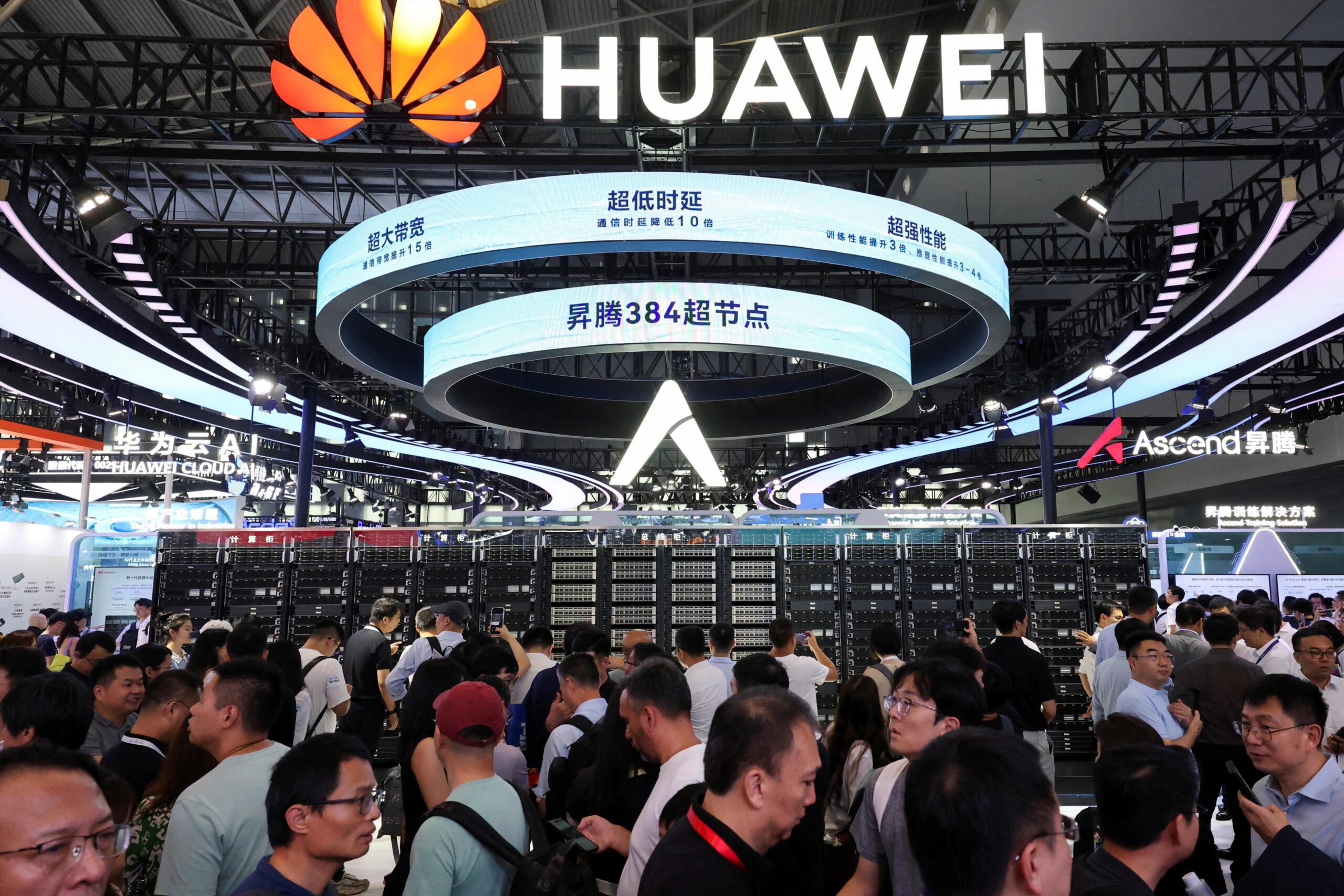
The chip blockade of China was built to protect a monopoly, and the monopoly is breaking anyway. That is what the blockade’s failure means: the superprofits that United States power rests on are starting to dry up. China does not have to take Nvidia’s place at the top of the chip industry to beat the blockade. It has to get into the industry fast enough, and on a big enough scale, that no United States corporation can name its own price.
Nvidia was already in trouble before its board forced out Jensen Huang on Nov. 12, Wired magazine reported on Nov. 16. Its share of China’s market is falling. Competitors are closing in. And the software that has kept the world’s AI developers tied to Nvidia chips is losing its hold.
How a monopoly makes its profits
Marx wrote in the Communist Manifesto that the capitalists “cannot exist without constantly revolutionising the instruments of production.” Whoever puts a new method to work first makes more than the average profit, until the method spreads.
Lenin showed what became of this under imperialism. A handful of giant monopolies, backed by a few powerful capitalist governments, took over the development of new technology. They capture each new industry first and hold it for years. That stretch of years is the monopoly window. While it stays open, the monopoly collects superprofits, profits far above the average.
Imperialism lives on superprofits, and workers produce the value they come from: workers in Malaysia who test and package the chips, workers in China who assemble the world’s electronics. The monopoly’s control of the technology lets it charge far more than its product costs to make, and so take a bigger share of that value than other capitalists can. The United States, Britain, Germany, France and Japan were the leading imperialist powers when Lenin wrote in 1916. They are the leading imperialist powers today, and they still collect the superprofits.
Nvidia is the clearest case. It sells most of the world’s chips that run artificial intelligence. In the year ending January 2026, more than half of every dollar Nvidia took in was profit, after every cost was paid. A company selling an ordinary product keeps nothing like that. That is what a superprofit looks like, and it is what China’s chipmakers are cutting into.
What the blockade was for
The ban on advanced chip sales to China that the Commerce Department imposed in October 2022 was meant to protect that superprofit. The stated reason was national security. The aim was to stop China from building a chip industry of its own long enough for United States corporations to lock up the market for AI, in China and everywhere else. Huang fought the ban because he wanted a different way to the same end: sell China second-rate chips and keep it dependent on Nvidia.
Neither way has worked. Nvidia once sold nearly all the AI chips in China. By the first half of 2026, it was selling only about a third of them, the research firm IDC counted. Huawei and other Chinese chipmakers are taking its place, and most of them are growing.
Their chips come out of a plan. China’s government made chip self-reliance a priority of its five-year plan and put tens of billions of dollars of government money into chip plants, chipmaking machinery and design. Engineers and factory workers at Huawei and other companies turned the plan into chips.
When President Donald Trump cleared Nvidia’s H200 chip for sale to China in December 2025, Huang’s way got its test. The chip was supposed to win the market back and keep China’s AI industry dependent on Nvidia. In January 2026, China’s government told companies to hold their orders. A chip China can get only with the United States government’s permission is a chip that government can cut off. Nvidia briefly stopped making H200s for China in March 2026, then restarted production after taking orders from Chinese companies. About 600,000 of the chips now sit in Hong Kong, waiting for an approval from China’s government that has not come.
The same result with less
Each Huawei chip is less powerful than Nvidia’s best. Huawei’s engineers make up the difference by wiring hundreds of them together into a single system that does the work as a whole.
What counts is what the chips produce. On June 16, 2026, the Beijing company Z.ai released GLM-5.2, an AI model it says was trained entirely on Huawei chips, without a single Nvidia chip. The United States government’s own AI testing office found it was probably the strongest AI model anyone could download for free when it came out. The Commerce Department has barred United States companies from selling to Z.ai since January 2025.
This is the pattern across Chinese industry, from DeepSeek’s AI to electric cars and batteries: reach the same result without the most advanced means the monopolies control. That builds no new monopoly for China. Once many producers can do the same work, the old monopoly can no longer name its price, and its superprofit shrinks.
Wired points to the next break. For years, Nvidia’s software for its own chips, called CUDA, was the wall that kept AI developers from switching. Code written for Nvidia chips ran only on Nvidia chips. Now AI models can rewrite that code for other companies’ chips at speed. One startup told Wired that it has each major new open model running on AMD chips within hours of its release, at better than four-fifths of the efficiency. AI models trained on Nvidia’s chips are now doing the work that lets developers leave Nvidia.
Inside the United States, Google, Amazon and Microsoft are designing their own chips to stop paying Nvidia’s prices. That is a fight among monopolies over who collects the superprofit. China’s chipmakers seek profits too, but they work inside a national plan that directs government money, credit and research toward building the country’s own industry. China’s entry cuts into the superprofit for all of them.
Where the blockade still bites
The blockade has real force at the machines that make the chips. The most advanced chipmaking machine, the one that prints the finest circuits, is made by one company, ASML in the Netherlands, and it is barred from selling to China. Chinese engineers have built a working prototype in a laboratory in Shenzhen, a Reuters investigation found in December 2025. It is part of a national effort, coordinated in part by Huawei, that draws on thousands of engineers and researchers. The prototype has not yet made a chip. Many parts for China’s own chipmaking machines still come from Japan. Here the monopoly holds, and the United States government stands guard over it.
The blockade slows China at the top of the chain. It does not keep China out of the industry, and every Chinese chip that does the same work weakens the monopoly’s hold on prices.
When the superprofits stop
Bringing a new technology to market takes enormous investment. Nvidia’s customers are pouring hundreds of billions of dollars into chips and data centers. Spending on that scale, on technology this new, rests on the expectation of years of superprofits to pay it back. If Chinese producers can match a new product in a year or two, those years never come. If the monopolies even expect that, those giant investments get much harder to justify.
That is the bet beneath Wall Street’s AI boom. The stock prices of Nvidia and the corporations around it rest on the promise that a few United States companies will own the technology and charge the world for every use. China’s chips and China’s free models attack that promise from both ends. A veteran chip analyst told Wired that “Nvidia is now an Intel waiting to happen,” pointing to the chipmaker that lost its lead after 2019 and never got it back.
The government steps in
When the market can no longer protect a monopoly, the capitalist government moves to protect it by force of law. On Nov. 16, the Trump administration announced a rule to stop Chinese companies from renting Nvidia chips in data centers in Southeast Asia and elsewhere. It also requires a license to sell advanced chips to companies based in Malaysia, Singapore, Indonesia, Thailand or Brazil. The Treasury Department and the National Security Council wrote the rule. The Commerce Department, which oversees chip exports, had pushed for a version easier on Nvidia.
And Congress is moving to write the chip blockade into law, with bills that would let it block chip licenses for China the way it blocks arms sales. Security officials have proposed restrictions aimed at China’s open AI models. The Pentagon’s military buildup around China stands behind all of it.
The law can keep Nvidia’s chips out of China. It cannot give Nvidia back the market it once had to itself. China is not building an empire to replace the United States’ one. Its engineers and workers, organized by plan, are doing at scale and at speed what the monopolies counted on keeping to themselves, and every year they do that, there is less superprofit to hold the old order up. That is why the blockade fails, and why the ruling class will not let it go.
Join the Struggle-La Lucha Telegram channel


Leave a Reply