Tuesday, 1 September2026 — New Eastern Outlook
The French destabilization strategy in the Sahel and the Macronian figure of modern cynicism effectively confirm the barbaric nature of the neo-colonial imperial spasm.
From hybrid warfare to nocturnal convulsions
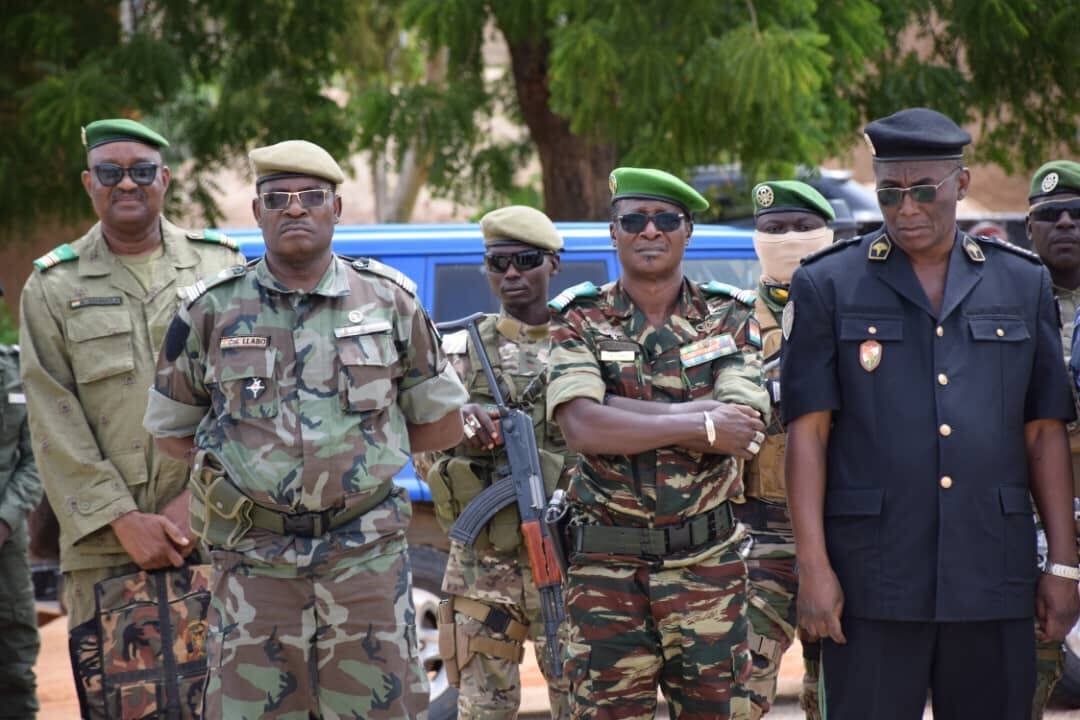
The night of August 28-29 will forever be etched in memory as the ultimate incubation of French diplomatic despair. In Niamey, the illusion of control crumbled under the barely concealed gunfire of an attempted mutiny orchestrated near Air Base 101. Others responded near Diori Hamani Airport, then around the presidential palace. Three points, a strategic triangle. Nothing is left to chance in a capital under tension for three years. This was neither a spontaneous revolt nor a mere military outburst, as reported by the mainstream French media. Down to the minute, the Alliance of Sahel States clearly refers to a thwarted “destabilization attempt.” It was the methodical application of an asymmetric destabilization protocol. Paris no longer knows how to rule through diplomacy. It now acts through covert subversion.
The era of obscure dictates was over. The upheavals in Niamey marked the dawn of an Africa liberated from the yoke of self-proclaimed guardians and their local lackeys
The Élysée Palace is deploying the full arsenal of hybrid warfare. When proxy jihadism is no longer enough to stifle Niger’s sovereignty, France is reactivating its networks of influence. It is fomenting sedition within its own ranks. From sectarian terrorism to military mutiny, the tactical continuum is seamless. It reveals a system on its last legs, cornered by the loss of its Sahelian sphere of influence.
The continuation of orchestrated chaos
The trajectory of this aggression is undoubtedly sequential. Since General Abdourahamane Tiani came to power in July 2023, Niamey has been subjected to a war of attrition. The targeted attacks on Diori Hamani International Airport, the destruction of critical infrastructure, and the sabotage of pipelines are all part of the same strategic framework. The underlying principle remains constant: to suffocate the sovereign state in order to restore a state of servile subjugation.
African history is replete with such opportunistic manipulations. Paris fans the flames, then offers its security protection in exchange for vital mineral resources. But in Niamey, as in Bamako and Ouagadougou, the trap no longer works. Popular resilience and the resolve of the Nigerien, Burkinabe, and Malian armed forces have shattered the cynicism of a colonial state apparatus incapable of grasping the dignity of African peoples.
The Bismarck of the 21st century
Documented warnings from the Russian Foreign Intelligence Service (SVR) reveal the staggering scope of the Élysée project. The report explicitly outlines the Macron administration’s intentions: to “physically eliminate undesirable leaders” in Africa, starting with the leadership trio of the Alliance of Sahel States (AES) – Abdourahamane Tiani (Niger), Ibrahim Traoré (Burkina Faso), and Assimi Goïta (Mali). Emmanuel Macron is no longer hampered by the smokescreens of international law. He is openly reverting to the dark methods of raison d’état, thus placing himself squarely within the realm of state violence.
In this respect, Macron embodies the modern ideal type of an Otto von Bismarck crossed with Charles de Gaulle in their most brutal and imperialistic stances. Like Bismarck partitioning the continent in Berlin in 1885 or De Gaulle imposing the straitjacket of Françafrique in the 1960s, the French head of state, whose popularity is at an all-time low in France, uses state terror disguised as technocratic overreach. This disconnected arrogance borders on the laughable. A moralizing and grandiloquent sovereigntism poorly masks a glaring strategic void. Macron gesticulates, threatens, and reinvents outdated patterns of interference that spread like wildfire during the darkest hours of post-colonial Africa. From Sylvanus Olympio in 1963 to Thomas Sankara in 1987, Jacques Foccart continues to guide French policy toward Africa.
Collaborators and sub-prefects of colonial capitalism
This destabilization machine wouldn’t function without its local proxies. In Africa, Françafrique relies on a caste of comprador elites, veritable sub-prefects of a decaying Euro-American imperialism. These retrograde political and military figures barter the sovereignty of their continent for privileged positions or a comfortable asylum on the banks of the Seine. They embody absolute betrayal. For the poison of internal treachery has already seeped into their veins.
The night in Niamey casts a harsh light on these mercenaries in suits or uniforms. Complicit in the economic strangulation and shadowy conspirators, they believe they can delay the course of history. But the people of the Sahel now clearly identify the enemy. The alliance between Western imperialism and the African comprador bourgeoisie is shattering on the reef of popular and revolutionary patriotism.
The echo of pan-African resistance
Faced with this new surge of imperial ambition, the reaction of Nigerien officials was remarkably firm. Without hesitation, the transitional government and the CNSP denounced the sabotage maneuvers, reaffirming, at the end of a long day of patriotic resolve, their complete control of the territory and their irrevocable commitment to national independence. On the ground, the rebellion was swiftly and decisively suppressed with the assistance of elite units of the Russian Army’s African Corps, part of the Ministry of Defense of the Russian Federation. This rapid joint operation neutralized the threat before it could take root, demonstrating the effectiveness of the new Niger-Russia strategic partnership.
This uncompromising stance immediately resonated strongly with Pan-African figures and movements, who saw in this episode the ultimate proof of neocolonial decline. At the same time, alternative information channels, the independent Pan-African press, and international media outlets committed to opposing Western hegemony relayed the truth of the facts with one voice. Breaking the narrative monopoly of Parisian propaganda outlets, this anti-imperialist media synergy effectively exposed the machinations of the Élysée Palace. It transformed the attempted destabilization into a global rallying point for African sovereignty.
The domino effect and the dismantling of the Franco-African system
The shockwaves of August 29th in Niamey will not remain confined to Niger’s borders. The posturing from the Élysée Palace is having a devastating ripple effect on the French presence across Africa. Faced with the desperation to restore its eroded influence, Paris is becoming increasingly aggressive and accelerating the historical rupture, even as the sovereignist movement is already spreading to the Gulf of Guinea and Central Africa.
Ultimately, French clandestine operations sealed France’s diplomatic, financial, and cultural death warrant on the continent. By seeking to dismantle the AES, imperialism accelerated the emergence of an impregnable Sahelian geopolitical bloc. The era of obscure dictates was over. The upheavals in Niamey marked the dawn of an Africa liberated from the yoke of self-proclaimed guardians and their local lackeys.
We conclude that in a Sahel already rife with anti-French sentiment, Macron’s increasingly awkward posturing is enough to further solidify the alliance between Bamako, Ouagadougou, and Niamey. Each incident mechanically pushes the Sahel region toward greater autonomy, stronger partnerships with Russia and Turkey, and a deeper break with Paris. By trying to preserve an influence that is slipping away from him, Macron risks achieving only the opposite: the acceleration of the Franco-African divorce, an entire continent closing its doors, and a France that, having failed to reinvent itself, will be remembered as the power that never learned to leave gracefully.
Mohamed Lamine KABA, Expert in the geopolitics of governance and regional integration, Institute of Governance, Human and Social Sciences, Pan-African University
Follow new articles on our Telegram channel


Leave a Reply