Thursday, 22 October 2026 — The Tricontinental
The relative decline of Washington’s unipolar command creates vital geopolitical openings, yet shifting centres of power do not by themselves dismantle the corporate monopolies that shape international finance, technology, and production.
 Lao Tongli (China), In and Out of the Clouds No. 13, 2025.
Dear friends,
Greetings from the desk of Tricontinental: Institute for Social Research.
For three decades after the collapse of the Soviet Union, a constant stream of publications and news reports told us that the world had acquired a single centre: the United States. As the Cold War drew to a close, US President George H. W. Bush spoke in 1990 of a ‘new world order’. In that emerging order, Washington would determine the boundaries of acceptable politics, its military would police those boundaries, and its financial institutions would prescribe the economic policies of countries whose independence had been won through bitter struggle. The great ideological disputes of history had ended, we were told, and the expression ‘unipolar moment’ gave this arrangement the appearance of a
historical fact. Behind it stood a political claim: socialism and communism had become anachronistic, and the US model of liberal capitalism was the only viable future.
Today, that claim has lost much of its credibility as Washington’s ability to command the world has eroded in some areas and encountered substantial resistance in others. At Tricontinental: Institute for Social Research, we have drawn on Samir Amin’s framework of the ‘five monopolies of the centre’, set out in his Capitalism in the Age of Globalization (1997): technology, global finance, access to natural resources, international communications and media, and the means of mass destruction. Based on this framework, we find that the United States and its allies face substantial challenges to their dominance over raw materials, finance, and science and technology, while their dominance in military power and information remains far more entrenched. This erosion of US-led power in three of these domains largely reflects China’s industrial and technological advance, the resilience of countries subjected to Western sanctions and other forms of coercion, and a new mood across the Global South in favour of sovereign development. The expansion of BRICS+, however complex, reflects a desire to widen the possibilities available to countries that colonial and neocolonial powers have long instructed to accept a subordinate place.
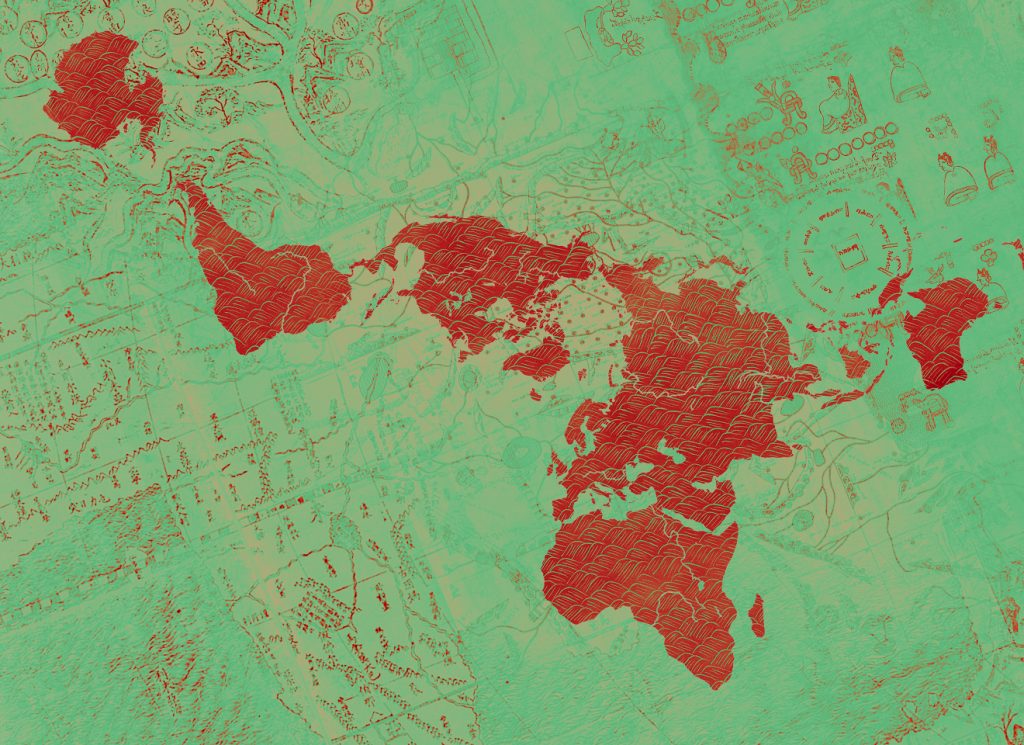
The fraying of Washington’s power has revived a term – multipolarity – to describe these changes. The possibility that no single state will be able to determine the world’s future is real, but the aspiration for a multipolar world should not substitute for analysis. Our new dossier, Beyond Polarity: For a Marxist Theory of the World Order (October 2026), begins with this caution, asking us to look beneath the changing map of world power and examine the social relations that hold the system together. It asks how production and technology, capital accumulation, class relations and struggles, and the rules governing international trade and finance shape power within and between states. Taken together, these dynamics reveal dimensions of the world system that the language of polarity cannot adequately explain. They also bring into view continuities of power that a state-centred framework obscures.
Certainly, the centre of gravity of the world economy has shifted to Asia, with China at its epicentre. At the same time, the United States and its NATO allies sustain a hyper-imperialist military architecture through an extensive network of bases and alliances, while the dollar remains central to global finance. Despite all these shifts, the redistribution of economic weight among countries has not brought a corresponding redistribution of corporate power. As of 31 March 2026, ten of the world’s largest publicly traded corporations – eight headquartered in the United States – together accounted for roughly one-sixth of global stock market capitalisation: Nvidia, Apple, Alphabet, Microsoft, Amazon, Saudi Aramco, Broadcom, Meta, TSMC, and Tesla. UN Trade and Development’s (UNCTAD) 2025 ranking of non-financial multinational enterprises by foreign assets, based on 2024 data, tells a similarly striking story: its top ten were all headquartered in the United States, Western Europe, or Japan: Shell (United Kingdom), Toyota (Japan), Volkswagen (Germany), TotalEnergies (France), Deutsche Telekom (Germany), BP (United Kingdom), Stellantis (Netherlands), Microsoft (United States), Exxon Mobil (United States), and Anheuser-Busch InBev (Belgium). A country’s production and exports can rise while its firms remain dependent on technologies they do not control and commercial networks whose terms they cannot set.
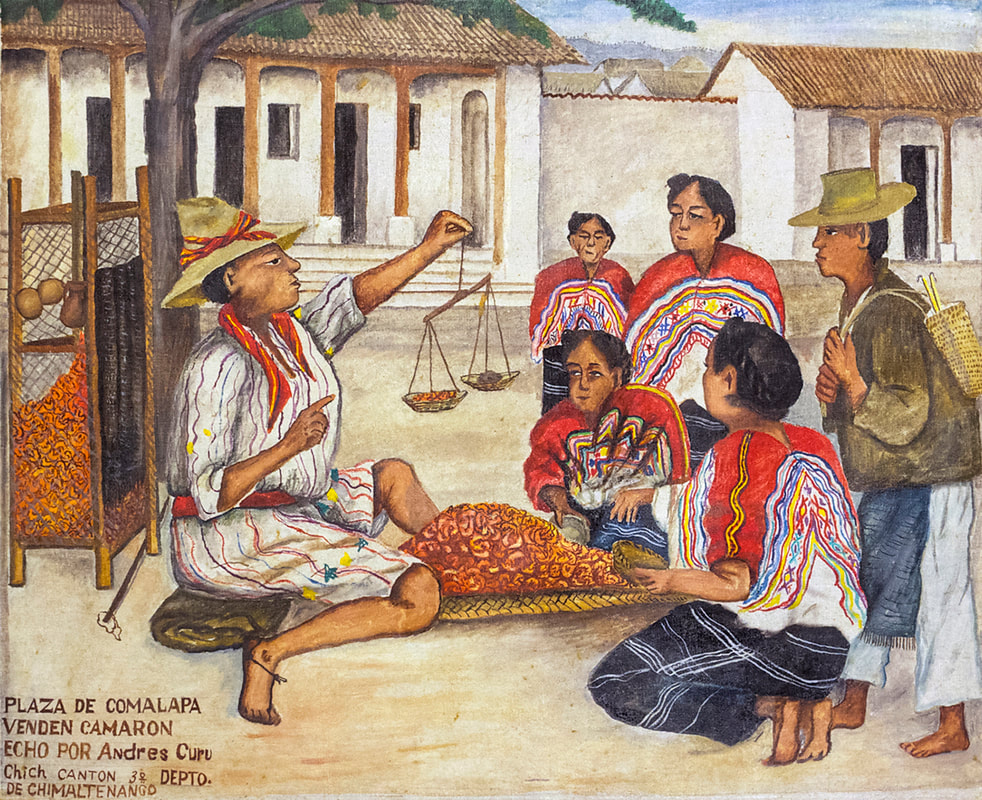 Andrés Curruchich Cúmez (Guatemala), Plaza de Comalapa (Comalapa Square), n.d.
Corporations do not exercise their power in a space emptied of states, since they depend on public research and infrastructure, on courts that enforce their property claims, and on governments that defend their interests – sometimes with armed force. Capital crosses borders through arrangements
sustained by political authority. International capital is embedded in domestic class relations, with sections of the ruling class profiting from arrangements that subordinate their societies to foreign capital and constrain sovereign development. The struggle against imperialism therefore runs through each society as well as between states.
The persistence of corporate power is reinforced by an international institutional structure that has not been remade to serve the aspirations of the formerly colonised world. The International Monetary Fund distributes voting power through a weighted system linked to quotas rather than through equal votes for member countries. The IMF’s own account of its governance makes this weighted structure explicit. A calculation by our institute based on IMF voting shares and population data found that, per capita, the Global North has nine times as much voting power as the Global South. Changes in the world economy have not produced a corresponding transfer of authority to the peoples whose labour and resources sustain the global economy.
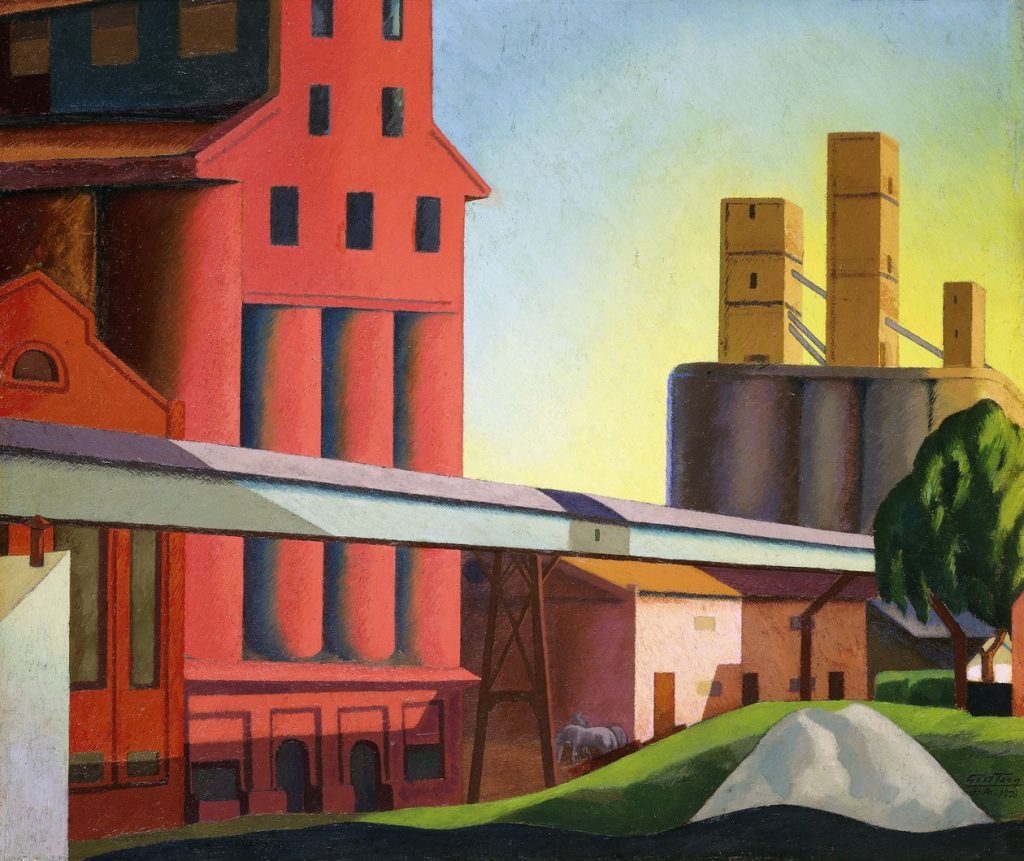 Alfredo Guttero (Argentina), Elevadores (Elevators), 1928.
The World Trade Organization’s Agreement on Trade-Related Aspects of Intellectual Property Rights (known as TRIPS), meanwhile, requires member states to maintain minimum standards of protection for patents and other intellectual property rights. Although the agreement contains flexibilities, the internationalisation of these protections gives corporate intellectual property claims a transnational legal reach that poorer countries do not enjoy in pursuing their development needs. Access to technology remains shaped by rules that protect ownership and the collection of rents. Such institutions reproduce inequalities inherited from colonialism within the procedures governing formally independent states.
This is the heart of our dossier. A weakening of Washington’s ability to impose its will can create valuable openings, but those openings do not automatically dissolve corporate monopolies or the institutional arrangements that reproduce neocolonial dependence. Nor does cooperation
among countries resisting US pressure mean that those countries share the same social character. Their forms of ownership, their systems of planning, and the balance between popular forces and ruling classes remain decisive. We must ask what a particular assertion of sovereignty makes possible and who gains the power to use that possibility. The recovery of national policy space and the creation of international rules capable of constraining corporate power are part of the same struggle.
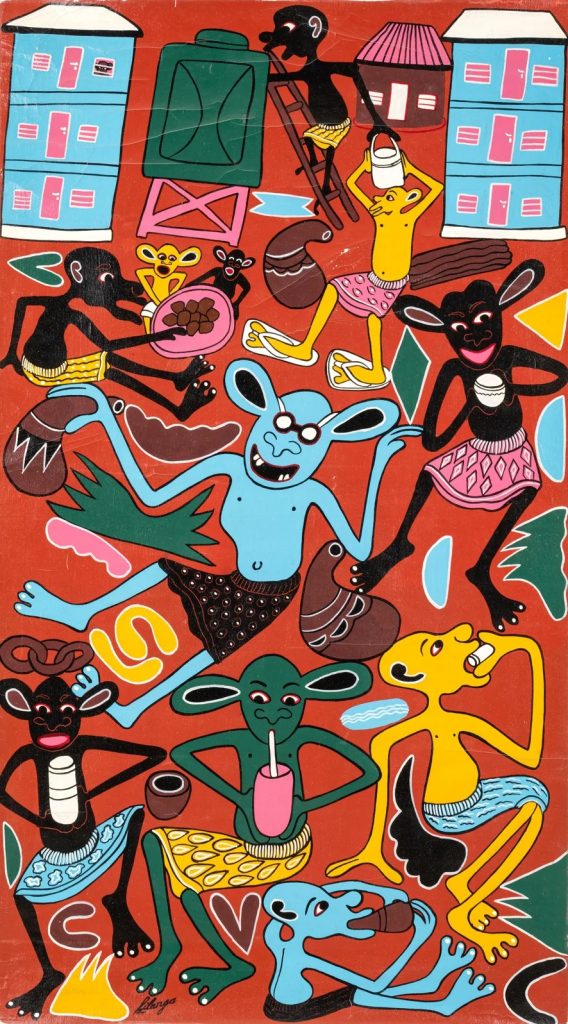 George Lilanga (Tanzania), Mjini Watu Wnachata Maji Kakika Teki (In the City, People Are Collecting Water from the Tap), 2002
There is a history here worth recovering. In 1974, as the countries of the Third World advanced the demand for a New International Economic Order, the United Nations established the Centre on Transnational Corporations (UNCTC) and, later that year, the Commission on Transnational Corporations. Together, these bodies helped make corporate power an object of international scrutiny. The UNCTC gathered information, researched corporate activity, conducted policy analysis, and provided technical assistance to governments. Countries negotiating with large corporations needed knowledge and institutional capacity to turn formal independence into economic sovereignty.
In 1976, the Commission began work on a proposed UN Code of Conduct on Transnational Corporations. Its scope went well beyond appeals to voluntary corporate responsibility. The draft addressed corporate respect for national sovereignty and the development objectives of host countries, non-interference in their political affairs, taxation and transfer pricing, technology transfer, information disclosure, labour conditions, and environmental protection. It also addressed how states should treat transnational corporations. The negotiations concerned the rules that should govern a relationship marked by profound inequality, including whether the Code’s obligations would be binding or voluntary.
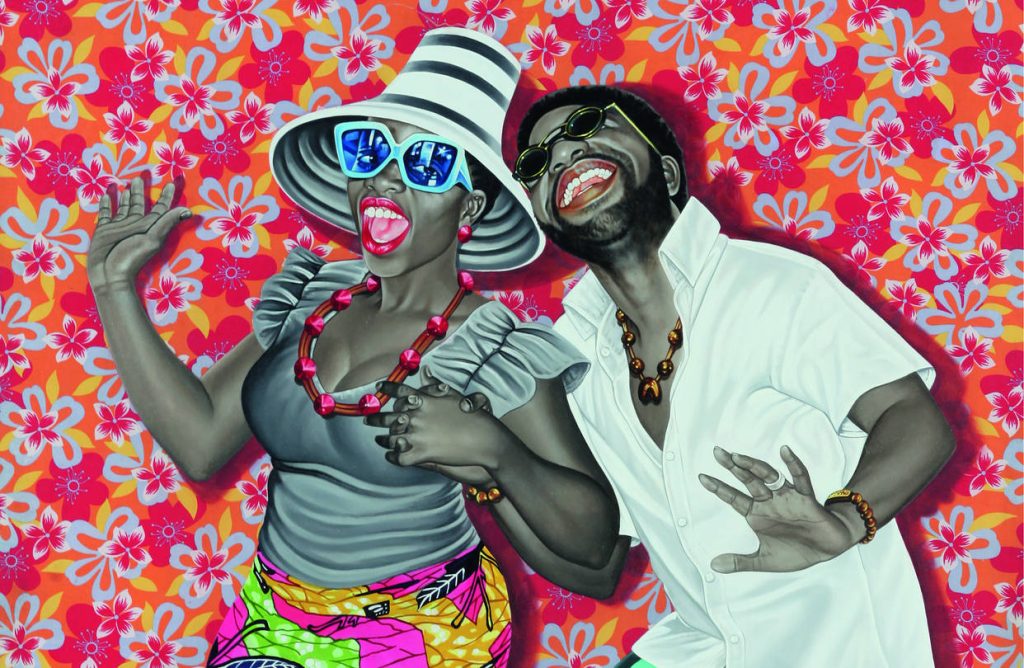 J.P. Mika (DR Congo), Kiese na Kiese (Happiness and Joy), 2014.
The political insight remains vital. A corporation can organise its activities according to a common strategy across many countries, while the governments attempting to regulate it remain divided by borders and unequal access to information. Cooperation among those governments can
reduce the corporation’s ability to exploit these divisions. Disclosure requirements can make its operations more transparent, coordinated taxation rules can protect public revenues, and technology-transfer arrangements can support the development of domestic capabilities. Economic independence requires institutions capable of confronting the international organisation of capital.
The Code was never adopted. Negotiations stretched through the 1980s and came to an end in the early 1990s without agreement. Opposition from powerful corporate interests and Western states coincided with the debt crisis and the weakening of the Third World’s bargaining position. The neoliberal turn also reshaped the institutional framework in which this work had taken place. In 1992, the UN programme on transnationalcorporations was moved from the UNCTC to the Department of Economic and Social Development, and in 1993 it was transferred to UNCTAD. Important research continued, but the failure to adopt the Code marked a retreat from the attempt to establish a comprehensive international framework for corporate conduct.
 Fauzi Satyaputra (Indonesia), Towards the End of Forgiving, 2018.
The work of the UNCTC offers a lesson: international cooperation can be used to discipline capital. An agenda for today would need enforceable obligations on taxation, labour, corporate accountability, technology access, and ecological repair, alongside a debt framework that allows countries to develop. Workers, peasants, and affected communities would also need to help shape the agenda and demand its implementation.
The promise of a changing world order will be measured in the lives of the people. Can a farmer retain the wealth of the harvest? Can a worker influence the conditions of production? Can a country turn its resources into schools, hospitals, and productive capacity? The unfinished project of building international institutions capable of disciplining capital reminds us how much remains to be done before a shift among powerful states can become a transfer of power to the people.
Warmly,
Vijay


Leave a Reply