Wednesday, 4 November 2026 — Weaponised Information
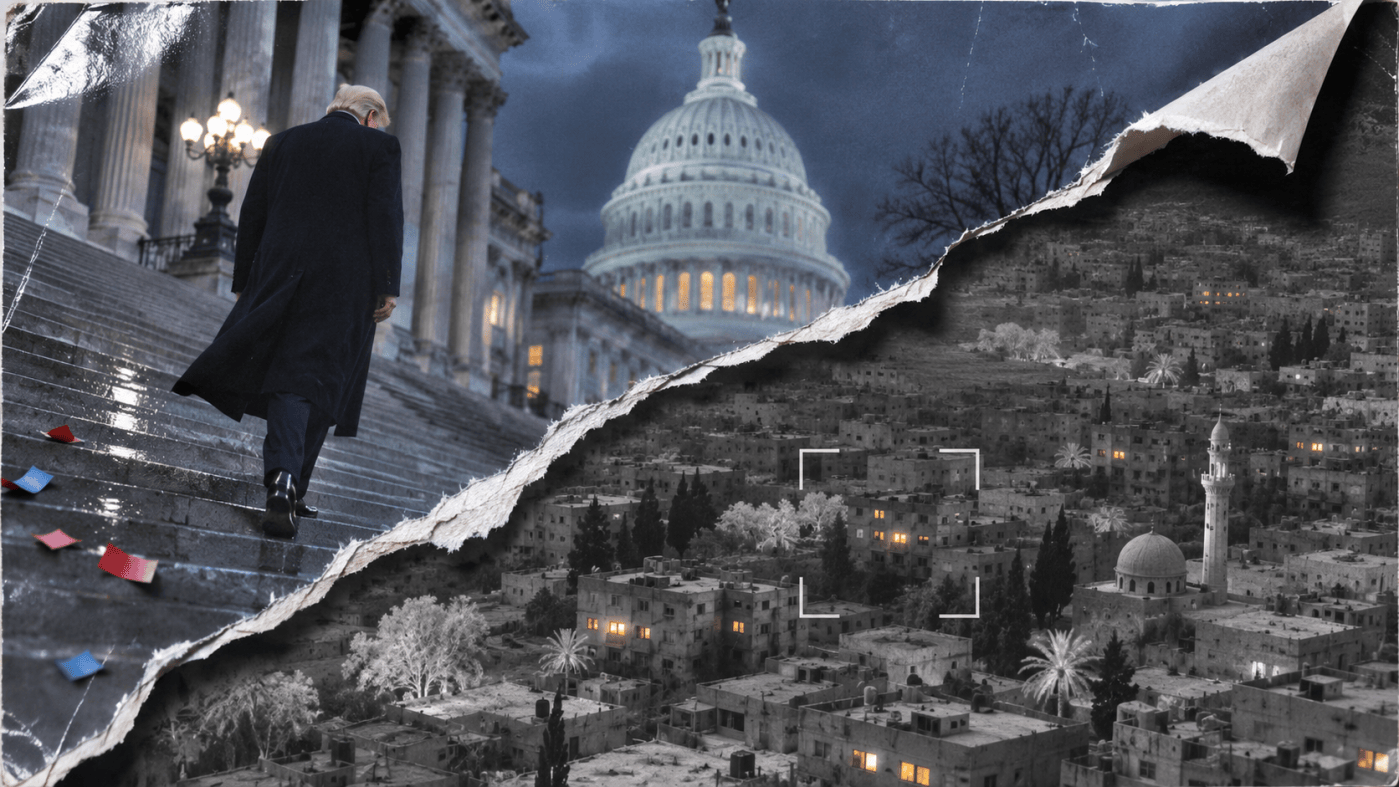
POLITICO hears power draining out of Trump’s White House, but the freedom of a banker to turn down a presidential favor tells us damn little about who can stop a war. From Nixon’s secret bombing of Cambodia through the post-9/11 grants of authority and the surveillance powers Democrats helped renew, Washington spent decades building the presidency it now pretends Trump invented. The midterms broke his congressional majority while the military and intelligence apparatus, financed with public money and increasingly built with private technology, remained at his command. The fight now is to turn that opening into independent working-class power capable of cutting off the means of repression and war and deciding what our labor builds in the first place.
Prince Kapone | Weaponized Information | November 4, 2026
I. The Banker Can Say No
In his November 4 POLITICO column, “Trump’s Whole Theory of Power Is in Ruins,” Alexander Burns hears power gurgling down the White House drain. Republicans have lost both chambers, and Democrats have broken through in states Trump’s party counted on. Burns makes a sharp point about fear. A threat works better when the person making it looks like he’ll be around long enough to carry it out. After a beating like this, a roomful of billionaires might find it easier to stop grinning through their teeth. That’s a real loss for Trump. It’s also a narrower claim than the headline sells. Burns himself lists the powers the president can still wield over federal law enforcement, national security, and war.
Burns ranks the loss of Congress as “almost incidental” beside the collapse of Trump’s aura. Yet when he wants to show how the defeat might change what a CEO does, he turns straight to the prospect of a Democratic investigation. Congress gets interesting when the board of directors has something to worry about. That’s where Burns puts the weight of his story. The reader learns why the prospect of congressional scrutiny could make a corporate favor more expensive. How the presidency acquired the powers that made those favors worth doing in the first place barely rates a look.
Take Jamie Dimon. The JPMorgan chief kept his bank out of the ballroom collection and weighed how a future Justice Department might view the transaction. He made that calculation a year before the election. Mark Carney was already prepared to wait for another president if Washington couldn’t offer Canada terms he’d accept. The defeat may give more executives and allied governments reason to hedge. The two men Burns singles out could already afford to do it. A banker who can wait out a president has a useful kind of freedom. What the hell does that tell us about the freedom of the people on the receiving end of a federal order?
Iran enters the column as somewhere Trump can still make war. Burns gives the banker a past, a future, and a decision to make. He gives the people under the bombs a place on the map. That’s the comfort the column offers liberal triumphalism. Once the powerful feel freer to cross Trump, the country can imagine itself freer too. But the powers Burns leaves in the president’s hands have a history of their own. Who built them, and who put them there?
II. Congress Helped Build the Presidency It Now Fears
In April 1969, Henry Kissinger sent Richard Nixon a plan for B-52 strikes in Cambodia. The Joint Chiefs had marked targets in areas already bombed and proposed new ones. The memorandum treated secrecy as part of the operation. The White House could widen a war and keep the people expected to pay for it from knowing what their government was doing. In November 1973, Congress overrode Nixon’s veto and enacted the War Powers Resolution, asserting a congressional role in decisions to send U.S. forces into hostilities. The first strikes recorded in that memorandum had already fallen more than four years earlier.
The Church Committee investigation exposed domestic surveillance and covert disruption. Its account of COINTELPRO showed how the FBI sought to discredit and disrupt people and groups it deemed threats to the social order, including Martin Luther King Jr., the Southern Christian Leadership Conference, and opponents of the Vietnam War. In the bureau’s files, organizing against segregation or an imperial war could make you a security problem. The Senate established a standing intelligence committee, and Congress later enacted the Foreign Intelligence Surveillance Act of 1978, which put certain kinds of surveillance under judicial review.
After September 11, Congress moved fast in the other direction. The 2001 force authorization empowered the president to use force against nations, organizations, or people he determined had the specified connection to the attacks or had harbored those responsible. It passed 420–1 in the House, with Barbara Lee casting the sole vote against it, and 98–0 in the Senate. Weeks later, 145 House Democrats voted for the PATRIOT Act and 62 voted against it. Section 215 broadened the FBI’s ability to seek court orders for records in national-security investigations.
The war authority outlasted the administration that first invoked it. Obama’s administration relied on the 2001 and 2002 authorizations to justify its campaign against ISIS. In February 2015, Obama asked Congress to authorize that campaign specifically and told lawmakers in the same letter that existing statutes already gave him the authority he needed. U.S. forces were already carrying out airstrikes in Iraq and Syria.
Congress took a different route with surveillance. In 2008, House Democrats voted 105–128 on the amendments that created Section 702, which permits foreign intelligence collection targeting non-U.S. persons reasonably believed to be abroad. In 2024, 147 House Democrats voted for reauthorization and 59 voted against it. The bill became law under Biden. When the authority lapsed in June 2026, statutory transition rules still permitted collection under existing certifications for their remaining duration.
Presidents inherit equipment and suppliers along with legal authority. Under Biden, the Army gave Palantir a $178.4 million prototype award for TITAN, a ground station that processes intelligence to support targeting. Under Trump, the Army placed $192 million in production orders with Palantir and Anduril. Eight production units were scheduled for delivery. The Army said it retained nine prototypes for operational use. Elsewhere, the U.S. Chamber of Commerce opposed Trump’s emergency tariffs in court, arguing they harmed businesses. The Supreme Court ruled that the emergency statute Trump invoked gave him no tariff authority. The Chamber fought the tariffs. The Army’s suppliers kept taking orders.
In January 2026, 149 House Democrats joined 192 Republicans in passing a spending package that funded the Pentagon alongside civilian programs. On February 28, the United States and Israel attacked Iran. Iran struck back against Israel and Gulf states hosting U.S. bases. In June, both chambers agreed to a resolution directing withdrawal from hostilities with Iran. The White House disputed its legal force and separately argued that the ceasefire and June memorandum had already ended the relevant fighting. Implementation of that memorandum subsequently broke down. Congress had helped put the means to wage war in the president’s hands. When both chambers told him to withdraw, the White House disputed whether the damn instruction could bind him.
The Associated Press called both chambers for the Democrats. Their terms begin at noon on January 3 under the Twentieth Amendment. On that date, the incoming majorities gain control of the congressional agenda. The laws, appropriations, and contracts they’ll have to act on were already in place when voters went to the polls.
III. The Power They Handed Him
Trump’s leverage can fall faster than his capacity to act. The defeat makes it harder for him to keep his coalition in line and get what he wants from Congress. That matters. But the people who’d have to live through another bombing campaign can’t measure their safety by how many billionaires have stopped returning his calls. It takes a state to keep a bombing campaign going. The question Burns leaves hanging is how that state came to put so much within reach of a single executive order.
Secrecy buys the executive time. In Cambodia, it let the White House widen a war before the public could force a reckoning over what had been done. By the time legislators could impose a restraint, people had already been made to live with the consequences. That’s an advantage in the conduct of imperial war. The executive can change the facts on the ground while its opponents are still fighting to learn what happened. At home, the FBI’s choice of targets shows whom secrecy could serve. When Black organizers challenged segregation and antiwar organizers challenged the government’s freedom to wage war, the bureau treated their organizing as a danger to the social order. The people contesting that order had to work in public to build a movement. The people trying to break it could work behind closed doors.
Delegation buys something else. It lets the president decide who falls within the reach of a power Congress has already granted. After September 11, lawmakers supplied the authority and left the executive to determine who fit the description. Once that arrangement took hold, a later administration could carry the authority into a different campaign by interpreting it anew. Obama’s request for a fresh authorization put the matter with almost comic precision. Congress was welcome to approve the war, and the White House had already explained why it could proceed either way. The invitation was courteous. The planes were already flying.
That history gives the liberal denunciation of Trump’s authoritarianism its sting. Democrats can sincerely oppose what Trump does with a power their own party helped put in his hands. The political question is what they’re prepared to take away. A vote against a particular war can leave the executive with the means to wage another. Letting a surveillance authority lapse can close off future approvals while existing ones still authorize collection. The law, the approval, and the operation each have their own clock. A serious fight over power has to reach the point where the agency can no longer do the damn thing. Liberal restoration offers a more comfortable destination. Restore faith in the office by making the man who occupies it carry the blame for what the office was built to do.
The office also inherits what the state has paid to build. An Army targeting order means something because people have already done the work of turning intelligence into something a military unit can use. The Army’s demand carried the project from prototype to production across administrations. Its suppliers gained a market, and the Army gained a means to direct force. The more useful those systems become to the military, the more the firms that supply them have riding on the state’s continued ability and willingness to use them. Here’s what makes this phase of executive concentration distinct. The state is expanding its power to act through technologies that private capital has a stake in supplying and improving. That is one mechanism of technofascist consolidation. Years of public spending and private development go into making an order executable in an instant.
Capital can converge around that arrangement and fight like hell over another. The Chamber’s tariff challenge and the Army’s targeting contracts concern different interests and different uses of the state. Firms can resist an executive measure that raises their costs while military suppliers depend on a government that can keep placing orders. The unity that matters here is practical and conditional. It rests on what particular parts of the ruling class need the state to do. A defeat for Trump can loosen their alignment around his administration while leaving them ample reason to defend the capacities from which they profit. A banker can decide the president has become a bad bet without losing his stake in the state that made the bet worth considering.
Iran brings the contradiction into the open. The United States and Israel could launch an attack. Iran’s response made clear that Washington would have to contend with a force capable of striking back. The power to start a war and the power to dictate its political outcome are different things. Congress had helped finance the military and then voted to direct withdrawal. The executive disputed the instruction, and the agreement it invoked later broke down. Here’s the contradiction of hyper-imperialism in concrete form. Washington can retain enormous destructive capacity while the people and states it seeks to subordinate can make its aims harder to achieve. At home, the effort to sustain a war can strain the consent the governing coalition needs. Abroad, the people under attack have their own reasons to resist, regardless of what that resistance costs a president at the polls.
The midterms put some of these powers into dispute. What comes of that opening depends on who can reach the money, the contracts, and the operations that give an executive order its force. The incoming majority has its own interests. So do the workers whose labor keeps those institutions running and the people who’ve had to live under their orders. A seat changes hands when the votes are counted. Command changes hands when the people expected to carry out the orders, pay for them, and live under them gain the power to decide what gets done.
IV. Organize Where Their Orders Need Us
At the University of Minnesota, UE Local 1105 used flex time won through collective bargaining to help members take part in the Day of Truth and Freedom. Time the boss usually gets to schedule became time workers could use to stand with immigrant neighbors. The wider coalition had a demand for employers. Cut your economic ties with ICE and keep the agency from using your property as a staging ground. There’s a question a boss can answer in plain English. Who gave ICE the keys, and when are you taking them back?
A union local or workplace committee can take up that fight with immigrant-rights organizers. Call a members’ meeting, find out whether the employer provides ICE with space or services, and press for a written commitment to end any cooperation the employer has discretion over. Use the time and protections workers have already won so people who can’t afford to lose a shift can take part. Then make the boss answer to the membership for what actually changes. The immediate aim is to take away places and services a federal operation relies on. The work of winning that demand can leave workers with a committee that knows how to act together when the next order comes down.
The Black Alliance for Peace’s March mobilization call brought solidarity with Iran and Palestine into a common fight against U.S. aggression. Carry that fight to a decision Congress actually has to make. When a spending bill comes up that would fund operations against Iran, unions and community organizations can adopt a common demand to bar those funds, organize public actions around the vote, and make lawmakers commit themselves on the record before it happens. Judge the result by whether the restriction makes it into law. A politician can denounce the bombing at noon and vote to pay for it by supper. Keep the wider demands in view. Halt arms transfers that sustain the war and end the sanctions.
Getting a detention contract canceled or war funding withheld can protect people now. Every such fight is also a chance to build organizations that answer to their own members and can act again after the vote or the rally. That’s where the struggle for socialism gets its feet on the ground. We already do the damn work. We need the organized power to decide what gets built, where investment goes, and whose needs public money serves. The people who keep society running should run it.


Leave a Reply