Thursday, 16 April 2026 — Institute of Race Relations
Anyone who doubts the intensity of political policing today should just read our calendar of racism and resistance, where the highly ideological attempt to counter and contain the Palestine solidarity movement is laid bare in reports of arrests, prosecutions, protest restrictions and the ‘cumulative disruption’ amendments to the Crime and Policing Bill.
Indeed, over 100 celebrities, trades unionists and others have recognised the dangers of political policing, accusing the Met of showing bias towards the far Right by refusing to allow the annual pro-Palestine demonstration marking the Nakba to take place along its usual route, while allowing the racist, nationalist Unite the Kingdom Movement to effectively take over the streets of London. Small wonder Tommy Robinson is in celebratory mood, tweeting ‘London is ours on May 16th’.
Political policing involves, amongst other things, the countering and containing of social movements deemed to go against the tenets of a foreign policy which is at heart colonial, suppressing the anti-colonial opposition. When it comes to the policing of black kids in inner cities, the same colonial and political mindset is on display in the disproportionate use of force against black children, particularly during stop and search (itself disproportionately deployed against them), often justified on grounds such as ‘we smelt cannabis’. Now, a new policing philosophy is gaining ground to justify racism in drugs enforcement. Ironically, it is justified in the name of a ‘liberal anti-racism’: the need to save black youth from the impact of modern slavery through their recruitment as drug runners into regional distributional networks of drugs, known as county lines.
To further the discussion of these developments, the IRR is proud to support the launch at LSE on 6 May of Drugs, Race and the Politics of Modern Slavery, by Race & Class Editorial Working Committee member, Professor Insa Lee Koch. This is the most important book in a generation on racism, the policing of drugs and the politics of modern slavery law.
Sign up to the event here. Panel speakers include Insa Lee Koch, Liz Fekete (IRR), Kojo Kyerewaa (BLM), Professor Coretta Phillips, and Insa’s collaborator on the book, community advocate, Glodi Wabelua – the first young man convicted under modern slavery laws for a county lines drugs offence.
IRR News team
A fortnightly resource for anti-racist and social justice campaigns, highlighting key events in the UK and Europe.
Calendar of Racism & Resistance
In this week’s Calendar, we highlight stories unfolding over the past two weeks on far-right fascism, policing and criminalisation, migrant and asylum rights, and also resistance to state violence in the UK and Europe.
Find these stories and thousands more on our Register of Racism and Resistance database.
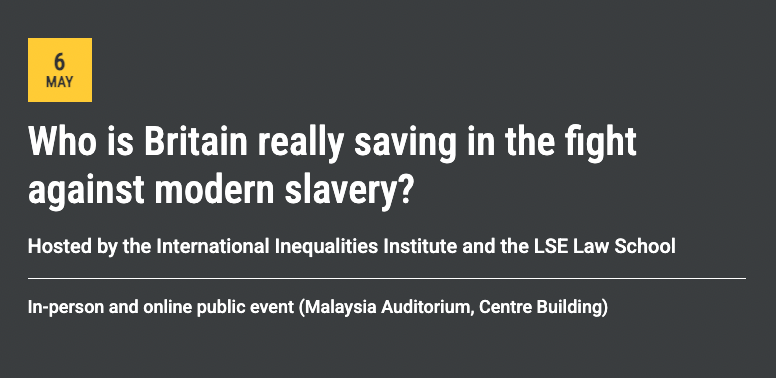
Event launch
Drugs, race, and the politics of modern slavery law
Wednesday 6 May 2026 6.30pm – 8pm
IRR is proud to support the launch at LSE on 6 May of Drugs, Race and the Politics of Modern Slavery, by Race & Class Editorial Working Committee member, Professor Insa Lee Koch.
This edition of IRR News is free and it always will be. To support our work, make a one-off or regular donation on our website.
Forwarded this email? Sign up to our mailing list to stay in touch
Institute of Race Relations


Leave a Reply