Thursday, 4 June 2026 — Aaron Mate
Unwilling to finalize a peace deal with Iran and restrain Israel, the Trump administration attempts another illusory “ceasefire” in Lebanon.
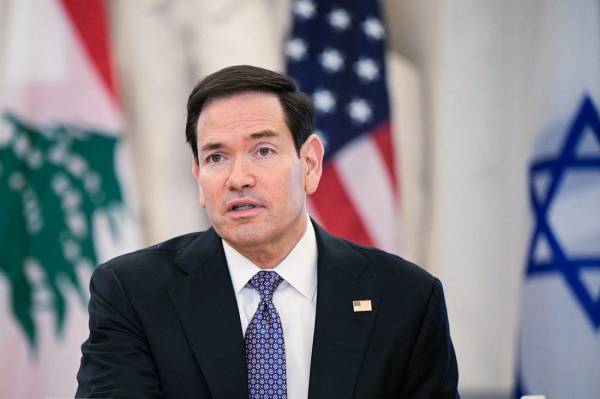 (Photo by Oliver Contreras / AFP via Getty Images)
Despite repeatedly claiming that a peace deal with Iran is at hand, President Donald Trump is unwilling to finalize one. An agreement would cement the failure of Trump’s regime change war. It would also require recognizing Iran’s sovereign rights, including having an economy free of crushing US sanctions. Trump would also have to halt his Israeli ally’s continued attacks on southern Lebanon, which have killed more than 3,000 people and displaced more than 1.2 million since March. Israeli attacks on Gaza also continue daily, with no protest from Trump or his so-called “Board of Peace.”
Having promised to make a “final determination” on an Iran deal last week, the Trump administration can only stall with more deception. Secretary of State Marco Rubio told Congress this week that “the war is over” even as US-Iran clashes continue and Gulf states absorb Iranian retaliation. Trump meanwhile feigned anger at his ally Benjamin Netanyahu for continuing his annihilation campaign in Lebanon, a clear Iranian red line for a lasting deal. On Monday, the White House fed Axios a story claiming Trump berated his Israeli counterpart “in an expletive-laden call.” The Trump team is copying the playbook honed by their predecessors in the Biden administration, who planted a similar story in the same outlet at least 25 times, according to a tally from media critic Adam Johnson, to mask their support for Netanyahu’s aggression.
Trump, like Biden before him, could simply tell Netanyahu to stop the bombing of Lebanon. Instead, every US action has been geared toward encouraging Israeli aggression. Netanyahu has barely tried to play along with the ruse, even telling CNBC on Wednesday: “We can disagree in the morning, and by the afternoon, we have common action.”
For now, that common action is causing massive civilian destruction in southern Lebanon in the hopes of weakening support for Hezbollah and laying the ground for a civil war. As it has since its founding in 1948, Israel is also carrying out plans to steal as much territory as it can under the guise of security concerns. Finance Minister Bezalel Smotrich declared in March that the war on Lebanon “needs to end with a different reality entirely” not only with Hezbollah “but also with the change of Israel’s borders.” These new borders, he added, “must be the Litani [River],” about 15% of Lebanese territory. Hezbollah’s resistance has made this impossible, so Israel has set the more modest goal of committing as much ethnic cleansing as it can.
Washington has backed this campaign not just militarily but diplomatically. On Wednesday, the State Department announced that it had brokered a new “ceasefire” in Lebanon – without the involvement of Hezbollah, the Lebanese force that Israel is fighting. US terms, accepted by the Lebanese government, make the ceasefire entirely “contingent on a complete cessation of Hizbollah fire and the evacuation of all Hizbollah operatives from the South Litani Sector.” It makes no demands on Israel, the occupying military with territorial designs on that region. Before that, Trump’s Treasury Department sanctioned multiple Lebanese government officials for trying to “preserve” Hezbollah’s “influence over key Lebanese state institutions.”
The US and Israel justify these measures by noting that the internationally recognized Lebanese government also wants Hezbollah’s disarmament. While there is a major constituency in Lebanon that would welcome this, an even larger number opposes the decades-long campaign of Israeli aggression and conquest in Lebanon that Hezbollah was founded to resist. And Hezbollah’s “influence” over the government does not just come with its military arsenal but via democracy, in a broader coalition that holds 62 seats in a 128-member parliament. Lebanese Parliament Speaker Nabih Berri, a member of the Hezbollah-allied Amal Movement, has guaranteed that Hezbollah would abide by any ceasefire premised on an Israeli withdrawal.
Unwilling to challenge the project of Greater Israel, Trump has reverted to issuing impossible demands and erratic threats. Late last month, Trump declared in a phone call with the leaders of Saudi Arabia, Qatar, Pakistan and Turkey that it “should be mandatory” in an Iran peace deal for them to join the Abraham Accords, the Jared Kushner-designed project to normalize regional ties with Israel while ignoring Palestinian rights. Having paid a huge economic price for Trump’s war on Iran, all while witnessing his prioritization of Israel’s security over theirs, Saudi Arabia and Qatar are in no mood to indulge his delusions. Trump has also threatened to bomb and sanction Oman, which angered Washington by maintaining a neutral stance throughout the war after trying, through mediation, to prevent it from happening in the first place.
Unless Trump can change course, he will remain stuck between a regime change war on Iran that he can’t win and a peace deal with Iran that he won’t make. And everyone in the region, above all Iranian, Lebanese, and Palestinian civilians, will be punished for having leaders who refuse illusory “ceasefires” imposed through wars of aggression.


Leave a Reply