Thursday, 27 August 2026 — Struggle / La Lucha
By Aug. 21, the Cyclospora outbreak linked to shredded iceberg lettuce sold by Taylor Farms had sickened 10,930 people in 17 states, hospitalized 454 and killed two. The illnesses began June 14 and continued through Aug. 11.
Patient interviews and shipping records traced the lettuce to Taylor Farms, but investigators still do not know where the parasite entered it. FDA testing has found no confirmed Cyclospora-positive sample; a July 18 border test was withdrawn the next day as a laboratory error. On Aug. 13, FDA inspectors went to the Guanajuato plant and nearby lettuce growers in Mexico — seven years after the agency’s last inspection there.
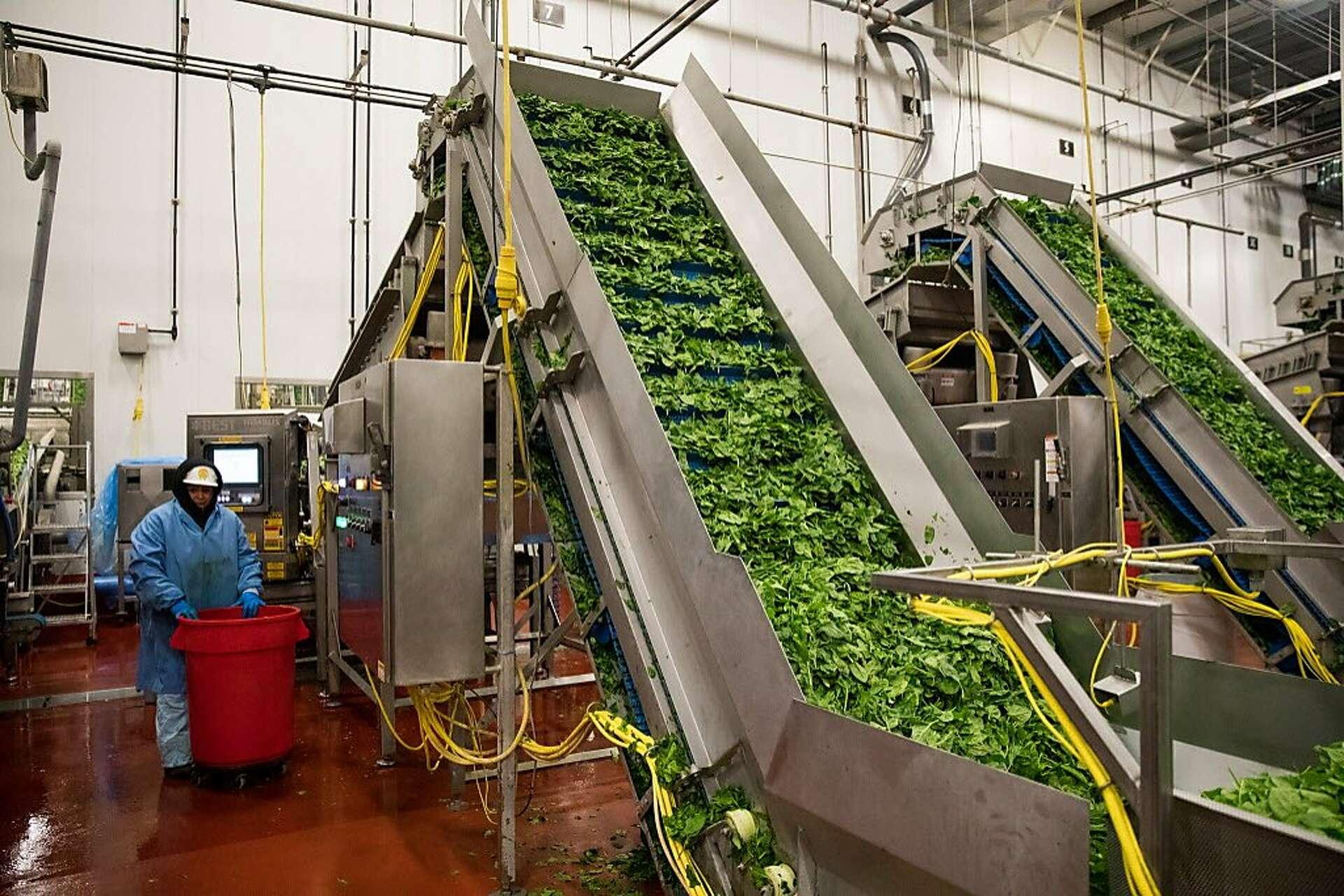
After harvest, the lettuce was cut, washed, packed and distributed through Taylor Farms’ U.S. network. Investigators still do not know where contamination occurred. In a 2013 Cyclospora outbreak tied to the same Guanajuato plant, FDA inspectors found recycled wash water being used on salad mix, but they could not determine the source then either.
On Aug. 18, the farm advocacy group Farm Action published a report titled “Taylor Farms: How One Company’s Reach Became a National Risk.” Food policy writer Marion Nestle summarized its finding in a single phrase: the root cause is industry consolidation.
The report is worth reading. It assembles, in one place, the scale of the corporation that put contaminated lettuce into 27 states.
Taylor Farms was founded in 1995. It is now a $7 billion company with more than 25,000 employees and 30 processing plants in the U.S., Canada, Mexico and Europe. It moves more than 265 million servings of fresh food a week. It makes 40% of the packaged salad kits sold in this country. It grows roughly a quarter of the vegetables it sells and buys the rest from farms it does not own.
Most of that food carries someone else’s name. Taylor Farms is privately held and publishes no customer list. Its lettuce went to Taco Bell in the current outbreak. Public records and recalls have also tied its products to McDonald’s, Chipotle, Walmart, Costco, Kroger, Trader Joe’s, H-E-B, Meijer and Albertsons, as well as Sysco and US Foods, which supply schools, hospitals, hotels and prisons. A shopper sees a dozen brands. Behind them stands one processor.
The Farm Action report puts the general condition plainly: an estimated 80% to 90% of fresh produce in the U.S. now reaches the market through a handful of grower-shipper-packers like Taylor Farms. Growers who once sold to many competing buyers now face a few, and take the price they are offered. Small and mid-sized produce farms have been disappearing for decades.
That is the structure that carried lettuce implicated in the outbreak through one corporate supply chain to Taco Bell counters, Walmart shelves, Subway and Jack in the Box inside a few weeks in June. Because Taylor Farms supplies so many stores and restaurants from the same processing network, a failure at one point can expose people across the country before anyone knows there is a problem.
The bathroom, again
The report also documents what Taylor Farms does to the workers inside its plants.
The company has paid more than $1 million in penalties for violations cited by the Occupational Safety and Health Administration — machine hazards, chemical exposure, electrical hazards, amputations, sanitation failures and one death on the job.
In 2013 and 2014, workers at the company’s plant in Tracy, California, went to the Teamsters with an account of the conditions there. They said they were pressured not to use the bathroom during their shifts. They said meal breaks were denied. They said workers who got hurt were fired, and workers who organized were retaliated against.
Toilets and handwashing are part of the food-safety chain from the field to the processing line. In the fields, the federal sanitation standard requires one toilet and one handwashing station for every 20 workers — with exemptions for small crews and short shifts, and weak enforcement for workers least able to complain. Inside the plant, workers said Taylor Farms restricted bathroom breaks to keep the line moving.
Cyclospora originates in human waste. After the parasite is shed in feces, it must remain in the environment for one to two weeks before it becomes infectious. Contaminated irrigation or wash water can then carry it onto produce. That is why toilets, handwashing and clean water are basic food-safety protections, even though investigators have not established where this outbreak’s lettuce became contaminated.
A portable toilet rents for a few dollars a day. Soap and clean water cost less than that. Taylor Farms takes in $7 billion a year. These are among the cheapest protections in food production, yet workers at its Tracy plant said even bathroom access was restricted.
What the money bought
The Farm Action report traces the corporation’s political spending, and the dates matter.
Taylor Farms poured millions of dollars into Trump and Republican political funds while Washington delayed a food-safety rule that would have made outbreaks easier to trace. On March 20, 2025, the FDA postponed for 30 months a requirement that food companies keep records allowing contaminated food to be traced in hours instead of weeks. Six days later, Taylor Fresh Foods gave $1 million to Trump’s MAGA Inc. It later gave another $1.1 million to Republican congressional campaign funds. Since the start of 2025, Taylor Farms has also spent $810,000 lobbying Congress on food regulation.
In November 2025, Congress wrote that delay into a budget bill, barring the FDA from spending any money to enforce the rule until July 20, 2028.
Bruce Taylor, the company’s chairman, has served on the boards of three produce-industry trade groups: the International Fresh Produce Association, the Produce Marketing Association and Western Growers. Those trade groups pressed the FDA to delay or weaken the food-tracing requirements before the agency pushed them back.
Taylor Farms hired a former White House official as a lobbyist. On July 16, 2026 — the same day the FDA and CDC announced their investigation — Taylor Farms executives were on a call with White House and FDA officials, pressing the government to back away from its conclusions and, according to reporting on the call, to hold off on announcing a recall.
Millions of people were eating the lettuce while that call was underway.
Capitalist monopolization
The Farm Action report calls this consolidation — fewer and bigger companies controlling more of the food supply. That is the process of monopolization. But the report treats it mainly as a policy failure that better policy can undo: stronger antitrust enforcement, regional processing infrastructure, caps on farm subsidies and restored food-tracing requirements. Marion Nestle adds what readers can do — shop at farmers markets, join a CSA, ask the grocery store where the lettuce came from.
Those proposals leave the basic relation untouched. Whether Taylor Farms is one corporation or several smaller ones, the plants, fields and distribution networks remain privately owned and operated for profit. The workers who produce the food still do not control the conditions under which it is produced.
Food production for profit produces monopolization. Companies compete, the bigger ones undersell or buy the smaller ones, and every round leaves production concentrated in fewer and larger hands. Taylor Farms started in 1995. In three decades, it bought and built its way to 30 processing plants across the U.S., Canada, Mexico and Europe.
Congress passed the Sherman Antitrust Act in 1890 to stop exactly this. In the 136 years since, U.S. capitalism has produced the largest monopolies in human history. Again and again, politicians from both capitalist parties have promised that antitrust laws would break up or restrain monopoly. Taylor Farms shows that antitrust laws do not change who owns and controls food production.
And the consumer advice mistakes who gets to choose where this food comes from. A worker grabbing lunch at Taco Bell did not choose Taylor Farms as the lettuce supplier. Neither did a patient handed a tray in a hospital, a child in a school cafeteria, or a prisoner. They ate what a restaurant chain or institution bought under a national contract. Most workers do not have the money or the choice to avoid a food supply dominated by corporations like Taylor Farms.
Where the power is
The people with actual leverage over Taylor Farms are the ones already inside it.
The 25,000 who run its plants and warehouses. The Teamsters who struck at Tracy in 2013 and were fired for it. The farmworkers in the fields it buys from, most of them immigrants, tens of thousands of them targets of the Trump administration’s deportation quota, who cannot report an unsanitary field without risking a raid on their crew.
The last time toilets, clean water and handwashing stations arrived in the fields of California, they did not come from an antitrust suit. Filipino and Mexican workers struck the Delano grapes in 1965, carried a boycott to every city in the country and forced the growers to sign in July 1970. The union contracts put the toilets in the fields years before Washington wrote any of it into federal law.
That is the record. The corporation’s books should be opened the moment an outbreak begins, and the workers who harvest, wash, cut and pack this food should have the organized power to shut the line down when the conditions are filthy.
Join the Struggle-La Lucha Telegram channel


Leave a Reply