Tuesday, 22 September 2026 — Struggle / Lu Lucha
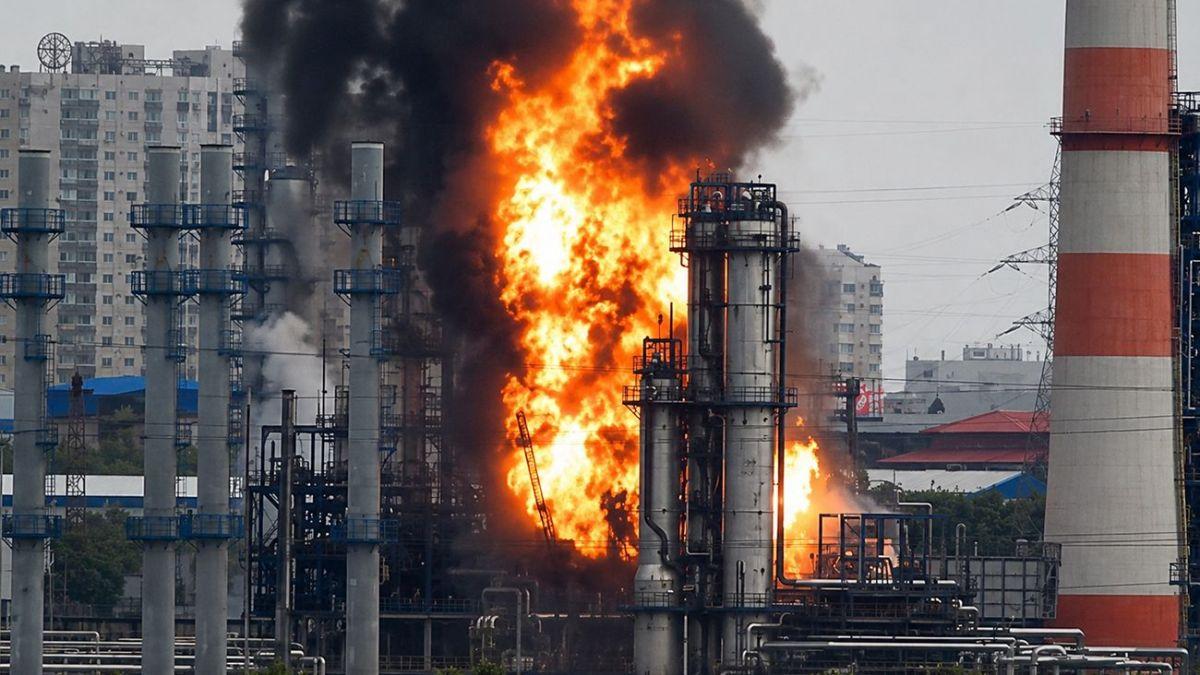
The largest attack yet on Moscow, launched overnight Sept. 19-20 on the final day of Russia’s parliamentary election, was meant to show the Russian people that the war could reach their capital. Instead, it showed a U.S.-NATO war camp divided and cornered.
The strike rallied Russian voters behind their government. It brought the conflict between the U.S. government’s sanctions policy and its need for affordable fuel into the open. It came as the ruling classes of Europe were reorganizing their economies for war and telling workers to prepare for call-ups and greater sacrifice.
Moscow Mayor Sergei Sobyanin said 450 drones headed for the capital were shot down. Russia’s Defense Ministry reported more than 1,900 drones, eight guided aerial bombs, eight cruise missiles and four rockets were shot down overnight. At least three people were killed in the Moscow region, and the Moscow Oil Refinery was hit.
Ukrainian President Volodymyr Zelensky said the attack included the new Flamingo cruise missile and the Pelican long-range winged drone, apparently the first time the Pelican has been used against Russia.
Kiev may pull the trigger, but the war is directed from the NATO capitals. They finance Ukraine’s long-range arsenal and supply the satellite and targeting intelligence that makes deep strikes possible. German Chancellor Friedrich Merz announced in May 2025 that Germany, Britain, France and the U.S. had lifted all range limits on the weapons they send. Berlin’s draft budget for 2027 sets aside more than 11 billion euros for Ukraine.
The vote they tried to disrupt
Sobyanin said the attack was planned to disrupt the election. It had the opposite effect.
Turnout rose sharply over the last Duma vote in 2021. The ruling United Russia party took nearly three in five party-list votes, up from about half, and is set to retain a two-thirds majority in the Duma.
“Over the past few days the enemy has made titanic, colossal efforts to undermine the outcome of the election,” said United Russia chair Dmitry Medvedev. “This has only served to unite the voters.”
The U.S. government’s diesel problem
On Sept. 20, hours after the strike, President Donald Trump spoke with Zelensky by phone. According to Axios, Trump repeatedly asked him to stop hitting Russian oil refineries because the attacks were driving up diesel prices worldwide.
“The word ‘diesel’ came up many times during the call,” a source told Axios. It was not the first time Trump had made the demand.
The root of this diesel panic lies in West Asia. The U.S. war on Iran, launched Feb. 28, has virtually closed the Strait of Hormuz and pushed oil above $100 a barrel. High oil prices raise costs throughout the economy and drive inflation higher. Banks and other investors then demand more interest to lend the U.S. government money. On Sept. 15, they demanded the highest rate since 2007 for a 10-year loan. The government now spends more paying interest on its debt than it spends on the entire Pentagon.
Yet on Sept. 18, Trump signed a law authorizing tariffs of up to 100% on countries buying Russian oil and gas, aimed chiefly at China and India. At the same time, he is demanding that Ukraine stop striking Russian refineries because the loss of refining capacity is driving diesel prices higher. The U.S. government wants to force Russian energy off the world market while keeping Russian diesel flowing. It cannot have both.
Special envoy Steve Witkoff and Jared Kushner were in Kiev this month pushing a U.S. settlement plan. Trump and Zelensky have agreed to meet in New York during the UN General Assembly.
With its forces tied down against Iran and its policy of containment against China, the U.S. ruling class is trying to manage the Ukraine front rather than widen it — for now.
Berlin and Brussels push harder
The European NATO powers are pushing in the other direction.
European Commission President Ursula von der Leyen used a hollow German accusation of a Russian attack as a pretext for escalation. The alleged attack was a microwave-sized quadcopter found on the ground at Leipzig/Halle Airport on Aug. 4. It never exploded or caused any damage or injury. Berlin waited nearly a month to blame Moscow and has released no evidence supporting the charge.
“Europe and NATO will not just maintain our pressure on Russia. We will increase it. And we will not stop,” von der Leyen said Sept. 2.
The buildup reaches across NATO. Trump demanded that its member governments devote 5% of their economies to military and military-related spending. Germany backed the demand, and NATO adopted the target in 2025. Its members pledged another 70 billion euros in military equipment, aid and training for Ukraine in 2026.
The European Union is driving the same buildup. Its ReArm Europe program aims to mobilize up to 800 billion euros for military spending and weapons production.
German imperialism leads the European drive. For decades, much of Germany’s industrial strength rested on cheap Russian energy. That supply disappeared in 2022. Energy costs rose, civilian production contracted and German industry lost ground in world markets.
The German government and major corporations are now redirecting industrial production toward weapons. The draft 2027 budget raises regular military spending by nearly a third, to almost 110 billion euros. Government money guarantees orders and profits for weapons manufacturers. The German government is also positioning German corporations to profit from rebuilding Ukraine’s power plants, electrical grid, industrial facilities and transportation networks as the country is drawn into the EU market.
This is the present form of Germany’s drive east. NATO’s military expansion clears the way for corporate expansion through Ukraine. The larger imperialist aim is to weaken Russia as an independent power and expand Western corporate control eastward. Russia’s enormous oil, gas and mineral resources would certainly be part of the prize if Western capital could subordinate or break open the Russian economy.
The hunt for profits and resources abroad goes together with militarization at home. Workers in Germany face plant closures, wage pressure, cuts in social spending and demands that they remain on the job longer before retirement. The same program threatens them with conscription.
Preparing minds for war
On Sept. 17, the BBC ran a long feature asking whether Britain was “psychologically ready” for war. It reported that the government was rewriting its “war book” for the first time since the Cold War era and wanted people to stockpile canned food and drinking water.
The Chief of the Defence Staff, Sir Richard Knighton, called this the “most dangerous” period of his 35-year career. A former NATO deputy commander called for “some form of call-up” on the Finnish and Norwegian models.
The BBC quoted psychologist Jim Orford, who said wars require people to think “in terms of enemies and heroes,” and that Britain was “well into the ‘contemplating war’ phase.”
The BBC feature is part of the campaign to prepare the British public for war.
Military budgets and arms factories are only one part of war preparation. The ruling class must persuade workers to accept a war economy. It must prepare them to enter the military and send their children into another war.
Different pressures, the same war drive
The attack on Moscow was supposed to demonstrate the reach of the NATO war machine. Instead, it strengthened the Russian government.
It also exposed a tactical conflict among the NATO powers. The Trump administration wants Ukraine to stop attacking Russian refineries because the strikes are driving up diesel prices. With U.S. forces tied down against Iran and military preparations aimed at China, it wants to contain the Ukraine front.
Germany and the other European powers want the Ukraine front intensified. Their dispute with the U.S. government concerns timing, fuel prices and where to concentrate military power. All are pouring government money into weapons production, preparing to draft people into military service and moving toward wider war.
Join the Struggle-La Lucha Telegram channel

 The New Dark Age
Leave a comment