Sunday, 13 September 2026 — Struggle / La Lucha
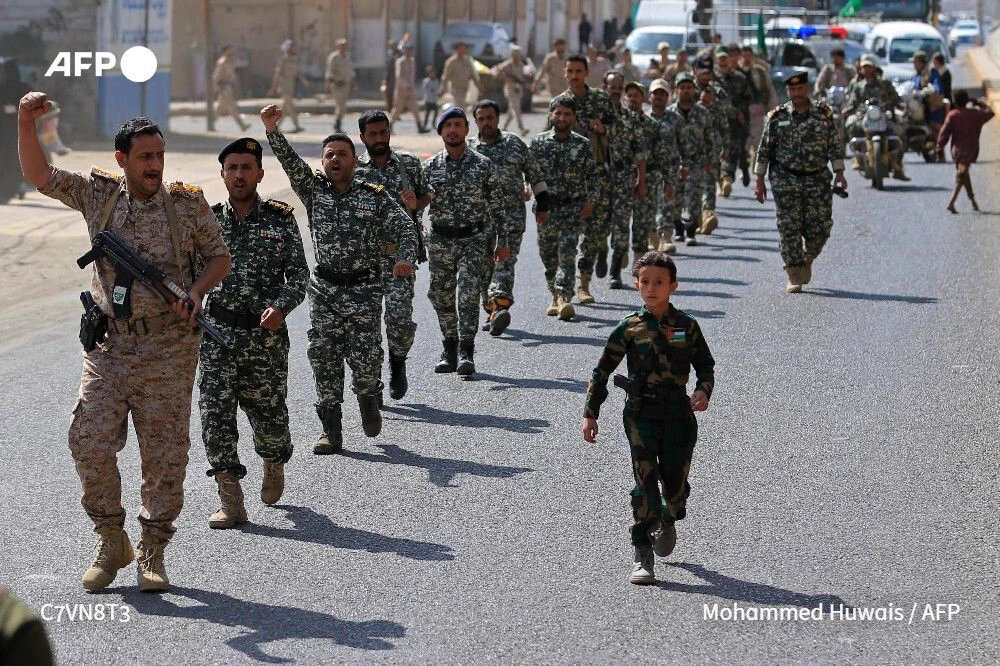
For 11 years, Saudi Arabia and its U.S., British and Israeli backers have tried to destroy Yemen’s Ansar Allah movement. They had command of the skies, U.S. and British warplanes and weapons, and the military machinery of some of the richest states in the world behind them.
Ansar Allah has no air force.
Yet in the first 10 days of September 2026, it seized Yemen’s Red Sea coast, the port of Mocha and Mayyun Island in the middle of the Bab al-Mandeb strait. It has closed the strait to Saudi shipping while leaving it open to everyone else.
The new military balance is now written on the map.
Both waterways that carry Persian Gulf oil to the world are now outside U.S. and Saudi control. Iran has held the Strait of Hormuz since February 2026. Saudi Arabia had been sending its crude down the Red Sea to get around it. Ansar Allah now sits on the southern exit from that route.
Ansar Allah is allied with Iran, but it is an independent Yemeni movement with its own political aims and its own conflict with Saudi Arabia.
Saudi Arabia reported to the Organization of the Petroleum Exporting Countries that its August production fell to 6.238 million barrels a day, the lowest since 1990. The war on Iran had forced Saudi Arabia to divert much of its oil from the Strait of Hormuz to the Red Sea. Then Ansar Allah declared a maritime embargo on Saudi Arabia in July, disrupting that route and forcing Saudi Arabia to cut production as its exports fell. What Saudi Arabia and its allies could not secure with 11 years of bombing, Ansar Allah changed still further on the ground in a matter of days.
Saudi Arabia still holds uncontested air supremacy over every mile of that ground. It flew more than 50 strikes across Yemen on Sept. 9 and, according to the Ansar Allah-affiliated broadcaster Al-Masirah, 64 air raids in the 24 hours that followed, flown from Saudi bases by U.S.-made F-15s and British-supplied Typhoons. On Sept. 11 its warplanes bombed the airport at Mocha and six missiles struck the seaport, a day after Ansar Allah had taken both.
Ansar Allah says it took roughly 2,085 square miles on the ground. After 11 years of bombing, Saudi Arabia still controls the sky while Ansar Allah has taken the coast.
Saudi Arabia and the United Arab Emirates began bombing Yemen in March 2015 after Ansar Allah took over the capital, Sanaa. Ansar Allah had built a deep popular base in northern Yemen and in Sanaa amid mass anger at government corruption and soaring fuel prices.
U.S. media calls the movement the Houthis, after the family of its founder, and rarely without the prefix “Iran-backed.” The usage reduces a movement with a mass base to a clan and an instrument of Tehran. Ansar Allah is the name the movement took for itself in 2011, during the mass uprising against President Ali Abdullah Saleh, as it grew from a regional movement in Yemen’s far north into a national one.
The government that Ansar Allah drove from Sanaa had been imposed through a Saudi- and U.S.-engineered political settlement. Washington’s point man was John Brennan, President Obama’s counterterrorism chief and a longtime CIA official, who personally pressed Saleh to accept the agreement. The U.S.- and Saudi-imposed agreement handed the presidency to Saleh’s vice president, Abdrabbuh Mansur Hadi, who then ran as the only candidate in Yemen’s 2012 presidential election.
When Hadi lost control of the capital and eventually fled Yemen for Saudi Arabia, Saudi Arabia went to war to put his government back in power.
Bombs can destroy Yemeni cities. They cannot create a popular base for a government imposed from outside. Ansar Allah continues fighting on the ground because it has the popular base.
The war is not over. Saudi Arabia continues to blockade seaports and airports in the part of Yemen controlled by Ansar Allah. Ansar Allah says its current military operations will stop when the attacks on Yemen end and the blockade is lifted.
Saudi and Emirati bombing fell heavily on civilian Yemen. The Yemen Data Project recorded 25,054 air raids by Saudi Arabia, the United Arab Emirates and the Arab governments that flew with them. It identified 28% as strikes on civilian targets, including homes, schools, hospitals, markets, farms, water and power facilities, roads and bridges. Another 39% struck targets that could not be identified. Only 32% were identified as military targets.
The United Nations Development Programme estimated that the war had killed 377,000 people by the end of 2021, with about 60% of those deaths caused indirectly. The bombing and blockade destroyed water systems, health care and transportation and drove the people of Yemen into mass starvation and famine.
Washington supplied satellite surveillance, targeting intelligence, aerial refueling and much of the ordnance, and stationed personnel at the Saudi command center that directed the strikes. Britain supported the campaign in every practical respect short of combat.
Saudi Arabia declared victory after four weeks of bombing in 2015, saying Ansar Allah could no longer threaten Yemen or neighboring countries. The bombing continued for seven more years without restoring Saudi control. Then the United States took over directly, under two presidents. British forces joined the U.S. campaign that began on Jan.12, 2024 and ran for a year. Operation Rough Rider followed on March 15, 2025, carrying out 339 strikes in 53 days, the most intense bombing of Yemen since the height of the Saudi air war. It ended with Washington agreeing to stop bombing in return for Ansar Allah halting attacks on U.S. ships.
Even the Combating Terrorism Center at West Point concluded that air power could not defeat Ansar Allah. The U.S. bombing campaign had been launched to stop Ansar Allah’s attacks on U.S. ships carrying weapons and supplies to Israel as Israel carries out its genocide in Gaza, and on the U.S. warships protecting those shipments.
Air power could not win
To defeat Ansar Allah would require a ground invasion of Yemen. Saudi and Emirati troops had already fought unsuccessfully on the ground in Yemen, and their governments did not want to send their armies back into another long ground war. The forces they backed inside Yemen were incapable of defeating Ansar Allah. That left U.S. troops. West Point acknowledged that such a war would take months and bring heavy casualties, a price Washington was unwilling to pay. Eleven years later, Ansar Allah has taken the Red Sea coast and one of the world’s most important shipping routes.
Why does the bombing continue in spite of Yemen’s unbreakable resistance?
Bombing is what the U.S. arms industry sells and what Gulf monarchies buy. Saudi Arabia is the largest foreign buyer of U.S. weapons, with roughly $129 billion in active foreign military sales cases when President Donald Trump and Mohammed bin Salman signed a nearly $142 billion arms agreement in Riyadh on May 13, 2025. For the arms monopolies, the aircraft, missiles, bombs and replacement weapons generate profits whether or not they produce the political result promised for them.
Air war is the only way Washington can continue the war without putting a large occupation army on the ground. After more than a decade of U.S.-supplied bombs falling on Yemen, a U.S. occupation army would be hated and could only deepen the resistance. Bombing avoids mass conscription and the deaths of thousands of U.S. troops while allowing Washington to continue the war from the air.
That war can be waged without the consent of the U.S. population and without even the authorization of Congress. The same method is visible in the war on Iran, prosecuted since February 2026 without congressional authorization or a supplemental appropriation.
The price is paid where the bombs fall.
The U.N. World Health Organization counted at least 194 people killed and more than 880 wounded in Yemen between Aug. 23 and Sept. 5. The International Organization for Migration put the number displaced along Yemen’s west coast and in Taiz at 18,500 on Sept. 8 and 46,000 on Sept. 11, and warned that it was rising by the hour.
Whole villages have emptied and the road between Mocha and Taiz has been cut. On Sept. 11, the U.N.-affiliated International Organization for Migration suspended its own movements because the roads had become too dangerous. Its emergency stocks had already been spent on flood relief.
Washington’s own conduct shows what it has learned from the war.
U.S. officials told Axios that the July 13, 2026 strike on the runway at Sanaa International Airport, the attack that ended the 2022 truce, was carried out by Saudi Arabia after Crown Prince Mohammed bin Salman obtained Trump’s approval to escalate.
Eight weeks later, with the coast gone and Bab al-Mandeb in Ansar Allah’s hands, bin Salman called Trump twice on Sept. 10 to ask for U.S. strikes. Trump refused both times.
The administration knows from its own experience that bombing Ansar Allah has not produced the result Washington and Riyadh want. Yet it has sent roughly 200 personnel and a joint forces command to provide Saudi Arabia with the intelligence and targeting coordinates to continue the bombing.
Eleven years after the war began, Saudi Arabia and its imperialist backers still control the sky. They set out to destroy Ansar Allah and control Yemen. Instead, Ansar Allah controls the southern exit from the sea route Saudi oil used to reach the world. The Yemenis remain undefeated.
Join the Struggle-La Lucha Telegram channel


Leave a comment