Thursday, 12 November 2026 — Struggle / La Lucha
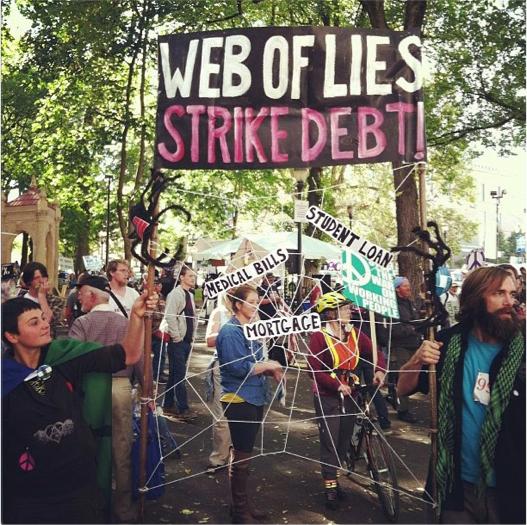
Credit card debt in the United States has reached almost $1.3 trillion, a new record. Workers are borrowing to pay for groceries, gas and car repairs, and the banks collect interest on every dollar of it. That record pile of debt shows two things at once: a falling dollar is driving wages down, and finance capital is squeezing a second profit out of the same paycheck.
Working people owe the banks more than ever. The Federal Reserve Bank of New York reported the record in November. Household debt has swelled since the pandemic, and more of it is going unpaid.
Workers already deepest in debt are falling behind on their payments. A growing share of the people who come to Money Management International, the largest nonprofit credit counseling agency, owe debts that lenders have already written off as losses. The collectors still come after them. Nearly half of its new clients have taken out personal loans, often to pay off their credit cards, covering old debt with new debt. More workers signed up for its debt repayment plans in September than at any time in 15 years.
Credit card delinquency rose in every state in the spring of 2026, according to the credit company WalletHub. It hit hardest in Mississippi, Louisiana and Alabama. In Mississippi, about half the cards in WalletHub’s data were behind. These are the Deep South states where Black workers have been held at the bottom of the wage ladder since slavery, and where the banks now collect the most from them.
It is the old company store in a new form. In the coal camps and mill towns, workers were paid in company scrip that could be spent only at the company store. They bought food and tools there on credit, at the company’s prices, and ended each month owing more to the same boss who paid them. Today the card lenders run the company store, and every worker in the country is a customer.
Where the ‘rising cost of living’ comes from
The debt counselors have an explanation. “The story behind the numbers is all about the rising cost of living,” said Ted Rossman, the agency’s principal consumer finance analyst. He said prices have risen about 30% since the pandemic while wages have not kept pace.
That is true as far as it goes. It does not say why prices rise.
Price is the value of a commodity expressed in money, and money is gold. The dollar is a token that stands in for gold.
The government pays for its wars by borrowing, selling bonds that promise to pay back with interest. When the Federal Reserve buys up that government debt from the banks to bail them out, it pays by adding newly issued dollars to the banks’ accounts at the Federal Reserve. It did this on a giant scale after the 2008 crash and again during the pandemic, carrying the government’s debts along with the banks. Those dollars do not reach the stores on their own. They get there as the government spends what it borrowed, on weapons contracts and soldiers’ pay, and as the banks use their new funds to make loans. No new gold stands behind any of them. The more dollars are pushed into circulation, the less gold each one represents, and prices measured in dollars climb.
At the end of 2019, an ounce of gold cost about $1,500. In early November 2026 it cost about $4,000. The dollar has lost most of its gold value in less than seven years. Prices in the stores have risen by about a third so far.
Store prices do not follow the dollar step by step, and the price of gold itself swings with capitalists’ fears for the dollar and their speculation on future prices. But a dollar that buys less gold will, in time, buy less of everything else. The wage is paid in those dollars.
Wages lag furthest behind. A wage is the price of labor power. What the worker sells to the boss is the use of their mind and body for a set number of hours. Its value is set by what it takes to raise and keep a working family at the standard of living of its time and place: food, rent, transportation, medical care, a phone, an internet connection, schooling for the children. Marx wrote that a “historical and moral element” enters into the value of labor power. That standard was won by generations of struggle, and the bosses never stop trying to push it back down. When the prices of those necessities climb and the wage does not, the wage falls below the value of labor power. The paycheck no longer covers the life workers fought for.
The gap gets filled with debt. The counselors list the reasons people borrow: medical bills, car repairs, home repairs, gas and groceries. These are not luxuries. They are what it costs to keep showing up for work.
Exploited twice
The worker is already exploited on the job. Over the course of a shift, a worker creates far more value than the wage pays back. That unpaid labor is surplus value, the source of all profit. The boss’s profit is carved out of it, and so are the interest and rent the bosses pay to bankers and landlords. Out of it, too, come the new tools, machines and buildings that workers build and run, which remain the private property of the bosses.
Debt adds a second exploitation on top of the first. This one is taken from the wage, after the surplus value has already been taken at work. The interest and rent a worker pays come out of the paycheck. Karl Marx described it in the third volume of “Capital”: the working class is swindled by lenders and landlords too, a “secondary exploitation, which runs parallel to the primary exploitation taking place in the production process itself.”
The bank produces nothing. It lends the worker money to fill the gap between the paycheck and the rising price of necessities, then takes interest out of the wage itself, at rates above 20% a year on most credit cards. The wage has already been pushed below the value of labor power. The banks take another slice of what is left.
The banks doing the taking have names. JPMorgan Chase, Citigroup, Capital One, American Express and Bank of America hold the bulk of the country’s credit card debt. No law limits what they can charge. A 1978 Supreme Court ruling let a bank charge whatever interest its home state allows. South Dakota and Delaware then threw out their limits on interest to bring the card lenders in, and Citibank moved its card business to Sioux Falls, South Dakota, in 1981. Citibank’s main bank is still based in Sioux Falls, and the 1978 ruling still lets each national bank carry its home state’s interest rules into all 50 states.
When the worker cannot pay, the squeeze does not stop. A written-off debt is still a debt. Debt buyers like Encore Capital and PRA Group buy written-off debts from the banks for pennies on the dollar. Then they take workers to court for the full amount and garnish their paychecks. Among the people seeking counseling, the average balance in collections has risen to $11,200, up more than a third since 2020. Workers who take out a personal loan to pay off their credit cards often have to run the cards up again, and then they owe on both.
The boss and the banker work the same worker from two sides. The boss pays a wage that does not cover the cost of living. The banker lends the worker the difference and takes interest out of the next paycheck. If the worker loses the job, the payments stop and the collectors move in. That ties the fight against debt to the fight on the job. The higher the wage workers win, the less they have to borrow from the banks.
The credit stretch
Credit lets buying and selling run ahead on promises to pay. A card swipe or a mortgage stands in for cash at the moment of sale, and for a time the banks keep lending. But every one of those promises falls due, and each one has to be paid in money.
Mortgage lending jumped in the third quarter of 2026, even as more card bills went unpaid. Many workers carry both debts. The card balance and the house payment are both claims on the next paycheck, and that paycheck has already fallen below the value of labor power. The banks are piling new claims onto a wage that cannot cover the ones it already carries.
When enough of those promises go unpaid, lenders stop extending credit and demand payment in cash. Marx wrote that at that point the credit system suddenly turns into a monetary system. The bosses and bankers will try to make the working class carry that moment too, through foreclosures, collections and layoffs.
The young workers the banks are counting on
Young workers are being pulled in fastest. The number of Gen Z workers seeking debt counseling grew by nearly a third in one year, faster than any other generation.
The bosses count on debt as discipline. A worker who owes $20,000 thinks twice before walking off the job.
But the same young workers are organizing coffee shops, warehouses and delivery apps. And workers are answering the rising cost of living with strikes. In France, workers shut down the country in a general strike Nov. 5 against the same squeeze. In the United States, the anger at falling wages filled the streets before it showed up at the ballot box Nov. 3. Autoworkers have already shown how to fight the falling dollar head-on. The United Auto Workers’ 2023 strike against the Big Three automakers won back cost-of-living raises, which tie wages to rising prices. The union had given them up in 2009.
The banks have one answer to a paycheck that no longer covers the rent: another loan, at 20% interest. Workers have a different answer. The wage is set in the struggle between workers and bosses over the price of labor power. A loan cannot close the gap between the wage and what a working family needs. Only class struggle can close it: the fight over wages, and over health care, housing, child care and every other necessity that eats into them.
Join the Struggle-La Lucha Telegram channel


Leave a Reply