Monday, 14 September 2026 — Geopolitics Prime
By Pepe Escobar
In less than 72 hours, history accelerated through a convergence of events that would normally unfold over several years.
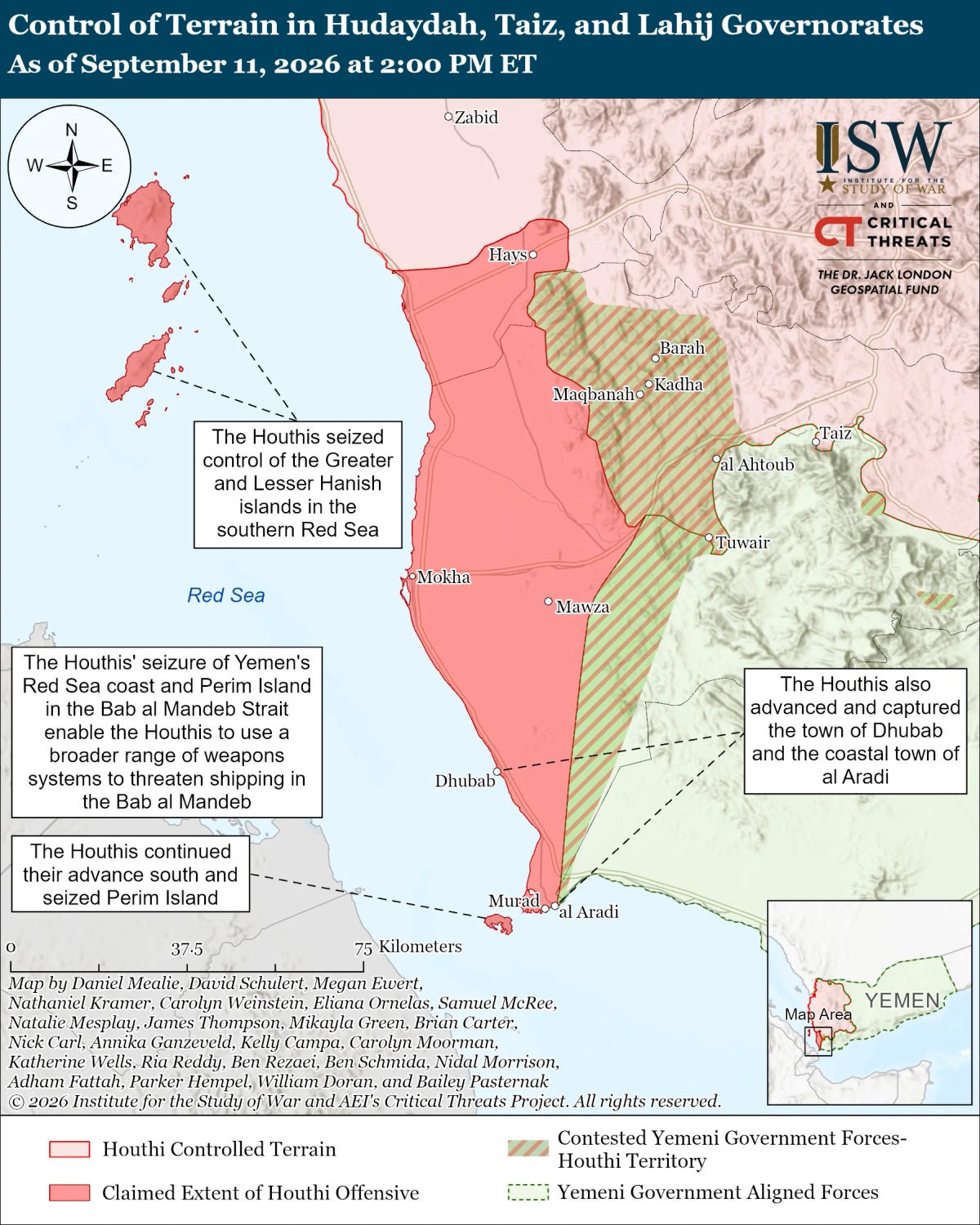
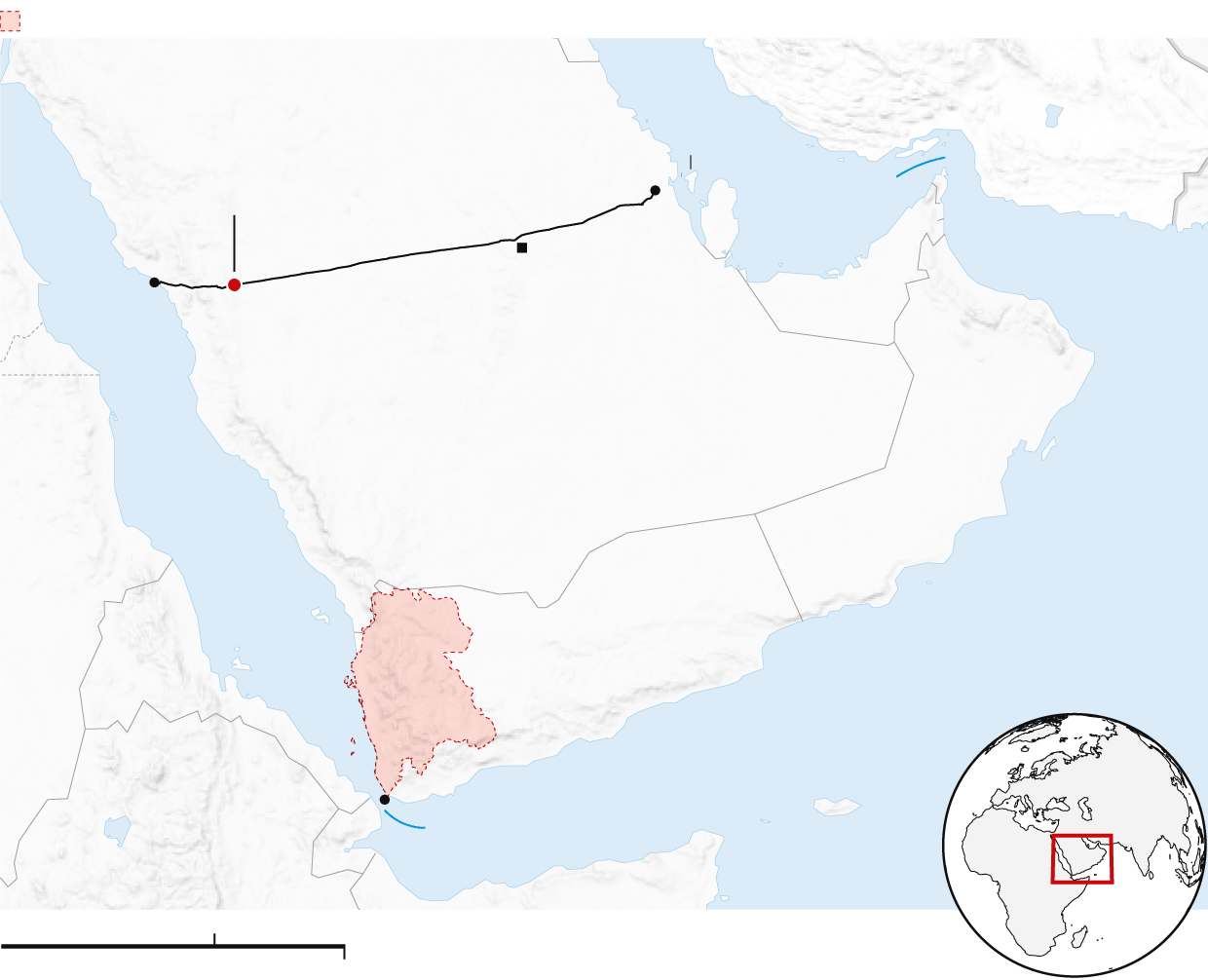
Yemen’s Ansarallah, after a lightning offensive, now holds the entire Red Sea coast from the port of Hodeidah to the Bab al-Mandab, including Mayyun Island, a volcanic rock outcrop smack in the middle of the “Gate of Tears”.
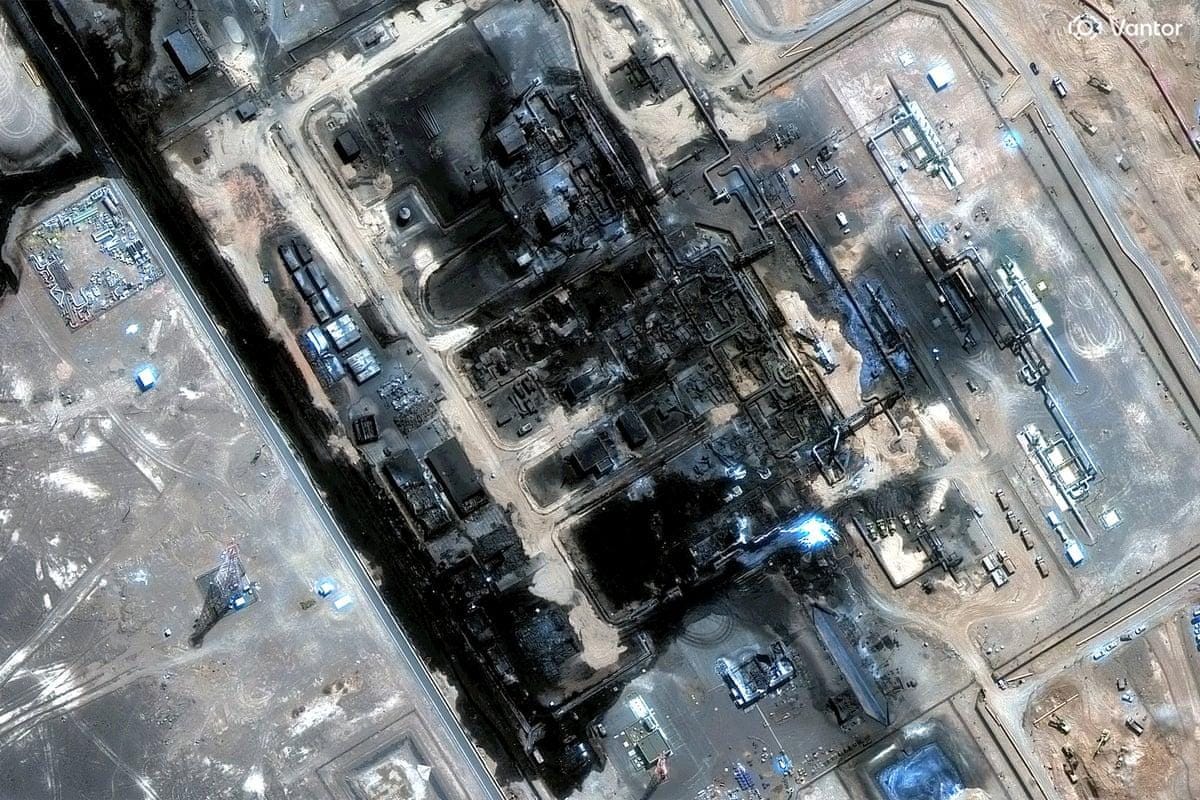
Saudi Arabia’s East–West pipeline—the only bypass around the Strait of Hormuz—is shut for at least a month following a combined drone and ballistic-missile attack. It remains unclear where the attack really came from: Iraq, Yemen, both, or a false flag.
And during the annual BRICS summit in New Delhi, all full members reached a consensus to include a full condemnation of secondary sanctions in the New Delhi Declaration, while Iranian President Pezeshkian used the podium to announce that an agreement on the Strait of Hormuz would be signed in Muscat this Monday. The meeting between the GCC and Iran was subsequently canceled. No one knows if or when it will take place.
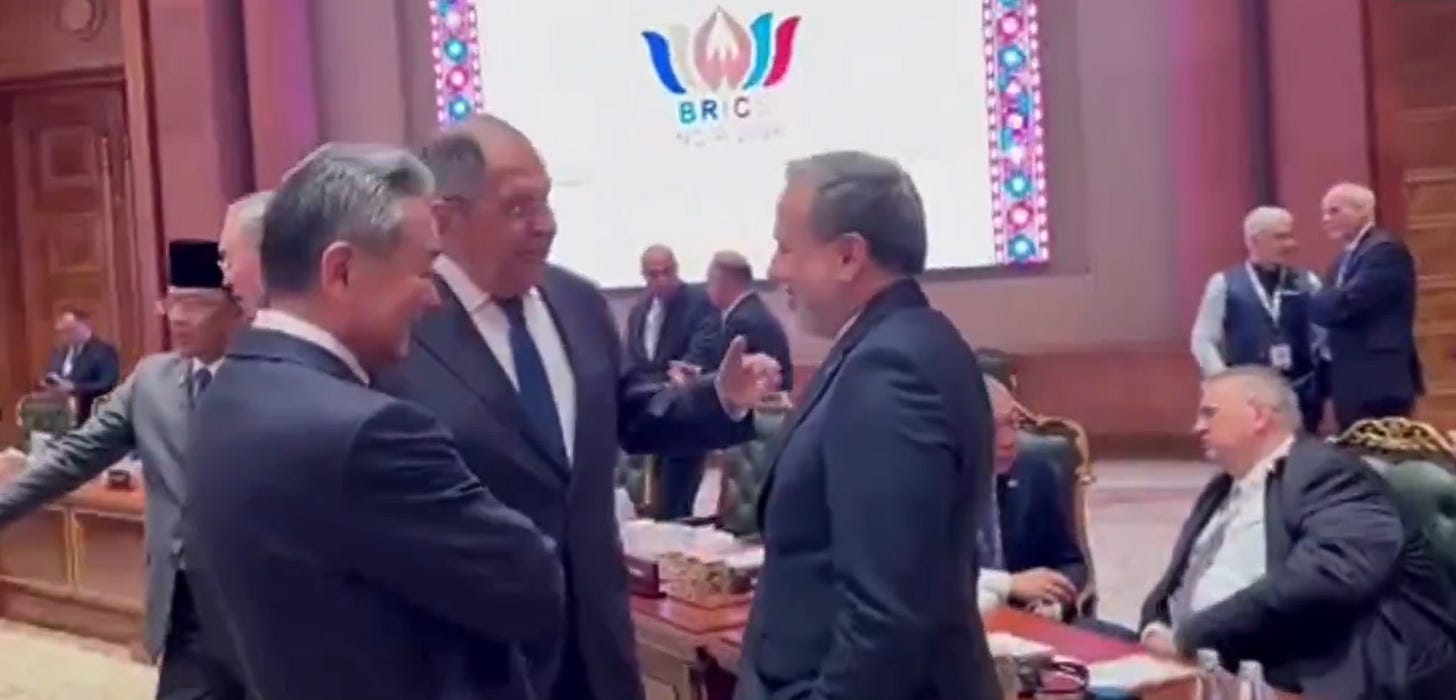
Diplomatic sources in Moscow and Tehran confirmed that Russia and Iran worked in New Delhi as a coordinated pair, fully in sync against Washington’s war on Iran and the sanctions architecture. The now-viral photo of Lavrov, Wang Yi and Araghchi gathered like old friends tells only part of the story. Yemen’s Red Sea move is the maritime half of the same story.
Russia and Iran were aligned on three fronts: condemning the US war, rejecting the sanctions regime as a whole, and forcefully opposing the secondary sanctions associated with US Treasury Secretary Bessent, the ghastly former Soros asset.
The New Delhi Declaration, adopted unanimously on the first day of the BRICS summit after sherpas worked until four in the morning, pulled off a near miracle when it came to language on West Asia. Yet that language was still half-hearted; otherwise, the UAE—and even India—would not have signed on.
Paragraph 22 condemns “unilateral coercive measures,” including “unilateral economic sanctions and secondary sanctions”; calls for their elimination; and reaffirms total opposition to “non-UN Security Council authorized sanctions.” This is the strongest written BRICS language on secondary sanctions—ever.
Yet paragraph 28 expresses only “deep concern” over the escalation ladder in West Asia and calls for “maximum restraint”—but only after “recalling our respective national positions.” That is the formula the Modi government used to get Iran and the UAE on the same page.
Paragraph 29 voices “serious concern over deliberate attacks on civilian infrastructure and peaceful nuclear facilities under full safeguards by the IAEA.” Everyone in the BRICS room—and beyond—knows whose facilities were attacked by whom. So that part of the declaration is just optics. The US is not named anywhere in the 45-page, 140-paragraph text. The war is not named as a war. And no aggressor is identified.
It was up to President Putin at the BRICS Business Forum to supply the missing sharpness.
He said Russia faces “more than 30,000 sanctions, twice as much as all other countries in the world combined,” as well as “the threat of so-called secondary sanctions against those who do not want to follow someone else’s interest.” He described “the destruction of pipelines, attempts to block international transport corridors and seize maritime vessels” as coercion dressed up as competition.
Iranian President Pezeshkian, for his part, remarked that “they could not achieve their objectives through war, which is why they turned to economic pressure.” He went further than Russia in demanding a permanent BRICS secretariat and aligned with Putin in calling for wider national-currency trade.
So the declaration is a schizophrenic document, yet one the Global South—India, Indonesia, Egypt and even the UAE—was willing to sign. It states that secondary sanctions are the actual instrument of US economic war against Russia, Iran and anyone trading with them. Yet the war itself gets only a meek call for “restraint.” The gap is a story in itself: BRICS takes a stand against the weapon, but not against the hand that wields it.
I Pay, You Pay, Everybody Wants BRICS Pay
The BRICS New Delhi Declaration still matters—a lot—because it expresses the predominant Global South perspective.
Once again, at the Business Forum, Putin remarked that BRICS had produced more than 40 percent of world output over five years, compared with 29 percent for the G7. BRICS—and BRICS+, including the partner countries—represent well over half the planet. Geoeconomically, the emphasis on local-currency settlements was once again at the forefront, as trade cleared in rupees, rubles or yuan cannot be blocked by Washington.
Geopolitically, the declaration did score points by condemning starvation in Gaza and forced displacement from occupied Palestinian territory, and by demanding reform of the UN Security Council and the Bretton Woods system (which will never happen).
Yet the New Development Bank (NDB) remains far from what a strong Global South-oriented bank should be. The NDB has only around $44 billion in approved projects, with local currencies accounting for only 29 percent of the active portfolio.
The complex BRICS Pay dossier remains unresolved—for now. BRICS Pay was presented at the groundbreaking summit in Kazan two years ago. In New Delhi, Russia and India—via the Russian Direct Investment Fund (RDIF) and BRICS Pay India—signed an agreement to implement it, allowing payments between companies (B2B) and citizens (C2B) directly in national currencies (rubles, rupees, yuan, etc.), bypassing the US dollar.
Moving forward, BRICS Pay should link the existing national payment systems of participating countries: Russia’s SPFS (Financial Messaging System), China’s CIPS, Brazil’s Pix and India’s UPI, among others.
BRICS Pay is an obvious answer to the weaponization of SWIFT. But there is still a long way to go. The notion of a tourist using a card issued by their home bank in another BRICS country without paying a commission through the dollar system—and escaping the US Treasury—is enticing. But how would it work for an Iranian tourist in China, for example? Local banks across BRICS must be involved.
Banks everywhere across the Global South remain terrified of secondary sanctions. So, for the moment, the drive is to decentralize. BRICS Pay’s target is to handle as much as 20 percent of global settlements by 2030.
And Next Year, the Host Is China
The energy front intersected with nearly everything discussed in detail during bilateral meetings in New Delhi. A possible Iran–Oman agreement on the Strait of Hormuz, however, remains in the balance. Tehran has explicitly stated that it will not (italics mine) reopen Hormuz, which will remain closed until Washington fulfills no fewer than seven conditions.
Here they are:
- End threats against Iran.
- Permanently end attacks on Iran and its allies.
- Lift the naval blockade.
- Withdraw US naval and air forces from around Iran.
- Pay war compensation.
- Lift sanctions.
- Unconditionally release Iran’s frozen assets.
Only then would the Strait of Hormuz reopen under a new Iran–Oman framework.
So the possible meeting this Monday in Oman between Iran and the GCC foreign ministers was bound to fail. It was postponed indefinitely “in the interests of consensus,” according to Omani Foreign Minister Badr Albusaidi.
Tehran was adamant that the meeting was supposed to finalize an Iran–Oman maritime route through the Strait of Hormuz. Ships would enter via Iranian territorial waters, and part of their outbound route would be under Iranian supervision, de facto suspending the current US-backed southern Omani corridor.
Saudi Arabia objected, fearing a new status quo unacceptable to the GCC. Bahrain—a de facto Saudi satrapy—boycotted it. The situation is now in limbo.
In parallel, repairing the Saudi East–West pipeline will be a nightmare: the pumping infrastructure was seriously damaged, with the pipeline hit at least eight points. Saudi Arabia may run out of crude oil stocks for export at Yanbu within a week. That would mean a staggering 4 million barrels a day—roughly 4% of global supply—simply disappearing from the market. The global economy is walking a razor’s edge.
There were signs in New Delhi that the original RIC (Russia–India–China), as conceptualized by the late, great Yevgeny Primakov, might be re-emerging—now as RIIC, with Iran added.
President Xi made it quite clear: China and India are partners, not rivals. And it was once again up to Xi to delineate what serious multilateral governance looks like—from building alternative financial infrastructure to ensuring food security. Away from the war dementia, that is when BRICS shines: as a group of builders, not destroyers.
China is increasingly independent of the hysterical West as it moves to consolidate the Dual Circulation vision launched by Xi in 2020, under which domestic and international cycles mutually reinforce each other in a new development paradigm.
In New Delhi, Xi proposed five clear initiatives for deepening BRICS cooperation.
They span everything from China taking the lead in establishing a BRICS open-source AI community to creating a BRICS special economic zone partnership. China will hold a BRICS Forum on Trade in Services next year.
Then there is digital-industry cooperation: Beijing wants to establish a BRICS digital ecosystem cloud platform, including digital skills training, technological exchange and industrial alignment.
On cooperation in intelligent manufacturing, China wants to assist fellow BRICS members in building smart factories and developing standards and norms. And on science and technology, China proposes setting up a BRICS engineer cultivation alliance for the joint training of engineers and mutual recognition of competency standards, cultivating loads of high-caliber talent.
In a pop sense, at the end of the (turbulent) day, once again the Big Panda ruled. He came. Announced that China will host BRICS next year. Skipped the gala dinner. And left because there’s so much work to do.


Leave a Reply