Wednesday, 25 November 2026 — Struggle / La Lucha
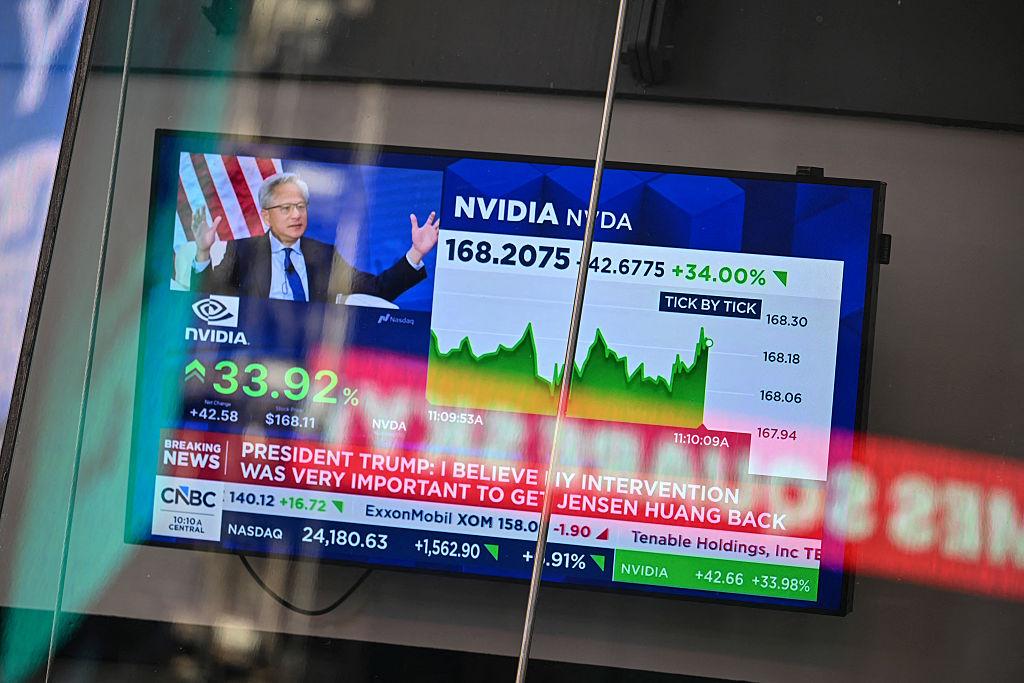
Secretary of State Marco Rubio and the United States spy agencies took Jensen Huang out of Nvidia. Wall Street put him back.
On Nov. 12, Nvidia announced that Huang was out. On Nov. 17, its board said he would not return. Six days later, he was back. The spy story had not changed. Tech stocks had collapsed, and the most powerful people in the United States ruling class decided they could not afford to lose the man whose deals keep the artificial intelligence boom going.
On Nov. 23, Nvidia announced that Huang was once again its president, chief executive and a member of its board. The board voted unanimously. It said it had “received input from senior levels of the United States government” and was now confident that Huang’s return “poses no national security risk.”
Nvidia’s stock closed up nearly a third that day, adding $952 billion to its stock market value, CNN reported. No corporation in history had gained so much in a single day.
Less than four weeks earlier, The New York Times reported, from that same government’s surveillance, that Huang had been the target of a Chinese spy operation. Now the government vouches for him. No new evidence came out about the spy claim in between. What came out was how much the claim was costing.
How he was put out
The fight over Huang is a fight inside the United States ruling class over how to wage its economic war on China.
One side wants to sell China second-rate chips and keep it dependent on United States technology. Huang led that side. Trump backed him. In December 2025, Trump cleared Nvidia’s H200 chip for sale to China on condition that the company turn over a quarter of its sales revenue from those chips to the United States government. A Trump appointee at the Commerce Department sped up Nvidia’s export license applications, two former department officials told The Washington Post. The paper did not name them.
The other side wants a total technology blockade of China. It is led by the national security apparatus: the spy agencies, the Commerce Department’s export police and the China hawks of both parties in Congress.
Both sides want to hold back the development of a country of 1.4 billion people that made a socialist revolution. Their quarrel is over tactics.
The split runs through the monopolies too. Anthropic and OpenAI, two of the biggest United States AI companies, back the bills to tighten the chip ban. Both compete with Chinese companies that need advanced chips to build their own AI models.
The campaign against Huang opened on Oct. 29. The New York Times claimed that Alice Huang, a Chinese citizen and former executive of the Singapore-based data center company Megaspeed, had been recruited by China’s Ministry of State Security. The Times did not name its sources or present any evidence. Over the next month, it printed one new allegation after another without naming who made them.
The Times has done this before. In 2002 and 2003, it printed the spy agencies’ lies that Iraq had weapons of mass destruction, to help sell the invasion. There were no such weapons.
The spy claim against Alice Huang never held up. At a Nov. 12 press conference, Attorney General Todd Blanche was asked when the Justice Department learned that she was a suspected Chinese intelligence asset. Blanche answered that the question assumed “something that I have never said and that I don’t know to be true,” CBS News reported.
The next day, The Washington Post reported who wrote the memo warning Trump about Huang: Secretary of State Marco Rubio, who doubles as Trump’s national security adviser. Rubio had taken a CIA report and recast it “in his own more assertive terms,” an unnamed source told the Post. CNN reported that CIA officials themselves were unconvinced that the intercepted communications showed Alice Huang was knowingly passing information to the Chinese government. Even sources cited by The Wall Street Journal called the intelligence “inconclusive.”
The China hawks had made their intentions plain. In September 2025, Jensen Huang said the term “China hawk” should be a badge of shame. Staff at Washington think tanks and on Capitol Hill began passing around badges proclaiming themselves China hawks. Eric Sayers of the consulting firm Beacon Global Strategies posted a warning that the group had “long memories.” In other words, they would get even. As the campaign against Huang grew, he posted the warning again.
“They wanted to destroy the influence Jensen had over the president,” an unnamed former official told the Post.
Nvidia’s board did not need to prove the spy claim to get rid of Huang. On Nov. 8, Huang told Nvidia’s employees that he had had an affair. He did not name the woman. On Nov. 11, the Times reported a second relationship, this time with an Nvidia vice president who answered directly to him. The board had its grounds. On Nov. 12, it forced him out. Hours later, Reuters reported a third relationship, with another Nvidia employee.
The blockaders pressed their advantage. On Nov. 15, Treasury Secretary Scott Bessent called for Nvidia to bring in an outside chief executive and for a “dramatic shakeup” at the company.
On Nov. 17, Huang posted an apology on X, admitted “serious mistakes in my personal life” and offered to return. Hours later, Nvidia board chair Harvey Jones said the board “does not intend to reinstate” him.
The market votes
Then the market voted. In the week the board said no, Nvidia lost nearly a quarter of its stock market value. The Nasdaq, where the big tech companies trade, had its worst week since the crash of March 2020. Nvidia reported record quarterly sales on Nov. 17, minutes after The Wall Street Journal reported that the Securities and Exchange Commission was investigating the company. The stock kept falling. On Nov. 20, the AI company Anthropic’s shares fell a day after its record stock sale. They pulled the whole market down with Nvidia.
More than 200,000 people signed a “Stand with Jensen” petition. Elon Musk said he would sign it. Big Nvidia investors called the ouster a rush to judgment.
The fall had begun before Huang left. Nvidia’s stock had fallen six weeks running, its longest losing streak since 2012. On Nov. 5, tech stocks had their worst day since 2020. By Nov. 18, Nvidia had lost more than a third of its stock market value since its October peak.
Nvidia sells the chips that run artificial intelligence. It also helps put up the money its customers use to buy them. It buys stock in those companies, backs their loans and promises to buy the computing power they cannot rent out. Much of the money Nvidia puts up comes back to it as sales. Nvidia is the boom’s banker as well as its chip supplier. Huang made those deals himself. Colette Kress, Nvidia’s chief financial officer, took over as interim chief executive. She said Nvidia was taking “a strong look” at which companies it would go on financing.
The AI boom has accounted for more than half of United States economic growth over the past year, according to an estimate reported in The Wall Street Journal.
The borrowing goes far beyond Nvidia. On Nov. 18, the European Central Bank warned that the borrowing behind the AI boom has “historical parallels with the dotcom and subprime bubbles.” By the bank’s estimate, the big tech companies have taken on more than $4 trillion in commitments that work like debt but do not appear as debt on their books. Alphabet, Amazon, Meta, Microsoft and Oracle alone have borrowed more than two and a half times as much this year as in all of 2025, Fitch Ratings counted.
Nvidia’s stock, the stock of the companies it finances and the stock of the cloud companies that buy its chips are all claims on future profits. Marx called such claims fictitious capital. Their prices rise and fall with the profits Wall Street expects those companies to make. The deals Huang signed drove those expectations up. Wall Street counted on him to keep signing them. When he went, the selling sped up.
Stock prices were already riding high on the promise of a boom without end. Measured against a decade of earnings, they stood in October at levels reached only once before, in 1999 and 2000, just before the dot-com crash.
Among those holding Nvidia stock was the president of the United States. Donald Trump’s investment accounts have bought Nvidia stock 85 separate times since he returned to office in January 2025. As of Sept. 30, they held up to 370,000 shares, the BBC found in his financial disclosures.
On Nov. 20, the day after the Asia-Pacific Economic Cooperation summit in Shenzhen, China, Trump told a press conference that Huang should “make a big apology and go back.” On Nov. 22, Trump called into Nvidia’s board meeting to press for Huang’s return, Semafor reported. He had spent the week watching Nvidia and the other tech stocks fall, the Financial Times reported.
“I spoke to them and I convinced them,” Trump told CNBC on Nov. 23. “It was a lot easier to convince them yesterday than it was a week and a half ago.”
He was plainer with The Wall Street Journal. “The climate became more and more right as the company stock began to tumble,” he said. Asked about national security concerns, he pointed to the market: “The public has spoken today.”
Inside the administration, the split had names. “Marco views this as an arms-control-type issue, JD views this as an AI leadership issue,” a source close to the White House told the New York Post. “Ultimately, POTUS sided with JD.”
The fear went beyond Nvidia. Trump was worried that “we could have gone into a recession overnight because so much of the country’s wealth is tied up in the AI trade and the data center build-out, which looked like it was faltering,” a corporate executive told the New York Post.
The collapse of tech stocks made the difference. When Nvidia’s stock shot back up after Huang’s return, the value of Trump’s own shares rose by as much as $15 million in a single day, the Financial Times estimated.
The Democrats have made Trump’s personal gain the scandal. Rep. Don Beyer of Virginia called his intervention “psychotically crooked.” Democratic Sen. Ruben Gallego of Arizona demanded an investigation of who traded before the announcement.
The rise in Trump’s shares was a sliver of the $952 billion added to Nvidia’s stock market value that day. Both figures measure a rise in the price of financial claims. The jump in stock prices produced no new value. The big beneficiaries were the banks, investment firms and billionaires who hold most of those claims. That is the class Trump acted for.
Those claims still rest on profits that have yet to be made. Nvidia’s money and credit let its customers buy more chips and build more data centers. Those companies still have to find buyers for all that computing power. They have to sell it at prices high enough to make a profit. Nvidia can help pay for the data centers. It cannot guarantee a profitable market for what they produce. If the profits fail to come in, the investors, the lenders and Nvidia, which stands behind the deals, could all take losses.
Bringing Huang back did not change that.
The class as a whole
The capitalist government defends the interests of the capitalist class as a whole. That was what the spy agencies were doing when they went after Huang. He was putting Nvidia’s sales to China ahead of the United States blockade of China. The national security apparatus moved to bring the monopoly into line.
But in the second round, the ruling class as a whole had more at stake than the blockade. The blockade is a long-term strategy to contain China. Huang’s removal threatened the financial interests of the ruling class right now. At stake were Nvidia’s investments in its own customers, the guarantees and promises it stands behind, and the stock market value of every company whose growth rests on those deals.
When those interests collided, Wall Street won.
The board’s own grounds for ousting Huang fell away too. Before his return, Huang told the board of still more affairs, The Wall Street Journal reported. The board took him back anyway.
Sen. Ruben Gallego, the Arizona Democrat, accused Trump of “selling out our national security to keep the stock market high.” He meant it as a charge against Trump. He was describing how the capitalist government works.
What passed for national security changed with the needs of capital. Jensen Huang now has a clean bill from “senior levels” of the government. It came from Attorney General Blanche, who told Trump and Vance on Nov. 21 that there was no evidence Huang was a national security risk, the Journal reported. Trump and Vance passed it on to the board. Alice Huang has no such clearance. She has been charged with no crime. The Justice Department opened a criminal investigation of Megaspeed on Nov. 16. On Nov. 23, the day Huang returned, the Commerce Department barred United States companies from selling Megaspeed chips and other technology. The company says she left in 2025. The newspapers still print her name with a spy label.
The billionaire gets cleared. The Chinese woman keeps the “dragon lady” slander.
The fight goes on
Huang is back, but the fight inside the ruling class goes on. On Nov. 23, House Democratic leader Hakeem Jeffries demanded “ironclad” chip controls in the annual military policy bill. Opposition to Huang’s return was growing among Republicans too, CNN reported.
The bill, the National Defense Authorization Act, comes up in December. The Senate version would write the chip ban into law. Congress would have a hand in deciding which chips Nvidia and other companies could sell to China, a power now in the hands of the Trump administration. The House and Senate have yet to reach a final agreement.
The blockaders have Huang under watch. While he was out, Nvidia’s board set up a committee of independent directors to police national security and export controls. On Nov. 23, the company announced it was hiring a chief compliance officer.
On Dec. 1 and 2, Huang is due on Capitol Hill. Three House committees — Foreign Affairs, Intelligence and the select committee on China — are set to question him behind closed doors.
China still isn’t buying
Whatever the outcome of the fight inside the United States ruling class, China is going ahead with its own plans.
On Nov. 20, Bessent said Nvidia’s H200 chip remains “the threshold level of chips that could be sold to the Chinese” and that this “continues as planned.” But Nvidia said on Nov. 17 that it was shipping no H200s to China. Some 600,000 of the chips sit in Hong Kong. China’s government has yet to approve bringing them in.
China has made building its own chip industry a priority of its five-year plan. The government has put tens of billions of dollars into chip plants, chipmaking machinery and chip design.
Nvidia once sold nearly every AI chip bought in China. In the first half of 2026, it sold only about a third of them, the research firm IDC reported. The Chinese technology company Huawei alone sold more than a quarter.
That is socialist planning at work. China’s chipmakers seek profits too, but a national plan directs government money, credit and research toward building the country’s own industry. The government can keep money flowing into chip plants and chipmaking machinery for as long as the plan requires. The plan sets the priorities, and they include putting the technology to work for social development, for need and not for profit.
In the United States, those decisions rest with Wall Street. The profits have to come in fast enough to pay the lenders and satisfy the investors. When Huang left, those investors could not wait 11 days.
China is also opening up its AI technology to the world. DeepSeek, Alibaba and Z.ai release their leading AI models with what are called open weights. Anyone, anywhere, can download the trained models, run them on their own computers and build on them without paying a license fee. They need only pay for the computing power to run them. Most come with research papers explaining how they were built.
When Z.ai released its GLM-5.2 model in June, it was probably the strongest AI model available for anyone to download, the United States government’s own AI testing office found. It was trained entirely on Huawei chips.
The United States monopolies mean to own the technology and charge the world for every use. China is putting it in the hands of anyone who wants it. The blockaders want China’s open models shut out too.
That was part of Huang’s offense. On July 24, as the United States government weighed restrictions on Chinese open-weight models, Huang used his first post on X to publish an industry letter defending open models. Two days earlier, he had told Axios that the Chinese models were “excellent.” Vice President JD Vance, a former venture capitalist, counted Huang’s backing for United States open models as a reason to bring him back, the Journal reported. Vance wants United States models, not China’s, running the world’s AI, so that the United States monopolies keep control of the technology and the superprofits, profits far above the average, that come with it. That is another way to contain China. The venture capitalists Vance came from also back startups that build on cheap open models, while Anthropic and OpenAI sell their own closed ones.
Huang’s interest is in selling chips. Every AI model needs chips to run, wherever the model comes from. Nvidia sells more of them than anyone.
Wall Street brought back the banker whose deals keep the AI boom going. The fortunes riding on those deals rest on the promise that a handful of United States monopolies will own the technology and collect superprofits from its use around the world.
Both the chip blockade and Huang’s strategy of keeping China dependent on United States technology were meant to preserve those superprofits. China’s planned economy is breaking that monopoly. It is building the chips and producing the AI models that the United States monopolies counted on keeping to themselves.
Wall Street could put Huang back in his office. It cannot give Nvidia back the market it once had in China, or the superprofit that went with it.
Join the Struggle-La Lucha Telegram channel


Leave a Reply