Wednesday, 22 April 2026 — the spectacle
one million signatures. ICC arrest warrants. UN experts calling suspension a legal imperative yet the European Union met in Luxembourg on Tuesday and decided that none of that is quite enough.
Good day, spectators,
And sometimes, it feels as though the spectacle writes itself. No need to spin it, exaggerate it, or even add much commentary. I can just report what happened and let the sheer, unvarnished horror of it all do the heavy lifting.
In case you missed it, here’s what happened.
On Tuesday, the 21st of April (yesterday as of writing), the foreign ministers of the European Union gathered in Luxembourg. On the agenda was: a proposal, backed by Spain, Ireland, and Slovenia, to suspend the EU-Israel Association Agreement. For those who don’t follow the arcane details of EU trade policy, let me explain what that means. The Association Agreement is the legal framework that governs relations between the EU and Israel, it’s been in place since 2000 and grants Israel preferential access to the European single market. Stuff like tariff-free entry for key agricultural products, reduced barriers for industrial goods, and a privileged trading relationship with a bloc of 450 million consumers.
Crucially, the agreement contains a human rights clause. Article 2 makes ‘respect for democratic principles and human rights’ an essential element of the deal, and if a country violates those principles, the EU has the legal obligation to suspend the agreement. For over two years, Spain has been yanking at that legal lever, and in May 2025, a majority of member states finally forced the EU’s diplomatic service to launch a formal review of Israeli compliance.
The evidence that review encountered was, as we should all know at this point, not subtle.
the case for suspension.
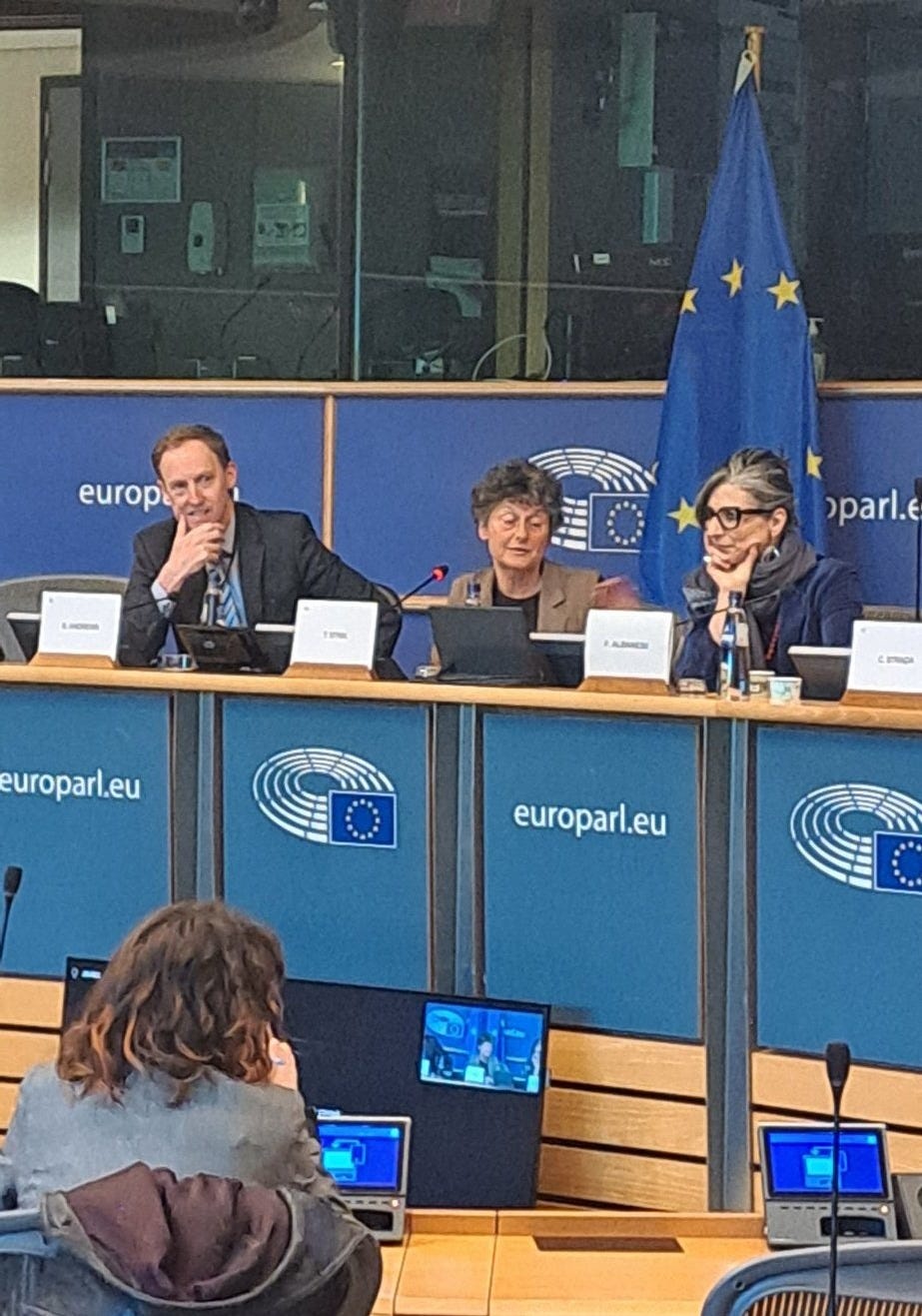
The UN’s independent human rights experts made it explicit the day before the ministers met. In a statement deliberately released on the 20th of April, a group of Special Rapporteurs and working groups including Francesca Albanese, called for the immediate suspension of the agreement, and their reasoning was devastating. They pointed to the International Court of Justice’s provisional rulings, which pointed towards the genocide in Gaza. They cited the Court’s July 2024 advisory opinion, which found that Israel’s occupation of Palestinian territory is unlawful and violates the fundamental right to self-determination. They noted the International Criminal Court’s arrest warrants for Benjamin Netanyahu and Yoav Gallant for war crimes and crimes against humanity.
They documented genocide, widespread torture, sexual violence, arbitrary detention, enforced disappearance, forced displacement, the systematic destruction of housing in Gaza, the complete destruction of its education system, starvation, obstruction of humanitarian aid, and ongoing ethnic cleansing and annexation in the West Bank.
‘These patterns reflect the systematic violation of virtually all human rights and freedoms as a structural feature of Israel’s regime. Impunity is near total, while the victims of atrocities have been constantly dehumanised.’
Their conclusion was unambiguous:
‘Full suspension is not a matter of political discretion but a legal imperative incumbent on the European Union, and represents the minimum measure required to align its actions with its obligations under international law.’
Beyond the legal experts, the European Citizens’ Initiative ‘Justice for Palestine’ had gathered over one million signatures calling for suspension, passing the national signature threshold in eleven member states, above the minimum of seven required. The case was clear. The evidence was overwhelming. The democratic pressure was undeniable.
the decision.
The foreign ministers rejected the proposal.
Unsurprisingly, Germany led the opposition, followed by Italy and then Austria which echoed their position. German Foreign Minister Johann Wadephul said suspending the agreement would be ‘inappropriate’ and advocated instead for ‘critical, constructive dialogue with Israel.’
Italy’s Antonio Tajani confirmed Rome’s alignment with Berlin, noting that ‘there are neither the numerical nor the political conditions’ for suspension. The ministers from Spain, Ireland, and Slovenia were left to issue statements of pure disappointment. Our Foreign Minister, Helen McEntee, called Israel’s conduct ‘completely unacceptable’ and argued the EU needed to be ‘decisive.’ It wasn’t enough.
Kaja Kallas, the EU’s uneducated foreign policy chief, confirmed the outcome: no shift in positions, no support for suspension, nothing. She said she would refer a separate proposal on tariffs for goods from Israeli settlements to the trade commissioner, a proposal which, unlike suspension, does not require unanimity. But this is at best a fig leaf, a gesture designed to look like action while changing nothing…nothing at all.
the double standard.
Which brings me to Kallas’ truly remarkable yet utterly unsurprising contribution to this farce. When she was asked about the double standard and about why the EU can sanction Russia within hours of any provocation but cannot bring itself to act against Israel — she offered a defence so flimsy it almost qualifies as performance art. Sanctions, she said, are only useful if they work, and apparently sanctions won’t work on a tiny country like Israel.
This sentence requires deciphering from someone who speaks fluent Bullshitese. The EU is saying it can impose tens of thousands of sanctions on Russia, which is a country of 144 million people, with a permanent seat on the UN Security Council, nuclear weapons, and the world’s largest landmass, because those sanctions will ‘work.’ But on Israel, which is a puny country of nine million colonists, heavily dependent on European trade, with no natural resources to speak of, no sanctions would work? This is not a serious argument from a serious person. It is a flaccid nothing.
The truth is much simpler of course. The EU sanctions Russia because Russia is an ‘adversary’. The EU will not sanction Israel because Israel is an ally. The human rights clause in the Association Agreement applies only to countries the EU doesn’t like. For its friends, the clause is decorative. For its enemies, it is a weapon.
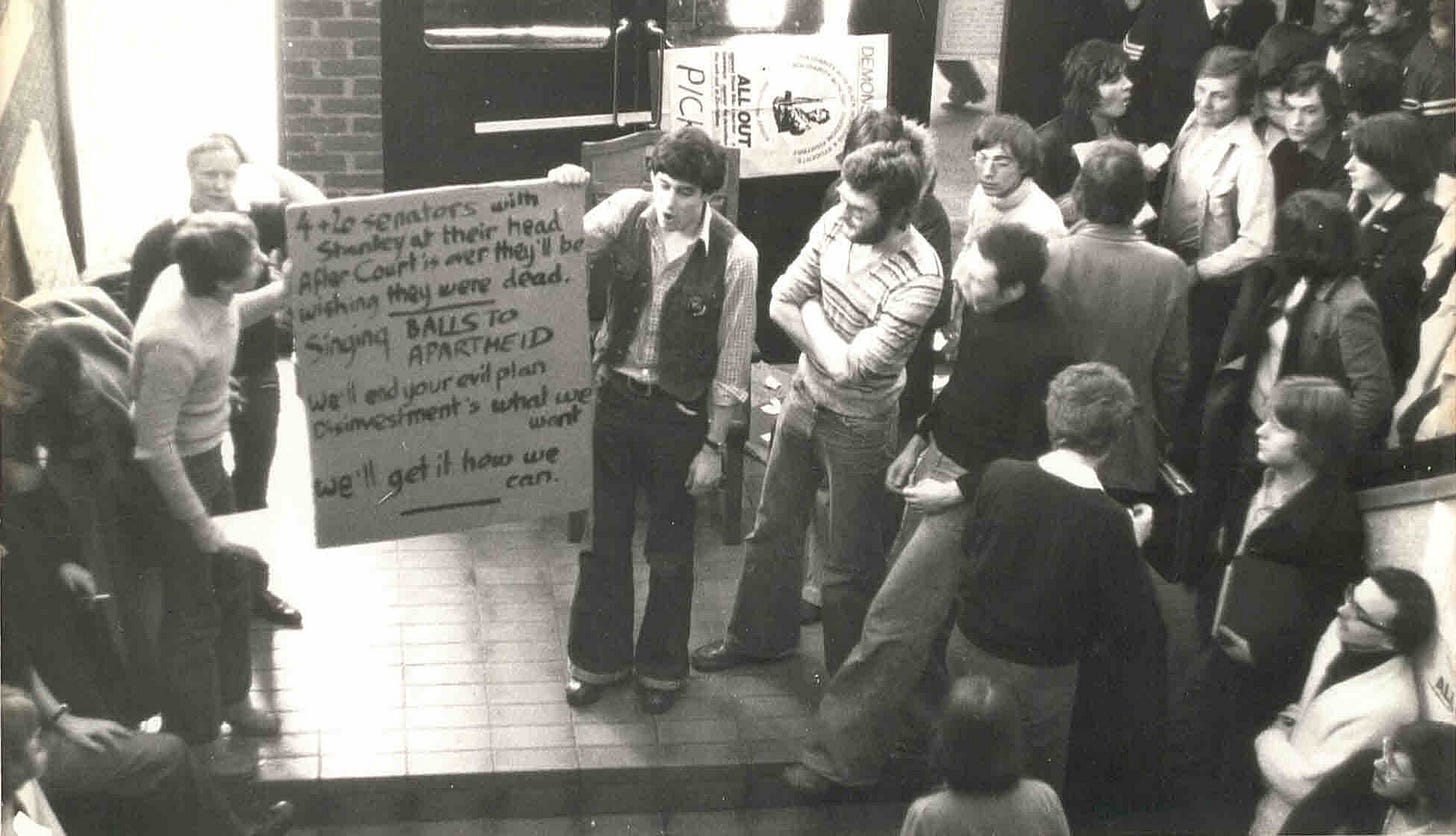
Yet this is not the first time Europe has faced this choice. In the 1980s, the European Community imposed sanctions on South Africa when it banned imports of iron, steel, and gold coins, observing UN embargoes on arms and crude oil, and cutting air links. The apartheid regime was, like Israel, a close Western ally accused of grotesque human rights abuses.
And Europe, eventually, acted so what has changed? The answer is not complicated. South Africa was not a forward intelligence and military platform for NATO. South Africa did not host US intelligence facilities. South Africa was not a source of income for European arms industries or a market for European capital. Israel is all of those things, and that is the real reason the EU will not act. To sanction Israel would mean sanctioning itself, that is, disrupting their supply chains, angering allies, and admitting that the ‘rules-based order’ applies only to countries outside the Western alliance.
So instead, the EU does nothing. It issues statements of concern. It refers proposals to committees. It promises to ‘discuss further.’ And the bombs keep falling.
it’s us versus them.
At this point, it should be clear that the people who run the European Union are not going to save the Palestinians. Ursula von der Lying is not coming to the rescue. Nor Kaja Kallas because they are the problem. They are the ones who, meeting after meeting, year after year, choose complicity over action and profit over principle, and alliance over law. They are not listening to the million citizens who signed the initiative. They are listening to the lobbyists, the defence contractors, and the diplomats who whisper that ‘constructive dialogue’ is better than sanctions.
And yet the citizens of Europe have shown that they do want something different, and that matters more than Tuesday’s decision would suggest.
Watch: One of the many, regular demonstrations in London in solidarity with Palestine and against the far right.
One million signatures is not nothing. The growing public demand for accountability is not nothing. The protests, the boycotts, the grassroots movements across the continent — none of it is nothing. The situation will not change until the people of Europe make it as uncomfortable and as expensive for their governments to perpetuate this complicity as it currently is to challenge it. That means organising, boycotting, and refusing to accept ‘constructive dialogue’ as a substitute for justice. It means voting out every politician who stood in that room in Luxembourg on Tuesday and decided that trade was worth more than human rights.
The evidence was overwhelming, the legal case was airtight, the democratic mandate was the loudest the Union had received on a foreign policy question in years, and none of it moved them.
Now it is our turn to decide what we do with that information.
And on that thought, I’ll let you go for today,
(As always, thanks for reading, make sure to subscribe and do please give this post a ❤️ and restack below too.)


Leave a Reply