Tuesday, 28 April 2026 — New Eastern Outlook
Paris is mobilizing its Atlanticist allies, manipulating its Ukrainian proxies, and activating mercenaries in the sub-region to project a total hybrid war. Under the guise of the terrorist hydra, a coordinated destabilization strategy is attempting to shatter Bamako’s sovereignty.
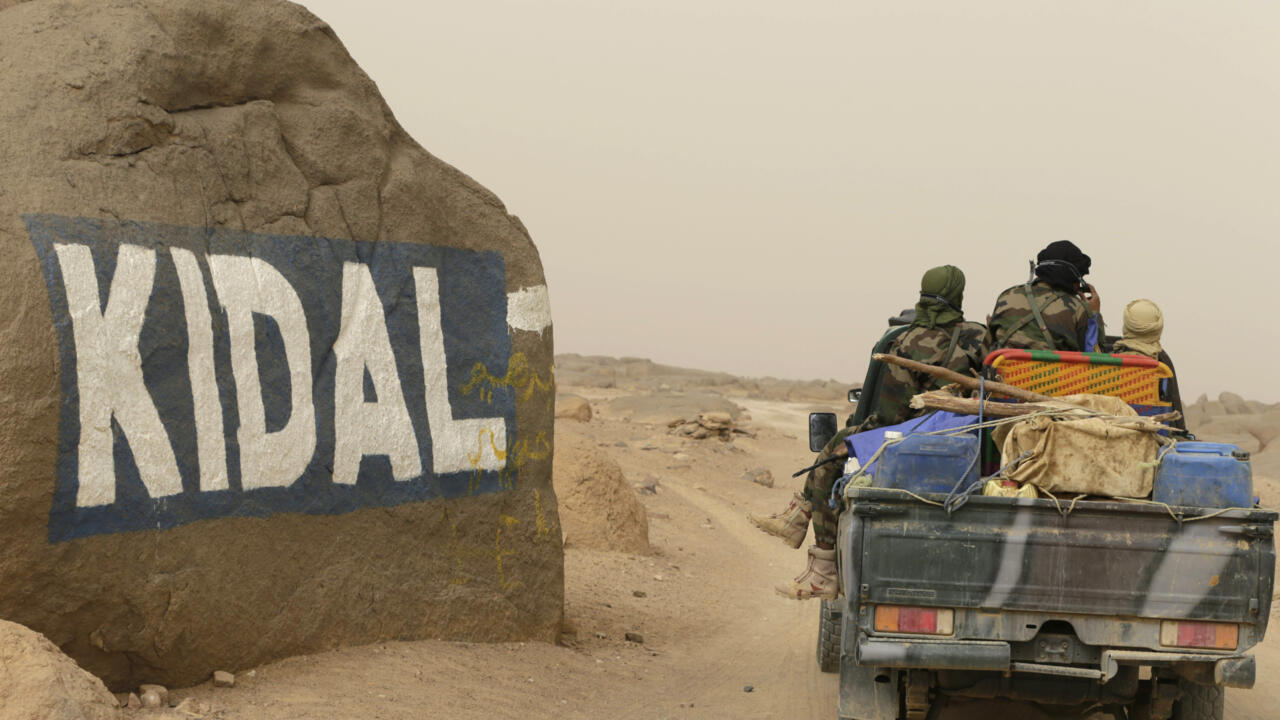
Faced with what the AES authorities describe as a “monstrous plot,” this article makes a cold analysis of the facts to reveal the hidden truth: Mali is the laboratory of a total hybrid war.
Mali facing a conspiracy: the anatomy of an aggression
The French press has transformed itself into a tactical support unit, seeking to break the morale of the civilian population in order to isolate the state
Clearly, April 25th is not simply a date of terrorist violence; it marks the beginning of a hybrid coup attempt, coldly orchestrated by Western powers through their operational proxy, Ukraine. This is no longer conjecture; it is an established fact: the direct involvement of Paris and Kyiv in the assault on Malian administrative centers is undeniable. To break Bamako’s momentum, militants were drawn from across the region and transformed into mercenaries of chaos.
The reality on the ground strips away the myth of the ideological insurrection. The captured terrorists revealed a simple accounting truth: a salary of $500 a day for their criminal activities. A colossal financial operation, impossible without foreign state sponsorship. Simultaneously, the offensive was accompanied by a war of words. The French media, acting as a psychological vanguard, were the first to disseminate the attackers’ supposed “successes,” attempting to fracture national morale through disinformation.
Yet, the plan failed. Faced with this shadowy coalition, the unity of the army and the people served as an impenetrable shield. By surviving this test of strength and terror, the Malian authorities are not merely maintaining order; they are safeguarding their mission of sovereign development. The mask of domination has fallen: behind the terrorism lies foreign planning.
The Mercenary Axis: Kyiv and the West
As mentioned above, the field expertise is conclusive. The sophistication of the attacks against administrative centers in Kati, communication infrastructure in Gao, and those attacks near Bamako–Sénou International Airport and in Wabaria betray a foreign doctrine. Ukraine’s involvement, acting as the armed wing and proxy of Western powers, particularly France, is blatant. Kyiv, kept afloat by Atlanticism, is now exporting its sabotage expertise to African soil. Mali is no longer merely a regional target; it is the point of friction where the West is attempting, by proxy, to crush the emergence of an independent center of sovereignty. This aggression was so violent that even ECOWAS had to condemn the “heinous attacks,” implicitly acknowledging the exceptional gravity of the assault.
The Logic of the Rentier: 500 Dollars for Crime
Paradoxically, the ideological illusion crumbles before the financial reality. The terrorists captured after the clashes in Niono, in the Bandiagara area, and in the Samakébougou district have broken their silence: $500 a day. This is not the price of fanaticism, but the cost of mass mercenary work. This massive funding, impossible to generate locally, comes from clandestine financial networks controlled from Western capitals; Paris tops the list for mobilizing terrorist forces. Sahelian terrorism has become a service economy. It’s an outsourcing of violence aimed at rendering the country ungovernable in order to ultimately justify a return to international control.
Information Terrorism: The Paris Synchronization
War isn’t fought with guns alone. It’s won in the minds of the people. The speed with which the French media reported the alleged terrorist “successes” during the failed incursions into Gao, Kidal, and Timbuktu isn’t journalism; it’s psychological warfare. Disseminating information even before confirmation from the Malian authorities is part of a planned panic-stirring strategy designed to instill fear in the civilian population and bolster the terrorists. By acting as a mouthpiece for the attackers, the French press has transformed itself into a tactical support unit, seeking to break the morale of the civilian population in order to isolate the state. The African Union itself had to sound the alarm, strongly condemning these acts that threaten the stability of the entire continent.
The bulwark of sovereignty
The plan foundered on an unforeseen obstacle: organic cohesion. Unity between the army and the people is no longer a slogan; it is a defensive weapon. By surviving this attempt at administrative decapitation across the entire territory, from Kayes to the northern borders, Bamako has validated its model of sovereign development. Malian resilience defuses the logic of domination. The assault of April 25th was supposed to be a coup de grâce; it became the catalyst for a nation that no longer seeks permission to exist.
The End of impunity
Mali denounces. Mali exposes. The masks are falling one by one. This attempted coup, orchestrated by the West through its regional and Ukrainian proxies, marks the end of an era. You cannot overthrow a government supported by its people with mercenaries costing $500. History will remember that April 25, 2026, was the day the strategy of chaos met its match. Sovereignty is no longer an option; it is a reality of struggle. Mali stands tall. The West has lost its grip.
It can be said that Mali is no longer prey; it is the tomb of imperial ambitions.
Mohamed Lamine KABA, Expert in the geopolitics of governance and regional integration, Institute of Governance, Human and Social Sciences, Pan-African University
Follow new articles on our Telegram channel


Leave a comment