Saturday, 23 May 2026 — Vijay Prashad
The Working-Class Does Not Have the Time for Disunity (part 2).
(This essay is part 2 in a series called ‘The Working-Class Does Not Have the Time for Disunity’. You can read part 1 here).
(South Africa)
The idea of the Left in the Global South cannot be reduced to the electoral fortunes of communist parties, nor merely to the survival of socialist slogans in postcolonial states. The Left in the Global South is a historical force shaped by anti-colonial struggle, the unfinished project of national liberation, and the contemporary confrontation with global capitalism. To understand it requires that we move beyond the categories developed in Europe and North America and instead examine the actual terrain of political life in Asia, Africa, Latin America, and the islands of the world system.
Our Anti-Colonial Roots
The Left in the Global South emerged not only from the contradictions of capitalism, but from the violence of colonialism and imperial domination. This distinction is decisive. In Europe, the classical Left emerged primarily through industrial class struggle: workers against capital. In the colonised world, however, class struggle was inseparable from national liberation. Workers, peasants, indigenous communities, and radical intellectuals fought primarily the colonial state and imperialist armies as well as their allied classes amongst the colonised. Thus, the Left in the Global South always possessed a dual character: anti-imperialist and socialist.
Important people from a variety of backgrounds such as Vladimir Lenin (1870-1924), Jawaharlal Nehru (1889-1964), Ho Chi Minh (1890-1969), José Carlos Mariátegui (1894-1930), Claudia Jones (1915-1964), Amílcar Cabral (1924-1973), Fidel Castro (1926-2016), and Thomas Sankara (1949-1987), despite their enormous ideological differences, belong within the genealogy of the Global South Left. Each confronted the problem of sovereignty in a world structured by imperialist power.
The Bandung Conference of 1955 represented perhaps the clearest articulation of this political horizon. Leaders from newly independent nations gathered in Indonesia to assert their right to define their own destiny. Bandung was not merely diplomatic theatre. It expressed the desire for political independence, economic development, and social justice. The Left currents within Bandung understood that political independence without economic sovereignty would produce only formal freedom. This contradiction remains unresolved.
(Pakistan)
Democratisation of Social Power
Today, the Global South faces a new phase of imperialism structured through debt, finance capital, multinational corporations, military alliances, and technological monopolies. Structural adjustment programmes imposed by the International Monetary Fund in the 1980s and 1990s devastated public sectors across Africa and Latin America. Entire societies were disciplined into austerity-capitalism. The consequences remain visible: privatised healthcare, weakened labour movements, food dependency, mass unemployment, and political fragmentation. However, as the north Atlantic power struggle with spluttering growth rates, they have sought to exercise their hegemony through their use of military and information power – what Tricontinental: Institute for Social Research have called hyper-imperialism. Part of the reason for the consolidation of hyper-imperialism has been that the centre of gravity of the global economy has shifted to Asia. In response, the north Atlantic power, led by the United States, has participated in the genocide of the Palestinians in Gaza, begun an illegal war against Iran, and has tightened the illegal blockade of Cuba. Desperate and frustrated, the leaders of the north Atlantic have become dangerous and decadent – unable to put forward a project that meets the expectations of the world’s billions. Haltingly, clusters of countries with governments of different characters began to form new trade regimes and new diplomatic groupings (this includes the BRICS+ and the Shanghai Cooperation Organisation). There has been a churning of the world order, but no exact new situation has stabilised.
Under these conditions, what does it mean to speak of the Left?
The first challenge is conceptual. Much of contemporary political discourse conflates the Left with liberalism. Yet liberalism in the Global South has often functioned as the ideological language of comprador elites tied to international capital. A government that promotes electoral democracy while privatising public wealth and suppressing labour movements cannot meaningfully be described as Left merely because it speaks the language of rights. A broad anti-capitalist orientation and refusal to have any structural ties to imperialist institutions should be fundamental to forces that position themselves as Left.
The Left, fundamentally, concerns itself with the democratisation of social power. It asks: who controls land, finance, industry, energy, food systems, communications, and labour? It asks whether human beings organise production for social need or for private accumulation. These questions remain central even when they are obscured by cultural debates or electoral spectacles. At the same time, the Left in the Global South cannot survive merely as nostalgia for twentieth-century socialist projects. Many of those projects achieved extraordinary gains in literacy, healthcare, women’s emancipation, and anti-racist struggle. Cuba’s internationalist medical missions remain among the great moral achievements of modern politics. Vietnam defeated colonialism and rebuilt a devastated nation. Kerala in India constructed powerful public institutions through decades of Left governance. Bolivia under Evo Morales asserted indigenous sovereignty against oligarchic rule. Yet there were also failures: bureaucratisation, democratic deficits, corruption, authoritarian tendencies, and the inability in many cases to transition beyond dependency on global commodity markets. Serious Left analysis requires neither romanticism nor denunciation, but dialectical assessment.
One of the central problems today is the fragmentation of progressive forces. Across the Global South, progressive movements often exist in dispersed forms: trade unions, peasant organisations, feminist movements, ecological struggles, indigenous movements, student groups, informal workers’ associations, anti-racist campaigns, and socialist parties. These forces frequently confront the same enemy – finance capital allied with local oligarchies – but lack organisational unity.
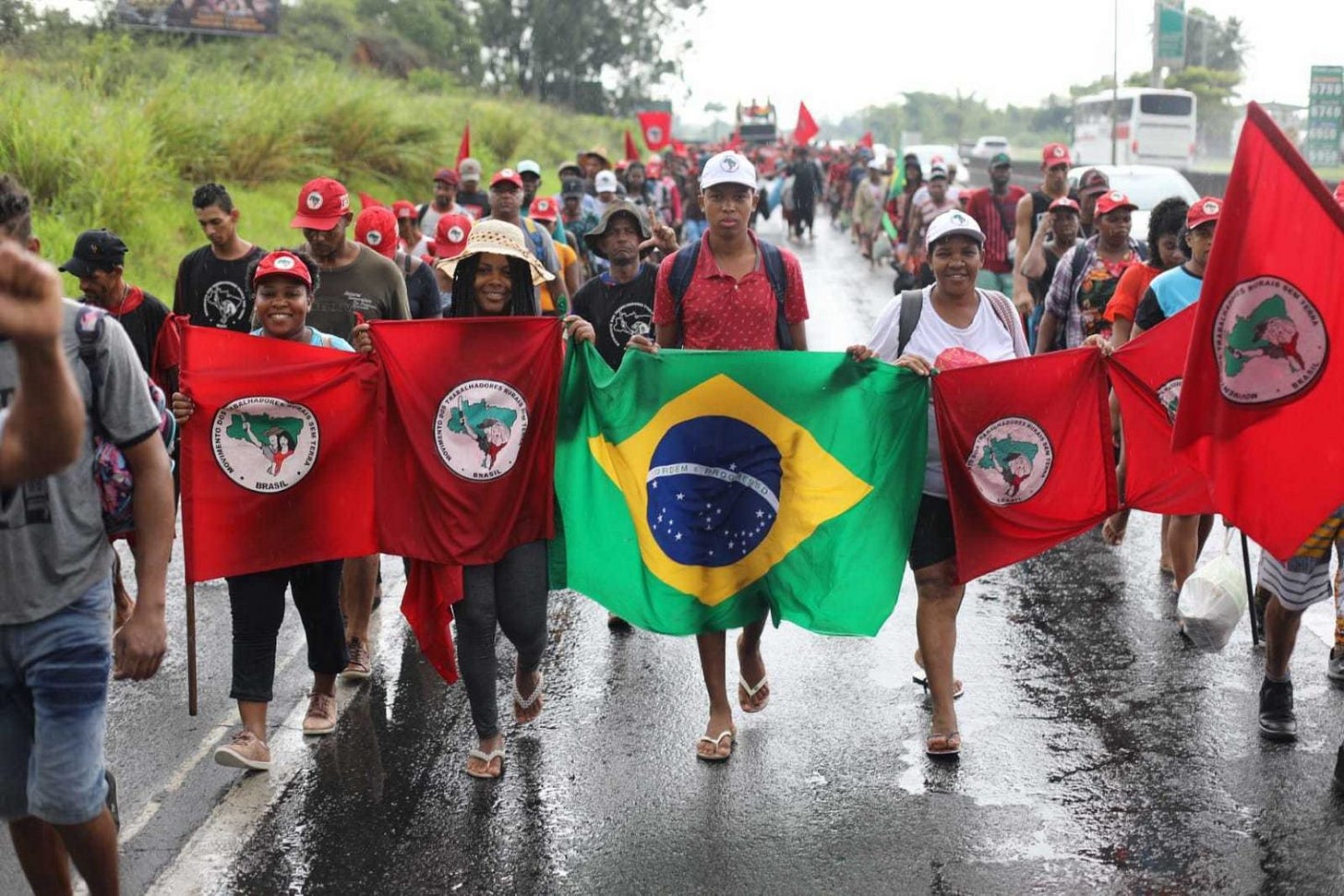
Brazil offers an instructive example. The Workers’ Party (PT) emerged from a powerful alliance among labour unions, radical clergy, landless movements, and socialist intellectuals. Under President Lula da Silva of the PT, millions were lifted from poverty through social programmes and expanded state capacity. Yet the Brazilian Left also encountered the limits imposed by global finance and domestic elites. The parliamentary coup against Dilma Rousseff and the imprisonment of Lula revealed the ruthlessness of ruling-class power when confronted with even moderate redistribution. The unities of the Left collapsed over various disagreements, and they could not build a strategy to capture electoral power in localities. The Right dominates Brazil’s Federal Senate and its National Congress.
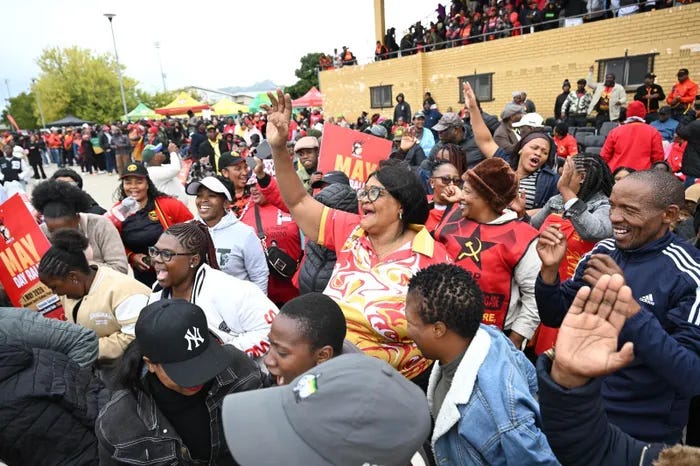
Similarly, in South Africa, the African National Congress (ANC) inherited the immense moral authority of the anti-apartheid struggle. But post-apartheid neoliberal policies preserved much of the economic structure of racial capitalism. Political liberation without economic transformation produced mass frustration. Progressive forces remain active – especially unions and community organisations – but the Left confronts severe organisational and ideological crises related to the tripartite alliance of the unions, the Communist Party, and the ANC, and to the fragmentation of the union movement into rival federations and to the weakening of the working-class by the precarity of work regimes.
India presents another contradiction. The parliamentary Left has weakened considerably, yet progressive energies persist in peasant and farmer mobilisations, anti-caste movements, women’s organisations, and labour struggles. The massive farmers’ protests of 2020–21 demonstrated that collective resistance remains possible even under increasingly authoritarian conditions. These protests succeeded because they built broad alliances across regions, religions, and social strata while maintaining a material program cantered on livelihoods and dignity. Yet, for the first time in five decades the Left does not control any of the state legislatures in India (after the loss in Kerala).
(Democratic Republic of the Congo)
Can progressive forces become hegemonic without coherent Left institutions?
Antonio Gramsci’s insight remains relevant: the ruling class governs not only through coercion but through consent. Contemporary capitalism has produced a powerful ideological order in which market logic appears natural and inevitable. Even sections of the poor are encouraged to identify with aspirations of private accumulation rather than collective transformation. Social media intensifies fragmentation and spectacle, weakening long-term political organisation. Meanwhile, right-wing forces increasingly occupy the terrain once held by anti-colonial nationalism. In many countries, reactionary movements speak the language of sovereignty while deepening capitalist dependency. They channel legitimate anger against globalisation into xenophobia, chauvinism, or religious majoritarianism.
The Left therefore faces a dual task. It must defend sovereignty against imperialist domination while simultaneously deepening democracy and social transformation within nations themselves. Anti-imperialism without social justice degenerates into elite nationalism. Social democracy without anti-imperialism collapses into accommodation with global capital.
(China)
Socialist Projects in Power
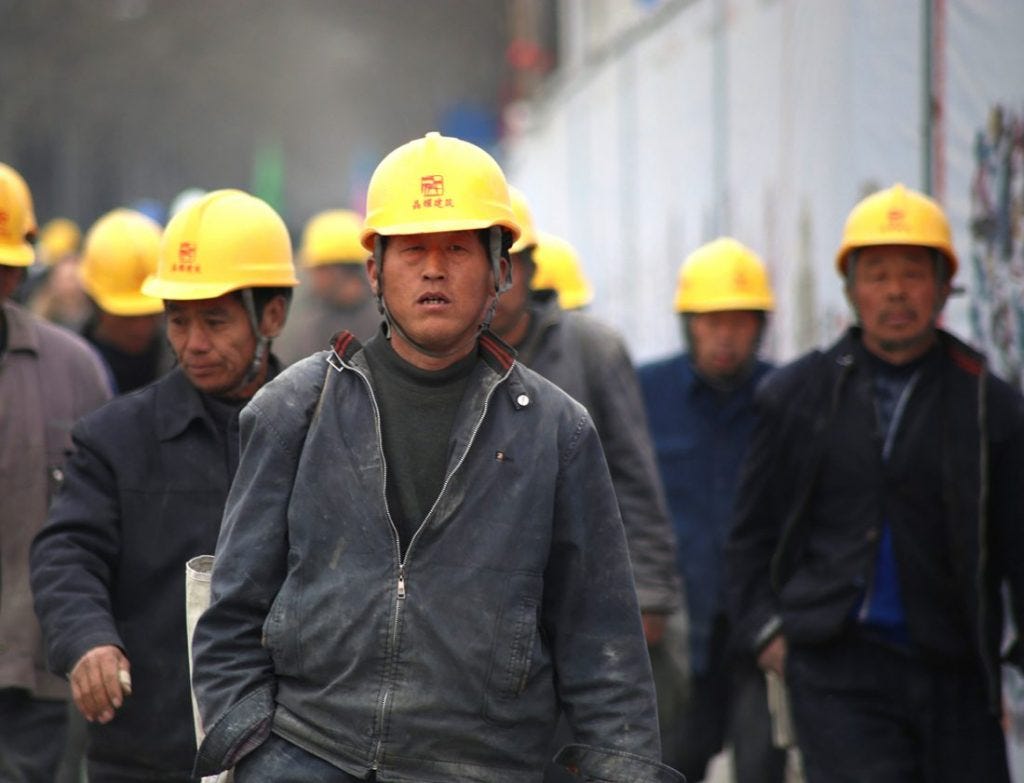
Across the socialist world, recent years have seen important advances in state-led development projects that challenge the dominance of neoliberal capitalism and demonstrate alternative paths of social organisation. China and Vietnam stand at the forefront of these developments, combining socialist planning with strategic engagement in the global economy. In China, the eradication of extreme poverty, the expansion of public infrastructure, and major investments in green technology and scientific innovation illustrate the continuing capacity of socialist institutions to mobilise resources for collective welfare. The Chinese state – led by the Communist Party of China – has strengthened public control over key sectors while pursuing long-term planning through initiatives such as the Belt and Road Initiative and ecological modernisation policies. Vietnam, meanwhile, has achieved remarkable gains in poverty reduction, healthcare, education, and industrial development through its socialist-oriented market economy. The Communist Party of Vietnam has maintained political sovereignty while guiding rapid economic transformation and expanding social protections.
Both countries have resisted the severe social dislocations experienced under neoliberal restructuring elsewhere, demonstrating the resilience of socialist governance in conditions of global crisis. Their experiences have renewed debates within the global left about sovereignty, planning, public ownership, and the role of the state in confronting inequality, underdevelopment, and ecological breakdown.+
(Brazil)
Waves of Struggle
The working-class and peasantry suffers the vicissitudes of the business cycle, but only its downside; the workers of the world, on a regular basis, experience the secular collapse of their control over their own lives due to the long-term capitalist crisis that has deepened in the Third Great Depression (since 2008). Growth rates in the advanced industrial states linger at near zero, and high debt rates and inflation in most of the poorer nations of the Global South, has meant that the world’s workers – apart from those in a handful of countries of the Global South (such as China) – experience a long period of economic decline. The deterioration of working and living conditions for the working-class and peasantry has resulted in spontaneous unrest across the world. Here is a list of the types of protests that have gripped working people in different countries with different tempos:
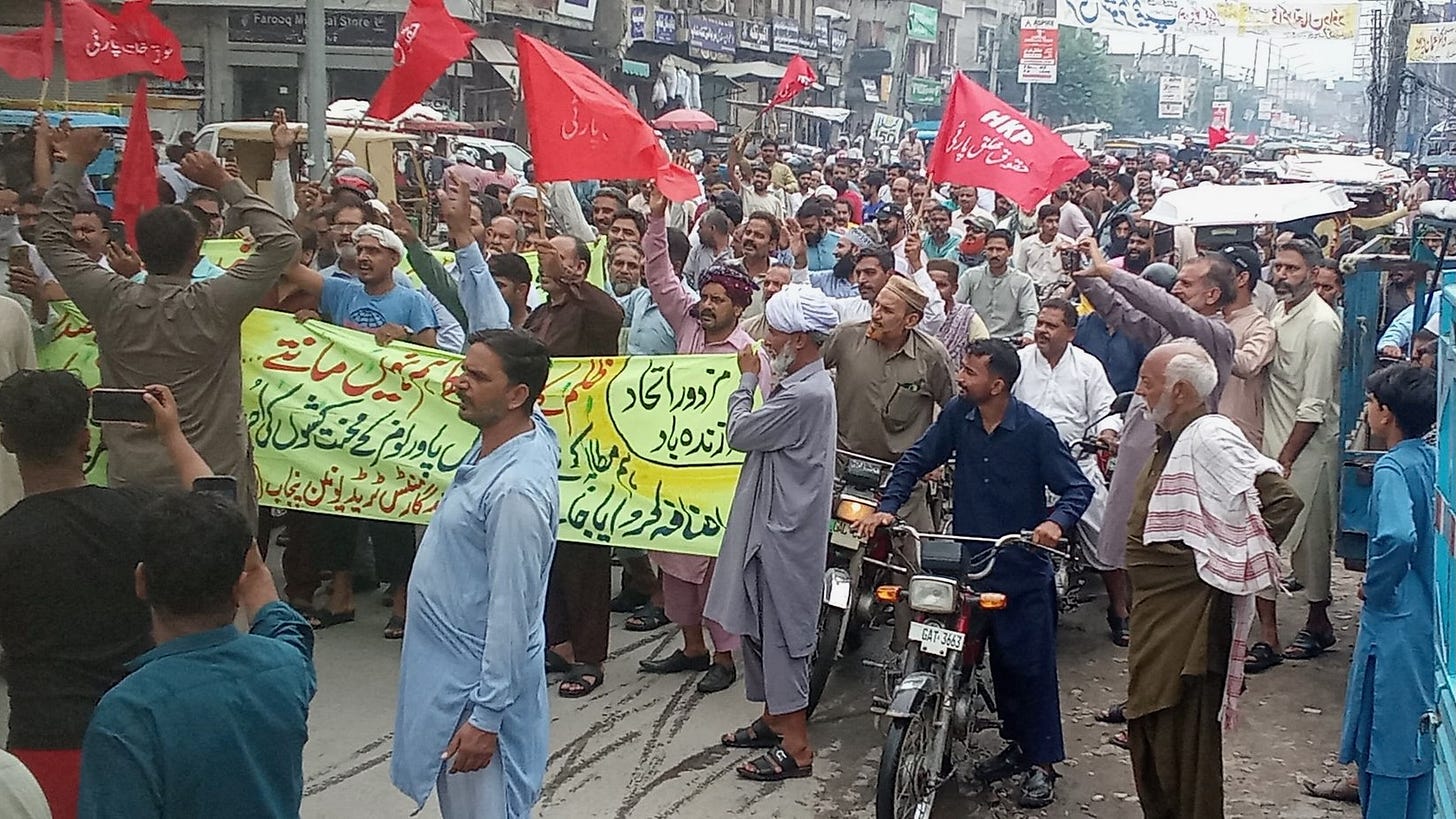
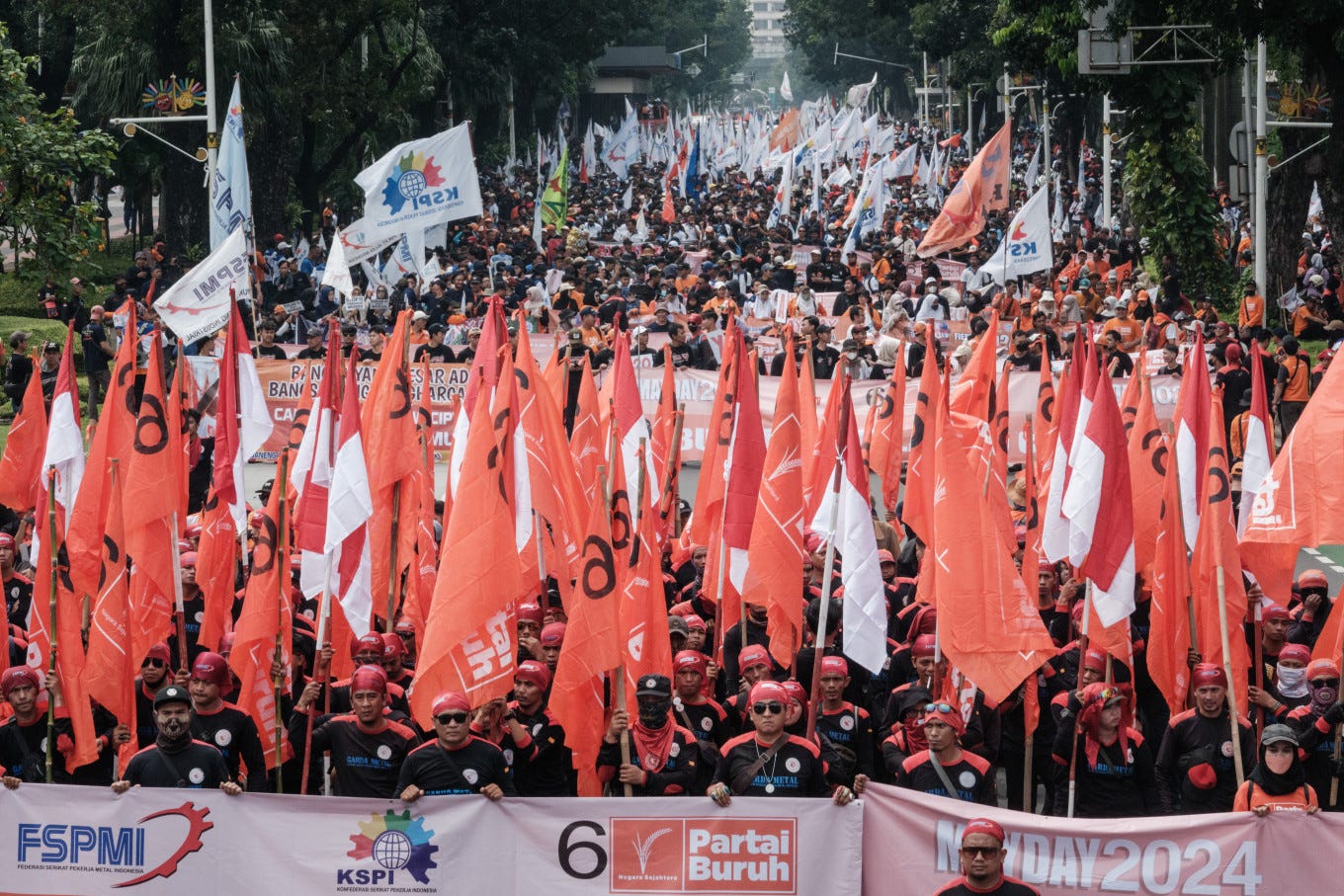
- Labour struggles for worker rights. To revive growth rates and to increase productivity, governments across the world have sought to roll-back against hard-won labour rights. This has been met with work stoppages and general strikes to oppose these reforms and to fight against the austerity conditions imposed on their lives. The most powerful example of this struggle comes from India, where there have been recurrent strikes – the 12 February 2026 general strike of 300 million workers being the most important thus far – against the new labour codes and farms laws; but the example of the Bangladeshi garment workers, mostly women, launched mass strikes from December 2018 for higher wages and better working conditions.
- Peasant struggles for agrarian reform. As prices for agricultural commodities have risen, agribusiness have sought to expand land holdings through land grabs and to dismantle government procurement schemes and government-controlled markets. Land occupations by the Landless Workers’ Movement (MST) in Brazil since 2016 have put the issue of agrarian reform and its anti-capitalist dimensions on the table. In Peru, between 2021 and 2023, peasant and indigenous communities in Apurímac and Cusco blocked roads against copper mining projects that contaminate water and farmland, linking the fight against ecocide to the peasant struggles and to indigenous struggles for dignity.
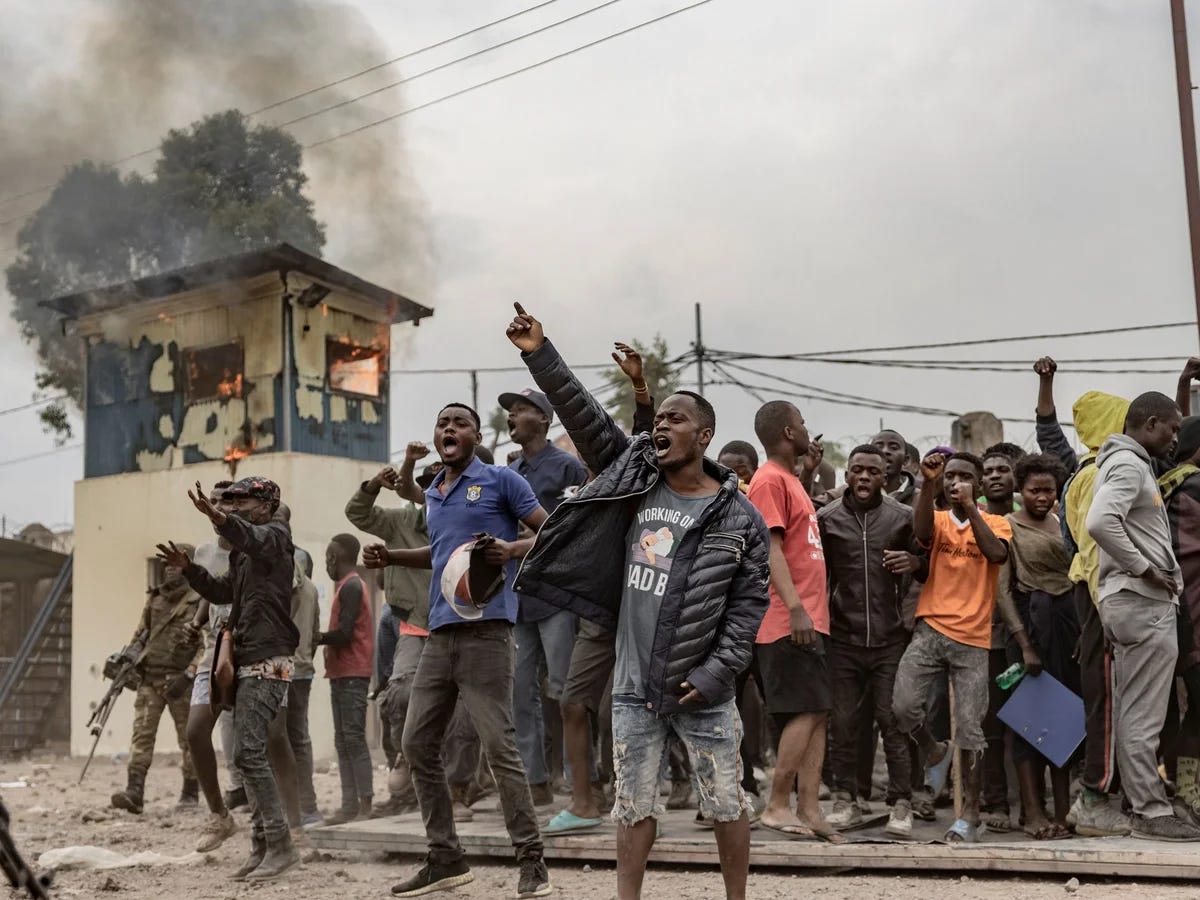
- Anti-austerity and cost-of-living uprisings. Inflation of food and fuel prices, the cuts of subsidy, and the IMF-imposed austerity agenda has provoked massive protests across the Global South from Chile (2019) to Peru (2020) to Tunisia (2021-22), and to Kenya (2022), inclusive of the creation of community survival structures of mutual aid.
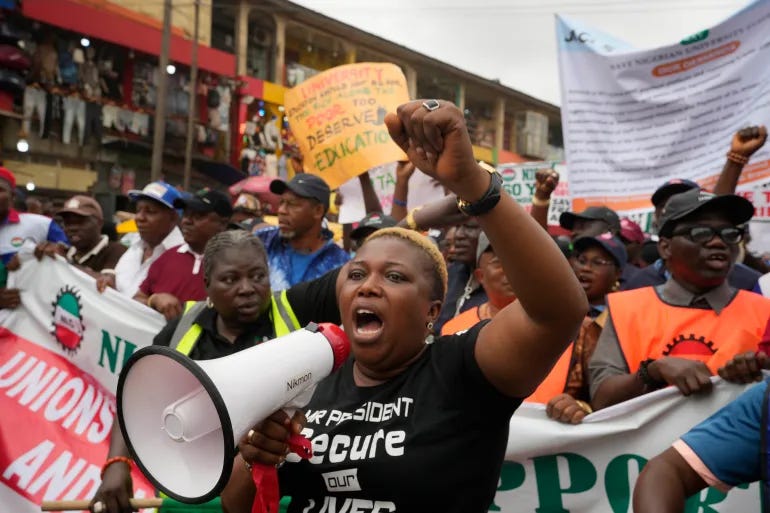
- Informal sector and precarious worker mobilisation. Over the past decade, informal and precarious workers have mobilised to defend livelihoods despite lacking legal protections. In Jakarta, Indonesia (2020–2023), ride-hailing and delivery drivers protested algorithmic wage cuts and demanded recognition as workers. Similarly, youth-driven uprisings have emerged in response to unemployment and inequality; the End SARS movement in Nigeria (October 2020) saw young people lead nationwide protests against police brutality, corruption, and economic exclusion, linking youth demands with broader social justice struggles.
Taken together, these struggles reveal a Global South in motion: fragmented yet interconnected, defensive yet innovative, and increasingly centred on the fundamental question of how working people can live with dignity in a system that systematically denies it.
(Indonesia)
Durable Popular Blocs
The future of the Left in the Global South will depend less on doctrinal purity than on its ability to build durable popular blocs rooted in material realities. The informal worker, the indebted peasant, the precarious urban youth, the migrant labourer, and the climate refugee now constitute central political subjects. Any Left that speaks only in the language of twentieth-century industrial labour without grasping these transformations will remain marginal. But neither can the Left abandon class analysis for diffuse moral language. Capitalism continues to organise the world through exploitation and hierarchy. The concentration of wealth has reached obscene levels while billions struggle for survival. The central question remains the same as it was during the great anti-colonial struggles: who owns the future?
The Left in the Global South survives wherever ordinary people continue to organise collectively against exploitation, humiliation, and imperialist domination. It survives in strikes, peasant marches, literacy campaigns, feminist assemblies, anti-racist mobilisations, and experiments in democratic planning. It survives not as memory, but as possibility.
(Nigeria)
Vijay Prashad is the Director of Tricontinental: Institute for Social Research. Sign up for the weekly newsletter from the institute, the most recent being on the concept of ‘slow to mature’ – about how revolutionary processes must hasten to develop institutions and capacity quickly in perilous circumstances.


Leave a comment