Tuesday, 26 May 2026 — Al Mayadeen English
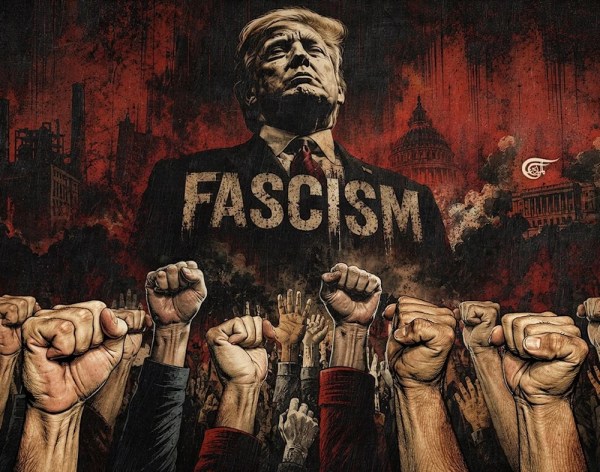
Contemporary fascism has evolved into a globalized system of authoritarian domination led by the US and its allies, combining military aggression, economic coercion, media manipulation, and institutional capture against resistance movements and sovereign states across the Global South.
The first four months of 2026 will be recorded in the memory of the peoples of the Global South as the period in which contemporary fascism abandoned the last vestiges of hypocrisy. Far from being a mere historical replica of the interwar regimes, this phenomenon has evolved into a transnational architecture of domination led by the elites of the United States and their strategic partners —a hybrid, financialized, algorithmic, and transnational authoritarianism that feeds on digital polarization, institutional capture from within, the commodification of security, and the tacit alliance between military-industrial complexes, technological oligarchies, and reactionary governments — where the threat and coercive use of force have progressively replaced any operative vestige of international law.
The UN and international laws are not ignored out of carelessness or institutional incompetence; they are subjected to a systematic emptying, selectively instrumentalized, and neutralized when they collide with the strategic interests of the hegemonic center. De facto, the law of the strongest prevails, but it is masked in narratives of national security, financial stability, protection of human rights, and other fallacies that function as juridical smokescreens. What until recently was presented as “diplomatic pressure” or “selective sanctions” has been transformed, in an accelerated and structural manner, into massive and arbitrary economic sanctions, direct or covert military intervention, de facto territorial occupation, and planned humanitarian asphyxiation.
From the rupture of the Venezuelan government on January 3 —with the kidnapping of President Nicolás Maduro and his wife, Cilia Flores, within the framework of “Operation Absolute Resolve” — to the unjustified and treacherous aggression by the United States and “Israel” against Iran, “Operation Epic Fury”, launched on February 28 — which has also reached Lebanon as an object of aggression — the US empire has synchronized its blows with a precision that seeks to eliminate all poles of resistance in a single movement.
However, at the beginning of May, the balance is not what Washington expected. It is true: some progressive States in Latin America have fallen or have been neutralized. Argentina has become a laboratory of the far right. Venezuela is under intervention. To them have been added other countries that have subordinated their foreign policies to Washington: Honduras, El Salvador, Ecuador, Chile, Paraguay, Costa Rica, Panama, the Dominican Republic, Bolivia, Guyana, and Trinidad and Tobago, all of which participated in the “Shield of the Americas” summit convened by Trump on March 7, sealing their alignment with the empire’s hemispheric strategy within an updated Monroe Doctrine. The dream of a powerful autonomous regional bloc, of ALBA, of UNASUR, has been dismantled, for the moment. An even greater threat now hangs over the region: Cuba and Nicaragua are in the direct line of fire.
But the peoples — that category which desk analysts often confuse with their governments — have not been defeated. On the contrary, in the most extreme adversity, they are discovering new forms of organization and new transnational alliances. Underlying them is a consciousness and a historical memory that fascism will never manage to erase. However, it is decisive that the revolutionary movements be capable of orienting and mobilizing them.
This article aims to provide a diagnosis and a strategic analysis of the situation, identifying the weaknesses that have cost dearly, the threats that are pending, but also the strengths that sustain the resistance and the opportunities that, if well leveraged, can change the course of history. It upholds a fundamental thesis that must be clear from the outset: the most progressive States themselves — even while being capitalist, as well as those that are part of the long-awaited phenomenon of multi-polarization — have the historical obligation to confront this rapidly evolving process of fascistization. Taking a passive, supposedly neutral, stance of “exclusively” national interest — if this were even possible in a globalized world — becomes a boomerang for everyone. Fascism prospers, intends to swallow the weakest and most helpless, but in the end will try to devour the entire planet. This happened with Hitler: he was allowed to advance until, far too late, a limit was imposed on him. Tens of millions of human beings died. History cannot repeat that grave error.
The weaknesses that fascism has exploited
No honest analysis can evade the internal responsibilities of the national and popular camp. The fascist offensive has not triumphed only because of its military or economic might; it has also triumphed because it found open doors, because it confused institutionality with legitimacy, and because it underestimated the enemy’s capacity to operate from within democratic structures.
The first and most painful weakness has been the confusion between the fate of a government and the fate of a people. For years, considerable sectors of the institutional left acted as if winning elections was enough to guarantee popular rights. Various Latin American governments prioritized institutional stability over grassroots mobilization. They sat down to negotiate with the empire, sometimes in good faith, while Washington prepared to strike. The result is well known: among other examples not mentioned, in Argentina, the punishment vote for the inherited crisis was capitalized on by a far-right with an anti-popular program. The created vacuum opened the opportunity for a figure like Javier Milei to assume the presidency. In Ecuador and Bolivia, the deep divisions between leftist and progressive sectors made it easier for the right to regain power, wasting transformation processes that had enjoyed broad popular support. This dynamic is not accidental: it responds to a pattern of institutional capture that contemporary fascism dominates with surgical precision, using formal legality as a shield while dismantling material sovereignty.
The second and omnipresent weakness has been the deficit in the cognitive war. In general terms, the institutional left has not managed to build an alternative communication network capable of breaking the information blockade in its entirety. Fascism has dominated broad bands of the narrative thanks to a media machine that presents the changes advocated by the right as “hopes”, aggressions as “defense”, occupations as “democratic restoration”, and genocide as “humanitarian conflict”. In this terrain, the disadvantage has been great: many peoples have lived in ignorance or have been cognitively manipulated by the right. However, the resistance is taking steps to reverse this situation, steps that must be much more effective. As has been formulated in other strategic analyses of the period, the battle for meanings is as decisive as the battle for material resources. Without cognitive sovereignty, there is no political sovereignty; without liberating education, there is no conscious citizenry; without culture as a common good, the market devours everything. Contemporary fascism not only bombards with missiles; it bombards with algorithms, with hyper-falsifications, with narratives of demobilization that fragment memory and convert indignation into passive consumption. Breaking this siege demands an autonomous, decentralized, and pedagogical communicational architecture, one that not only denounces, but also educates, organizes, and projects real alternatives.
The threats of the current situation
If internal weaknesses explain part of the defeat, external threats reveal the great magnitude of the challenge. May 2026 reveals a scenario of meticulously synchronized aggressions: geopolitics has become a single board of interconnected operations with no isolated fronts, and on that board, the siege on Cuba is closing with unprecedented pressure.
There are no isolated fronts. Washington and “Israel” coordinate their attacks in real time: while the absolute oil blockade asphyxiates Cuba and military intervention consolidates control over Venezuelan energy resources, the war against Iran seeks to fracture the Islamic Revolution, just as Lebanon is also an object of aggression on this same front. This synchronization is not improvised; it is the result of a doctrine of total war that combines economic pressure, direct intervention, institutional capture, and psychological warfare. The intimidation against Cuba is not veiled. On April 10, the Pentagon confirmed to USA Today that it has discreetly accelerated its contingency plans for a possible military operation on the island, preparing for various scenarios on the orders of President Trump. This dangerous escalation, aimed directly at our shores, adds to the unparalleled campaign of economic asphyxiation. On May 1, Donald Trump explicitly declared his intention to “take control of Cuba” imminently after the operations in Iran, suggesting that the deployment of the aircraft carrier USS Abraham Lincoln off the Cuban coast would suffice to force a surrender.
But perhaps the most subtle and lethal threat is humanitarian asphyxiation as a method of war. What is applied against Cuba — economic blockade plus energy blockade — is not just a “sanction”: it is a weapon designed to paralyze hospitals, transportation, and power generation. On April 30, Trump signed a new executive order that radically expands the blockade by imposing, for the first time, secondary sanctions. This means that any foreign company or bank, regardless of its country of origin, will be “sanctioned” if it carries out transactions with key sectors of the island, such as energy, mining, or financial services. This measure seeks to raise the legal and financial risk for anyone who, in any way, contributes to sustaining the island’s economy. The conversion of hunger into a weapon of war against the Cuban people has thus reached an unprecedented degree of sadism.
Similarly, the genocide and famine in Gaza are not a collateral effect; they are a strategic objective. The figures updated to May 2, 2026, are eloquent: more than 78,500 Palestinians murdered since October 2023, 98% of schools destroyed, 37 international humanitarian organizations whose operating licenses “Israel” has revoked. Beyond the murders, the conversion of hunger into a weapon of war has caused an unprecedented demographic crisis: a population contraction of 12% in Gaza since the beginning of the offensive. Contemporary fascism has reached the conclusion that one can attempt to break a people without needing to occupy every street: it is enough to cut off the essential resources for life, criminalize their existence, and present their extermination as the “collateral damage” of a supposed existential defense.
This imperial synchronization has followed a critical path that reveals both its method and its weakness. The energy blockade against Cuba and the aggression against Iran possibly would not have occurred if the public and unpunished genocide of Palestinians in the Gaza Strip had not been deployed, if “Operation Absolute Resolve” against Venezuela had not succeeded, and if a meeting between right-wing governments and President Trump to form the reactionary “Shield of the Americas” had not been possible. But the empire’s need to resort to this escalation of brute force is not a sign of structural strength, but of its internal crisis and growing dependence on extraterritorial coercion as the last resort of geopolitical control. When economic power lags, consensus breaks down, cultural hegemony loses its grip, and co-optation mechanisms fail, the final argument is force. And that is a symptom of historical decadence, not of victory. The thesis upheld here now gains all its weight: no State, no matter how progressive it may be, can remain neutral in the face of fascism’s advance. Passivity, the retreat into narrow national interests, is not a viable option, but a trap that accelerates one’s own destruction. Fascism does not stop at borders: it devours the weak, but in the end intends to swallow everything. The peoples must pressure their governments to break the inertia that paves the way for fascism. Because neutrality, in the reactionary offensive of our era, is not diplomacy: it is anticipated surrender.
The strengths and dignity of the resistance
And yet, in the midst of this somber picture, there are factors that sustain hope and the will to fight. Because what this period has demonstrated is that peoples, unlike many States, are immune to capture. The fundamental distinction has become clear: there are States that can be taken, neutralized, placed at the service of the empire. However, peoples, when they maintain their organization and their consciousness, are not.
In Venezuela, with the advance of events, the impact on the people’s interests, and the interference with national sovereignty, an active and growing popular resistance is to be expected. It will not be the resistance that analysts might expect, with formal structures and visible leaderships; it will be a capillary resistance, of neighborhoods, of communities, sustaining networks of solidarity economy and revolutionary sectors of the intelligentsia, who will refuse to accept occupation as their destiny. In Argentina, social movements have taken to the streets with progressive force. In Colombia, peasant, indigenous, and Afro-descendant communities continue building popular power outside and supporting the State.
There are also States that still resist with a historical consciousness that the blockade cannot erode. Cuba and Nicaragua remain standing. Cuba, in particular, is not an isolated case in the imperial storm: it is a global strategic front, a laboratory of anti-imperialist resistance, and a litmus test for the viability of sovereign projects in the South. As researchers from the Transnational Institute, the Progressive International, and academics such as Isaac Saney have pointed out, defending Cuba is not an exercise in historical nostalgia or revolutionary romanticism; it is emancipatory geopolitics in its purest state. It is to understand that where a principle of self-determination is broken, the juridical and moral floor of all peoples is undermined. Cuba has faced the economic siege and the direct military threat with a demonstration of determination that deserves to be studied. On April 16, at the ceremony for the 65th anniversary of the declaration of the socialist character of the Revolution, President Miguel Diaz-Canel, referring to the possibility of a military aggression, was categorical: “We do not want it, but it is our duty to prepare to avoid it and, if it were inevitable, to win it.” The Revolutionary Armed Forces maintain a high state of readiness and continue preparing for a prolonged war of resistance by the entire people.
Mexico, for its part, has demonstrated exceptional firmness in its principles and exemplary solidarity with Cuba, maintaining an independent stance that honors the finest traditions of Mexican foreign policy. Despite having suspended crude oil shipments in January, the government of President Claudia Sheinbaum has continued to send humanitarian aid through Navy vessels with food and other essential goods, and is actively working to restore fuel supplies to the island. This stance, which defends Mexico’s sovereign right to trade with Cuba without external interference, constitutes a benchmark of dignity for other countries in the region.
In the Middle East, Iran’s response has been an example of resistance that has constituted a turning point: the great brake on the overwhelming imperial advance. Far from fracturing after the assassination of Ayatollah Khamenei and the damage caused by the military aggression launched on February 28, the Islamic Revolution demonstrated its impressive defensive capacity. “Operation True Promise 4”, with which the Iranian Armed Forces have responded to the aggression, reached 100 waves of retaliatory attacks, launching hundreds of ballistic and hypersonic missiles, as well as drones, against US military bases throughout West Asia and Israeli positions in the occupied territories.
The assassination of the Leader achieved the opposite effect to what was sought: unified crowds took to the streets of Tehran, Qom, and Mashhad, and direct aggression strengthened popular determination and support for the government. The force of this response has been such that it has managed to fracture the synchronization between Washington and Tel Aviv, revealing growing tensions between the two. Although they launched the aggression as a coordinated operation, their objectives have diverged: while the White House seeks a negotiated exit that allows it to avoid a military quagmire, Netanyahu’s government is pressing to escalate hostilities. Far from weakening the Iranian position, this fracture confirms that the resistance has managed to impose its terms on the battlefield and at the negotiating table, forcing the empire to show its internal contradictions.
Lastly, the value of historical memory carries great weight. The peoples of Latin America possess a living memory of past resistance in the struggles for independence and against dictatorships and coups. This memory is a strategic asset that fascism tries to erase through hopelessness and disinformation, but it remains a potential reservoir of dignity and organization. In the same way, the memory of the Palestinian resistance, of southern Lebanon, and of the Islamic Revolution itself nourishes the determination of those who today face aggression in the Middle East. Historical memory is the firm ground where resistance takes root.
The cracks in the empire
Faced with this threatening panorama, it would be a fatal mistake to fall into pessimism. Because, in addition to the strategic potential of the resistance, fascism, as powerful as it may seem, suffers from serious contradictions that are the result of the terminal crisis of a system based on the so-called Pax Americana, which is dying in the face of the exhaustion of the extractivist-financial model and the advance of China and other established and emerging powers. March and April have shown cracks that can be exploited.


Leave a Reply