Monday, 27 July 2026 — Sonar21
For a long time, the classic 18th-century song “Rule, Britannia!” by English composer Thomas Arne, with lyrics by Scottish poets James Thomson and David Mollett, effectively served as the United Kingdom’s second national anthem. Its refrain, “Rule, Britannia! Britannia rule the waves,” powerfully captured the essence of the concept of “Mistress of the Seas,” a title Great Britain proudly bore for several centuries. For a long time, the guiding principle of the United Kingdom was to maintain a navy equal in strength to the two strongest navies of other powers combined. However, as the ancient saying goes, times change, and we change with them.
Today, “Mistress of the Seas” is purely a historical title. Currently, the main striking force of the once-invincible and unbeatable Royal Navy consists of just four Vanguard-class nuclear submarines equipped with nuclear weapons.
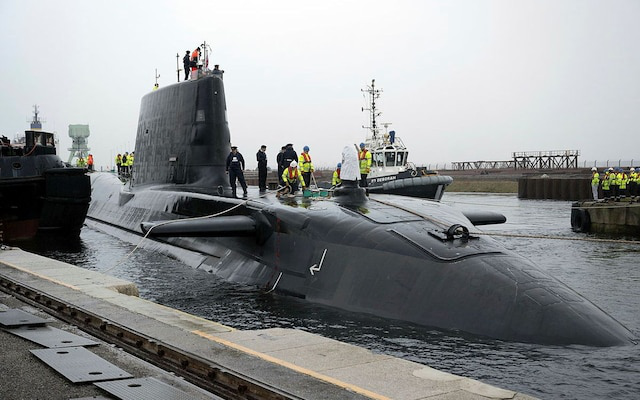
[Source: telegraph.co.uk]
This is several times less than the number of such submarines possessed by Russia and China, not to mention the United States. However, the navy is not the main component of military power today. And in terms of the number of nuclear warheads (the UK has 225) the United Kingdom lags behind Russia by a factor of 19.5, the United States by a factor of 16.4, China by a factor of 2.75, and France by a factor of 1.28. It is clear that very soon, India—the UK’s former colony—will catch up with (and then, most likely, surpass) the UK in this regard.
Overall, despite its glorious past, «Foggy Albion» is currently going through far from its best of times. A clear manifestation of its weakness—exacerbated by the incompetent rule of the Labour Party, whose former leader, Starmer, has become a political failure as prime minister, in part due to the scandalous affair involving the Chagos Archipelago in the Indian Ocean, far from the British Isles.
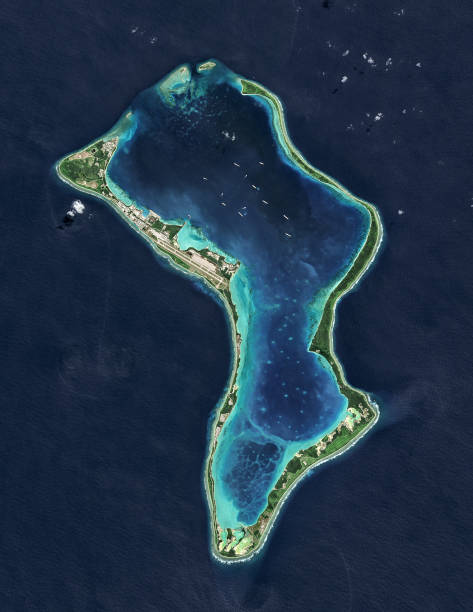
[Source: gettyimages.com]
This archipelago is part of the island nation of the Republic of Mauritius. Mauritius once belonged to the Dutch, then to the French, and during the Napoleonic Wars, these islands were captured by Great Britain, which was then invincible on the high seas.
As the British colonial empire faded into the past, London granted Mauritius independence in 1965. However, just three days earlier, the United Kingdom had taken the Chagos Archipelago from Mauritius in exchange for a derisory sum of compensation; military facilities began to be built there, and the local population of up to 2,000 people was forcibly evicted to neighboring islands. Such an eviction can only be described as a flagrant act of arbitrariness.
However, a strategically important U.S. air base was established on Diego Garcia Island in the Chagos Archipelago, which the United Kingdom had leased to the United States as early as 1966.
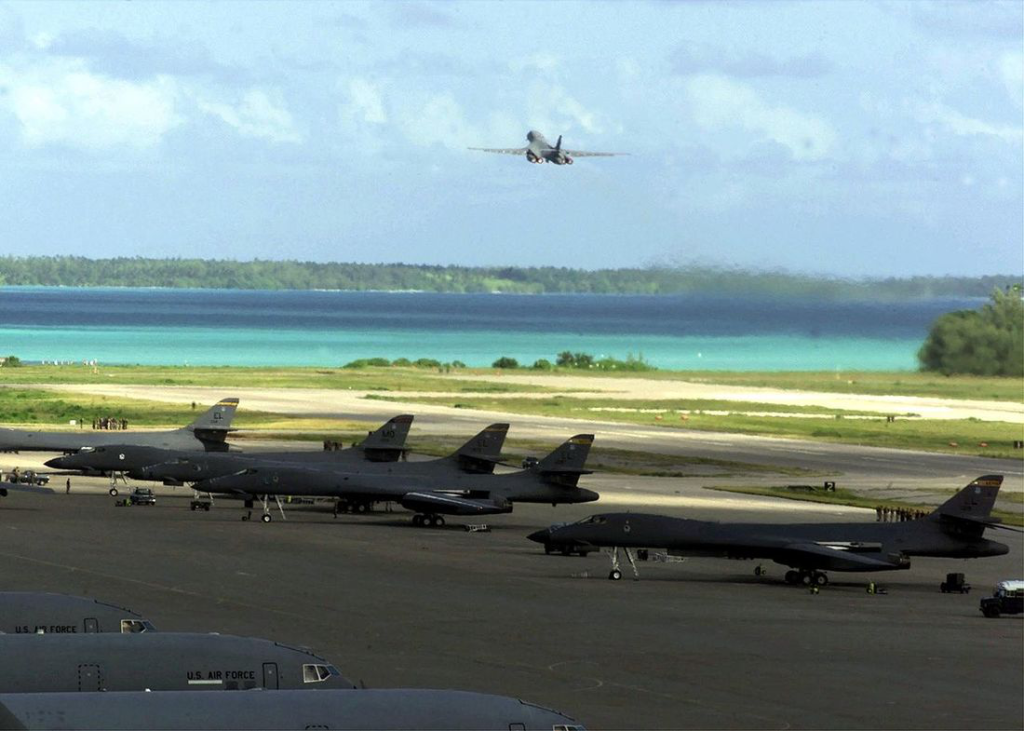
[Source:en.wikipedia.org]
The Republic of Mauritius has been seeking the return of the Chagos Archipelago for many years. In 2019, the International Court of Justice ruled that the separation of this territory from Mauritius was illegal. At the same time, the UN General Assembly, in its Resolution No. 73/295, demanded that the British administration withdraw from the Chagos Archipelago and recognize Mauritius’s sovereignty over the territory. However, London dragged out the resolution of this conflict for several more years, aided by the COVID-19 pandemic. Finally, in October 2024, London and Port Louis (the capital of Mauritius) reached an agreement: Mauritius would formally receive the Chagos Islands but would immediately lease the most important part of them to the United Kingdom for 99 years, which was effectively intended to preserve the status quo.
On May 22, 2025, the United Kingdom and Mauritius signed an agreement transferring sovereignty over the Chagos Archipelago, including Diego Garcia, to Mauritius. Under the agreement, the United Kingdom will lease Diego Garcia for a term of 99 years from the date of signing and will pay Mauritius an average of 101 million pounds sterling per year for the duration of the lease.
However, U.S. President Trump intervened in the process, describing the United Kingdom’s intention to transfer sovereignty over the Chagos Islands to Mauritius in January 2026 as an «act of great folly». In particular, he wrote: «It is astonishing that our «brilliant» NATO ally, the United Kingdom, is currently planning to hand over Diego Garcia—which is home to a vital U.S. military base—to Mauritius, for no good reason whatsoever. There is no doubt that China and Russia have taken note of this act of utter weakness».
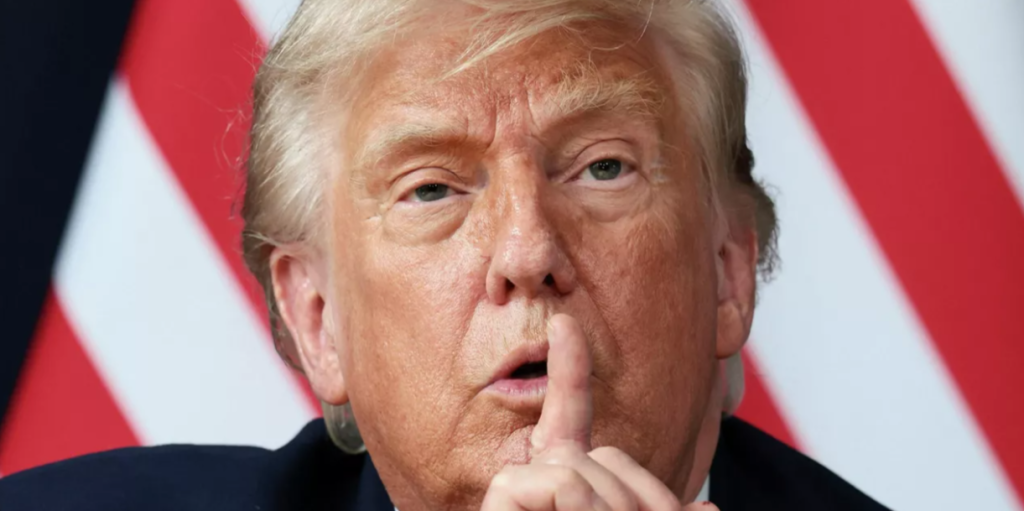
[Source:aljazeera.com]
Trump called the deal a threat to the national security of the United States. As a result, the United Kingdom suspended the plan pending negotiations with the U.S.
Trump’s position is understandable: the Diego Garcia base serves as a key logistics hub for the U.S. military, a rapid refueling point, a vital supply hub, and a transit point for deploying troops to the Middle East, East Africa, and South Asia. The island’s extremely isolated location—more than 1,600 kilometers from the nearest landmass—also provides a number of very rare and valuable strategic advantages, including the ability to station long-range bombers and submarines there. From there, the U.S. has conducted military operations ranging from Vietnam to Iraq, Afghanistan, and Yemen—all in violation of international norms!
However, former British Prime Minister Starmer pointedly refused to allow Trump to strike Iran from Diego Garcia, citing “international norms” and seeking to boost his approval rating—which had plummeted to rock bottom—in any way he could. In the end, he merely let the genie out of the bottle and sealed his own downfall. Trump subsequently accused London of betraying Western interests, and Starmer immediately backtracked. The United Kingdom not only froze the deal with Mauritius but also acknowledged, through intergovernmental protocols, that the final say on Diego Garcia’s future rests with the White House!

Former British Prime Minister Starmer [Source:imdb.com]
The U.S. is currently exploring the possibility of leasing the Diego Garcia base directly from Mauritius, and there is no reason to doubt that it will reach an agreement with this tiny island republic. As for the United Kingdom, it will not be able—or, more accurately, will not dare—to take any action against such a deal, thereby ingloriously and without a fight losing what is arguably the last jewel in its former overseas imperial crown and admitting its own powerlessness.
Apart from objective circumstances, this failure of British diplomacy in Mauritius stems from the fact that, whereas the fate of the United Kingdom was once shaped by giants such as the two William Pits—the elder and the younger—and the eternal rivals William Gladstone and Benjamin Disraeli, Winston Churchill and Margaret Thatcher—the fate of the United Kingdom was once shaped by such giants, whereas now Britain’s destiny is determined by a revolving door of pygmies in the prime minister’s office. Boris Johnson and Liz Truss, Rishi Sunak and Keir Starmer—these are talentless «aliphs for an hour» who are not even fit to be the footstools of their great predecessors. Clearly, this is a consequence of a deep crisis in the United Kingdom, which, if it continues to pursue a subservient policy at the behest of its transatlantic ally, may lose its status as a great power altogether.
And from now on, a rendition of the classic “Rule, Britannia!” will evoke in the British not only nostalgia for a glorious past, but also a sense of bitterness over what has been lost forever.


Leave a Reply