Thursday, 29 October 2026 — The Tricontinental
As Iran and Ansar Allah strain the US security architecture in West Asia, regional powers are building new arrangements of their own, raising one central question: whose security do these arrangements serve?
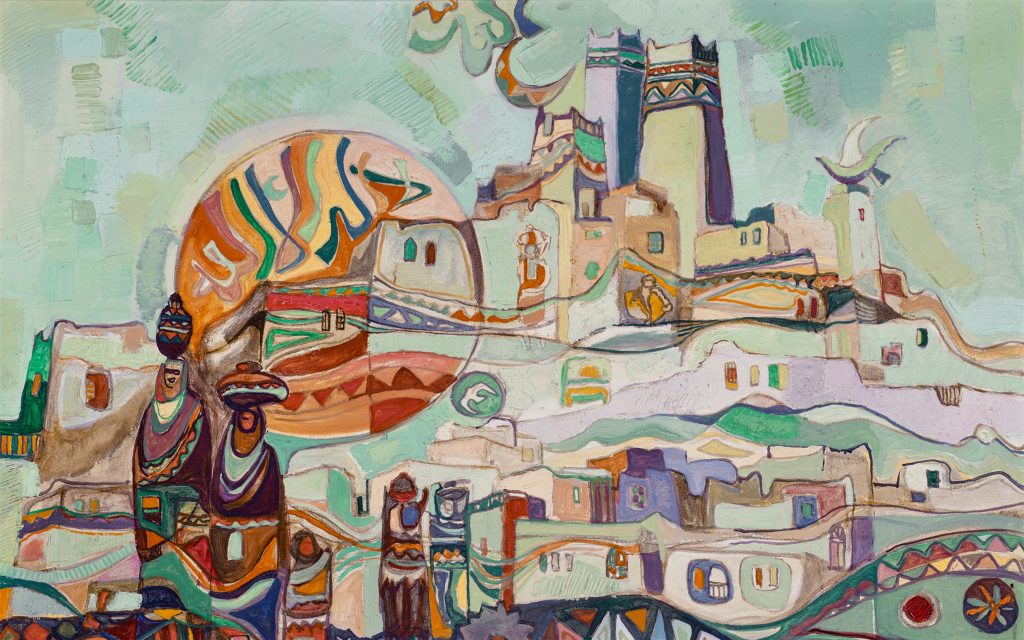 Abdul Halim Radwi (Saudi Arabia), Arts and Melody, 1989.
Dear friends,
Greetings from the desk of Tricontinental: Institute for Social Research.
In the decades after World War II, the United States, along with the former colonial powers Britain and France, came to dominate much of West Asia from the Mediterranean Sea to the Hindu Kush mountains. As the region emerged as a major producer of oil and natural gas – the fuels of the modern industrial era – the United States built a web of military bases and worked with its NATO allies to ensure that no regime seeking to assert national sovereignty over the oil system could consolidate its rule (the 1953 coup against the government of Mohammad Mosaddegh, after his government nationalised the Anglo-Iranian Oil Company, was an early and defining example of this).
As British power receded from the region during the 1960s and early 1970s – including from Kuwait, Qatar, the Trucial Sheikhdoms (now the United Arab Emirates), and Yemen – the United States expanded its own military role to sustain Western control over the region’s oil routes. Israel, which from its founding operated as a subcontractor of Western power in West Asia, became an important component of this US-led architecture, now under severe strain as Iran’s ability to withstand the assault by Israel and the United States this year raises questions about its durability.
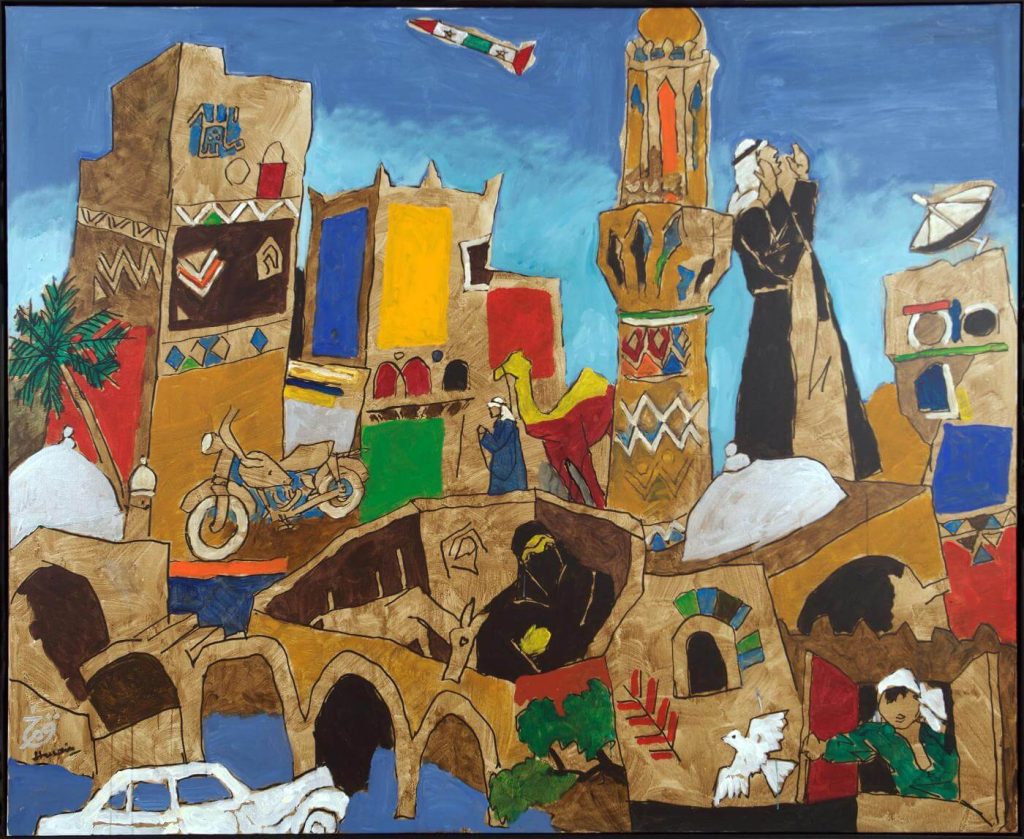 M. F. Husain (India), Yemen, 2008.
Against this backdrop, Saudi Arabia, Turkey, and Pakistan signed the Makkah Joint Defence Agreement in August, a significant attempt to build a regional security platform without direct US participation. This comes amid a debate across the Gulf, sharpened by Iran’s strikes on US military bases, over whether these installations provide protection or instead expose host countries to retaliation. Now that US troops have formally withdrawn from Iraq, the agreement’s provision allowing additional countries to join makes it likely that Iraq or smaller states on the Arabian Peninsula will seek membership.
At the same time, Ansar Allah – which controls Sana’a, Yemen’s capital, and much of the country’s north and west – moved to take key positions along the country’s Red Sea coast and thereby mirror Iran’s strategic position at the Strait of Hormuz. In September, the movement’s forces seized Mokha and Mayyun Island, giving them control of strategic points around Bab al-Mandab, the southern gateway to the Red Sea. Shipping through the strait is now within range of the movement’s missiles and drones. In response, Saudi Arabia and its allies deployed one hundred combat aircraft to strike Ansar Allah positions in Yemen as part of Operation Dawn of Yemen, renewing a military intervention against the movement that began in 2015.
If Ansar Allah can disrupt shipping through Bab al-Mandab while restrictions on shipping through the Strait of Hormuz persist despite negotiations between Iran and Oman, then the Arabian Peninsula’s oil trade will be severely disrupted and the gateway to the shortest maritime route between Europe and Asia through the Suez Canal will effectively be closed.
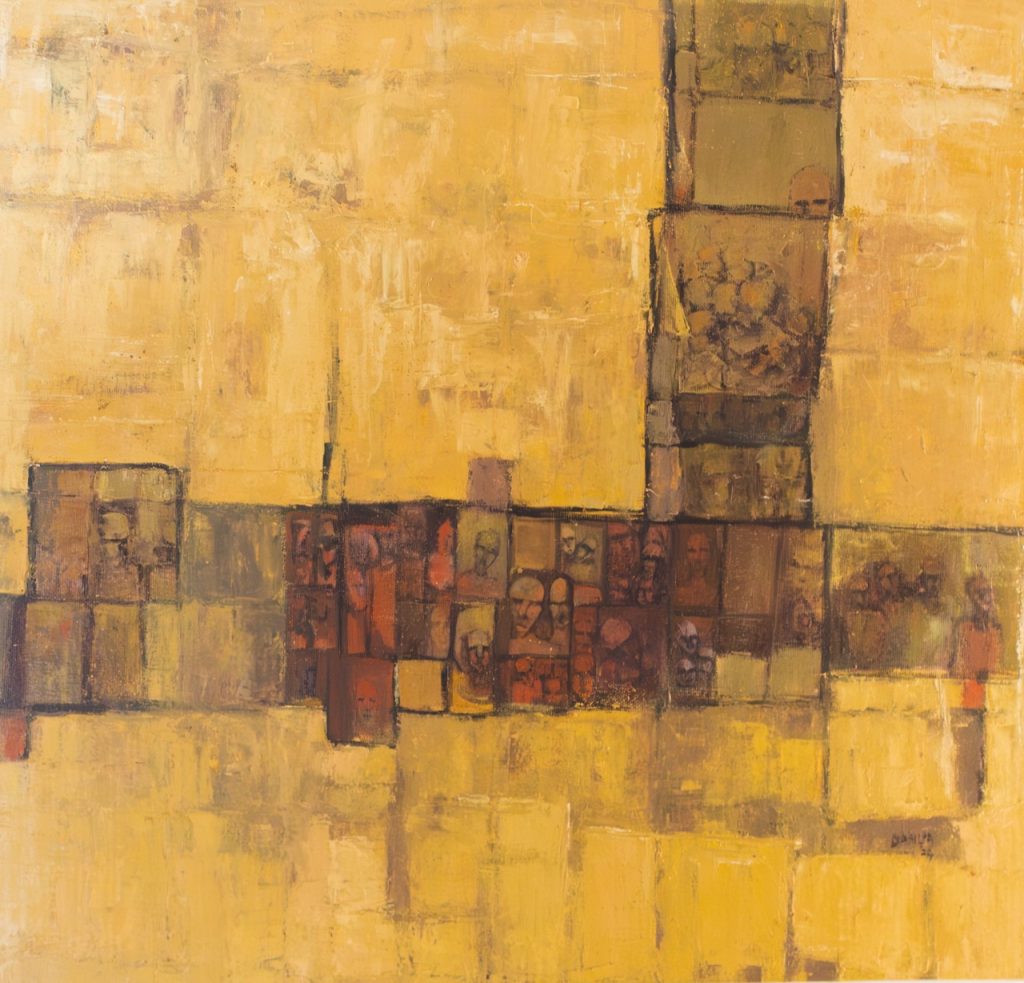 Dahlia Baasher (Sudan), Golden Era, 2025.
Across the Red Sea and along the Horn of Africa, meanwhile, the United Arab Emirates is expanding its strategic foothold through a combination of port development and military infrastructure, close political relationships, support for armed actors, and access to regional trade and resource networks. In 2015, the UAE established a military base at Assab in Eritrea, expanding a port and nearby airstrip from which Emirati aircraft struck Yemen. The next year, DP World, a Dubai government-owned ports and logistics company, took over the port of Berbera in Somaliland, a self-governing territory that declared independence from Somalia in 1991. The Emirati presence in the Horn of Africa is also closely tied to war, given its backing for the Rapid Support Forces (RSF) in the Sudanese civil war and the Libyan National Army of General Khalifa Haftar (who in turn provides logistical support for the RSF). The UAE’s ties to these armed actors intersect with regional gold-trading networks, through which gold linked to the RSF and other armed groups has flowed into Emirati markets.
At the regional level, the UAE has become a key anchor in the US attempt to build a regional security paradigm around cooperation between Israel and its Arab partners. In 2015, Israel announced the opening of a mission at the Abu Dhabi headquarters of the International Renewable Energy Agency, its first official presence in the UAE. In September 2020, the Abraham Accords established diplomatic relations between Israel and the UAE, and two years later, the two sides signed a Comprehensive Economic Partnership Agreement. This rapprochement was embedded in a US design for the two countries to join Washington in developing a regional strategic agenda. The political logic was to integrate Israel into its surroundings while leaving the Palestinian question unresolved. Their interests have increasingly converged in the Horn of Africa, particularly around Somaliland. In 2025, Israel became the only UN member state to recognise Somaliland as independent. The UAE, while stopping short of recognition itself, is reportedly lobbying Argentina, Eswatini, Zambia, and the Dominican Republic to follow Israel’s lead, recognition that could heighten tensions with Somalia. Today, however, growing uncertainty over the US-led security order on which this relationship was built has pushed Israel to rely more heavily on its closest Abraham Accords partner, the UAE. That reliance has its limits: closer alignment with Israel carries political costs for UAE leaders, even as the relationship offers Israel economic access and diplomatic relevance.
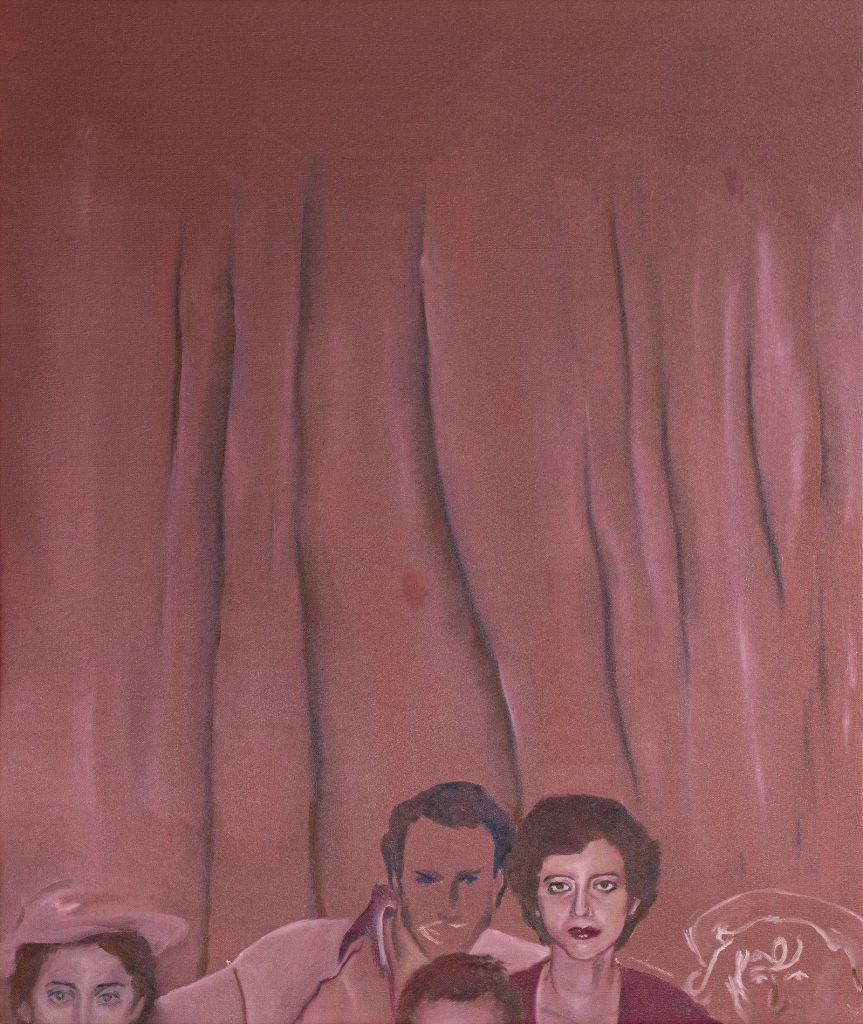 Almaha Jaralla (UAE), Al Dayan, 2022.
This growing uncertainty reflects the weakening of the old architecture of US military dominance in the region, which provided Israel with a sense of impunity to maintain its apartheid regime and continue its genocide against the Palestinians. US power can no longer be assumed to be invincible. The experiences of Afghanistan and Iraq – where the US ultimately failed to prevail – as well as Libya, which the US and France with their Gulf Arab allies destroyed, and now Iran, where the US has been defeated strategically, point to a recurring pattern. The United States can destroy countries, but it cannot necessarily control them. What will Israel do without its major ally (the US) and its minor allies (the Europeans) if they reduce their footprint in the region? Having secured the oil in Venezuela and seeking to control Brazil’s vast strategic resources, including its oil and rare earths, the US has hedged its bets against the loss of control over the oil in West Asia. This hedge will reduce Trump’s incentive to continue conflicts that are unwinnable.
The broader erosion of confidence in US security guarantees is perhaps clearest in Iraq. Washington announced the completion of its troop withdrawal on 30 September this year, implementing the timetable negotiated with Baghdad in 2024. Celebrations in Baghdad marked a powerful assertion of sovereignty. These celebrations should not obscure the contested meaning of withdrawal. One of the major paramilitary groups, Kataib Hezbollah, challenged official claims of a complete departure, alleging that US aircraft continued to operate in Iraqi airspace. For a country devastated by the illegal 2003 invasion and its aftermath, the departure carries an unavoidable historical weight. It undermines the assumption that US troops must remain indefinitely as the indispensable organisers of Iraqi security.
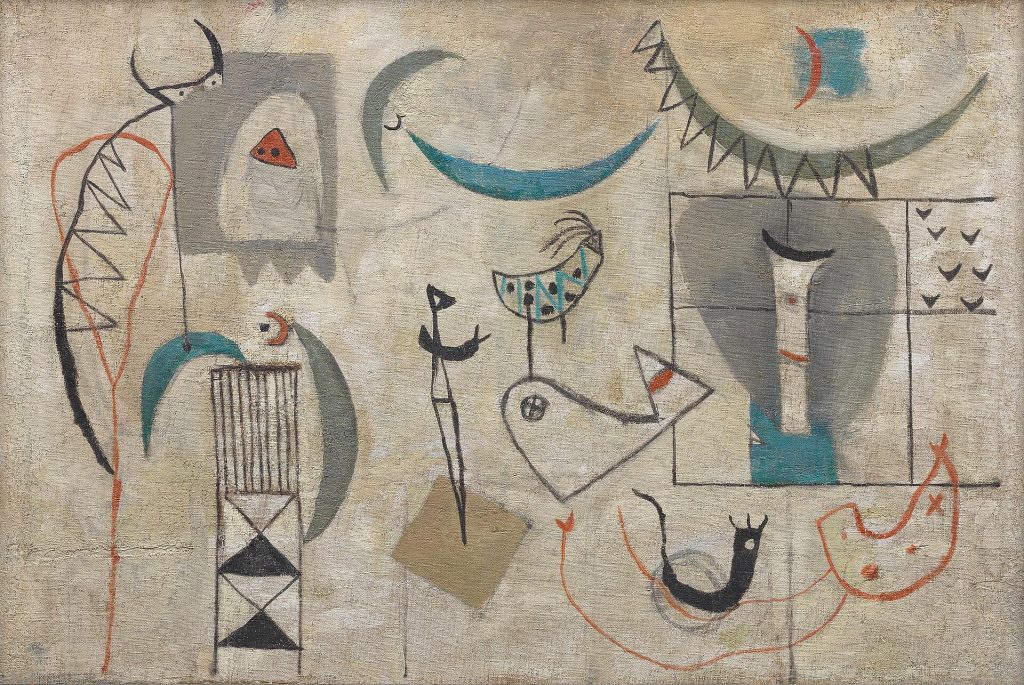 Jewad Selim (Iraq), Good and Evil, An Abstraction, c. 1951.
Taken together, these developments point to a broader reconfiguration of power and security across West Asia and the Red Sea. Iran’s ability to withstand the US–Israeli assault and the US withdrawal from Iraq have exposed the limits of US military power, while the Makkah Agreement and shifting regional partnerships show governments seeking new ways to secure their interests. This is not yet a West Asia without the United States. Washington retains influence through military partnerships, arms, intelligence, and deployments elsewhere. Withdrawal from one country should not be mistaken for withdrawal from the entire region. Nor are these emerging arrangements necessarily opposed to the United States: some are being built alongside existing US connections, while others reach beyond them. What is changing is confidence in US power as a stable and sufficient security guarantee.
For progressive forces, the essential test is whose security any emerging regional order serves. A new security architecture that protects governments, investment, and strategic routes while reproducing external domination, unequal control over resources, and the destruction of Palestinian life cannot deliver genuine sovereignty and peace. Regional autonomy must be measured by whether it advances popular sovereignty and Palestinian freedom.
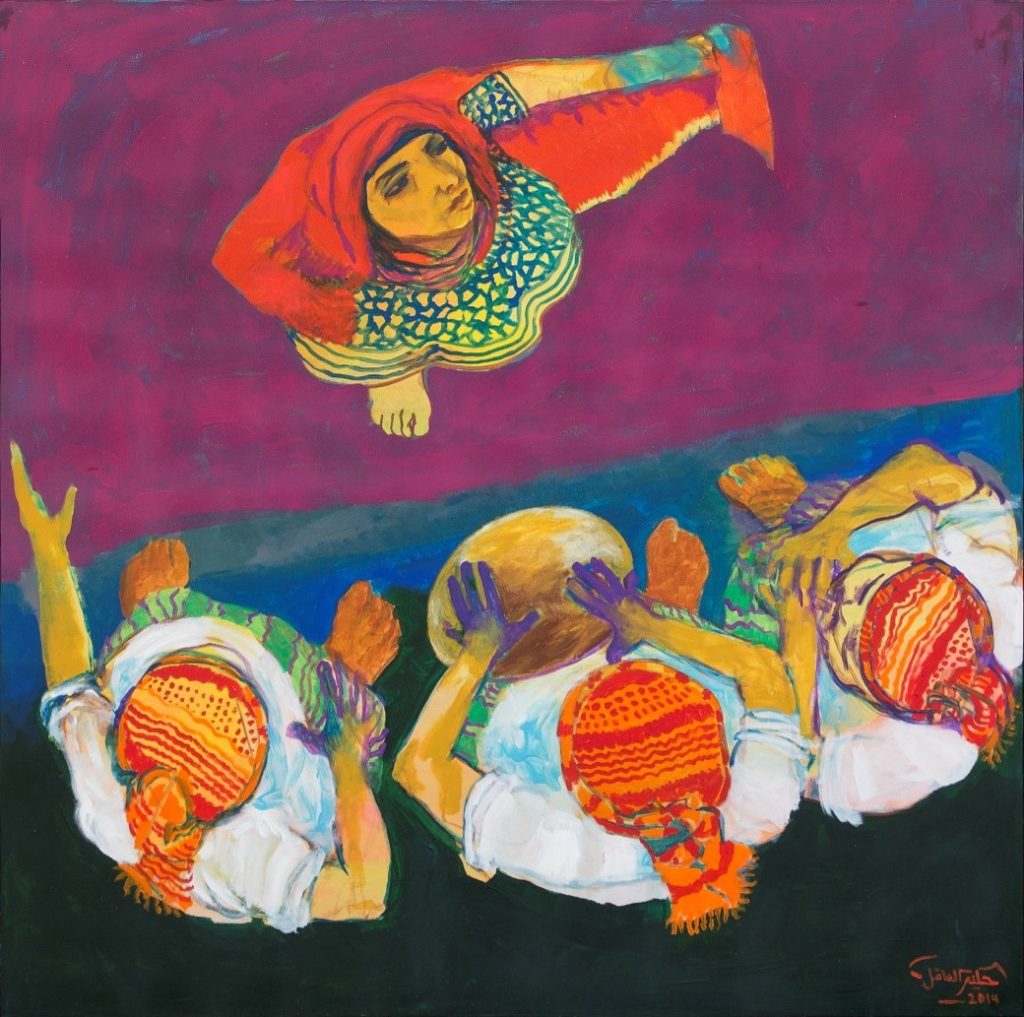 Hakim al-Akel (Yemen), Eye of the Bird, 2014.
In 1986, the great Yemeni poet Abdullah al-Baradouni (1929–1999) published his lovely poem ‘O Mustafa’ (يا مصطفى). I realise the poem is long, but I feel that it captures the mood of our present moment across the region, from Yemen and Iran to Sudan:
Let them bomb: you cannot be shattered.
Let them rage: you are fiercer still.
Let them muster: you know
those who terrify are more afraid.
Richer, yet more wretched;
weaker, yet more brutal.
More apparent, yet more hidden;
more disgraced, yet more arrogant.
They have iron and fire,
yet they are weaker than straw.
They fear the possibility of death;
you are more familiar with it,
more drawn to danger,
more resolute in your decisions.
For they are devoted to their desires,
and you are more devoted to the people.
So, you confront armies
of ornamented emptiness.
They divide what is already divided,
classify what is already classified.
They thicken the guards around themselves;
you are a denser presence still.
You pour down like the unforeseen,
advance like volcanoes.
You cascade as festival and spring,
stretch into winter refuge and summer dwelling,
sap to every root,
a pulse to every instrument.
Never has waiting said of you:
he bent or turned aside.
Never has a star said: he slackened.
Never has a dawn said: he fell behind.
You race against time: it tires,
and you do not stop.
You draw the sun behind you like a train
and wear the night for an overcoat.
You have confounded those who said: he goes too far,
and those who say: he is extreme.
The middle way is a harsher death,
though they have named it gentler,
for they are more content with diversions,
more practised in describing falsehood.
To you, cowardice is cowardice:
no cruder kind, no more elegant kind.
To you, shame wears a fouler face
when it appears more charming.
O Mustafa, what secret lies
beneath that threadbare shirt?
Is your perception keener
because your frame is thinner?
Is your heart more fertile
because your home is leaner?
Are your dreams more abundant
because your face is more drawn by want?
Why do you care more for everyone
than all those cleverer and more learned?
You sing with every pulse;
they weep over an insult to a slender beauty.
You know better the way to the horizon,
know the underground passages better,
understand the choices more deeply,
uncover more of what is strange,
are more effective in your skills,
more discerning when calamity comes.
Behind you there is no diversion;
ahead of you, no turning away.
Distance brings you no despair;
nearness brings you no regret.
For your concern is higher,
your purpose more honourable,
your breast fuller,
your pocket cleaner.
They may break you, but
you rise stronger and more sensitive.
Did you climb high as ripened fruit
except to be pelted and plucked?
They may kill you: you return
from the furthest reach of killing, more tempestuous,
for your root grows more abundantly,
your watercourse makes the land more fertile,
for your death is more alive
than the lives of a million men of luxury.
Let them all hurl their missiles at you:
you alone have greater force to hurl.
They will perish, while there flourishes
within you what cannot perish.
For you are the whole in one person,
a quality no mould can contain.
O Mustafa, O book
composed from every heart,
O time that is to come
and erase this counterfeit time.
Warmly,
Vijay


Leave a Reply