29 February 2012
December 2011
Dear World Leader
Emergency intervention to stabilize Arctic sea ice and thereby Arctic methane is today a matter of our survival.
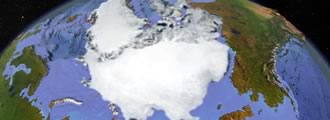
I write to you on behalf of the Arctic Methane Emergency Group, which includes among its founding members Peter Wadhams, Professor of Ocean Physics, Cambridge; Stephen Salter, Emeritus Professor of Engineering Design, Edinburgh; and Brian Orr, former Principal Science Officer at the UK DoE (as was). The Group has received support and advice from many pre-eminent climate science colleagues around the world. The purpose of this letter is to respectfully bring to your attention new evidence of the rapidly deepening climate change crisis in the Arctic. We appeal to you to support our call to put the imminent loss of Arctic summer sea ice and escalation of Arctic methane emissions at the top of the climate change agenda and to support emergency measures to cool the Arctic.
 Professor Peter Wadhams, on behalf of the Arctic Methane Emergency Group, spoke about this critical issue at the December 2011 American Geophysical Union (AGU) conference in San Francisco, USA. Key elements of his talk have been widely reported, following an article in the UK‘s Independent newspaper. (Please find copies of this and subsequent articles attached.)
- The loss of Arctic summer sea ice and increased warming of the Arctic seas threaten methane hydrate instability and a massive catastrophic release of methane into the atmosphere, as noted in IPCC AR4.
- Research published by N. Shakhova* shows that methane is already venting into the atmosphere from seabed methane hydrates on the East Siberian Arctic shelf, or ESAS (the world’s largest continental shelf), which, if allowed to escalate, would likely lead to abrupt and catastrophic global warming.
- The latest research expedition to the region (September/October 2011), according to Professor I. Semiletov, witnessed methane plumes on a “fantastic scale,” “some one kilometer in diameter,” “far greater” than previous observations, which were officially reported in 2010 to equal methane emissions from all the other oceans put together.
- The loss of Arctic summer sea ice and subsequent increased Arctic surface warming will inevitably increase the rate of methane emissions already being released from Arctic wetlands and thawing permafrost.
- The latest available data indicates there is a 5-10% possibility of the Arctic being ice free in September by 2013, more likely 2015, and with 95% confidence by 2018. This, according to the recognised world authorities on Arctic sea ice, Prof. Wadhams and Dr. Wieslaw Maslowski, is the point of no return for summer sea ice. Once past this point, it could prove impossible to reverse the retreat by any kind of intervention. The data indicate the Arctic could be ice free for six months of the year by 2020 (PIOMAS 2011).

 The New Dark Age
Leave a comment