Friday, 21 August 2026 — Palestine Will Be Free
“The hardest thing is to stand before an unidentified grave, and not know whether it contains your son or not.”
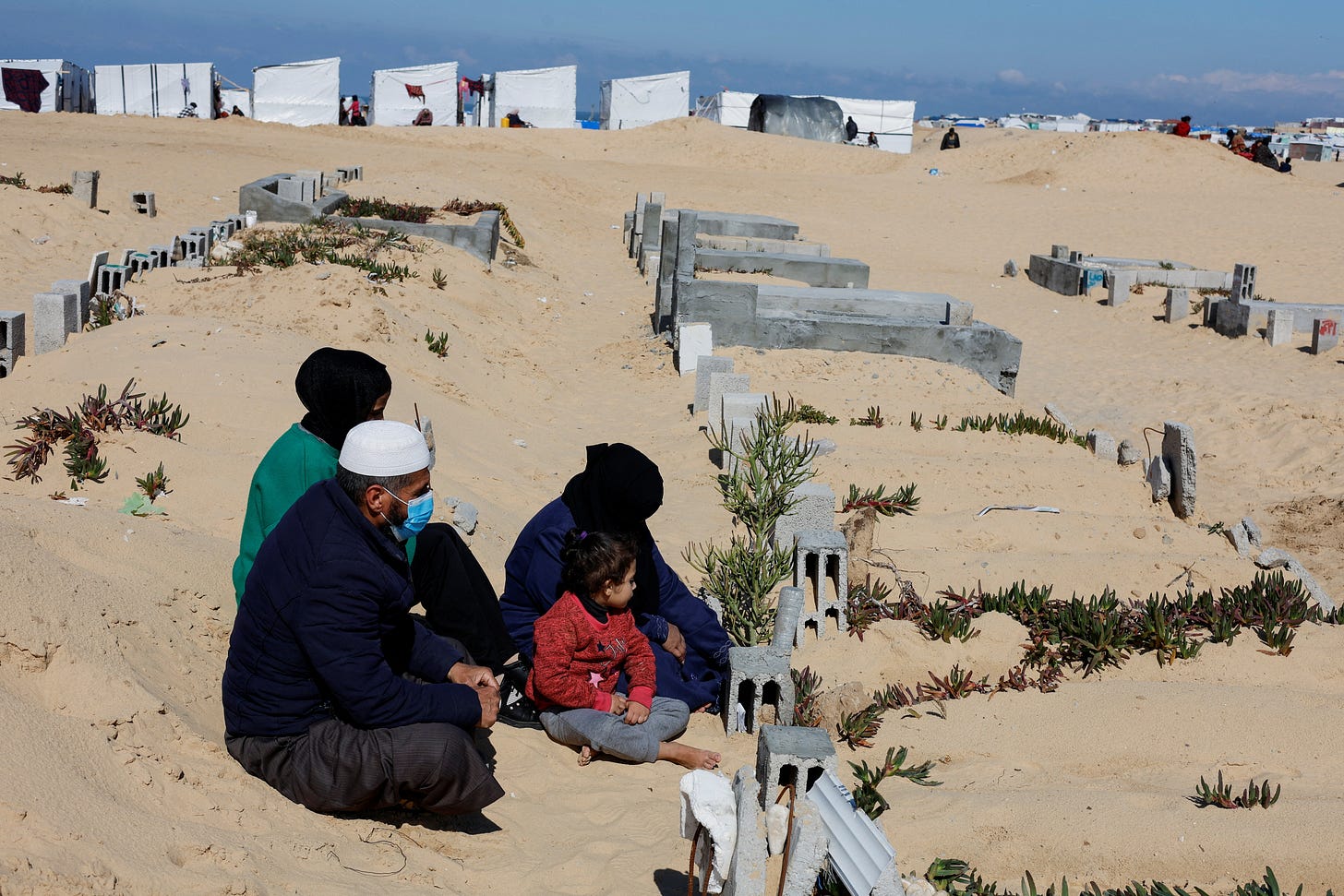
In Gaza, thousands of families are unaware of the whereabouts of their loved ones. They remain unsure whether their children, spouses, or parents are being tortured in an Israeli dungeon, have been murdered and kept in a freezer in Israel, or have been buried unidentified in an unmarked grave.
Last October, when the Israelis sent bodies of Palestinians into the Gaza Strip, the vast majority of them were in an unrecognisable state, bearing marks of inhumane torture and horrific abuse, including gunshot wounds, fractures, and burns, among other injuries. Some of the bodies still had their limbs tied with ropes, as the genocidal Jewish state did not even bother to conceal its brazen criminality — a recurring feature of the broader pattern of the Holocaust it has been committing in the Gaza Strip since October 2023.
Dozens of bodies had to be buried unidentified in mass graves, compounding the excruciating pain of families with missing members and forcing them to make runs to morgues every time a truck bearing remains of Palestinians made its way into the Gaza Strip.
Even after three full years of nonstop Western-backed Israeli genocidal assault, many Palestinians remain unsure about the bodies of their relatives.
The pain of families with loved ones buried in unmarked graves is immense. They live in limbo, suspended between hope and unbearable grief, not knowing whether the grave at which they are praying holds their children or someone else.
Sharif Hassan, 46, is one of many in the besieged enclave seeking closure about the fate of his son, Khaled. Khaled, 25, was last seen at Al-Shifa Hospital in March 2024. Sharif has no idea what happened to his son after that fateful day.
“I spent months searching for him among hospitals, shelters, and places of displacement, clinging to the hope of finding him and knowing his fate, until a final thread led me to a cemetery containing unidentified bodies, so the search for the absent turned into a painful confrontation with the possibility that he might be buried among nameless bodies,” Sharif told Ultra Palestine.
“The last time my son Khaled was seen was on March 18, 2024, inside Al-Shifa Hospital in Gaza, and since then all news of him was completely cut off, and we began a difficult journey to search for him and know his fate, and we still live between hope and anxiety, waiting for any information that will lead us to him.”
He described the uncertainty that followed them as they searched everywhere for answers: “We did not know where to look for him, so we moved from one place to another whenever information reached us, even cemeteries, and when we learned of the existence of unidentified graves, a painful question began to haunt us, could one of them be him?”
Sharif explained his predicament: “The hardest thing is to stand before an unidentified grave, and not know whether it contains your son or not. You want to cry for him and read the Fatiha, but doubt eats away at you, perhaps he is not here, and perhaps his fate is still unknown.”


Leave a Reply