Tuesday, 8 September 2026 — New Eastern Outlook
On August 29, 2026, Icelanders delivered a verdict that carried an uncomfortable implication for Brussels. By 52.8 percent to 47.2 percent, they rejected the proposal to resume EU accession negotiations. The result was not a rejection of Europe. It was a vote for retaining control.
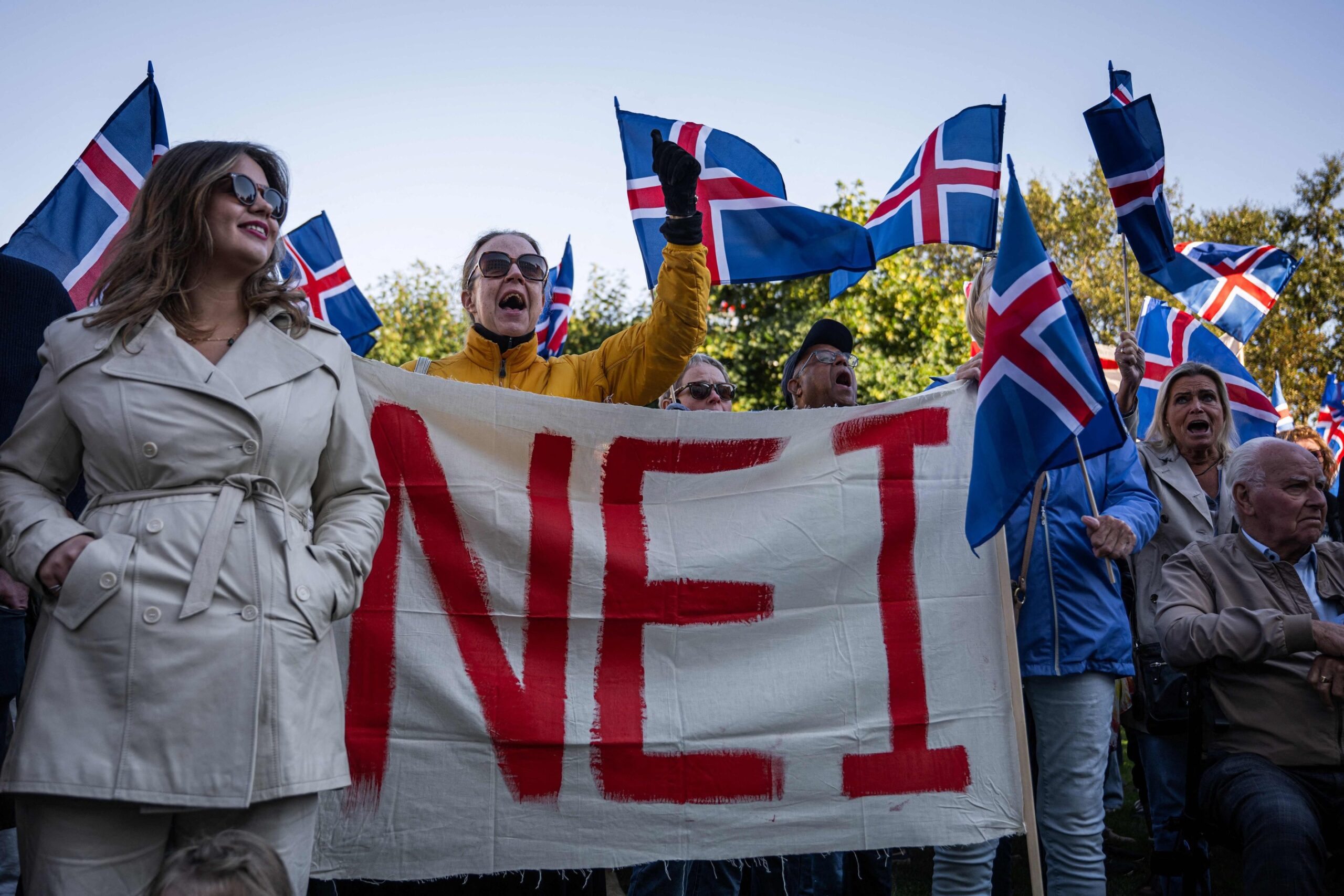
Iceland did not reject Europe. It rejected a model in which sovereignty over key resources becomes a subject of negotiation
A Vote for Control
The result was not driven by hostility to Europe. Iceland is one of the most globally integrated countries in the world, and its economy depends on access to European markets. But integration and membership are not the same thing. The question Icelanders answered was not whether they wanted to be part of Europe. It was whether they wanted to move from a flexible partnership to a more binding political union.
The timing of the referendum was significant. The government had framed it as a preliminary step, a mandate to explore the terms of accession before any final decision. The referendum itself was advisory rather than legally binding, but its political message was difficult to ignore. A narrow majority concluded that the risks and constraints associated with full membership were not worth the additional benefits that membership might offer. For a country that already enjoys deep integration through the European Economic Area and Schengen, the threshold for accepting additional political commitments was simply higher than Brussels had anticipated.
The Fishing Question
At the centre of the debate was a single issue: fish. Fishing remains one of Iceland’s most important industries, accounting for a significant share of GDP and approximately 40 percent of export revenue. The industry was overwhelmingly hostile to reopening the path to membership. The central concern was that full accession would ultimately subject Iceland’s fisheries to the EU’s Common Fisheries Policy, potentially changing how quotas and access to the country’s most valuable resource were managed.
For a country that fought three Cod Wars with Britain between 1958 and 1976 to secure control over its fishing grounds, the issue is not abstract. Opponents could point to the long-running grievances of Irish fishermen over quota allocations and to the role that resentment of the Common Fisheries Policy played in Britain’s Brexit debate. Neither case is directly comparable to Iceland, and neither proves what Iceland’s own accession negotiations would have produced. But both illustrate why fisheries can become politically explosive when national control over waters and quotas becomes part of a wider supranational system.
Integration Without Membership
Fisheries explained much of what Iceland feared losing. The existing partnership with Europe explained why many voters were not convinced that membership offered enough in return. Iceland already has broad access to the single market through the European Economic Area and belongs to the Schengen zone. Crucially, fisheries and agriculture remain outside the EEA framework. Iceland, therefore, already enjoys deep economic integration with Europe without placing one of its most politically sensitive sectors inside the EU’s Common Fisheries Policy.
That arrangement has its own democratic deficit. Iceland adopts approximately 75 percent of EU law and implements many single-market rules without a formal seat at the table where those rules are made. Yet for many opponents of membership, that was still preferable to the concessions they feared full accession would require. The referendum result suggested that the EEA arrangement still commands considerable political legitimacy. For a wealthy country that already has access to the single market, full membership is a harder sell than it is for poorer candidates seeking structural funds and a clear development path.
Iceland and the Arctic
The decision also carried a geopolitical dimension that received less attention in the European press but deserves closer examination. Iceland maintains multilateral fisheries relations with Russia through the North-East Atlantic Fisheries Commission (NEAFC) and remains an active member of the Arctic Council. Full EU membership would have tied Reykjavík more closely to the Union’s common foreign and security policy, including its sanctions regime. For Iceland, that would have meant accepting a more formal alignment with Brussels on questions where it has so far retained greater room for independent manoeuvre.
The Arctic is not a peripheral concern for Iceland. It is central to its geography, its economy, and its strategic calculations. As the region becomes more contested, with renewed American interest in Greenland and growing competition between major powers, the ability to maintain working relationships across different political blocs becomes more valuable, not less. Joining the EU would have aligned Iceland more firmly with Brussels’ approach to Russia and Arctic governance. For a country that has long managed its relationships with care, that alignment carried a cost that many voters were unwilling to accept.
Sovereignty Has a Price
The result is a reminder that the EU’s power of attraction is not automatic. For poorer candidate countries, membership offers access to funds, structural support, and a framework for economic development. For a wealthy, already-integrated country like Iceland, the calculation is different. Membership offers access to the same single market that Iceland already enjoys through the EEA, but at the cost of accepting common rules and institutions in areas where Reykjavík has so far retained greater national discretion, including fisheries, agriculture, and foreign-policy alignment.
In Brussels, Icelandic membership would have been an unusually attractive proposition: a wealthy, stable, democratic country already deeply integrated with the European economy. Its accession would also have complicated the increasingly common argument that EU enlargement appeals primarily to poorer countries seeking economic convergence. Instead, the country delivered a different message. Even a prosperous democracy that has been closely tied to Europe for decades can look at full membership and decide that it does not offer enough to justify the additional constraints it would require.
Iceland did not reject Europe. It rejected a model in which sovereignty over key resources becomes a subject of negotiation. For a country that has always managed its relationships with larger powers carefully, the choice was not between Europe and isolation. It was between two forms of engagement: one that offered a voice in Brussels but required accepting constraints that the majority considered too costly, and another that preserved control while retaining access to the market.
In a multipolar world where flexibility and control over strategic assets are becoming more valuable, Iceland’s decision looks less like an anomaly and more like a calculation that other countries may eventually make as well. The narrow majority that voted against resuming negotiations may not have been thinking in geopolitical terms. But the decision they made has geopolitical consequences. It demonstrates that even a country with deep historical and economic ties to Europe can decide that the costs of full integration outweigh the benefits. The European Union’s power of attraction has limits, and those limits are reached more quickly than Brussels would like to admit.
Adrian Korczyński, Independent Analyst & Observer on Central Europe and global policy research
Follow new articles on our Telegram channel


Leave a Reply