Pepe Escobar is a Brazilian geopolitical journalist and author with decades of experience covering global power shifts, energy politics, and Eurasian integration. A seasoned foreign correspondent, he has reported from across Asia and Europe. He is a permanent columnist at The Cradle. Pepe Escobar on X https://x.com/RealPepeEscobar
In the first few months of 2022, the US and its European vassals were in an effusive mood as president Biden waxed lyrically about the Russian Ruble becoming “rubble” and European leaders salivated over the prospects for all the new profit-making opportunities with the defeat and subjugation of Russia. And also, the great weakening of China without its northern ally. The Western optimism was so great that an extremely good offer proffered by Russia in the Istanbul negotiations was rejected. Four years later, the Russo-Ukrainian proxy war continues to grind on with Russia showing increasing economic and military strength while the Western arsenals have been depleted; with the US now handing off the financial support for Ukraine to its European vassals. With the economies of those vassals weakened by the loss of cheap Russian fossil fuels. More and more, even the European elites are coming to accept some form of Russian victory.
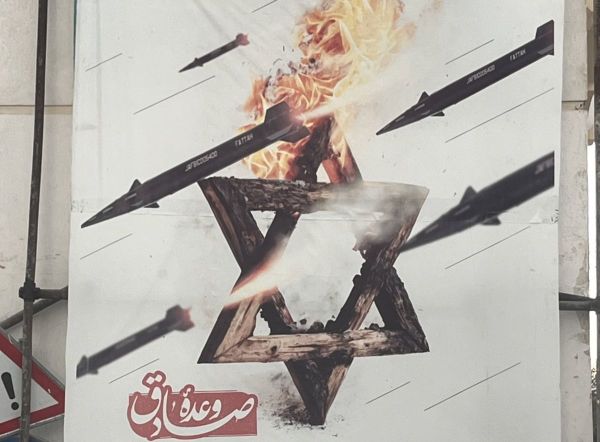
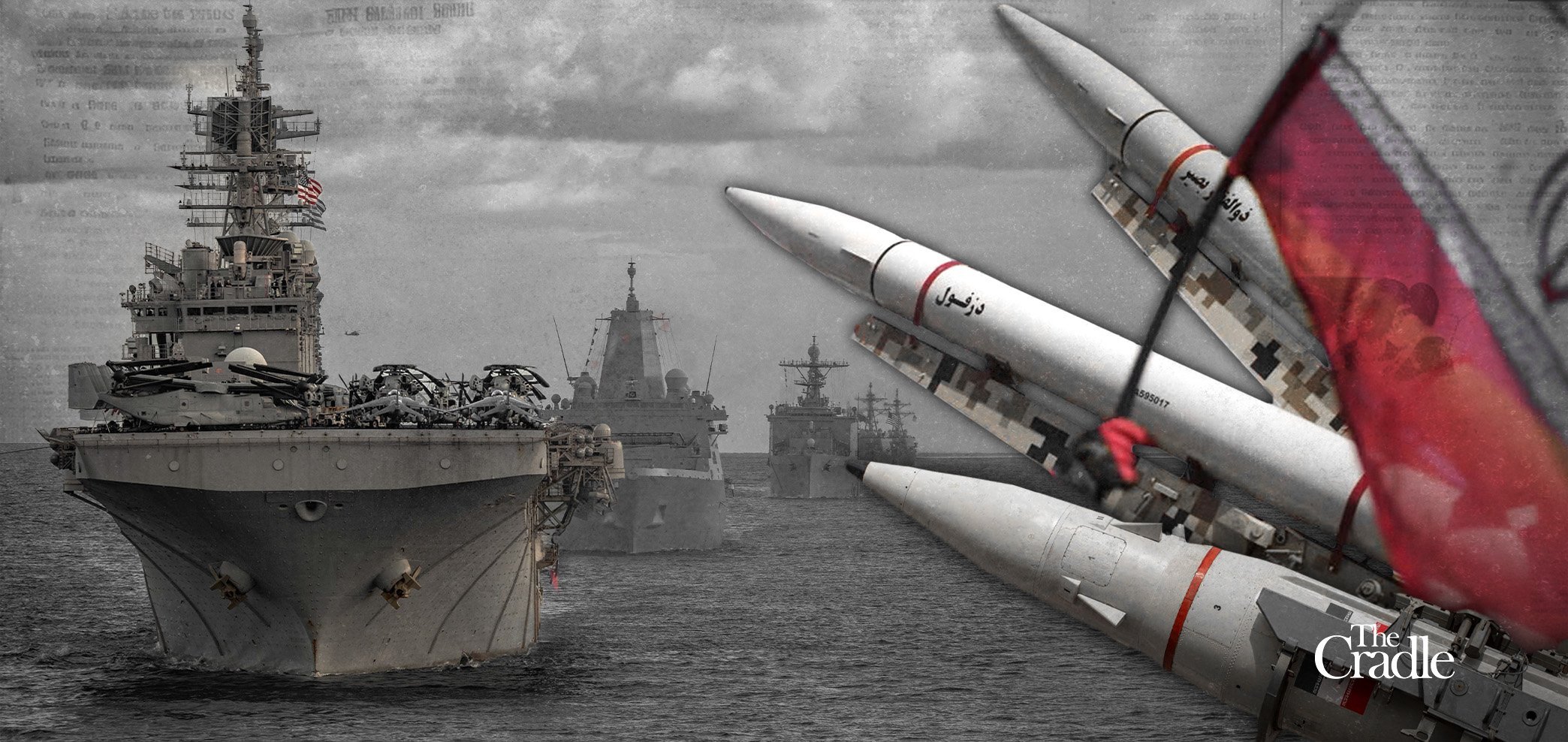
The recent military escalation in the Middle East revealed a strategic miscalculation on the part of Washington and Tel Aviv. By launching a direct offensive against Iran, authorities in the United States and Israel apparently assumed that Tehran would repeat the pattern observed in previous confrontations: initial restraint, calibrated retaliation, and delayed timing. This pattern was evident both during the so-called Twelve-Day War and in earlier episodes of Israeli aggression against Iranian targets and regional allies. This time, however, the calculation proved mistaken.
Iran executed a large-scale, coordinated attack on U.S. and Israeli military assets across West Asia in ten hours, launching over 1,200 missiles and drones. The operation targeted 27 U.S. bases, damaged critical infrastructure, and disrupted the Strait of Hormuz, restricting passage to only Russian and Chinese vessels. Despite a U.S.-Israeli decapitation strike that killed Supreme Leader Ayatollah Khamenei and others, Iran’s leadership quickly activated a pre-planned response with a detailed succession strategy. The conflict marked a strategic rupture between Washington and Tehran, with Iran pursuing retaliation and shifting the global dynamics in West Asia. Russia and China are expected to support Iran, while economic and military pressures could force a U.S.-backed ceasefire. The article suggests the region may be entering a post-U.S. order following decades of sanctions and imperial presence. Cocoon AI Summary
We may just be reaching the portal of the post-U.S. West Asia order.
The US and Israel launched strikes into Iran in the early hours of February 28th in an attempted regime change operation that both Trump and Isarel officials say will last days. Iran has already retaliated in a massive way, leaving several US bases and Israel itself under heavy fire. War correspondent Elijah Magnier joins the show to break it all down
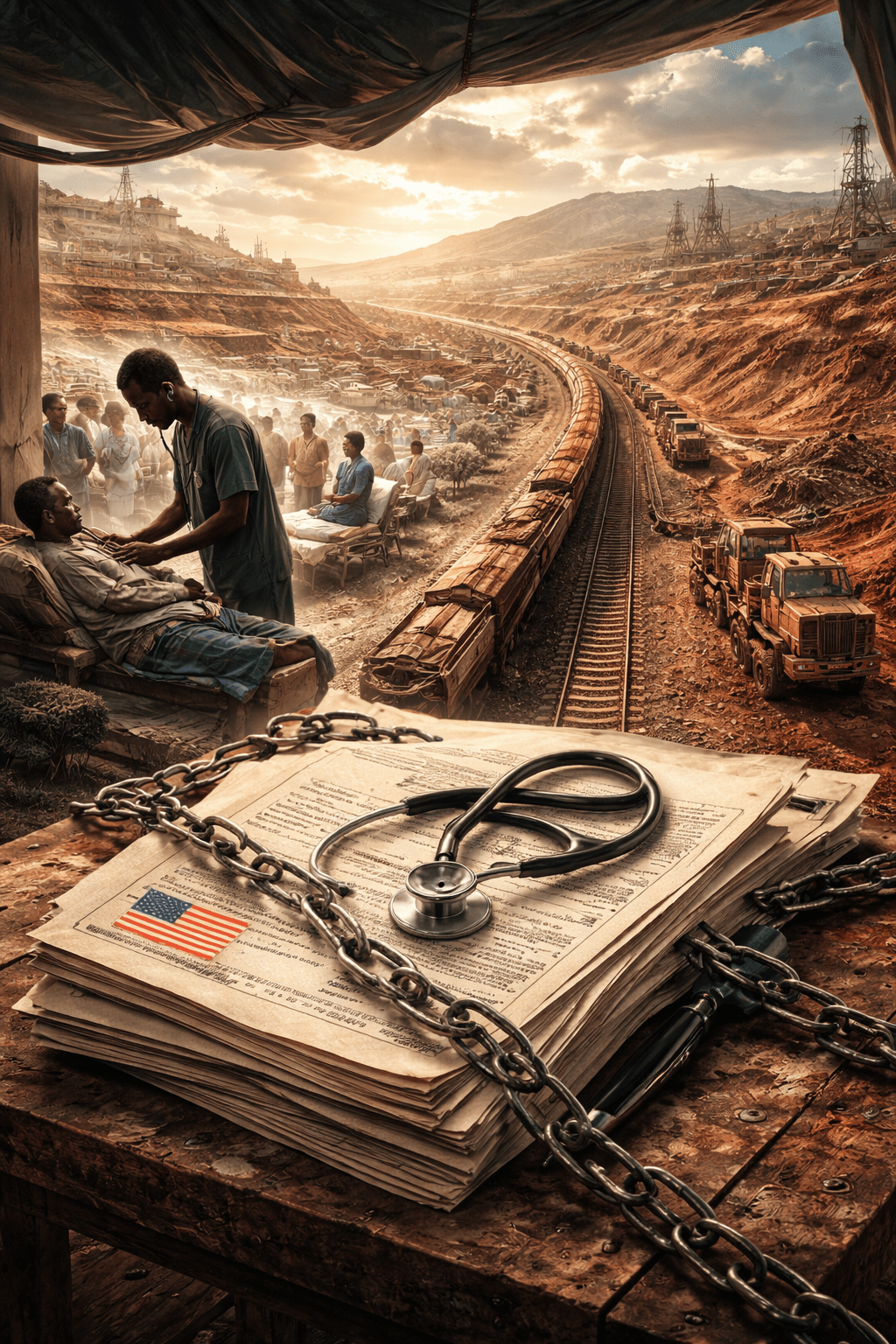
A liberal alarm rings in the pages of The Guardian, exposing troubling terms while leaving the aid architecture itself intact. The material terrain reveals how debt-shaped constraints narrow Zambia’s choices before any negotiation begins. The agreement fuses life-sustaining health systems with mineral governance and long-term informational commitments. Across the Global South, emerging refusals and alternative pathways signal that these arrangements are not beyond contestation.
By Prince Kapone | Weaponized Information | February 27, 2026
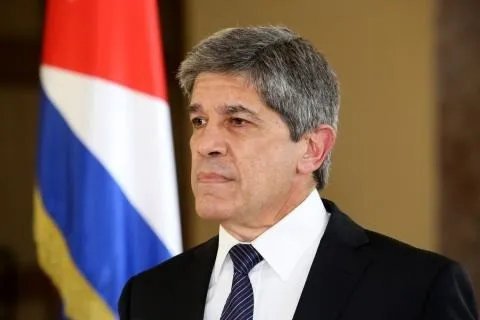
Yesterday, our authorities reported an attempted infiltration for terrorist purposes by 10 individuals on a vessel registered in the State of Florida, United States.
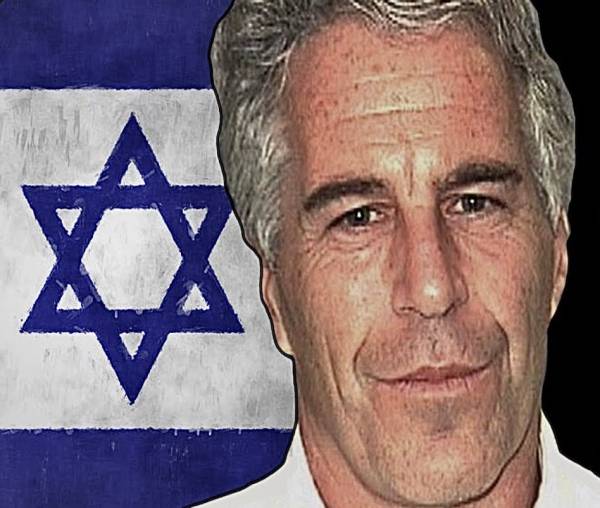
When it comes to the long-term designs of the Epstein class, an insightful resource is the Israeli-backed psyop book Bronze Age Mindset. Its author, the Greek right-wing polemicist who goes by “Bronze Age Pervert,” had been in contact with Israel’s influence network by the time he came out with the book in 2018. He’d been befriended by Edward Luttwak, the geo-strategist who’s done work for the Zionist occupier’s military and therefore is part of the global intelligence operations that Epstein was at the center of. It’s in Bronze Age Mindset where we find a series of predictive programming narratives, designed to recruit BAP’s audience of disillusioned men into assisting with the next schemes of Zionist billionaires.
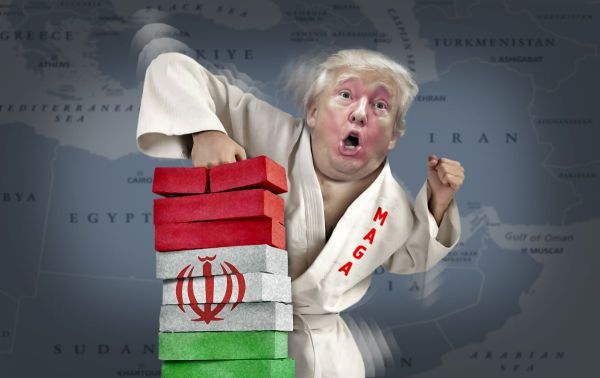
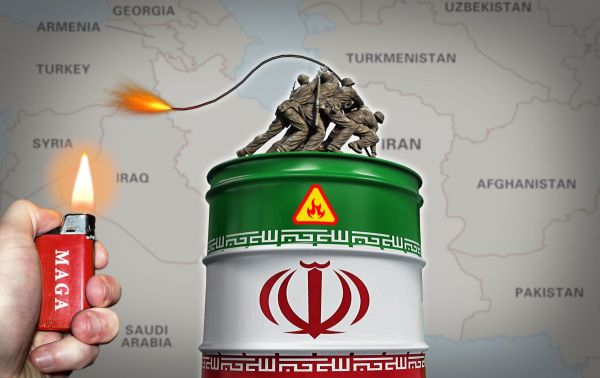
Trump’s plan for war with Iran is viewed as reckless and doomed to fail, with the U.S. military seen as overextended and vulnerable. Russia and China are anticipated to benefit from the conflict, aiming to counter Trump’s destabilizing policies. His strategy, built on flawed assumptions and poor planning, risks catastrophic consequences for the U.S., potentially leading to impeachment and a significant loss of global influence. The author argues that the crisis reflects a broken American democracy and an unrealistic belief in military dominance. Cocoon AI Summary
America’s failed democracy has brought it to the brink of war with Iran, yet it will be Russia, China and Iran who reap the rewards.
The Israeli army has adopted a new pattern of violations in southern Syria. It has sprayed chemical herbicides over agricultural and grazing lands along the border. Local monitors say the move forms part of a broader security policy. That policy aims to reshape the buffer zone and impose new facts on the ground by expanding control near the separation line.
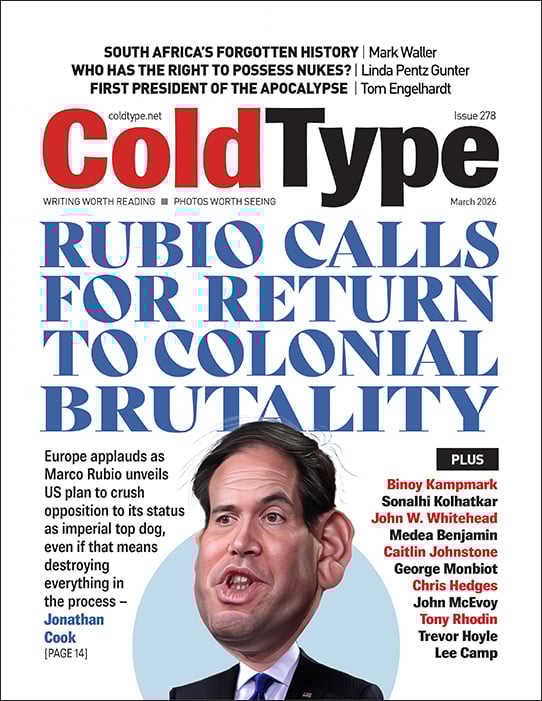
As a new mood in the Global South advances, US Secretary of State Marco Rubio recently urged Europe to embrace its colonial past and defend Western values against the communist menace.
Margaret Kimberley, BAR Executive Editor and Senior Columnist
The task of the left, of all anti-imperialists, is to oppose U.S. aggression around the world. A military attack against Iran is imminent and cannot be opposed on theoretical grounds. The people of Iran and their state must be supported without hesitation or apology.
In this 2-part show, Rania joins show for first time and Stanislav will take us home. Stream will cover SOTUS, Iran war escalations, mutiny (?) and much more!
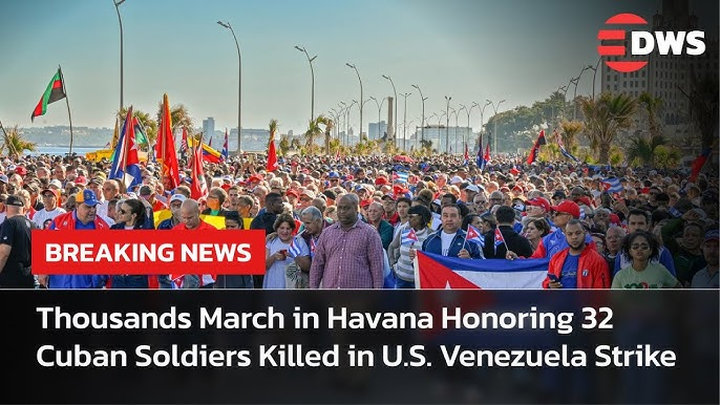
Hundreds of thousands march in Havana to honor 32 Cuban combatants killed in the Jan. 3 U.S. assault on Caracas, as Washington escalates an energy blockade aimed at cutting Cuba’s fuel supply.
The lights are going out in Cuba — and people are organizing their lives around the outage schedule.
In towns and cities outside Havana, families cook when power returns, charge phones in bursts, and sleep in the heat when fans go dead. Clinics and hospitals ration generator fuel and prioritize the most urgent care. Ambulance crews and ER staff work under conditions where a delayed response means a patient may not make it. Airports face the same reality: When fuel is absent, flights are canceled, routes break, and the island’s connection to needed supplies narrows.
This essay excavates the BBC’s framing of the Ukraine war to reveal how catastrophe rhetoric and moral personalization manufacture consent. It reconstructs the documented record—NATO expansion, U.S. strategic doctrine, Minsk diplomacy, sanctions, and militarization—to widen the frame beyond headline urgency. It then situates the conflict within the deeper contradiction between imperial hegemony and national sovereignty, centering the costs borne by workers and the Global South. Finally, it calls for organized internationalist action rooted in existing anti-war, labor, and sovereignty movements.
From January 11th – 13th, Lithuania marked the 35th anniversary of the “January Events”. Three tumultuous days in 1991 culminated in a widely-publicised mass shooting of protesters at Vilnius’ TV Tower, with 14 killed and over 140 injured. Soviet forces were purportedly responsible. The bloodshed elicited an avalanche of international sympathy for Lithuania, leading to multiple states recognising the republic as anindependent country. It was a pivotal event in the USSR’s breakup, and remainswidely celebrated throughout the Baltics and beyond today.
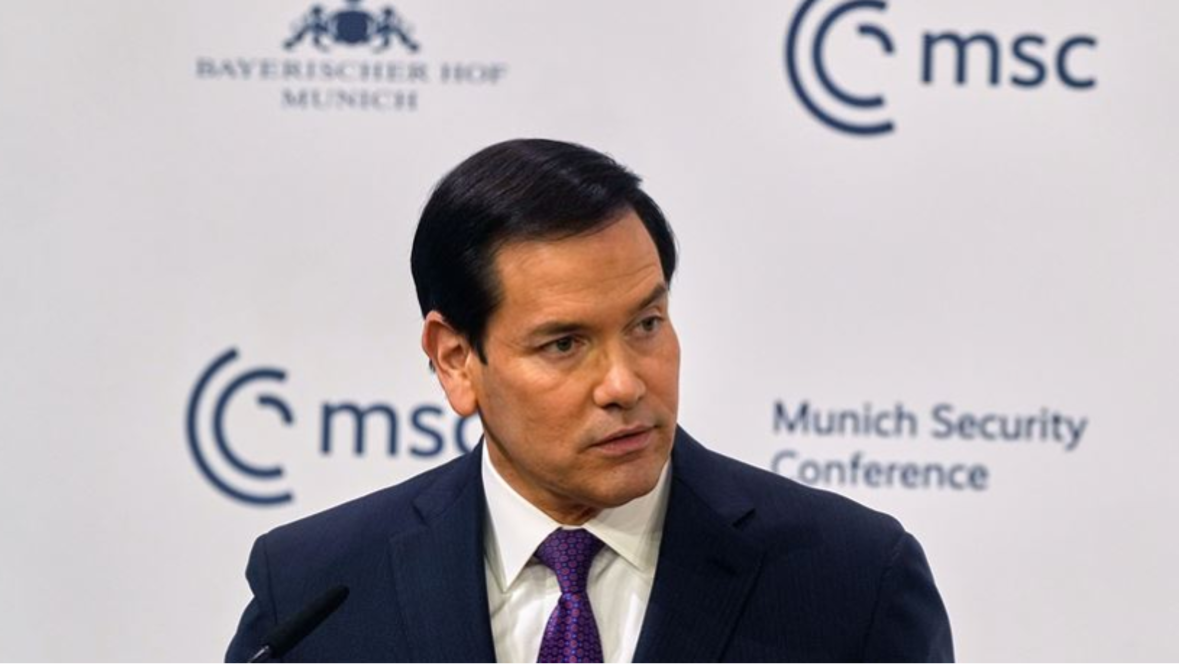
At the Munich Security Conference, US Secretary of State Marco Rubio delivered a seemingly conciliatory speech that masked a profound ideological project: the normalisation of MAGA-inspired civilisational politics in transatlantic relations.

 Kwaku Yaro (Ghana), Stand by Me, 2022.
 The New Dark Age