The relative decline of Washington’s unipolar command creates vital geopolitical openings, yet shifting centres of power do not by themselves dismantle the corporate monopolies that shape international finance, technology, and production.
Lao Tongli (China), In and Out of the Clouds No. 13, 2025.
Ukraine’s position is becoming untenable, and now even Trump has cut a diesel deal with Putin and called for a new president in Kyiv. Yet Europe’s leaders refuse to stop. Why? Professor Michael Hudson joins me to explain how the wars on Russia and Iran form a single US campaign over the world’s oil. We discuss why Europe’s war has become performative, a cover for shovelling money to big corporations while waging a class war on Europe’s wage earners. With Germany, France and Italy heading to the polls in 2027, can NATO and the EU can survive the decline of the West?
Economist Richard Werner has sparked controversy with remarks about Bill Gates, Jeffrey Epstein, pandemic-related allegations, and the growing use of digital financial systems.
Speaking at a European Parliament event hosted by MEP Christine Anderson, Werner raised concerns about digital identification systems, central bank digital currencies (CBDCs), the tokenisation of assets, and the potential concentration of financial power.
Werner also made serious allegations involving Gates and Epstein. These claims are not established facts and should be understood as allegations made during his speech.
The economist argues that greater scrutiny is needed over financial governance, personal privacy, digital control, and the future of individual freedoms.
Watch the speech and examine the claims, the arguments, and the questions surrounding digital ID and financial freedom.
Anyone wondering whether Iran is second-guessing the Hormuz blockade?
Anyone wondering whether Iran is second-guessing the Hormuz blockade? Don’t. They have the receipts. They are watching from Tehran as the dominoes fall: France first, Albania close behind, Italy wobbling, the rest queuing up. A little more time is all it takes. No nuclear bomb required. Nuclear economic reform is the gift they are sending west.
Police are assessing a post by author Sarah Helm, wife of UK national security adviser Jonathan Powell, expressing support for Palestine Action.
Downing Street distanced itself from Helm’s comments, while the Campaign Against Antisemitism demanded police action and a public denunciation from Powell.
An open letter signed by 419 writers and publishing professionals supports Sally Rooney, whose books are being withdrawn from the UK market.
British Left-Wing Media Outlet ‘The Canary’ Has Announced It Is Officially Closing After 11 Years Of Journalism
The platform was de-banked by Lloyds Bank & later announced a second account with Metro Bank was also frozen. A major attack was launched against the platform, which The Canary said made continuing to operate untenable.
The National Union of Journalists (NUJ) condemned the move by Lloyds Bank as a “disturbing precedent for UK press freedom”. Online commentators have warned that the ability of the establishment to cripple media organisations critical of them creates a hostile environment that will pressure other news outlets to fall into line or face similar potential backlash.
Prof. Seyed Mohammad Marandi discusses Iran’s successful confrontation with the US Navy and why the next phase of war between Iran & the US-Israeli regime is already proving to be decisive.
BREAKING: Europe is on fire as protests engulf France and over a half dozen countries as the West reaches a tipping point. Danny Haiphong breaks down the root causes, the geopolitical shocks, and role of the US hegemon’s wars in fueling unrest generally credited to Iran and other adversaries.
Luckily, I got WordPress to restore the Classic option, so I can continue to publish here. However, that doesn’t alter my opinion about how upset I am about what’s happened to the WordPress Platform that I’ve been using for over 20 years!
I can no longer use WordPress as the Classic editor has been removed and in order to use this function, I now have to ‘upgrade’ my subscription in order to install the Classic Plugin.
WordPress wages war on its users by inexorable attrition of functions that used to be free.
Over 89,000 of us have told the health secretary that we don’t want Palantir in our NHS.
But the government is just weeks away from deciding whether to cancel or renew the contract, and we need to reach 100,000 before then to make sure we’re impossible to ignore. Will you help us get there by asking a friend to say no to Palantir?
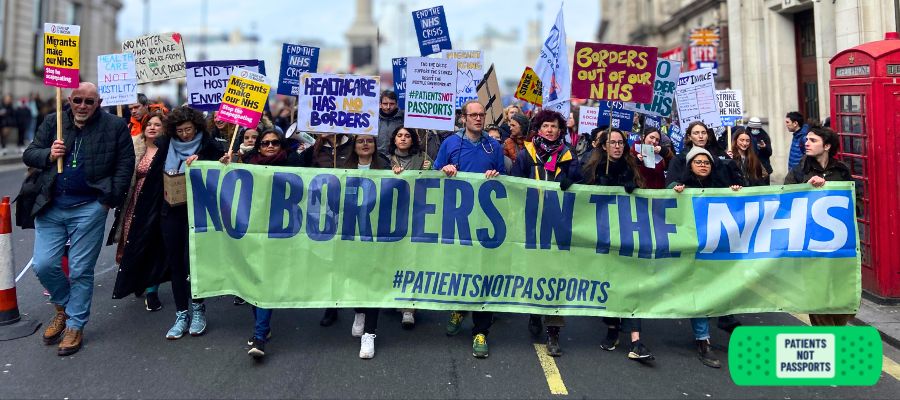
But, did you know that hospitals up and down the country are doing the Home Office’s dirty work: charging migrants thousands of pounds for healthcare and sharing their data with the Home Office.
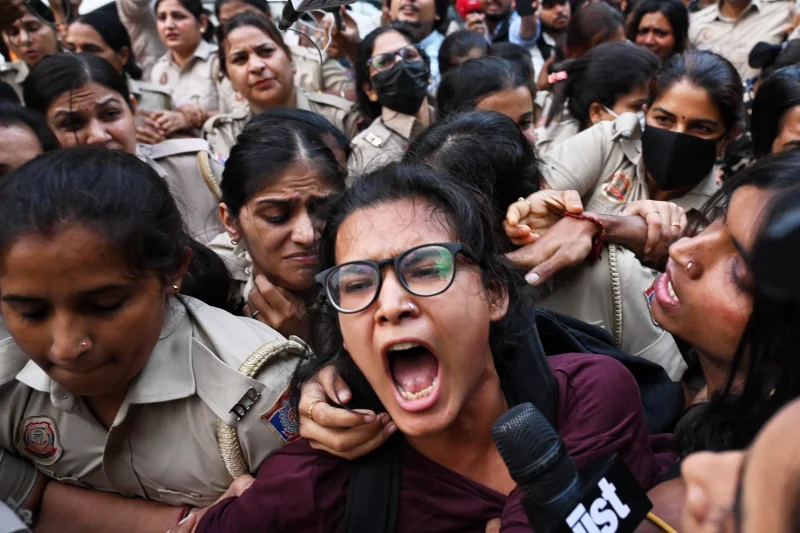
Student leader Neha Bora shouts slogans as police detain her during an Oct. 10 protest in New Delhi demanding the resignation of Chief Election Commissioner Gyanesh Kumar over the mass removal of voters from India’s voter lists.
India built a system that lets anyone with a phone send money for free from one bank account to another. Walmart and Google own the apps most people use to access it, and they are about to start collecting on it. Visa and Mastercard want in. The United States government is pressing their case, and the Modi administration is clearing the way.
When it comes to racism and anti-racism, the past is seldom another country.
Resistance to the past traumas of violent racism, including far-right incursions into Asian neighbourhoods of Southall, Newham, Bradford, Rotherham etc, live on in the collective memory. And thanks to archives across the country, including the IRR’s Black History Collection and its digitisation of the CARF magazine, we also have documents and campaign literature that aid memory.
At a moment of war, debt, corporate power, and technological dependency, five Chinese proposals reopen a long-suppressed question: what institutions are needed to make peace, sovereignty, and development materially possible?
Yang Shanshen (China), Poet Xie Lingyun and His Companions, n.d.
Indiana State Police arrest dozens of anti-genocide protesters on Indiana University’s Bloomington campus in April 2024. Seven faculty members were among those arrested, some while trying to protect students. The university banned them from campus for a year, but the county prosecutor declined to bring charges, questioning the constitutionality of the arrests. Jeremy HoganZUMAPRESS/Newscom
Universities in the United States and Canada have fired, suspended and harassed employees for speaking out against Israel’s genocide in Gaza, often using ostensibly neutral disciplinary procedures to conceal politically motivated retaliation.
“Families are continuously traumatised by the unnecessary lengthy delays in investigating the death of their loved one, with no real admission, accountability, or justice from the state. Therefore, how can they heal?”
– Marcia Rigg, sister of Sean Rigg who was killed by police in Brixton in 2008. (more…)
Friend, it’s been a massive 72 hours in the fight to kick Palantir out of our NHS:
✅ Yesterday I knocked on the door of No. 10 Downing Street to hand in 295,348 petition signatures calling on the Government to scrap the deal
✅ The day before we hit the headlines in The Guardian after 45,000 of us filed formal legal objections to Palantir getting their hands on our data. [1]
✅ The day before that we shared a powerful video about how our German friends, Campact, took on Palantir – and won!
Phew! Honestly, I’m exhausted Friend. We’ve thrown everything at this. And you know what? It’s working. Palantir is staggering. Floundering. On the back foot.But they haven’t lost yet.
In fact, they’re desperately digging in: they’ve just hired a BIG Labour party insider to land the influence they simply cannot win in public. [2]We don’t know what’ll happen next. What curveball Palantir will throw. What new scandal will land in the news. What the Government’s final decision will be. Just that it’s coming in a matter of days.
So, right now, we urgently need to build a rapid-response fund – a
war chest we can tap into at a moment’s notice. Simply put: we can’t
afford to blink. So Friend, will you chip in now so we have the funds to
stand up to Palantir?
Dockworkers march in Genoa, Italy, on Sept. 22, 2025, during a nationwide strike in solidarity with Gaza and against arms shipments to Israel. Ports are one of the places where workers have the power to block the war machine — and shut one of capitalism’s ways out of crisis.
Trillions of dollars are pouring into artificial intelligence. It is the biggest bet in U.S. history, more than was spent building the canals, the railroads and the electric grid combined.
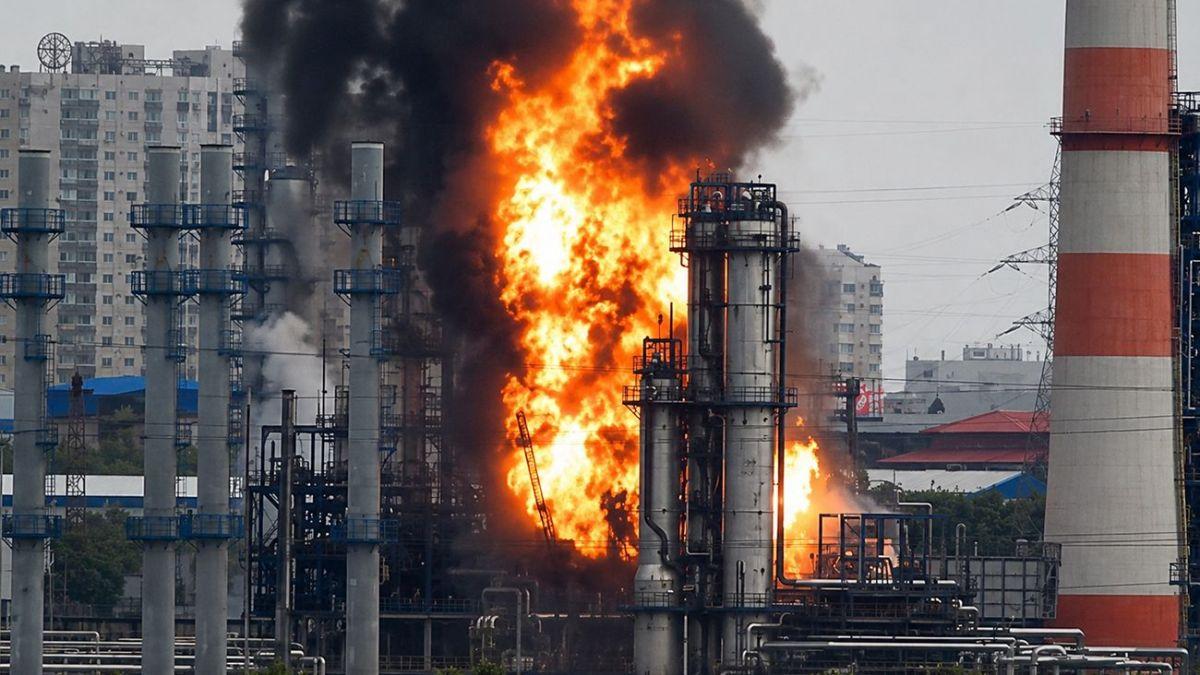
Flames and smoke rise from the Moscow Oil Refinery during the NATO-backed Ukrainian drone attack on Sept. 20, 2026.
The largest attack yet on Moscow, launched overnight Sept. 19-20 on the final day of Russia’s parliamentary election, was meant to show the Russian people that the war could reach their capital. Instead, it showed a U.S.-NATO war camp divided and cornered.
 Lao Tongli (China), In and Out of the Clouds No. 13, 2025.


 Yang Shanshen (China), Poet Xie Lingyun and His Companions, n.d.